








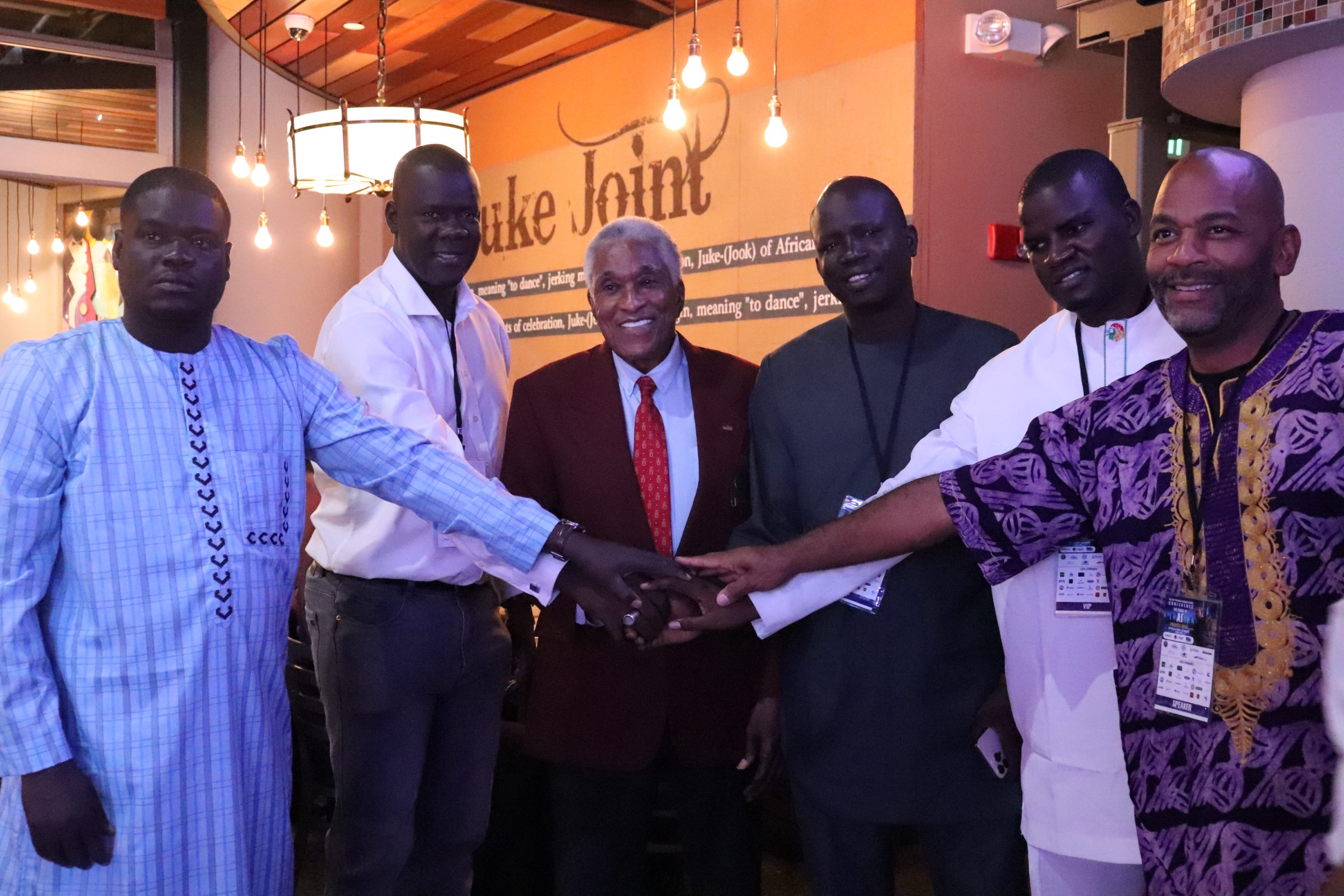

ATLANTA—Black business owners and entrepreneurs from across the country gathered in Atlanta for the 126th National Business League, held during National Black Business Month on Aug. 19-22.
Atlanta has become one of the hubs for Black-owned businesses, as it leads the country with Black-owned firms making up more than 10% of all businesses across the city. The National Business League held the conference in Atlanta for the fourth consecutive year.
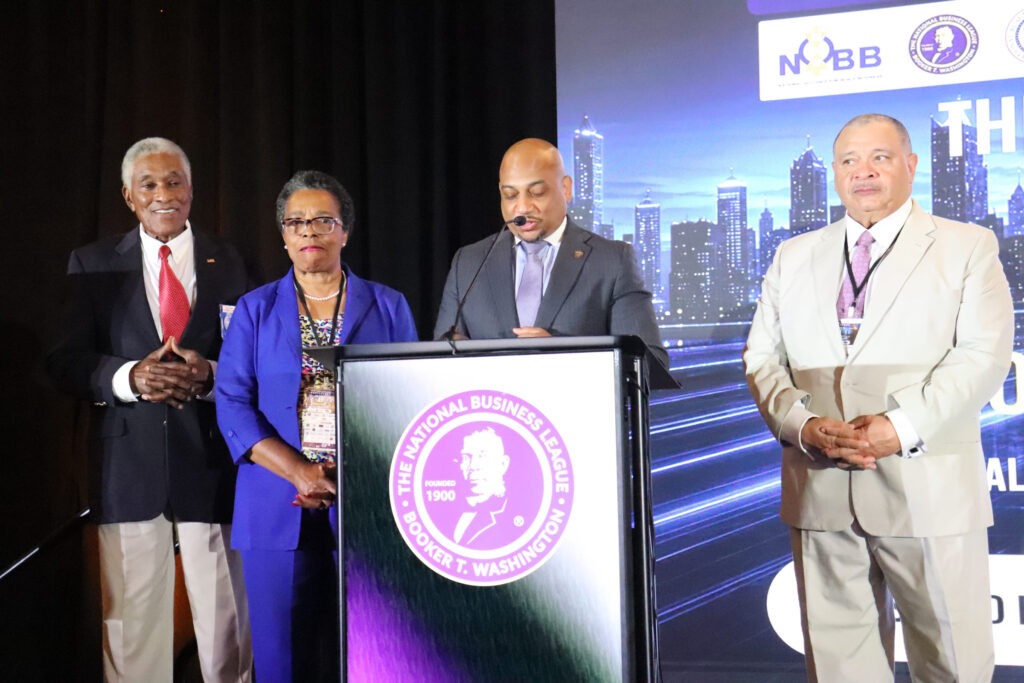
The 2026 conference operated under the theme, “Booker T. Washington and the Sacred AI Codes to Economic Sovereignty.” It was hosted by the National Alliance for Black Business, a unified coalition including The National Business League led by president and CEO Dr. Ken Harris;
The World Conference of Mayors, founded by Tuskegee Councilman and former Tuskegee, Ala. Mayor Johnny Ford; the National Black Chamber of Commerce, led by executive director Charles H. DeBow III; and The Black Business School, founded by educator and businessman Dr. Boyce Watkins.
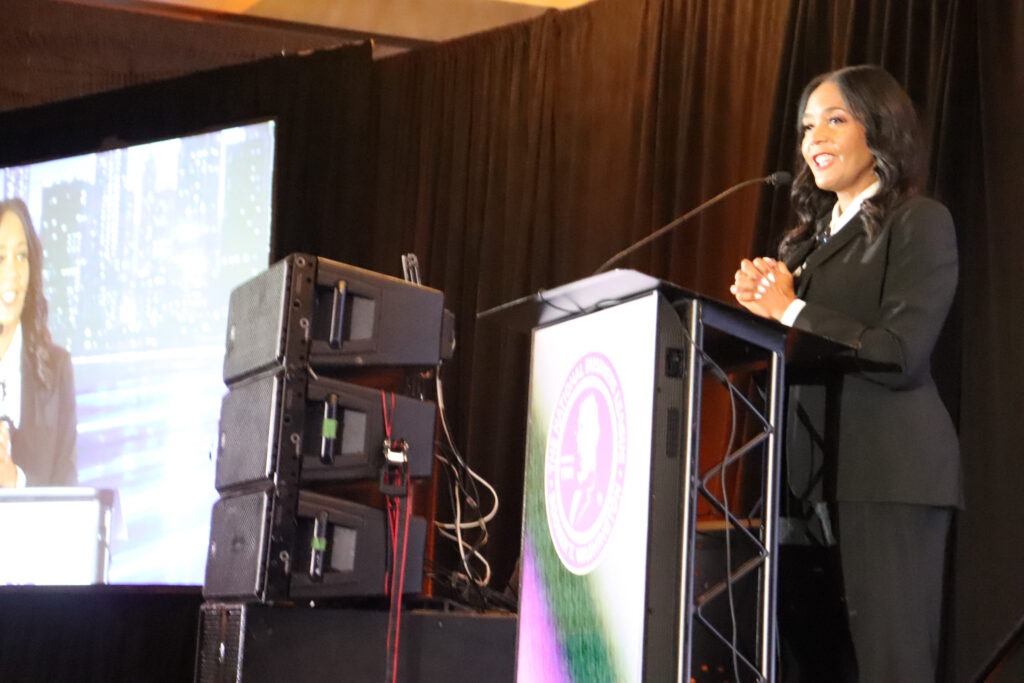
The spirit of Booker T. Washington, founder of Tuskegee University in Tuskegee, Ala., and the National Negro Business League, dwelled in the conference rooms of Hilton Atlanta throughout the weekend. Booker T. Washington held the first National Negro Business League conference in Boston, Massachusetts, on August 23, 1900.
The Most Honorable Elijah Muhammad, Eternal Leader of the Nation of Islam, who taught Black people to unite, do for self, to own land and to open and to support businesses, admired Booker T. Washington and the principles he established among Black people.
“We must revisit and engrain those principles into our very being, and teach them, and pass them on to our children and unborn generations in the future,” the Honorable Minister Louis Farrakhan, National Representative of the Most Honorable Elijah Muhammad, said in Part 38 of his 2013 weekly lecture series, “The Time and What Must be Done.”
“The principles, if followed, upon which Dr. Booker T. Washington founded Tuskegee Institute, now Tuskegee University, are immutable principles that any and every human being of every race, creed or color—any people who are down.
And in the mud of civilization, or nonproductive, could become producers for self and producers of a great community, and become a people that produce a great civilization.,” Minister Farrakhan said.
“Dr. Washington was interested not just in farming and agriculture and animal husbandry; he was interested in our growth into Science and Civilization: the manners and behavior of a civilized people,” he continued.
The 2026 National Business League Conference began where it all started, in Tuskegee. During a citywide tour, attendees viewed Booker T. Washington’s home, the Tuskegee University Historic Campus District, George Washington Carver Museum, George Washington Carver National Monument and other historical sites.
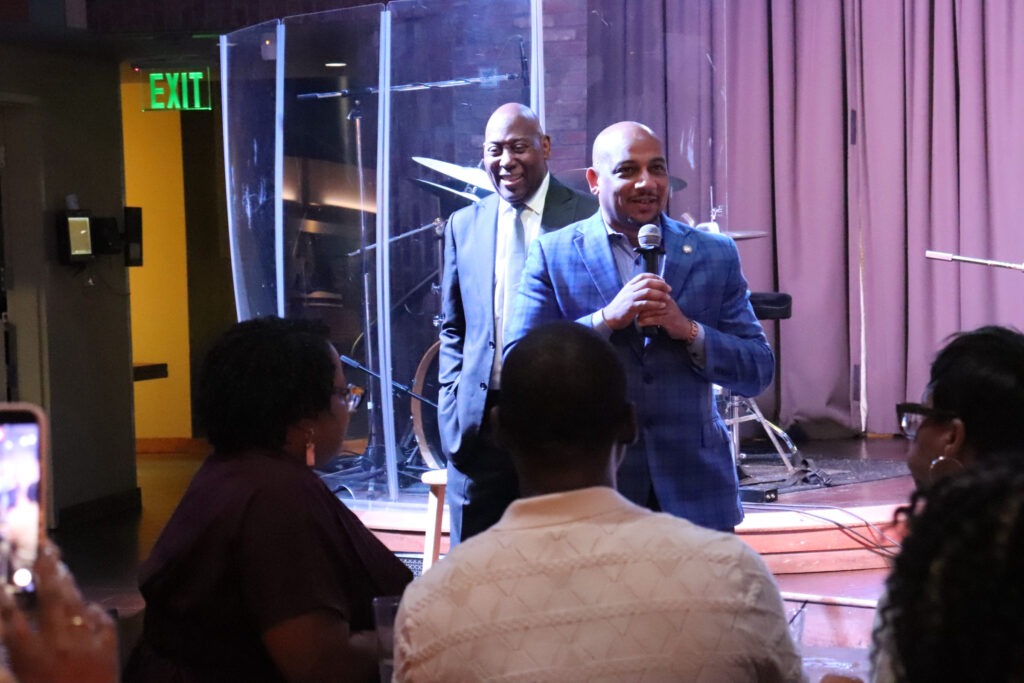
On the following day, Aug. 20, several summits ran concurrently. During the World Conference of Mayors summit, Tuskegee Councilman Johnny Ford, mayor emeritus of Tuskegee, declared a proclamation for the Nation of Islam’s upcoming Holy Day of Atonement, which will be in Atlanta, Oct. 10-11.
“As you know, Tuskegee hosted a Holy Day of Atonement, and so we intend to support it. And I’m so proud of the Holy Day of Atonement, and we commend the [Honorable Minister Louis Farrakhan] for continuing to have it,” Mayor Emeritus Ford said to The Final Call.
The Nation of Islam convened the Holy Day of Atonement, commemorating the 18th anniversary of the historic Million Man March in Tuskegee in 2013.
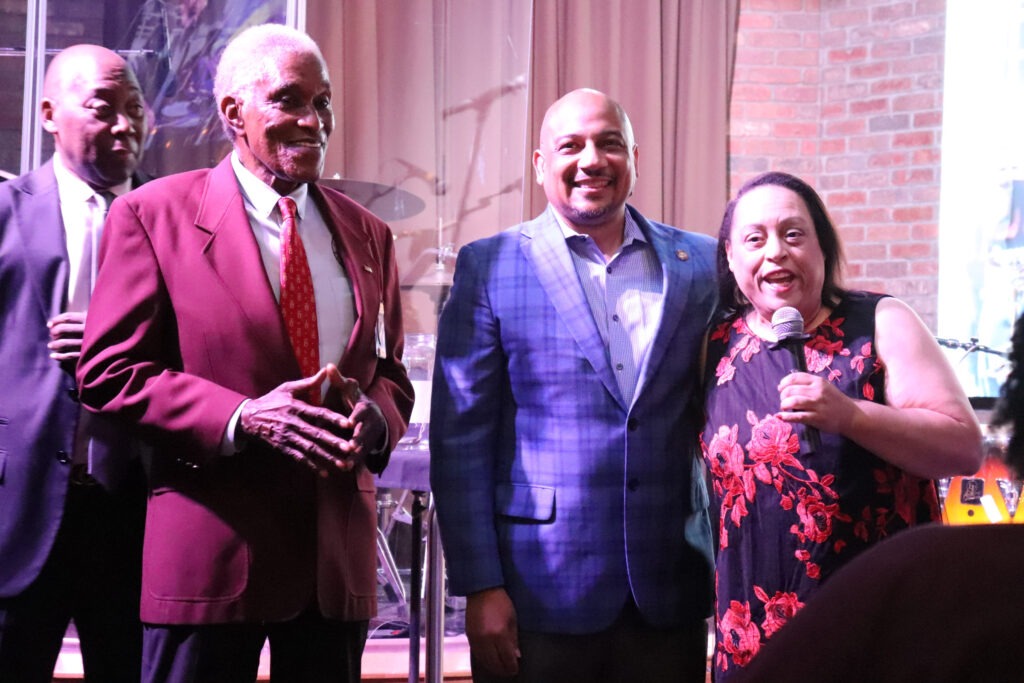
At a welcome reception Aug. 20, evening, Booker T. Washington’s great-great-granddaughter, Dr. Erica Washington McDonald, shared words with attendees.
“On behalf of the family of Booker T. Washington, we want to thank you all for coming out again, for keeping his legacy alive and continuing with business, to continue to show us what Black excellence looks like,” she said.
Artificial intelligence and Black businesses
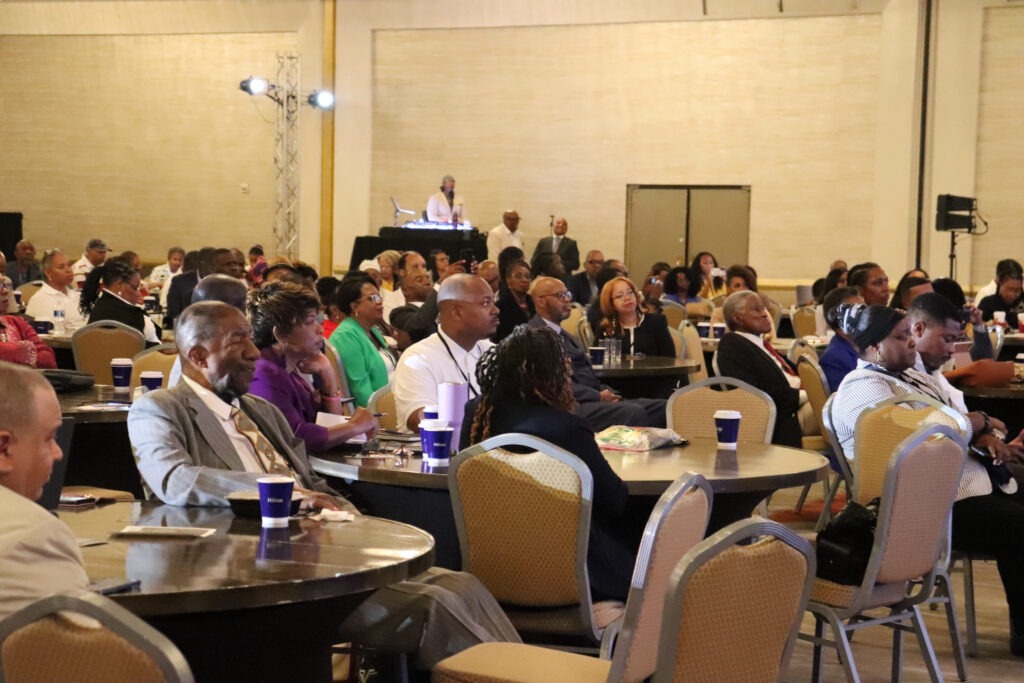
The conference’s main sessions began Aug. 21, when Dr. Harris and other presenters introduced and launched “Project 2035,” a national economic sovereignty think tank to assist in forming a national economic agenda for Black people.
“We got Project 2035, which is our plan towards national economic sovereignty. We launched a pilot this weekend with an unbelievable technology app that allows for us to collect the thoughts of the community and allow the community to come forward with the types of things that’s necessary as we rebuild over the next 10 years towards an economic sovereignty agenda,” Dr. Harris said to The Final Call.
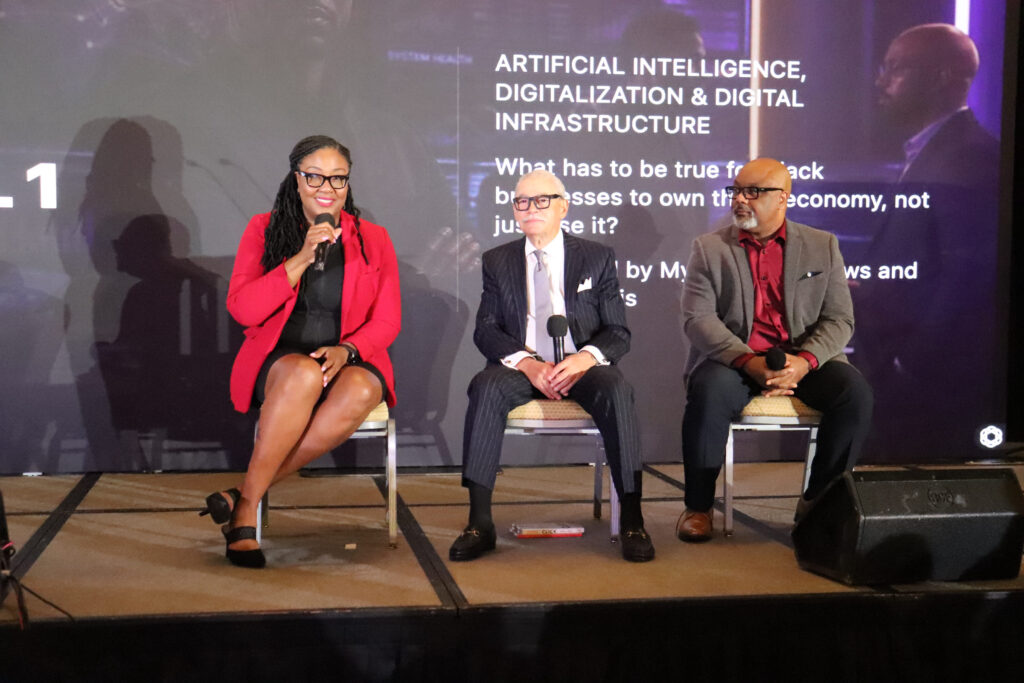
As part of the project’s working sessions, panelists tackled artificial intelligence, digitalization and digital infrastructure.
“As a Black community, that digital divide is real. It has always been. We have missed so many movements, cultural movements, technology movements, etc. throughout history. We missed the agricultural revolution because we were the ones picking the cotton, not being able to participate, not being able to own the land in a way that allowed for us to be a part of the economy.
We missed the Renaissance movement. We missed the Civil Rights Movement because it did not have economics attached to it,” Dr. Harris said. “So, 62 years later, post the 1964 Civil Rights Act, Black people are at the bottom of every major economic indicator and quality of life, and we do not want to miss the technology boom, but most importantly, the artificial intelligence boom.
We want to be a part of it, and we just don’t want to participate or be included anymore. We want to own and control the technological advances of the future because we believe … that this will lead to freedom, liberation, emancipation, and most importantly, economic sovereignty.”
Conference keynote presenter Dr. Talitha Washington, executive director of the Center for Applied Data Science and Analytics at Howard University, defined A.I. as “a system that performs tasks normally requiring human intelligence, including reasoning, perception and judgment.”
It can include machine learning (systems that improve by learning patterns from data), generative A.I. (models that produce new content such as text, images, code and audio) and agentic A.I. (systems that plan, use tools and take multi-step actions toward a goal with limited human supervision).
Panelists discussed how A.I. could change the landscape for Black business owners and entrepreneurs. A.I. can help break down barriers to building capacity and scaling, they shared. But it must be tied with unity, collaboration and the will to do the work.
“One thing about A.I. that’s really interesting to me is I have found that it is a fascinating place to generate ideas and create plans to execute those ideas. What the A.I. won’t do for you, though, is do the actual legwork required to make that idea into a real thing. It’s not going to replace the work necessary for you to take that thing all the way to the finish line,” panelist Dr. Boyce Watkins said.
News analysis, surveys and research have presented A.I. as both a major opportunity for Black entrepreneurs but also as a new way to possibly reproduce longstanding racial disparities, if Black people fail to keep up. There are concerns that the data and information that is fed into A.I. is discriminatory toward non-Whites. For example, there are studies that show A.I. algorithms used in healthcare are racially biased.
But as big tech companies increasingly build their massive A.I. data centers, the engines that train and run A.I. systems, in or near Black communities or other cultural landmarks, such as historic Black cemeteries, creating harmful environmental impacts, the question becomes, how can Black people adopt A.I. responsibly?
“We don’t want to do things in a way that’s harmful to our people and harmful to the community, and so we must bring stakeholders together,” Dr. Harris said. White House representatives from the Department of Agriculture and the government’s A.I. center presented at the conference, along with the Democratic and Republican candidates for Georgia governor.
“We need to be in the middle to figure out how do we solve potential problems but at the same time not lose out on the opportunities,” Dr. Harris added.
“Regardless of who’s in office, Black businesses are at the table, and it’s not about parties anymore. It’s about how do we advocate properly for our communities so that we are a part of the process, that we’re at the table and not just on the menu.”
During her talk, Dr. Washington brought up zero net water usage and the use of renewable energy like solar in order to power data centers. She also encouraged transparency around data centers.
Mayor Emeritus Ford shared with The Final Call that it is the responsibility of mayors to ensure data centers are built in areas where they do not become detriments to the community.
“Our environment is important. Being able to get electrical services at a reasonable rate is important for our citizens, and we’re not going to have that threatened by a data center.
So, mayors are intelligent enough to make sure that before we approve a data center for our area, for our cities, we go through all the necessary things to make sure it’s a benefit, not a detriment, to make sure it doesn’t take up all the electrical power,” he said.
There are serious concerns about the use of A.I. an its impact on Black people and communities which The Final Call has covered in several editions. (See The Final Call, Vol. 44 No. 16 and Vol. 45 No. 35)
Conference takeaways
Other topics addressed at the conference on Aug. 21 and 22 included buyer supplier readiness, the role of historically Black colleges and universities (HBCUs) and turning prospects into clients.
The U.S. Africa Trade Desk hosted the Pan-American Global Business, Investment and Trade Summit. During the session, Dr. Alveda King, niece of the Rev. Dr. Martin Luther King Jr., emphasized the need for Black land ownership.
“Your land is one of the most valuable things you could hold on to,” she said.
The conference ended with the Booker T. Washington National Awards Gala.
Mayor Emeritus Ford emphasized to The Final Call that the conference is not about talk but about action.
“We go to a lot of conferences, and people come together and hear a lot of speeches. They have a lot of receptions and meeting other people, but that’s it. This is a working session. This is a business session,” he said.
“We are concerned about action and getting things done. So, we want people to take away from this conference the ability to understand the A.I. process and have the ability to take what they learn here back and put it into effect.”
As next steps, the partners in the National Alliance for Black Business are continuing to form relationships overseas. The World Conference of Mayors is focused on building bridges with countries in South America, the Caribbean, Africa and Asia.
“We live in a global world,” Mayor Emeritus Ford said. “Mayors now must be global. They must be international. They must be able to deal with the whole world.”
The long-term goal for Black business and economics? Dr. Harris voiced the following concluding words to The Final Call: “We want all people of Black descent all over the world to own and control their own destinies, to build enterprise, develop enterprise, and most importantly, as Booker T. Washington would say, become captains of industry.” The question is however, is A.I. the way to achieve this?
