





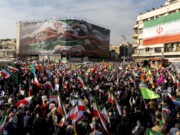

Top Iranian military and security officials have issued messages of gratitude to the public in praise of 200 consecutive nights of nationwide street demonstrations in support of the armed forces.
The leadership of the Supreme National Security Council (SNSC), the Islamic Revolution Guards Corps (IRGC), and the Army praised the continuous public mobilization, describing it as the ultimate deterrent against the United States and Israel.
They commended the historic turning point that has shattered Western calculations for “regime change” and societal fracture.
Major General Mohsen Rezaei, the SNSC secretary, framed the 200-night mobilization not merely as a security response, but as a definitive break from Iran’s tragic history of foreign subjugation over the past two centuries and before the Islamic Revolution.
“In the last 200 years, Iran was repeatedly targeted by invasions, occupations, and foreign interventions, where a lack of national cohesion led to defeats, unequal treaties, and the loss of territory,” the SNSC statement read.
“But today, we can say with certainty that history did not repeat itself. In these 200 days, the people of Iran showed that their entire existence is dedicated to their country.”
The top security official said the Iranian public has become the most vital pillar of national deterrence, successfully dismantling the “false dichotomies” of internal division that Western intelligence agencies hoped to exploit.
“The enemy, which sought to break the nation’s will through military pressure, is now on its knees before your resolve,” General Rezaei noted, calling the nighttime vigils an immortal epic that has effectively healed the historical wounds of foreign humiliation.
A renewed oath
Echoing these sentiments, IRGC Commander-in-Chief Major General Ahmad Vahidi described the rallies as a “national awakening” and a profound spiritual manifestation.
General Vahidi highlighted that the massive street presence served as a renewed oath of allegiance to the new Leader, Ayatollah Seyyed Mojtaba Khamenei, following the assassination of his father, Ayatollah Seyyed Ali Khamenei, on the first day of the recent 40-day war of aggression.
General Vahidi warned that having failed on the battlefield, the U.S.-Israeli coalition is now pivoting to cognitive warfare, economic strangulation, and attempts to induce public fatigue.
He urged the public to counter this hybrid war by embracing a resistance economy and advancing domestic scientific production.
“The IRGC stands ready to avenge the pure blood of our martyred Leader and will decisively crush any miscalculation by the enemy.”
‘Iran’s internal structural strength’
Army Commander-in-Chief Major General Amir Hatami also praised the demonstrations for showing the “internal structural strength” of the Islamic Republic.
He said the continuous public backing has completely upended hostile military planning and psychological operations.
“This historic presence proved that Iran’s true power, alongside the deterrence of our armed forces, is rooted in the faith and unity of the nation.”
The Iranian general reaffirmed the Army’s unwavering commitment to defending the territorial integrity and national honor under the command of the new Leader.
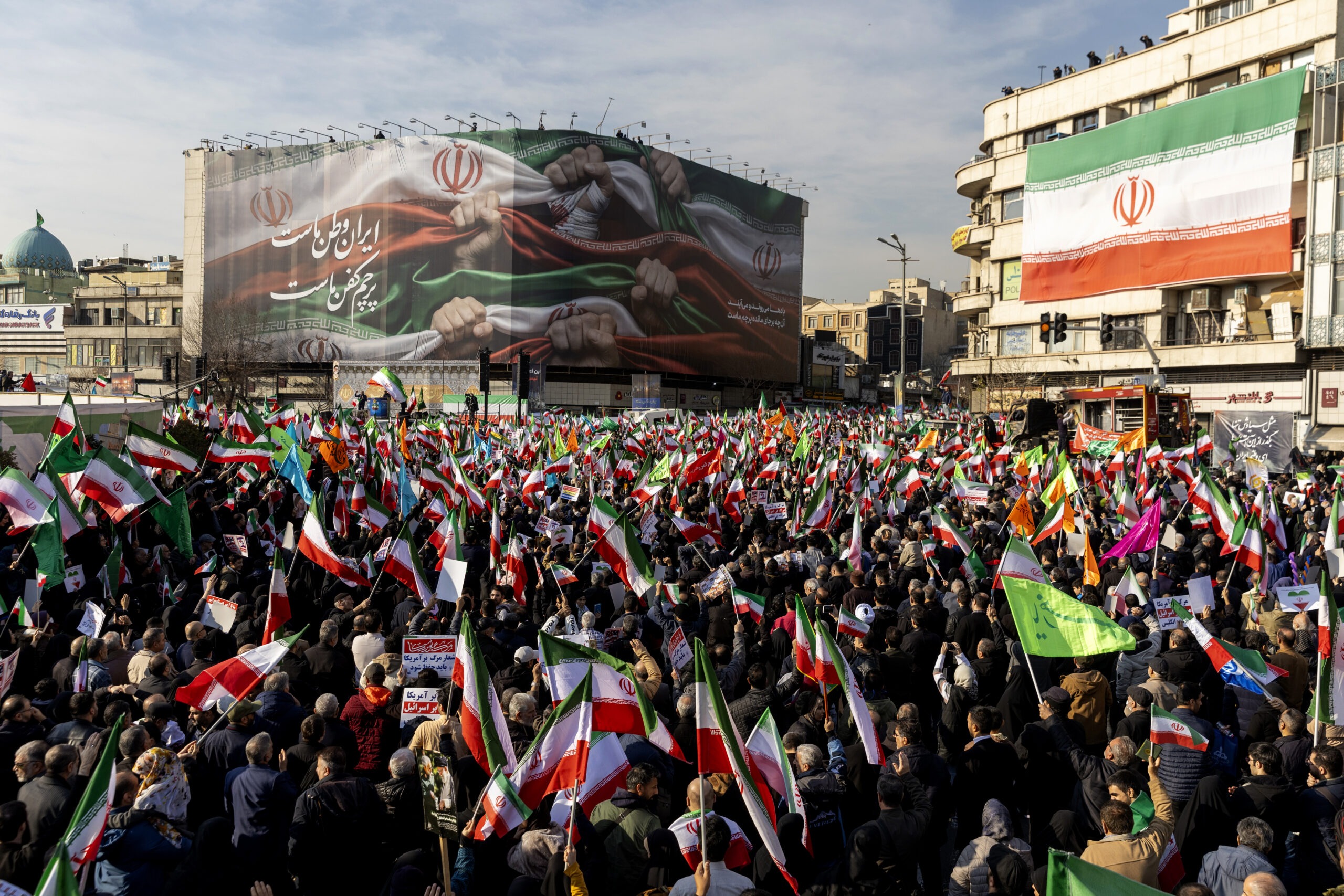
The nightly demonstrations first began in the immediate aftermath of February 28, when the United States and Israel launched a full-scale war of aggression against Iran.
What began as spontaneous outpourings of grief and outrage following the bombardment of Iranian cities and civilian infrastructure quickly crystallized into a synchronized, nationwide movement.
By early March, citizens across Iran’s major metropolitan centers and rural provinces alike had established a routine of gathering in public squares every night after sunset.
These nightly vigils serve a dual purpose on the Iranian home front. On one level, they act as a massive morale-boosting mechanism for the armed forces, with crowds frequently directing their chants and solidarity toward the frontline soldiers of the Army and the IRGC.
On another level, they function as a rejection of Western psychological warfare. Participants routinely light candles for the martyrs, wave national flags, and chant anti-oppression slogans, signaling an unwavering refusal to capitulate to foreign coercion or economic strangulation.
(PressTV.co.uk)
