




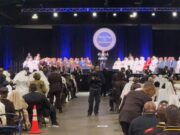






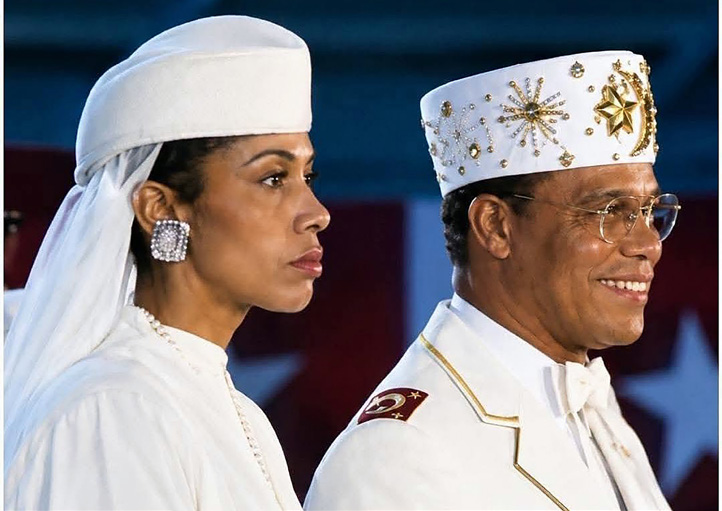
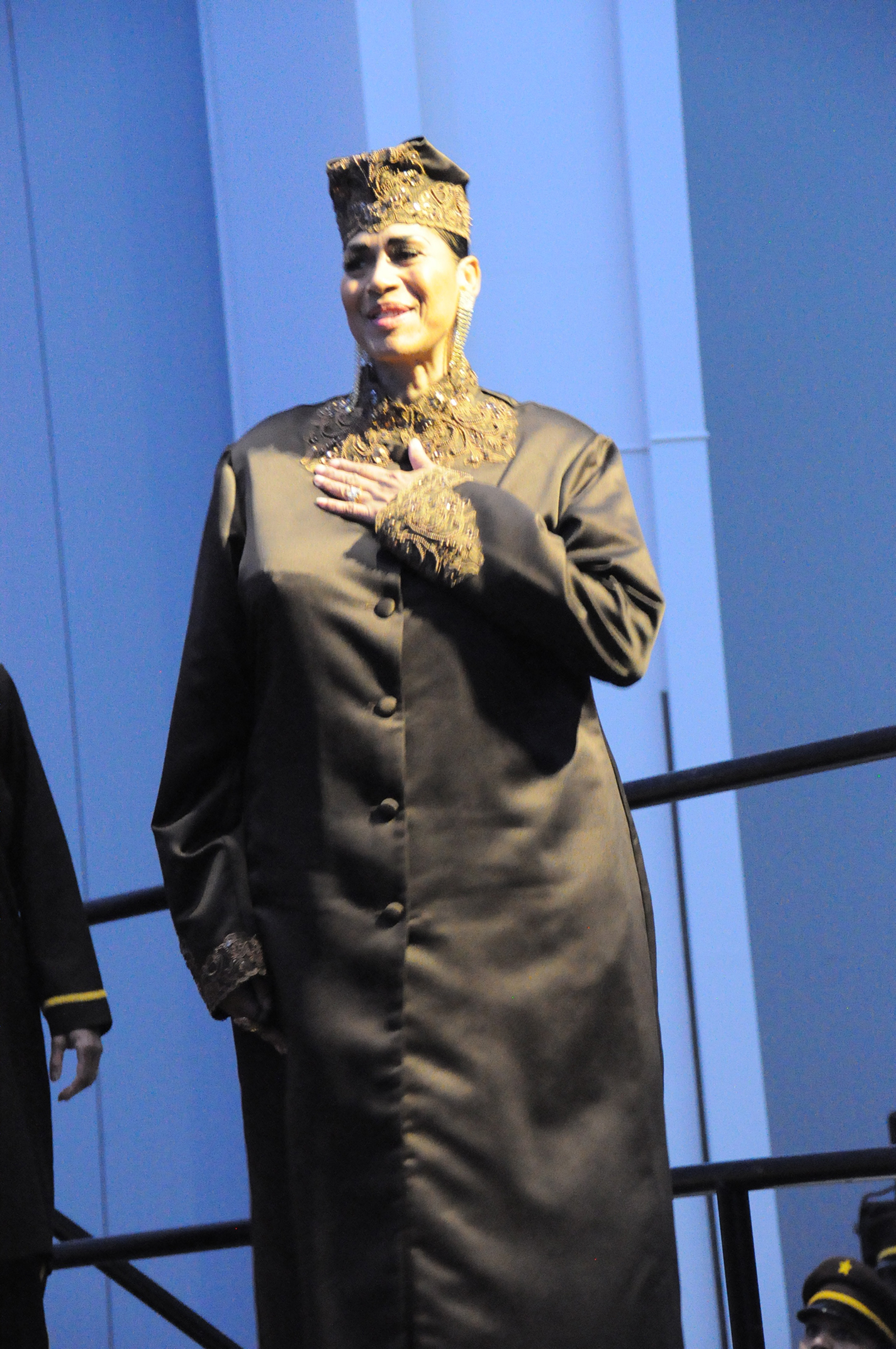
The year was 1985. I (Sister Nisa Islam Muhammad) was pregnant with my son Nasser, sitting among some 25,000 people packed into Madison Square Garden in New York, waiting to hear the Honorable Minister Louis Farrakhan speak. When he took the stage, he was flanked by a group of sisters, his M.G.T. and G.C.C. Vanguard, and one of them stopped me cold. She was tall, statuesque, unmistakably beautiful, and she carried herself like security itself: Sister Betsy Jean Farrakhan, his eldest daughter.
I kept watching her watch the crowd. I wanted to meet her. I wanted to be her. I wanted to learn whatever secret allowed her to stand that close to greatness and still seem so entirely herself.
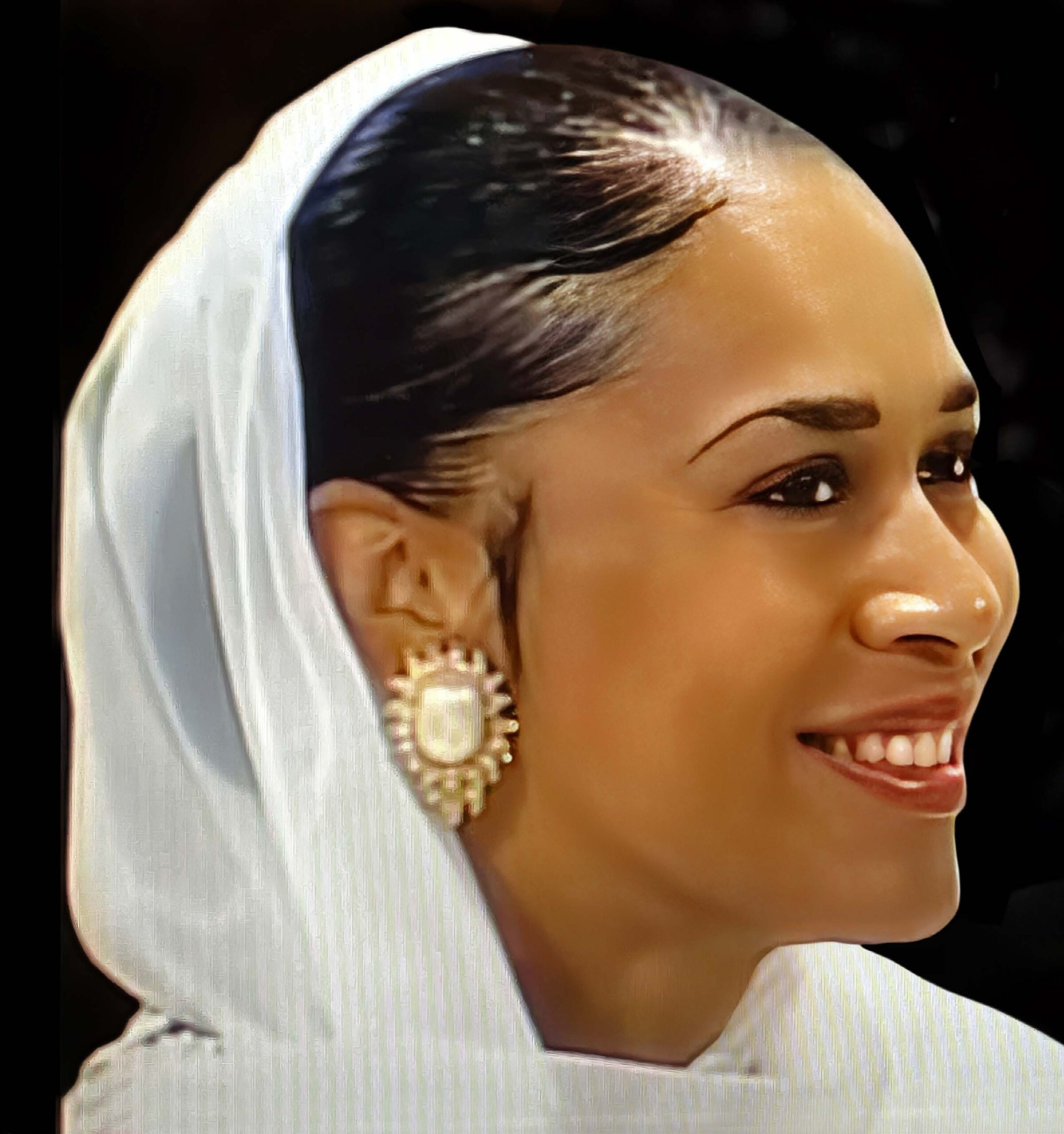
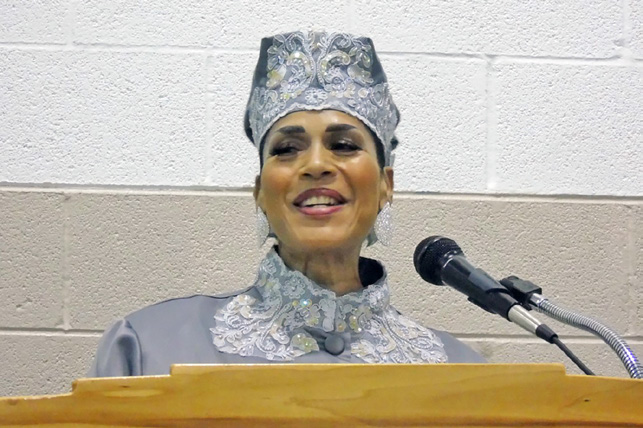
Years later, that wish came true. As the Mid-Atlantic Regional M.G.T. Captain, I had the honor of serving under her, and she turned out to be everything I had imagined from that arena floor and more. She was a sister and a soldier. She taught me that Allah (God) loves beauty and that we are meant to reflect that beauty in everything we do: our dress, our posture, and our discipline. She was kind and gracious, but no one mistook her kindness for weakness. In the high-pressure work of providing security for her father at public events, her grace never cracked, and she expected the same steadiness from those serving beside her.
Sister Betsy Jean Farrakhan, the eldest daughter of Minister Farrakhan and Mother Khadijah Farrakhan, returned to Allah (God) on September 18. Her Janazah (funeral service) was held at Mosque Maryam in Chicago, on September 25.
She was appointed National M.G.T. and G.C.C. Captain by her father in 1988 and she helped train and shape generations of women in the Nation of Islam. Later, her service also extended to agriculture and producing healthy food for the community. Yet for many women who knew her personally, her legacy lives most vividly in the standards she set: discipline without hardness, beauty without vanity, and authority grounded in care.
She taught internal strength and resilience. If you were selected to work with her, you learned quickly to raise your standard. She taught her captains to see the beauty in every sister and cultivate it, and to care for women who belonged to Allah with consideration and concern. She always took her work seriously. But when the night was over, the crowd had cleared, and her father was safe, she was a joy to be around. She could fill a room with laughter and loved to hear about our lives.
In the days since her return to Allah, sisters who served alongside her across four decades and several cities have used many of the same words to describe her: soldier, sister, mother and warrior. Although public references often identified her as Minister Farrakhan and Mother Khadijah Farrakhan’s eldest daughter, generations of women in the Nation also knew her as a captain, teacher, and model of disciplined service.
A trainer of women
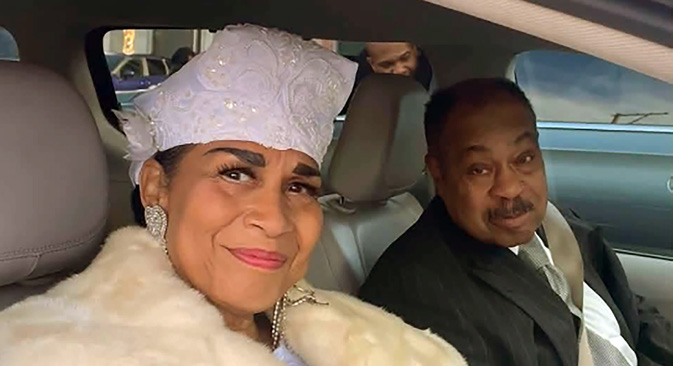
Sister Dr. Nusaybah Muhammad is the Student Southern Regional M.G.T. and G.C.C. Captain of the Nation of Islam. She told The Final Call she first met Sister Betsy Jean in the early 1990s. “I remember being on a security detail at the airport to pick her up. As she stepped out of the vehicle, I remember freezing in place. I was struck by her stunning and captivating beauty.
But what impacted me even more was the blessing of hearing her speak. Her words carried a passion, strength, and spirit I felt immediately. Her beauty caught my attention, but her voice, her spirit, and the passion she carried captured my heart. In that moment, I knew I had developed a deep love and admiration for her,” said Sister Nusaybah.
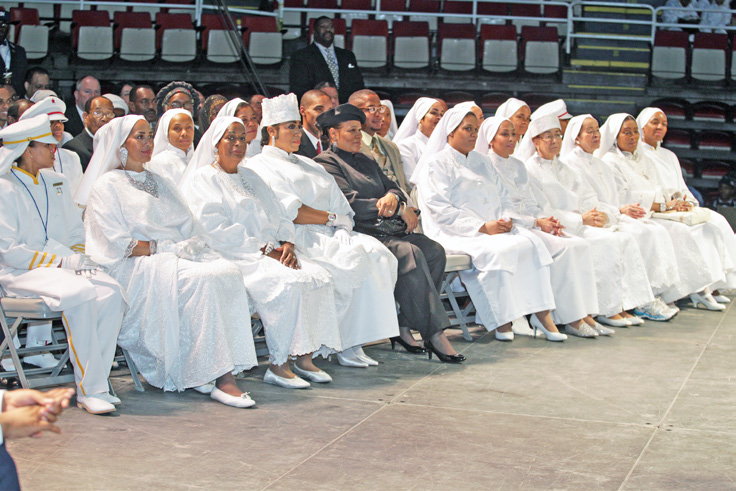
“I will never forget that first encounter. It was one of those moments that stays with you, not simply because of what you saw, but because of what you felt.” Sister Nusaybah described Sister Betsy Jean as “the epitome of a soldier.”
“She accepted nothing less than excellence. As a National Captain, she was the kind of leader who never asked you to do what she wasn’t willing to do herself. She led from the front. She demonstrated discipline by example. Her expectations were high because she knew what was possible when a woman was properly taught, developed, disciplined, and given the opportunity to discover the power within herself.
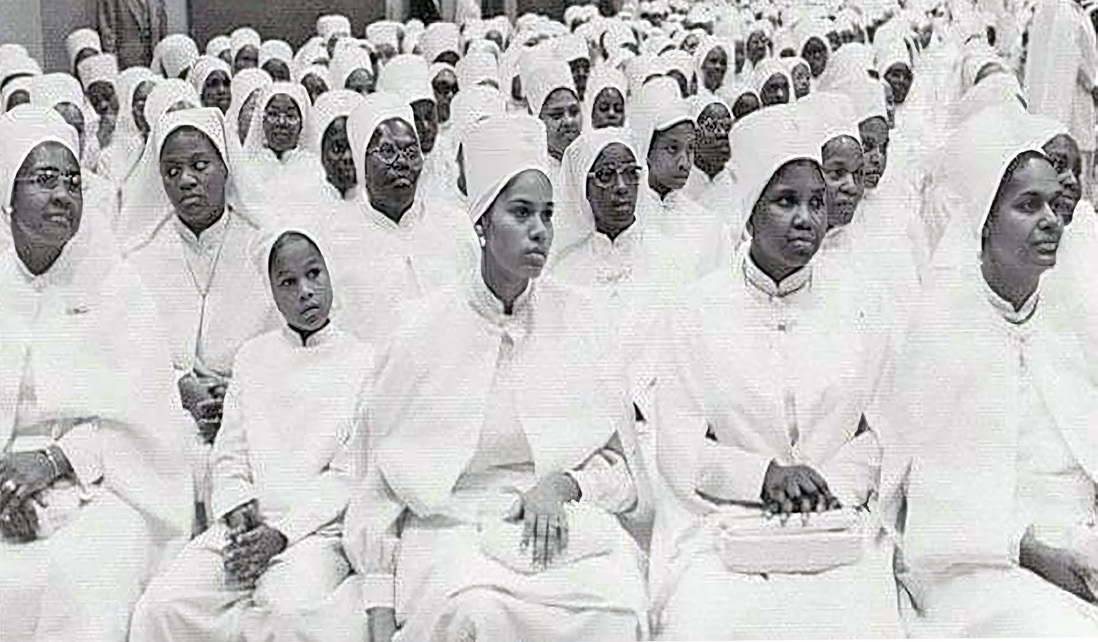
“She was and will always be one of my guiding examples of leadership. Her leadership was so profound because she understood that you cannot solve a problem if you are unwilling to go to its root. She had a remarkable ability to look beneath the surface and identify the deeper issues affecting Black women and girls. She understood our struggles, our strengths, our wounds, our hopes, and our potential. More importantly, she knew how to offer solutions that were practical, relatable, and rooted in the real experiences of Black women,” said Sister Nusaybah.
Sister Dr. Sabora Muhammad was a member of the Chicago M.G.T. Vanguard. She vividly remembers that same Madison Square Garden event. She first heard Minister Farrakhan when she was a Five Percenter (Nation of Gods and Earths). When she pushed through the crowd at the Garden and saw the women surrounding Minister Farrakhan to secure and protect him, she said to herself, “I don’t know who they are, but I want to be that” and she remembers thinking, “I want to do what they’re doing.”
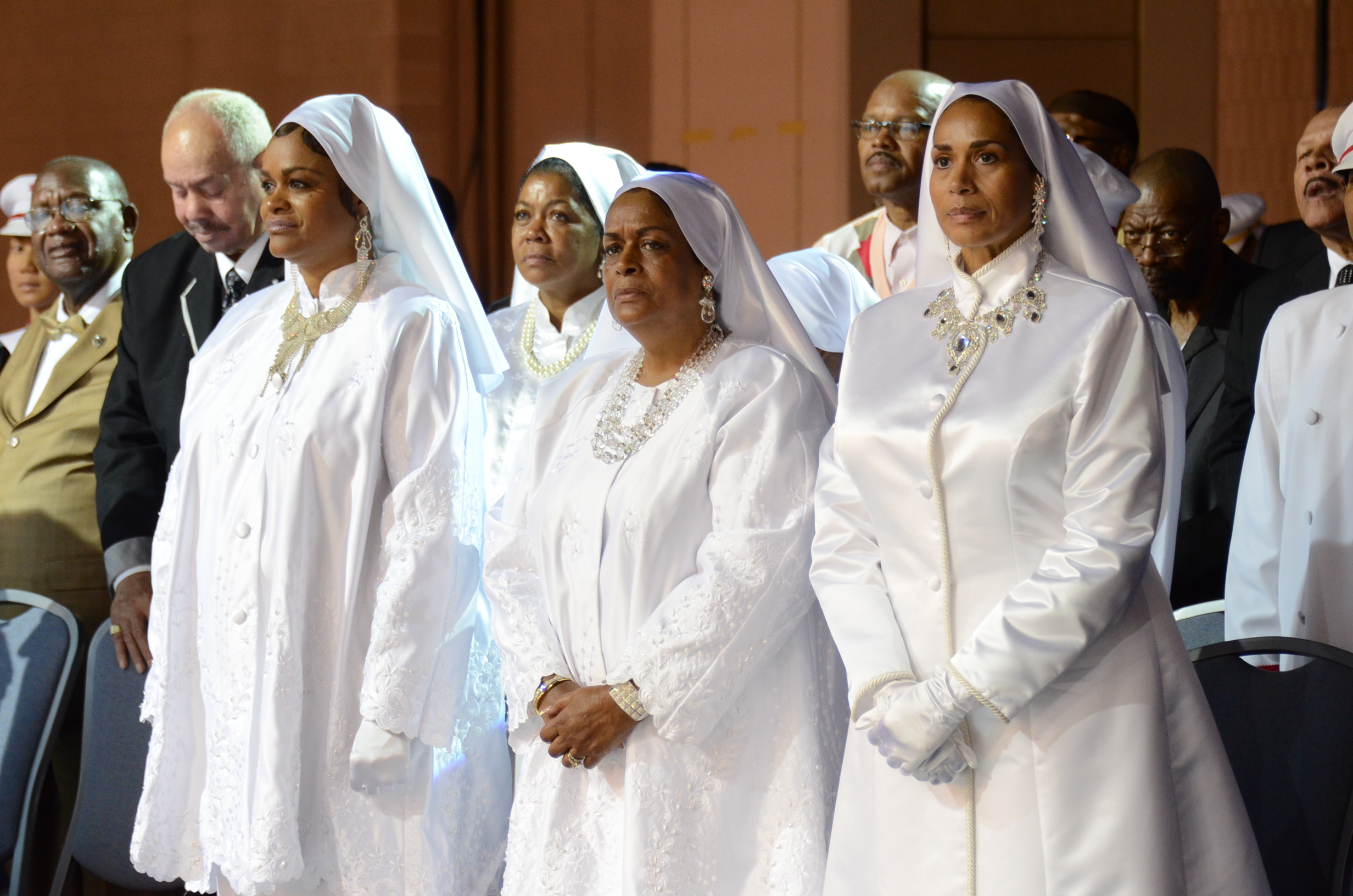
Sister Dr. Sabora later moved to Chicago and she told The Final Call that Sister Betsy Jean was a pillar in her adult life. “She exhibited that perfect balance of strength and softness,” she said. “She was disciplined. She was firm, unwavering. Yet she carried such a gentle, nurturing soul.”
Sister Betsy Jean asked about the women’s families, children, and households. Sister Dr. Sabora, who later became Mosque Maryam’s M.G.T. Vanguard Captain, believes she understood that “we could only do what we had to do to protect Minister Farrakhan if our home front was straight.”
The M.G.T. Vanguard are young women of the Nation of Islam ages 16-35 and are the warrior class of the M.G.T. and G.C.C., which was established by the Most Honorable Elijah Muhammad.
Sister Dr. Sabora still carries one piece of advice Sister Betsy Jean gave her directly: “Sabora, don’t dim your light for anybody, sister; you got to shine.”
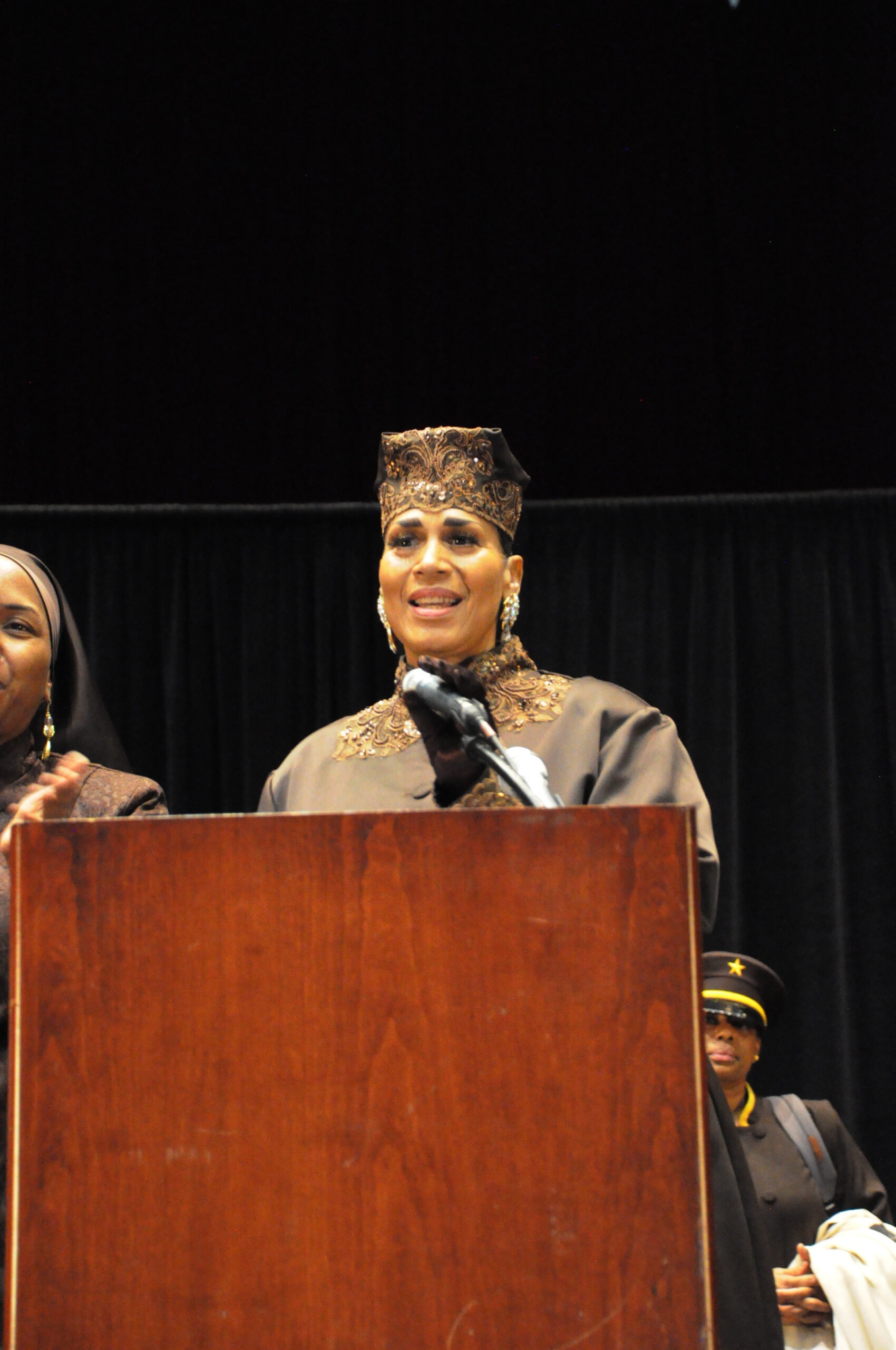 That balance of firmness and tenderness runs through nearly every account of those sharing their reflections about Sister Betsy Jean.
Sister Bronda Muhammad was also a Chicago M.G.T. Vanguard and remembers Sister Betsy Jean returning Sunday after Sunday to conduct inspections personally, even after her tenure as National M.G.T. Captain. “She was mothering,” Sis. Bronda told The Final Call. “She no longer had that direct responsibility, so she was really hands-on when she was around us.”
Sister Betsy Jean taught the M.G.T. Vanguard how to walk, how to dress, and how to hold a security post while remaining “deadly, but dainty,” said Sis. Bronda.
In the 1990s, Sis. Angela Muhammad arrived in Washington, D.C., from Buffalo and was assigned to a post at Sister Betsy Jean’s suite. She recalls a “quiet confidence” and “effortless grace” that reshaped how she understood service. “Her devotion to the sisterhood expanded my heart,” Sis. Angela said, adding, “and (it) inspired a deeper love for the M.G.T. through her powerful example.”
 A soldier
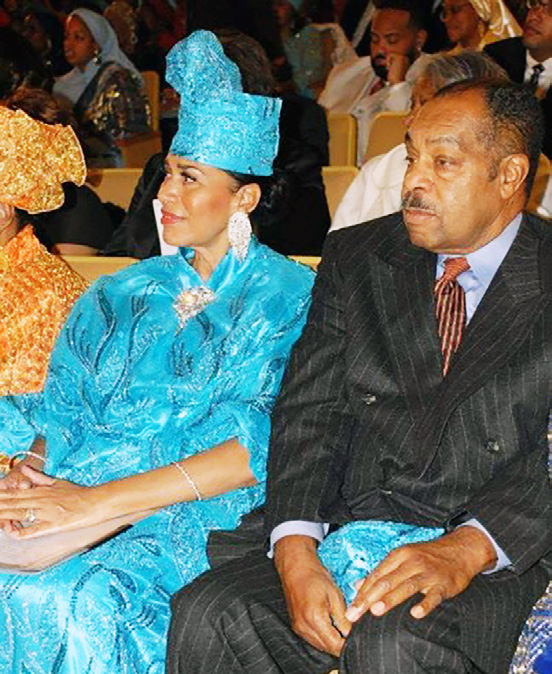
Baltimore Student M.G.T. Captain Leslie Muhammad remembers the choreography of Sister Betsy Jean’s workdays. She walked the security areas in flat shoes as sisters arrived for an event, then changed shoes when it was time to head toward the stage, where she remained on post throughout the program. She pushed her captains to be mindful of their appearance and encouraged Sis. Leslie to continue serving as long as she felt able. “She has always been my ‘shero,’” Sis. Leslie said.
Sister Victoria Muhammad, who served on Sister Betsy Jean’s personal security detail, explained that Sister Betsy Jean modeled a particular kind of femininity under pressure: firm, but never rough. “Whenever there was a situation, you would say, okay, what would Betsy Jean do?” Sis. Victoria said.
For Sis. Abiola Muhammad of the Chicago M.G.T. Vanguard, who entered the mosque in 1990 and trained under Sister Betsy Jean in both M.G.T. and M.G.T. Vanguard work, one of her sharpest memories is standing for hours at the United Center in Chicago during Saviours’ Day. Sister Betsy Jean gathered the young women beforehand and told them plainly what the assignment required. “She told each and every one of us that if we’re going to stand this post, we’re putting our lives on the line for the Minister,” Sis. Abiola told The Final Call. “If we did not want to do that, no hard feelings, no judgment, just fall out,” she recalled. No one fell out.
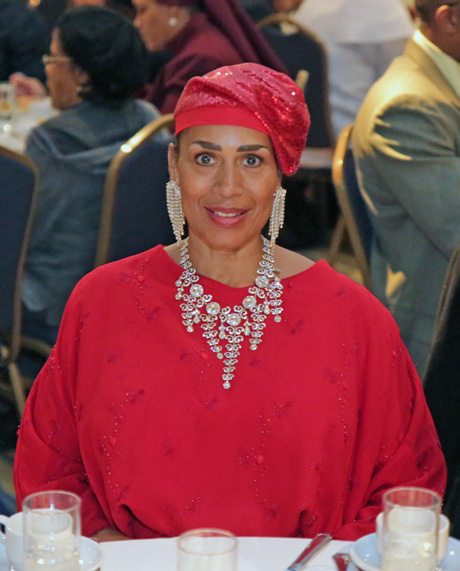
Her influence extended beyond the women she trained directly. The men of the Nation of Islam also regarded Sister Betsy Jean with honor and respect.
Student Minister Abdul Arif Muhammad, a member of the N.O.I. Shura Executive Council, serves as N.O.I. General Counsel and is a member of the N.O.I. Research Group. He offered his reflections, first, with Ayat (verse) 154 from Surah (chapter) 2 of the Holy Qur’an, the Islamic book of scripture which states: “And speak not of those who are slain in Allah’s way as dead. Nay, (they are) alive, but you perceive not,” he said.
“A grateful Nation is thankful to Allah for the beauty and spirit that is our Sister Betsy Jean Farrakhan. To me, she embodied the spirit and love of her father and mother (Mother Khadijah Farrakhan) to serve a grateful Nation. And as our National M.G.T. and G.C.C. Captain in the very early foundational days of the rebuilding of the Nation, she looked after the women and trained them as Allah directed they be trained. She was loved by the sisters then and she is loved now,” said Student Min. Arif.
 He also recalled his impressions from that historic Madison Square Garden event.
“A personal reflection for me, of my sister, was on October 7, 1985, at Madison Square Garden, in New York City. I see her proudly standing on post, at the point of the diamond of security around her father, along with others of her sisters, to protect the life of her father, during his ‘Power At Last Forever’ message. That same love and spirit that she had to protect the life of The Messiah, her father, the Honorable Minister Louis Farrakhan, was that same love of protection and that same extension of protection that she gave in care and training of the sisters and her Nation,” Student Min. Arif continued.
“She made an indelible impact in the work of the resurrection of the dead under the direction of her father, the Honorable Minister Louis Farrakhan. We can only say Allah-U-Akbar (God is the Greatest) and may Allah grant to the Honorable Minister Louis Farrakhan, all of the Farrakhan family His peace and comfort, and that we are grateful to Allah as a Nation for the service of our Sister Betsy Jean Farrakhan.”
Brother Sultan Muhammad is a close aide to Minister Farrakhan and a member of the N.O.I. Research Group. He first met Sister Betsy Jean on October 7, 1985. “I meet this stern woman, where ‘Captain’ oozes out of her very being! I could see her father in her. I could see her mother in her, and then I could see what God made in the womb of her mother. So, I have always bragged and boasted about her. I have always respected her. And I wanted to be brother enough, man enough, believer enough, to earn her respect,” said Bro. Sultan.
Student Minister Jamil Muhammad, who traveled with her during Minister Farrakhan’s extensive touring in the late 1980s and early 1990s, remembers her as “a steadying force.”
“She heard her father’s instructions, and she moved out with him,” he said. “She was a confidant and a counselor in Islam … accessible, warm, and supportive of anyone who sincerely wanted to help her father in the mission.” He wants her remembered, he said, not simply for her standing in the Nation, “which, of course, was understandably high,” but “for her genuine goodness as a person. She was a big sister to all of us.”
A servant and example
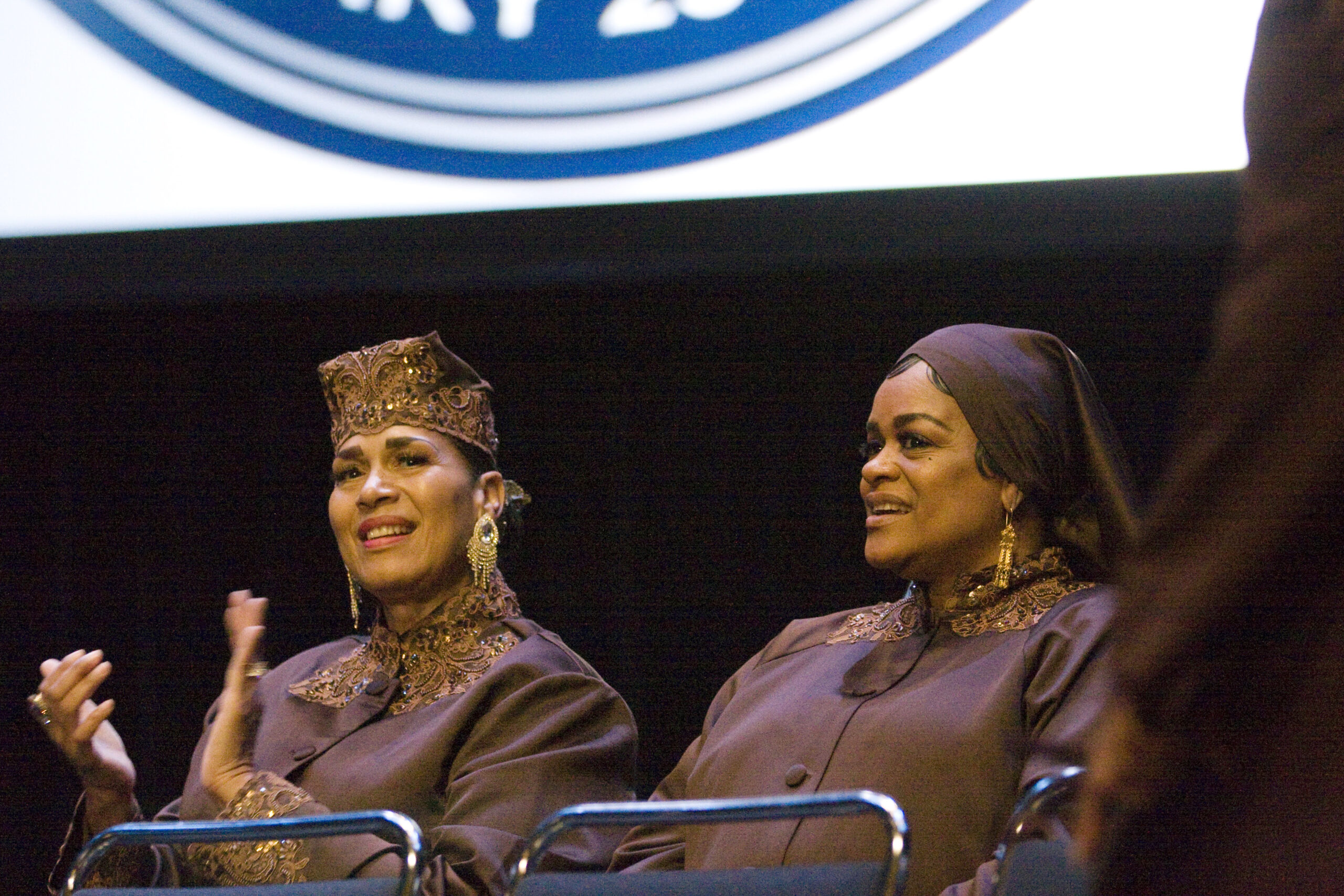
Sister Dr. Saaudiah Muhammad of Mosque Maryam in Chicago shared that her memories of Sister Betsy Jean included her emphasizing “the importance of carrying ourselves like a queen, especially when it came to our posture.”
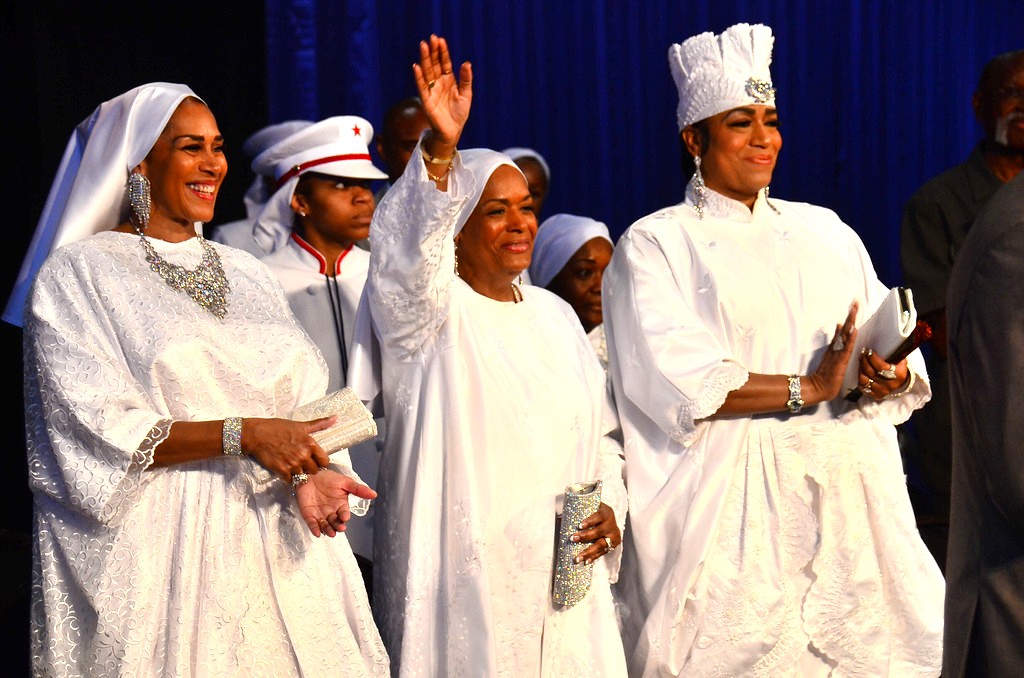
“She created in me an absolute love of being statuesque and shared that height was nothing to be ashamed of but to stand tall. As a new Muslim, I would ask her all sorts of questions, and she would indulge them as I believe she knew I was just striving to be the best Muslim and she was the best example of a M.G.T. I knew as the National M.G.T. Captain,” said Sis. Dr. Saaudiah.
Sister Johnna Muhammad is the Student Eastern Regional M.G.T. Captain, based in New York at Mosque No. 7. Sis. Johnna served as a Vanguard Captain in New York when Sister Betsy Jean was the National M.G.T. Captain.
“She was a formidable woman—one who was not only a trainer of women, but a woman whose strength, discipline, knowledge, and conviction earned the respect and high regard of men as well. Men revered her and held her in the highest esteem because she carried herself with authority, stood firmly upon the Teachings, and demanded excellence from those entrusted to her no-nonsense training,” said Sister Johnna.
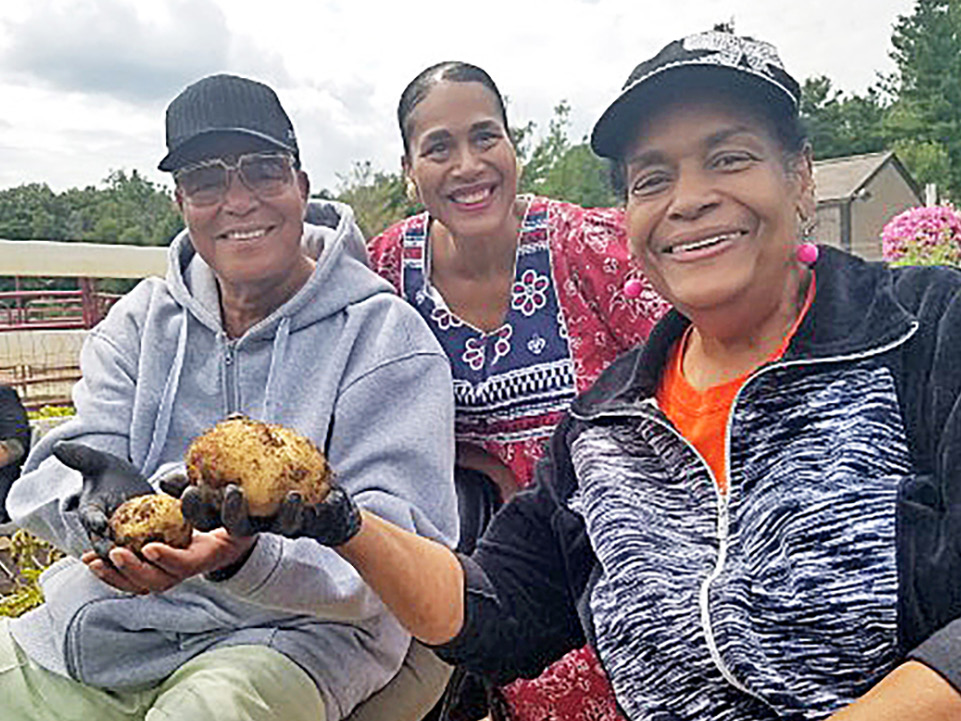
“Sister Betsy Jean was a product of a life dedicated to the service of the Cause of Islam. She gave herself to the work, to the training, to the development of others, and to the dissemination of truth. Her life stands as a testimony to what it means to be a soldier in the army of Allah (God). She will go down in the annals of time as one whose life and service left an enduring mark upon our Nation and upon all of those who were blessed to learn from her,” said Sis. Johnna.
Sister Betsy Jean Farrakhan trained generations of women, including many she may never have known she shaped. Her work in helping in the Most Honorable Elijah Muhammad and the Honorable Minister Louis Farrakhan, asked her to be a soldier, teacher, mother, and mirror for the beauty she insisted every one of us carried. Sister Dr. Sabora Muhammad said it best: “Generations of young women learned from her how to serve with honor, how to live with that armor of God … her legacy lives.”
Sister Betsy Jean was tall, statuesque and stunning that night in Madison Square Garden in 1985. Forty years later, to every sister who ever stood a post beside her, she still is.
