










We must establish, grow and support Black businesses
Anisah Muhammad — Staff Writer
“The So-Called Negro Must Do Something for Himself.”
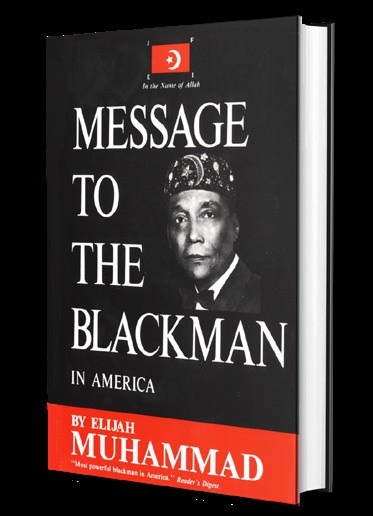
That is a chapter title in the book, “Message to the Blackman in America,” by the Most Honorable Elijah Muhammad, Eternal Leader of the Nation of Islam. On page 61, He writes, “There is no need for us, millions through the country, spending our money for the joy and happiness of others.
As a result, as soon as they throw us out of a job we are back at their doors begging for bread and soup.” The Honorable Elijah Muhammad questions, “Should we not sell our people everything they want or need?”
The Honorable Minister Louis Farrakhan, National Representative of the Most Honorable Elijah Muhammad, has, like his teacher, constantly taught on the importance of Black people spending their money in Black businesses.
“It appears that integration has only meant the surrendering of our dollars to others so that they can enhance their lives while our businesses close and our problems remain unattended.
We must look like a very foolish people in the eyes of others who nurse themselves to economic strength on our earnings and then abandon us and ridicule us as they advance and leave us further behind,” Minister Farrakhan said in an article published in The Final Call, titled,
“Rethink the Old Slavemaster-Slave Relationship.”
“We need to turn constructively inward, pool our resources intellectually and financially, and begin to build a future for ourselves and our children. We must patronize ourselves, as others patronize themselves. This is the way to build a viable economy and earn the respect of self and others,” Minister Farrakhan said.
Today, there are more than 4.5 million Black businesses in the U.S., according to the Brookings Institution, a nonprofit public policy organization and think tank. But what is the state of Black businesses as 2026 comes to a close?
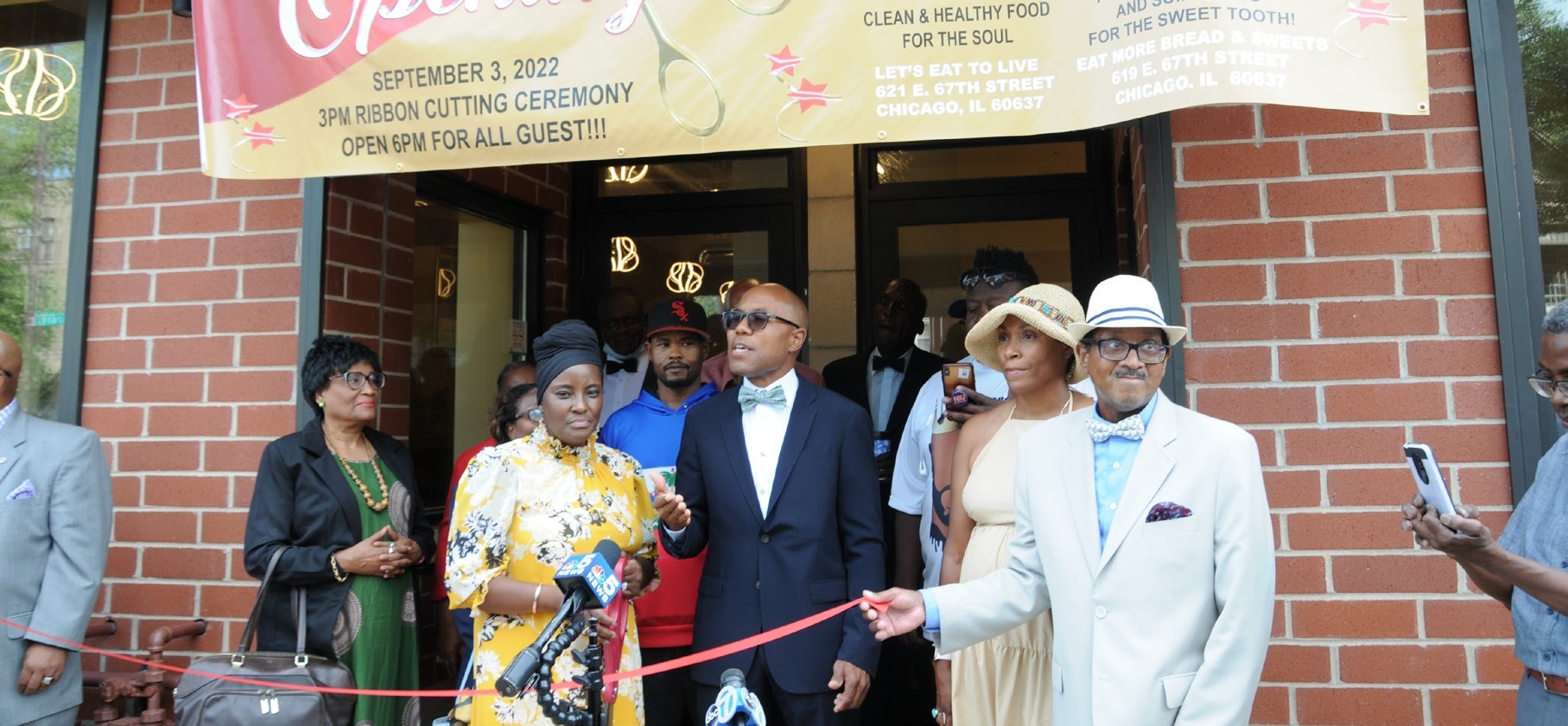
“It’s growing. I think Black businesses and Black economics are actually growing. There’s more opportunities and more education given out there for Black businesses,” restaurateur Sister Nahla Muhammad, founder and owner of Let’s Eat to Live restaurant in Chicago, said to The Final Call.
As an example, she pointed to FoodLab Chicago, a program where Black restaurant owners can get trained on finances, budgeting, how to run their business, menu engineering, how to do inventory and the best point-of-sale systems.
Most Black businesses are owner-operated firms without employees. According to the latest available 2023 Census data, Black-owned firms accounted for 14.4% of nonemployer businesses.

Approximately 201,000 Black-owned businesses are employer firms with at least one employee other than the owner, according to a U.S. Census Bureau infographic published in February. The businesses employed approximately 1.9 million people and paid nearly $70 billion in annual payroll.
Researchers with the Brookings Institution looked more closely at those numbers. They found that Black-owned employer businesses grew by 62% from 2017 to 2023. Yet Black-owned firms accounted for just 3.4% of employer businesses in 2023, while Black people represented 13.5% of the U.S. population, according to the Census Bureau.
Dr. Ken Harris, president and chief executive officer of the National Business League, founded by Booker T. Washington in 1900 to promote economic sovereignty and self-reliance among Black people, said to The Final Call that while Black businesses have expanded significantly, Black economic sovereignty has not grown at the same pace.
The challenges
Black businesses often face a litany of challenges that are exacerbated by systemic anti-Black racism. Those challenges include lack of access to capital, unequal lending outcomes, inflation, tariffs, operating expenses, low profitability, and difficulty attracting customers.
In a June 2025 research report on “How Racial Disparities in Small Business Ownership Affect Black Wealth and Economic Prosperity,” the Urban Institute, a nonprofit research organization, shared, “Racial inequalities prevail at each stage of business outcomes, however, contributing to the lack of wealth among Black individuals and communities.
Black individuals are less likely to form businesses, and the businesses they do form tend to be smaller in terms of size and commercial activity. In addition, Black families are less likely to hold any business equity.”
The National Bankers Association, an organization representing non-White-owned and women-owned financial institutions, analyzed findings from the Federal Reserve’s 2026 Small Business Credit Survey report on employer firms. The data further illustrated the significant financial strain Black-owned firms are experiencing.
The National Bankers Association highlighted key findings from the report: 34% of Black-owned firms rated their condition as poor, and 42% rated it as fair; 47% reported operating at a loss; and 50% cited credit availability as a financial challenge.
Many large banks are not lending Black applicants the money they request. The National Bankers Association pointed out that “at large banks, only 16% of Black applicants received the full amount they sought, compared to 48% of White applicants. And nearly half (48%) of Black applicants at large banks received nothing at all.”
Between 1888 and 1934, 134 Black-owned banks were established in the United States, according to a Library of Congress resource guide. As of June 2026, the Federal Deposit Insurance Corporation recognized only 24 federally insured Black-owned banks.
Those interviewed by The Final Call agreed that access to capital is one of the major challenges Black business owners face.
“Black businesses are starting to get some level of traction, but there needs to be a lot more work done. I think the biggest issue is the same: lack of access to capital and the lack of us as business providers to be able to work with one another to control our vertical aspect of business,” said Chicago-based entrepreneur and businessman Brother Abdul Akbar Muhammad.
“That is, if we’re in the restaurant business, some of our counterparts, such as the Arabs or the immigrants, they control the supply side because they have their own farms, the butcher shops, and all the way from farm to table,” he added.
Dr. Harris pointed out the need for Black businesses to scale. For him, simply owning a business is not enough. “If it doesn’t equal freedom or liberation but, most importantly, sovereignty, then why are we doing it?” he questioned.
“We have to move into true ownership because as of 2026, … post the signing of the Civil Rights Act in 1964, 62 years later, we find ourselves basically at the bottom of the economic spectrum in just about every single economic quality of life indicator,” he added.
He advised against being “solo entrepreneurs” and painted a picture of the landscape Black businesses exist in.
“Companies have dropped their supplier diversity programs, so we’re going to have to find new ways to position our businesses to be able to get contracts with major companies or small businesses that are purchasing in the community,” he said. “We have to create working capital, collateral, creditworthiness, cash flow management. Those all remain central constraints on Black-owned businesses.”
Dr. Harris also noted the importance of Black business owners owning and controlling their own data. “Would you rather have someone else controlling your infrastructure and information and data, or should our community control that information, especially when it comes to our personal information, fees, customer data, cybersecurity, platform dependency, etc.?” he said.
The power of the Black consumer
On page 174 of “Message to the Blackman in America,” in a chapter titled “An Economic Blueprint,” the Honorable Elijah Muhammad lists five points for Black people to follow:
One, “recognize the necessity for unity and group operation (activities)” two, “pool your resources, physically as well as financially”; three, “stop wanton criticisms of everything that is Black-owned and Black-operated”; four, “keep in mind, jealousy destroys from within,”
And five, “Observe the operations of the White man. He is successful. He makes no excuses for his failures. He works hard in a collective manner. You do the same.”
“Without the Black consumer, we have no real business,” Brother Abdul Akbar said. He added that Black people need to work through envy, jealousy and backbiting and “realize that without us being able to rely on one another, we won’t be able to advance.”
“I can go pretty fast, but we can go far as a whole. We can go far, and I witnessed that. I put together a distributorship. I can buy it directly from the manufacturer, and I didn’t do it by myself. It was a group of us that helped pull it all together.
So, it’s just a necessity for us to realize the importance of self-reliance, and the self that I’m speaking about is not just the individual. Us as a whole is the self,” Brother Abdul Akbar said.
Black buying power was projected to reach $2.1 trillion this year, according to Nielsen. For Dr. Harris, circulating those dollars with Black businesses is critical. He recommended organizations create online shopping directories of businesses in their neighborhoods to bolster community support.
“It needs to become more of a culture for us to be able to support our own as a first, as opposed to it being a last option,” Dr. Harris said. He challenged Black people: if just a percentage spent $100, $200, $500 or $1,000 on a particular day to support local Black-owned businesses, “could you imagine what that impact would be financially?”
“Let’s get proud about promoting how much money we spend with Black businesses, how many referrals we make, and from a corporate procurement standpoint, supporting companies that support us,” he said. “Why are we going to spend money with companies that don’t support Black-owned businesses?”
The Most Honorable Elijah Muhammad raised a poignant point. “You, the Black man, are the only members of the human race that deliberately walk past the place of business of one of your own kind—a Black man—and spend your dollars with your natural enemy. The so-called American Negro has never in the history of America been known to boycott or criticize the White man as he does his own kind.
He thus shows love for his enemy and hatred for his own kind,” he wrote in the chapter, “An Economic Blueprint.”
“We cannot demand economic power while overlooking the businesses that are in our communities and we don’t support those businesses. Shame on us,” Dr. Harris said.
The take-home message
Brother Abdul Akbar left the following message to Black business owners and consumers: “We as a people have to realize that we are all we got. … We have to realize that now is our time to be able to do it because others are pulling out.
And that’s the message for the Black consumer and the message for the entrepreneur. We have to be able to work together, and if we can’t, we will definitely suffer major consequences.”
Dr. Harris’ message? “Let’s take it back to the basics. Booker T. Washington had it right,” he said. “To Black business owners: Stop thinking small. Build institutions, not just businesses.
Compete for contracts, create jobs, own technology, control your supply chain and build enterprises that can survive beyond your lifetime and can be transferable to your children and grandchildren’s children.
To Black consumers: Your dollar is your economic vote. Every purchase is a decision of how a business grows, whose employees get paid and whose children inherit the wealth.”
He concluded: “Follow the sage words of the Honorable Minister Louis Farrakhan, as he has preached for his entire life ownership and economic independence as a people, and I think his leadership has gotten us this far. But he has also provided us with a vision for the future.”
Minister Farrakhan has continued his teacher’s warning: “Do for self or suffer the consequences.”
“The Honorable Elijah Muhammad lifted up a mighty example of doing for self for the Black man of America. Many said the Muslims operated mom-and-pop stores and made mockery of our humble beginnings. However, the Honorable Elijah Muhammad lifted up a light for all to see.
He was not working with the best minds in the country, but with those that society labeled as social misfits, the outcasts and the prisoners,” Minister Farrakhan said in an article published in The Final Call, titled, “The Key to Success: Do For Self.”
“There were very few people who worked with the Honorable Elijah Muhammad who were highly trained and highly learned. Yet, he showed us how to pool our resources, go to the earth and farm, thereby giving us the ability to do that which would one day enable us to be independent and gain the respect of the civilized people of the world,” he added.
He concluded the article with the words: “No one respects a beggar, and up until now we are beggars for a job, clothing, and education from the White man. No, Black man, the time has now arrived where you must beg no man. You must get up and do it for yourself.”
