










A well-funded, multi-platform digital ad campaign designed to promote anti- Muslim hate and impact elections in Europe and other countries was exposed in a 137-page report published Oct. 29 by researchers Marc Owen Jones and Sohan Dsouza. The report is titled, “Manufacturing the Great Replacement.”
The campaign began in October 2023, the year of the Oct. 7 Hamas attack on Israeli concertgoers and was continuing as late as October 2026, the report says. Its goal is to create anti-Islamic and anti- Muslim sentiments based on the “great replacement” conspiracy theory that argues the influx of immigrants from Muslim countries is aimed at becoming the majority population.
The campaign utilized platforms like Meta, YouTube, and TikTok. Forensic evidence points to Israel as the originator, the report claims.
The campaign named Qatar as the financier “directing migration, manipulating European institutions and seeking to ‘Islamize’ Europe.” The current Muslim presence in European countries is presented as evidence of an “Islamic takeover.” It is buttressed by imagery of Muslim conquests, inflammatory slogans and AI-generated parody songs.
The impact of the campaign resulted in 533 million exposures of “anti-Muslim, anti-migrant, racist and anti-Qatar” advertising in 30 countries, mostly in Europe. The total is “likely a massive undercount, and only accounts for advertising cost, as opposed to labor and commissioning costs.”
In addition to advertising, the campaign ran “branded and covert accounts” on Twitter/X and Telegram. A Change.org petition garnered 7,500 signatures in the name of a fake human rights organization and a “sockpuppet” network edited Wikipedia articles about Qatar, the report revealed.
Sockpuppet refers to a group of fake or misleading online accounts controlled by one person or organization, working together to look like independent people.
Calling the campaign a “multi-million-dollar machinery of hate,” Ibrahim Hooper, communications director of the Council on American-Islamic Relations (CAIR), said the ad campaign is a threat to democracy.
“Islamophobia is not just a domestic civil rights threat; it is being weaponized globally by bad actors and foreignlinked influence networks to manipulate elections, subvert democratic integrity, and target marginalized communities,” he said.
“This important investigation reveals the dark underbelly of transnational disinformation, showing how anti-Muslim bigotry and the xenophobic ‘Great Replacement’ conspiracy theory are systematically manufactured and bankrolled to achieve geopolitical goals.”
Advertising was placed through accounts and companies recorded in Vietnam, Brazil, Belgium, and through German-named TikTok advertiser strings, none with a disclosed connection to the countries targeted.
Money spent on the campaign reached millions of dollars and deleted ads often found their way back. Meta, for example, reported a $1.2 million spend in the first phase of the three-phase campaign. That is the highest advertising spend Meta has disclosed for any operation targeting European Union member states, the report says.
Meta, owner of Facebook, Instagram and other platforms, removed the phaseone network in about mid-May 2024; advertising resumed, however, under new identities in November 2024 and returned at scale in October 2025, highlighting the relative ease of bypassing platform legal requirements, the report says.
Phase-one buying in France ran through the months before the June 2024 European Parliament election, and United Kingdom (UK) buying stopped on May 17, 2024, days before the general election was called.
Phase-one focused mainly on Western Europe and the United States, with the U.S. accounting for 37% of the 266.8 million targeted exposures. As the campaign continued through phases 2 and 3, the U.S. was less of a target, the report says.
The campaign remains active in countries approaching major elections, including France and Italy in 2027. The campaign targeted the UK in the months leading up to the July/August 2024 anti-Muslim riots that occurred after the Southport murders, where the murders of three children were mistakenly reported as caused by a Muslim or an immigrant.
Marc Owen Jones, co-author of the report and an associate professor at Northwestern University in Qatar, suspects Qatar was chosen as the originator of the “replacement” effort in Europe because of the country’s role as a negotiator to end the U.S.-Israel war with Iran.
“Discrediting Qatar serves the interests of Israeli hardliners who oppose negotiated settlements and favor continued military confrontation, including with Iran,” Mr. Jones told The Final Call via email.
“The political logic is to make the mediator itself appear illegitimate. If Qatar can be portrayed as a dangerous sponsor of extremism, its efforts to facilitate negotiations involving Hamas or Iran become easier to dismiss as complicity with an enemy.”
Video ads in Europe include AI-generated Christmas messages like “Now Santa’s Name is Abu Baqar.” Another video stressed the Great Replacement narrative, opening with the warning “You are being replaced” and “Wake up!” over footage of Muslim crowds and public gatherings.
To appear credible, the campaign created three fake organizations, including “Citizens for Human Lives,” “European Extremism Monitoring Project,” and “One Peace Global.”
Pointing to an Israeli origin for the ad campaign, researchers found that one Wikipedia editing session in 2024 “included a fixed-line Israeli IP address” layered with campaign accounts and known German proxy exits “consistent with a proxy failure exposing an operator’s own presence in Israel.”
Edit metadata in the videos on the operation’s Telegram channel “puts their production on a Sunday-to-Thursday working week … on machines with Hebrew drive and folder names, and one machine’s clock moved back between 22 and 27 October 2024, the week Israel left daylight saving time.”
The Great Replacement theory relates to a White nationalist concept that non- White immigrants and certain ethnic groups are invading Europe and other nations with dominant White populations with an aim to “replace” them.
The answer, they propose, is remigration, which is the voluntary or forcible return of immigrants and often their descendants to the immigrants’ countries of origin.
President Donald Trump has weighed in on the concept, establishing an Office of Remigration in the State Department and implementing strong and often brutal deportation policies.
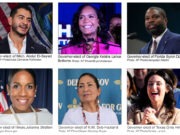
Anti-Muslim hate was rampant during the recent midterm elections, with President Trump and Vice President JD Vance targeting Muslim candidates like Abdul El-Sayed and Rep. Ilhan Omar (D-Minn,) with anti-Muslim remarks.
“None of this makes sense and none of it is true,” said Edward Ahmed Mitchell, CAIR deputy national communications director. Islamophobia and the term great replacement “are deliberate attempts to marginalize and sideline American Muslims as we become more active and visible participants in our democracy.”
In an email to The Final Call, Aftab Malik, in Australia’s Office of the Special Envoy to Combat Islamophobia, said scapegoating is often behind “replacement” movements.
In 2019, a White nationalist killed 51 people in two mosques in Christchurch, New Zealand. Prior to the shootings, he wrote a manifesto titled “The Great Replacement.”
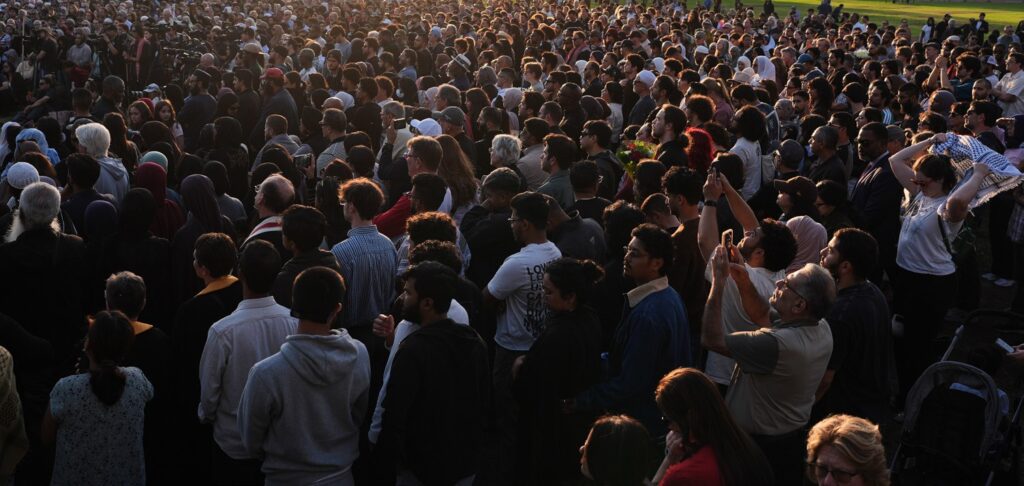
And earlier this year in San Diego, Calif., three Muslims were slain at the Islamic Center of San Diego in a case that was investigated as a possible hate crime. According to police, it was believed that the two suspects in that shooting met online and exchanged radicalized ideology.
Writings found in a vehicle reportedly used by the suspects described hatred toward various religions, including Islam, and races, police said. (See The Final Call, Vol. 45, No. 34)
“Some people may feel uncertainty about their identity, security, or future,” Mr. Malik wrote. “Unfortunately, such narratives can simplify complex social challenges by attributing them to communities, migrants, or religious groups. Rather than encouraging understanding and constructive solutions, these claims can deepen division, fear, and mistrust.”
