








Can the new Congress deliver, or will partisan gridlock continue?
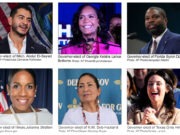
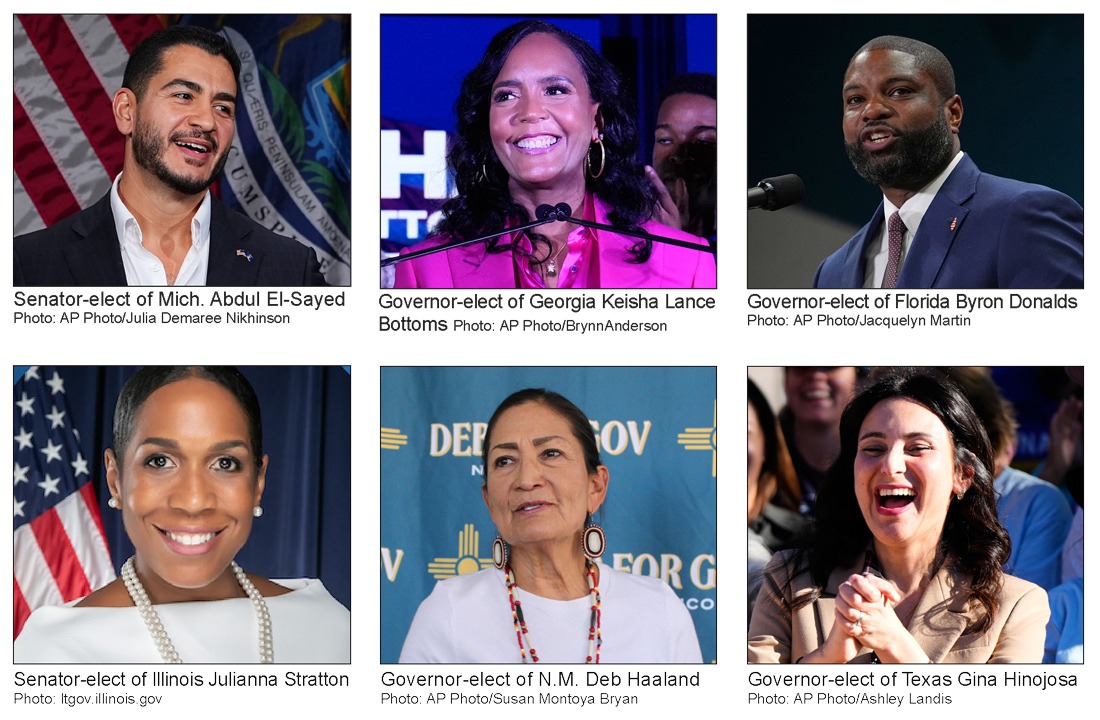
The 2026 U.S. midterms are over, but Americans now face the aftermath of a contentious campaign season. Attack ads in Michigan spent weeks telling voters to fear Abdul El-Sayed’s faith. Black Detroit answered at the ballot box. Mr. El-Sayed is now set to become the first Muslim to serve in the U.S. Senate, and he was not the night’s only first.
In Georgia, former Atlanta Mayor Keisha Lance Bottoms will become the first Black woman to serve as governor of any U.S. state. If the incoming House elects him in January, Hakeem Jeffries will become its first Black Speaker of the House of Representatives.
Voters handed Democrats control of both the House and the Senate in the Nov. 3 midterm elections. As of press time, Democrats hold at least 54 Senate seats, including the two independents who caucus with them. Frustration over the cost of living and the war in Iran shaped the vote. Many analysts and observers view the so-called “blue wave” as a rebuke of President Trump and his administration.
When the new Congress convenes in January, Democrats will decide which bills reach the floor. Their committees can also investigate the Trump administration. However, President Trump still holds veto power.
For families already struggling to buy groceries or pay for a doctor’s visit, one question matters most. What can or will Democrat lawmakers actually get done with the power voters just gave them?
Black women on the ballot and a first in Florida
A record 72 Black women appeared on ballots nationwide for Congress, governorships and other statewide offices, Essence reported, citing data from Rutgers University’s Center for American Women and Politics and Higher Heights. Ms. Lance Bottoms’ win in Georgia gave that record its national milestone.
In Washington, D.C., Janeese Lewis George won the race and will become the District’s first new mayor in more than a decade.
In Illinois, Julianna Stratton, the former lieutenant governor, defeated her opponent for U.S. Senate and will become the second Black woman to hold that office.
The night also produced a first in Florida, from the other side of the aisle. The Associated Press called the governor’s race for Republican Byron Donalds, who is set to become Florida’s first Black governor. “I want you to hear from Florida that we are still red,” Mr. Donalds told the crowd on election night. He also thanked President Trump for his support and for “being in my corner.”
Faith on the ballot
In Michigan, campaign attacks went after Senator-elect El- Sayed’s Muslim faith. Student Minister Troy Muhammad of Muhammad Mosque No.1 in Detroit said the frequent commercials he saw dwelled on Mr. El-Sayed’s religion, name called, and gave little attention to his policies.
The Black vote was the test. “I was very interested to see what the Black community in particular would do, and praise be to Allah (God), the Black community came out,” Student Minister Muhammad told The Final Call. “They didn’t allow that anti-Muslim hate to go down.”
He credited relationships the Honorable Minister Louis Farrakhan has built over decades with helping Black Detroiters see past the attacks. “Those relationships that the Minister has established reminded Black people that ‘the Muslims that I know aren’t like that’” he said, referring to the racist stereotypes spewed by El- Sayed’s opponent and from others.
A preliminary survey commissioned by the Council on American-Islamic Relations and CAIR Action widened the lens. Seventy percent of Muslim respondents said rising Islamophobia motivated them to vote. Eighty percent called the economy a major influence on their vote, and 80 percent said the same about what the survey called the genocide in Gaza.
Seventy-six percent cited the U.S.-Israel war on Iran as a major influence. Community Pulse conducted the survey by text from Nov. 2 to 4, gathering responses from 522 self-identified Muslim registered voters.
“Muslims, like our fellow Americans, are fed up with wars that destroy lives abroad while making it harder to feed our families at home,” CAIR and CAIR Action said in a joint statement. The organizations called on Congress to lower costs, improve health care and education, protect civil rights and end U.S. support for Israel’s military actions against Palestinians.
Loyalty at the polls did not mean trust. Among respondents who voted and answered the question about party choice, 80% said they primarily voted for Democrats. Yet 33% said neither party was more responsive to Muslim concerns.
The group also found at least 97 confirmed American Muslim electoral victories at the federal, state, and local levels across 21 states, including 38 state legislative wins.
Another 15 Muslims are leading in races that have not yet been called as of presstime, six Muslim candidates are running in races that are too close to call, and 50 Muslim candidates ran in races they did not win.
“Michigan, we did it. My name is Abdulrahman Mohamed El-Sayed, and I am so proud and honored to stand here as your senator-elect from the great state of Michigan. Up until right about now, you might have noticed, I always say ‘Inshallah’ or ‘God-willing’ whenever the outcome of this race was mentioned.
But today, tonight, we can turn that Inshallah into a ‘Alhamdulillah.’ For the right-wing ops, that just means praise be to God,” Senator-elect El-Sayed said during his Nov. 4 victory speech.
Money and the map
The cycle’s biggest donor spent like no one before him and still lost where it counted. Tech billionaire and former Trump administration figure Elon Musk contributed about $474 million to federal and state political groups through mid- October, according to a New York Times analysis of disclosures. That money paid for advertising and voter outreach.
In Texas, voters chose James Talarico for the U.S. Senate despite a costly effort by Musk-funded groups to elect Republican Ken Paxton. In Michigan, Musk’s America PAC spent about $9.2 million on ads supporting Republican Mike Rogers or opposing El-Sayed, according to WIRED. Voters went the other way in both states.
According to MSN, GOP groups spent $46 million on attack ads invoking terrorism, 9/11, and referencing Islam or Muslim groups against the Michigan Democrat. The influential AIPAC (American Israel Public Affairs Committee) also spent millions backing candidates in both parties.
What can Congress deliver?
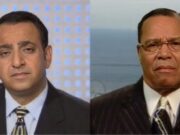
“Well, first, we have to be clear on what they are to deliver on,” Student Minister Abdul Arif Muhammad, a member of the Nation of Islam Shura Executive Council and Student General Counsel, told The Final Call. He pointed to many concerns: the price of gas, food, and health insurance, along with demands for accountability and an end to the war in Iran.
Rep. Jeffries gave House Democrats a timetable. “During the first 100 days, House Democrats must act to reverse the Medicaid cuts, restore SNAP funding, extend the Affordable Care Act tax credits … ,” he wrote in his Nov. 4 letter announcing his candidacy for speaker. He also called for eliminating Trump’s tariffs and ending the war in Iran.
Senate Democratic Leader Chuck Schumer said voters had told Democrats about “costs above all, chaos, and corruption.” The two leaders share broad priorities on affordability and accountability. Which House proposals the Senate takes up first remain open.

Atty. Abdul Arif Muhammad raised the question that will matter the moment President Trump rejects a bill. Does Congress have the votes to override him? An override requires two-thirds of those voting in each chamber, with a quorum present. With every member voting, that means 290 votes in the House and 67 in the Senate.
“The numbers tell the story,” he said. “In conclusion I would say what the Honorable Minister Louis Farrakhan said on February 25, 2024, during his Saviours’ Day Message, entitled: ‘What Does Allah The Great Mahdi and The Great Messiah Have To Say About The War in the Middle East?’
Minister Farrakhan said, ‘So go on and vote for who you want to. If I were you, I would vote for God. If I were you, and I am you, I’d vote for the Honorable Elijah Muhammad and the God that HE represents,’” Atty. Abdul Arif Muhammad stated.
Two Senate races remained uncalled as of Nov. 5. In Mississippi, Democrat Scott Colom and Republican Sen. Cindy Hyde- Smith were separated by a thin margin, with absentee and affidavit ballots still to be processed, The Associated Press reported. If Mr. Colom’s lead holds, he would become Mississippi’s first Black senator since Reconstruction.
In Alaska, Democrat Mary Peltola, Alaska Native/Indigenous, of Yup’ik heritage, held a narrow lead over Republican Sen. Dan Sullivan, with ranked-choice tabulation scheduled for mid-November.
Alaska’s governor’s race also remained uncalled, with Democrat Jonathan Kreiss-Tomkins leading the unofficial first-choice count. Even if Democrats win both seats and reach 56, they would remain 11 votes short of an override in the Senate with all members voting. Before a bill reaches President Trump, most major legislation must clear a separate 60-vote hurdle in the Senate.
Congress can still act without a vetoproof majority. Lawmakers can hold hearings on how the Medicaid cuts affect patients and use spending negotiations to press for relief.
For Black families who rely on Medicaid or SNAP, progress has a plain measure: whether they keep their coverage and get help buying food. A vote shows where lawmakers stand. Restoring benefits takes a bill that becomes law.
D.C. community activist Luci Murphy doubts either party will make the economic changes she believes people need. “But I’m really clear about the Democrats and Republicans being a duopoly,” she told The Final Call. Ms. Murphy praised El- Sayed and New York City Mayor Zohran Mamdani, arguing that the country needs to move away from capitalism.
Her challenge cuts deeper than the fight over votes and vetoes. How much are elected officials willing to change about the conditions that leave families struggling in the first place?
What can communities do now?
Senator-elect Talarico described love of neighbor as an obligation to serve Texans who voted against him as well as those who voted for him. Other winners also spoke about the importance of helping and serving their constituents, not being beholden to their political party but to the people.
Economist Julianne Malveaux was one of many panelists present on the midterm election night show of journalist and media personality Roland Martin. “Voting is the least we can do. After voting, we have to go to our communities and make the changes we need, hold community town halls, and meet with officials,” she said.
The Honorable Minister Louis Farrakhan, National Representative of the Most Honorable Elijah Muhammad, speaking in a different context, placed a parallel responsibility on Black people for the places where they live and not relying on politicians or the government to solve our problems.
“We have to make our own community a decent place to live and make it safe and habitable for our people,” Minister Farrakhan said in a January 2016 interview with The Final Call.
He spoke about ending senseless violence, developing education in Black communities and preparing people for self-governance. His charge puts the work of building safer communities in the hands of the people who live in them.
That work does not wait on Washington. It can go on while residents press their representatives to act on the local, state or national level. A family facing the loss of Medicaid can bring its story to a district office or a town hall. Neighbors can help one another navigate benefits and organize around the conditions they want changed on their own blocks.
When the new Congress convenes in January, voters will hold specific promises in hand. They can measure those promises against the bills their representatives introduce, the votes they cast, and the relief that actually reaches their communities.
