











Acquired Through MGN Online on 07/29/2026

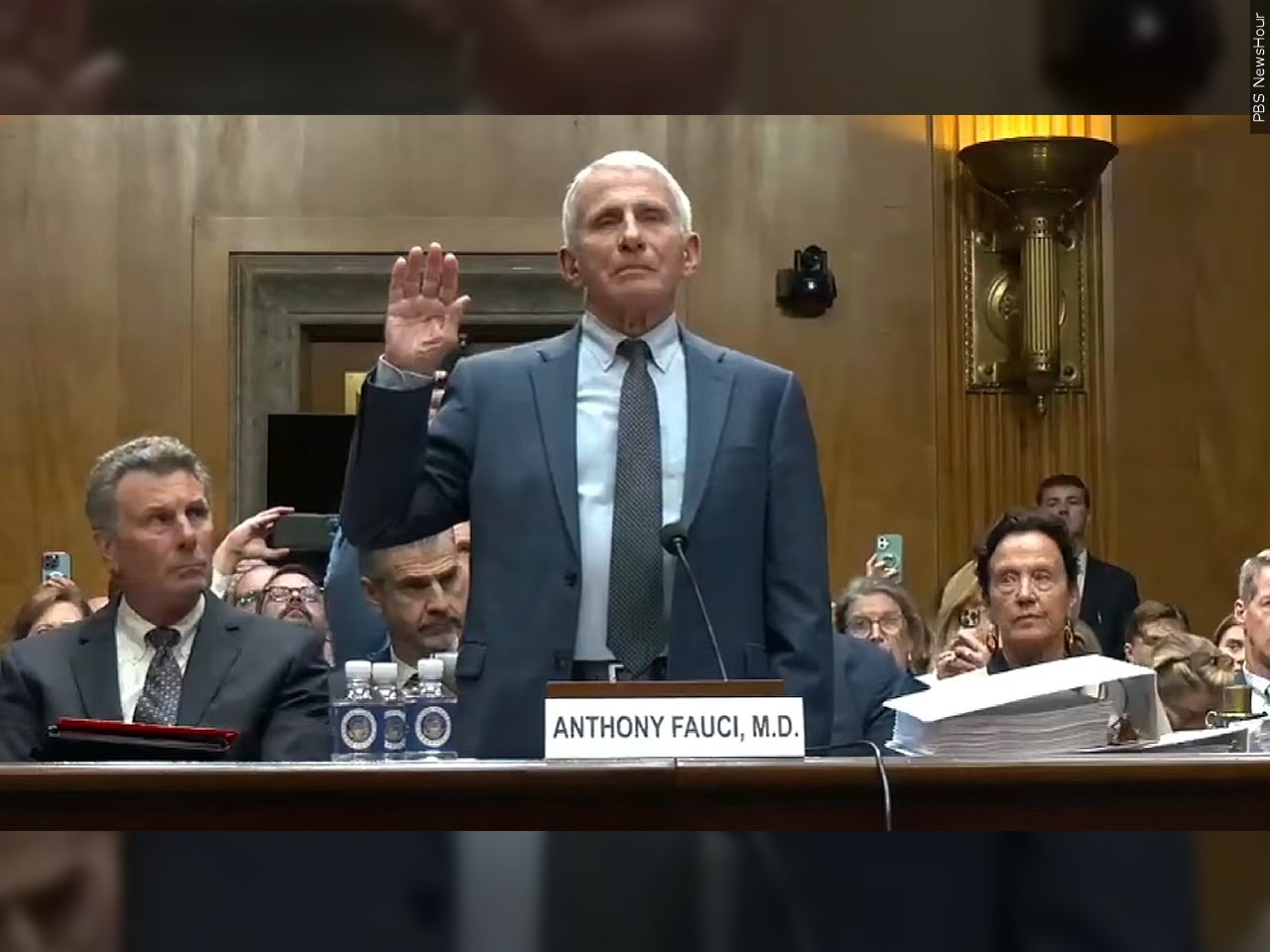
Dr. Anthony Fauci, the physician-scientist who was appointed as one of the people to lead the government’s COVID-19 pandemic response, was called to testify at a Senate Homeland Security and Governmental Affairs Committee hearing on July 29 examining the origins of the virus, U.S. funding of coronavirus research in Wuhan, China, and gain-of-function research.

Gain-of-function research refers to experiments that intentionally alter an organism or pathogen to give it new or enhanced biological properties.

Dr. Fauci served as the director of the National Institute of Allergy and Infectious Diseases at the National Institutes of Health (NIH) from 1984 to 2022 and as President Biden’s chief medical advisor from 2021 to 2022.

According to multiple sources, including Worldometers.info, approximately 1.2 million Americans died from the virus during the pandemic. Dr. Fauci was pressed for answers during the hearings.

---

Republican senators, led by Committee Chair Sen. Rand Paul (R-Ky.), grilled Dr. Fauci on his research in Wuhan and his response to COVID-19. They accused him of funding research that they alleged may have led to a laboratory origin of COVID-19, improperly handling federal records and resources and concealing information about vaccine-related adverse effects.

Dr. Fauci refused to answer all questions posed by the Senate during the nearly three-hour hearing, stating that on the advice of his attorneys, he was exercising his constitutional rights under the Fifth Amendment, which protects people against self-incrimination.

Senate Republicans criticized his refusal to testify. Senate Democrats argued that the hearing was a political exercise, stating that Dr. Fauci had already testified before Congress numerous times. One of Dr. Fauci’s attorneys attempted to intervene during questions, leading Sen. Paul to order security to remove the attorney from the room.

Sen. Paul also announced plans for the committee to consider holding Dr. Fauci in contempt of Congress for refusing to answer questions.

Questions asked during the hearing directed to Dr. Fauci pertained to: gain-of-function research; Dr. Fauci’s private communications and federal recordkeeping; why NIH-funded research involved the Wuhan Institute of Virology; laboratory safety oversight and NIH oversight of Chinese laboratories; vaccine safety and suppression of alternative COVID-19 treatments.

Regarding vaccine-related injuries and adverse effects, the senators brought up more than 1.6 million submitted reports from the Vaccine Adverse Events Reporting System (published weekly on page 8 of The Final Call), including more than 39,000 reports involving deaths. They also referenced individuals who reported suffering serious injuries after receiving COVID-19 vaccines.

In his July 4, 2020, message, titled “The Criterion,” the Honorable Minister Louis Farrakhan, National Representative of the Most Honorable Elijah Muhammad, warned Black people not to take the vaccine. Regardless of the physical origins of COVID-19, he described the virus as a “pestilence from heaven.”

“Don’t take the vaccines. There are 14 therapies that are in the world today that we can use to fight against the COVID virus. America, you won’t solve it. The scientists of the world, you won’t solve it,” he said. “I want to tell you what will solve it. This virus is a pestilence from heaven so scholarship from hell can’t deal with a pestilence that came from heaven.”

—Anisah Muhammad, Staff Writer Subprime auto loans trap Black, low-income families in cycle of debt

Millions of Americans rely on a car for work, school, healthcare, and daily life. For Black families and low-income households, buying a car often means facing predatory lending practices that take away wealth and threaten their stability, according to a new report from the Center for Responsible Lending (CRL).

The report, released in June, called “We Woke Up to Them Taking Our Car: Borrowers’ Experiences with Subprime Auto Lending,” shows that auto dealers and lenders often push vulnerable people into risky loans.

This leads to missed payments, defaults, and aggressive repossessions at levels not seen since the Great Recession (2007-2009). In 2025, auto loan debt reached a record $1.67 trillion, and those who can least afford it are suffering the most.

A system rigged from the start

CRL’s research, based on focus groups and interviews, shows that deception is common in the car sales process. Borrowers said dealers used high-pressure tactics to raise costs and push people into loans they did not fully understand. Many were told they only qualified for one loan, so they felt forced to accept terms they could not afford just to get a car.

“I feel like I was definitely swindled,” said Kaittay Cius of Florida, a focus group participant. “They told me it would be $200 a month for four years, but that wasn’t true.”

This is not a rare problem. The report found that dealers often hide important information or exaggerate the value of add-on products, leaving borrowers with thousands of dollars in hidden costs for useless warranties and services. There are also no real rules to make sure borrowers can actually repay these loans.

A tax on being Black and low-income

The racial gap in this market is clear and well-documented. Research from Rice University, cited in the CRL report, estimates that about 80,000 auto loan applications are denied each year because of racial bias. Even when approved, Black and Latino borrowers pay about 0.7% more in interest, or $410 more over the life of a loan.

This gap remains even when credit scores and income are the same. That might not sound like much, but for families struggling to pay for gas and diapers, every bit counts.

Co-author of the CRL report, Lucia Constantine, explains this is not an accident. “This report shows how the advantages auto dealers and lenders have over consumers result in exploitation,” she said. “Our government must establish guardrails to protect consumers, like it did in the mortgage market.”

These findings match research from UCLA’s Lewis Center, which found that Black and Latino neighborhoods have more auto debt per borrower, and that “race and ethnicity are stronger predictors of auto debt levels than income.” Predatory lending is taking wealth from Black and Latino communities and making it harder for families to build a stable future.

The nightmare of repossession

When borrowers fall behind on payments, the consequences come quickly and are harsh. The CRL report describes aggressive repossession tactics, like using “kill switches” or starter-interrupter devices that can stop a car while it is being driven.

This creates dangerous and embarrassing situations. Many borrowers wake up to find their only way to get to work is gone after missing just one payment. “We woke up to them taking our car,” is how one focus group participant described the experience.

A call for action

Subprime borrowers pay about twice the interest rate of prime borrowers, with an average APR of 20%. This puts huge financial stress on them. The CRL is urging federal and state leaders to act quickly, including:

– Implementing the FTC’s Combating Auto Retail Scams (CARS) rule.

– Banning dealer interest rate markups and capping interest rates.

– Creating an “ability-to-repay” standard for auto loans.

– Outlawing the use of kill switches while a vehicle is in motion.

Today, low-income consumers are struggling while the wealthy do well. Owning a car has become another challenge in the fight for economic justice. Without action, Black and low-income families will keep facing debt, discrimination, and despair just to get to work.

The Honorable Minister Louis Farrakhan has reminded us to live within our means and the consequences of too much debt. In a message he delivered October 9, 2011, for the 16th anniversary of the Million Man March, titled, “Unite Behind Elijah Muhammad’s Program and Position,” Minister Farrakhan spoke of college debt, but the principle can be applied to other areas.

During his message he cautioned, “You send your children to college and you expect that their college education is going to get them a job. But since you didn’t have the money, they’re in debt. Coming out of four years of college in debt and they’re constantly being reminded of what ‘they owe.’ So not only is America in debt, the American people are in debt! And debt is another form of slavery.”

—Nisa Islam Muhammad,

Staff Writer