







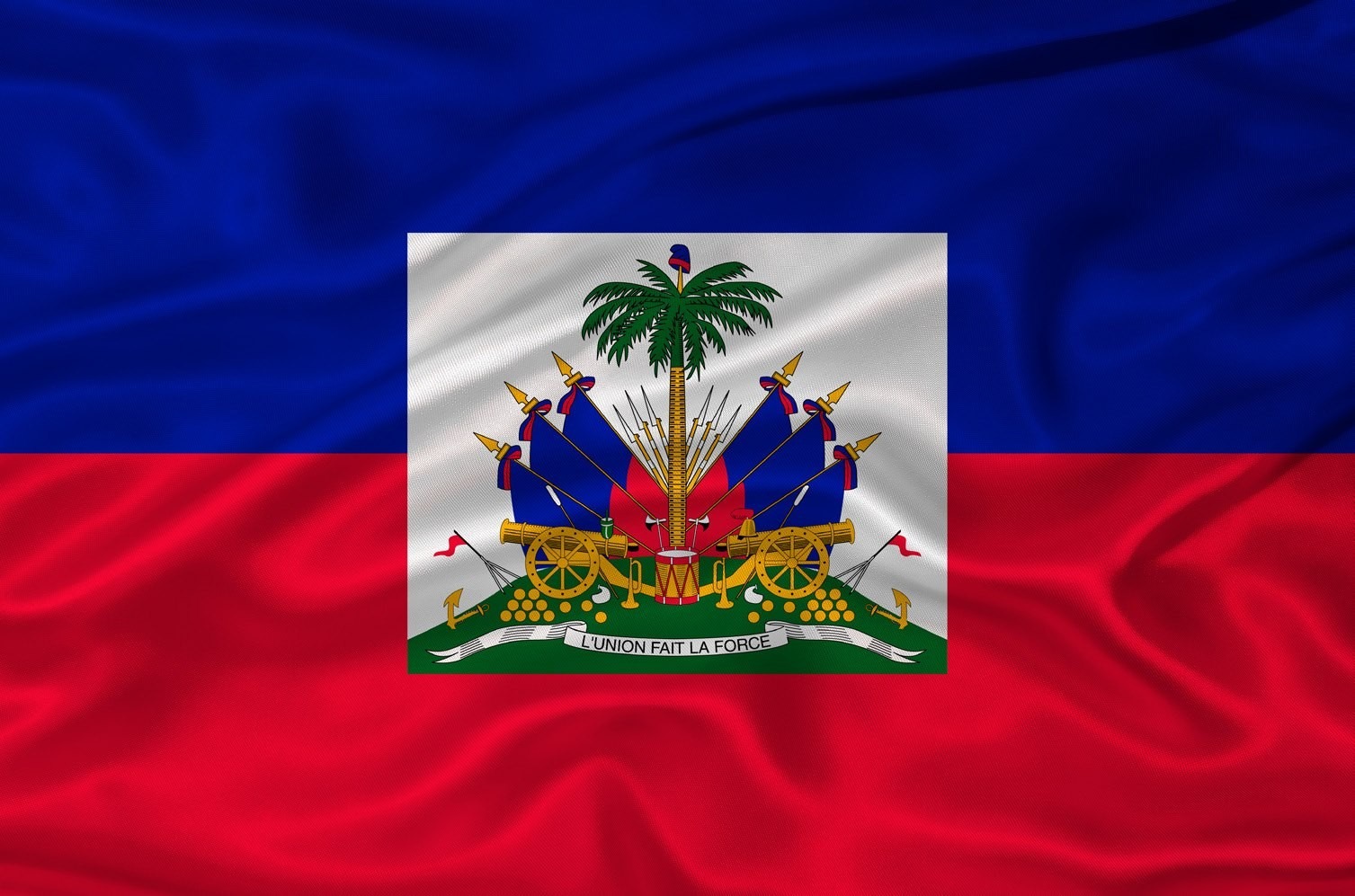

What if the poorest nation in the Western Hemisphere was never poor at all—but robbed?
Haiti’s story is not one of failure. It is one of thefts, disguised for two centuries as diplomacy, aid, and “stability.” In 1804, enslaved Black Africans did what no other nation on Earth had done before:
They defeated the armies of Napoleon Bonaparte, one of the most powerful military forces in the world, and declared themselves free. Haiti became the first independent Black republic in the Western Hemisphere, the second independent nation in the Americas, and a living rebuke to the entire architecture of slavery.
The White world never forgave them for it.
In 1825, France returned to Haiti—not with soldiers, but with warships anchored menacingly off the coast, and an ultimatum. Pay 150 million francs in exchange for France’s “recognition” of Haitian independence, or face invasion and re-enslavement.
Haiti, a nation founded on the blood of the formerly enslaved, was forced to pay for its own freedom.
“Haiti won its independence on the battlefield in 1804. There was nothing left to negotiate,” says Attorney Joseph Makhandal Champagne, Nation of Islam Representative to Haiti, in an interview with The Final Call. “What France demanded in 1825 wasn’t a debt. It was ransom. They were charging a nation for the crime of freeing itself.”
The sum—later reduced to 90 million francs, still an astronomical figure—was calculated to compensate French colonists for the “loss” of their human property. Haiti was, in effect, billed for freeing its own people.
Atty. Champagne does not soften the framing: “Call it what it is—financial slavery. It was designed to be genocide against a nation—not with bullets, but with balance sheets.”
The numbers bear this out. Haiti spent an estimated 122-125 years paying off the debt and the loans it took out—mostly from French banks and later American ones—just to service it.
Some economists estimate the total drain on Haiti’s economy, adjusted for lost growth and compounded interest, could be worth over $20 billion in today’s dollars.
The New York Times’ 2022 investigative series, “The Ransom,” calculated that Haiti paid its former colonizer the modern equivalent of $560 million in wealth extracted—money that could have built schools, hospitals, and infrastructure instead.
Judge Lionel Jean Baptiste explained that in 1806, the U.S. imposed a trade embargo on independent Haiti as part of a broader policy to isolate the Caribbean country, and it refused to recognize Haitian independence until 1862. Decades later, the U.S. invaded and occupied Haiti from 1915 to 1934, gaining and exercising extensive control over Haiti’s finances.
Judge Baptiste further explained that the U.S. occupation led to constitutional changes that allowed foreign land ownership. The Caribbean country has experienced more than 30 coups and violent regime changes, “much of it by military personnel that were imposed by the United States,” Judge Baptiste said.
U.S. compounds Haiti’s misery
Haiti’s debt did not end with France. In 1910, the National City Bank of New York— the institution that would become Citibank— took a controlling interest in the Banque Nationale de la République d’Haïti. Five years later, the United States occupied the country outright, seizing $500,000 from Haiti’s national reserves and controlling the country’s finances until 1947.
Pastor Frantz Ulysse, who heads the 1st Haitian Church of God of Prophecy, has spent years studying this pattern of external control. He describes it as a system built not to help Haiti stand, but to keep it kneeling. He argues that every time the country has tried to assert economic independence, foreign interests— political and financial—have found a way to intervene.
Rev. Dr. Josephis Dafils of the Haitian American United for Change frames the crisis in similarly structural terms, pointing to how foreign-backed coups, from the ousting of Jean-Bertrand Aristide in 1991 and again in 2004, consistently followed moments when Haitian leadership pushed for economic sovereignty or raised the demand for French restitution.
No discussion of Haiti’s engineered instability is complete without Jean-Bertrand Aristide—a former Salesian priest turned politician who became one of the most consequential and contested figures in Haiti’s modern history.
Aristide was democratically elected president of Haiti in 1991 and again in 2001, serving terms from 1991 to 1994, from 1994 to 1996, and from 2001 to 2004. Between those terms.
He lived in exile twice—first from 1991 to 1994, after being ousted in a military coup just months into his first term, and again from 2004 to 2011, after a second coup widely thought to have been backed by foreign powers.
Mr. Aristide’s offense was not mismanagement. His offense was popularity. He was a voice for Haiti’s poor majority, and that made him a threat to the arrangements that had long benefited foreign interests and Haiti’s entrenched elite. Twice, when Haitians chose him at the ballot box, outside forces made sure that choice did not stand for long.
Observers widely note the complicity of foreign colonizers in indigenous Haitian leaders they helped to put into power to aid in bilking the nation of its resources. Examples are the administrations of Francois “Papa Doc” Duvalier and his son, Jean-Claude “Baby Doc” Duvalier, who ruled from 1957 until 1986.
They were known for their ruthless brutality and use of a militia known as the Tonton Macoute. Papa Doc had once declared himself “president for life.” He died of natural causes in 1971.
Baby Doc became the youngest head of state, inheriting the mantle at age 19. A popular uprising forced him to flee to France in 1986. He returned to Haiti in 2011 to face corruption charges and died of a heart attack in 2014.
Atty. Champagne describes this cycle as economic pressure that creates desperation; desperation destabilizes government; unstable government weakens institutions; and weak institutions invite more exploitation. “It’s a wheel that keeps turning,” he says. “And every time it turns, the Haitian people are the ones crushed beneath it.”
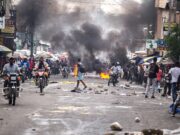
The global media narrative around Haiti often stops at the surface: gang violence, political chaos, natural disasters. Rarely does it ask why. Rarely does it connect the 2010 earthquake— which killed over 200,000 people—to a nation that had already been stripped of the fiscal capacity to build earthquake-resistant infrastructure, precisely because it had spent a century sending its wealth abroad.
Rev. Dafils calls this the “manufactured instability” narrative—a convenient story that allows the world to look at Haiti’s suffering and shrug, as though the nation’s condition were inevitable rather than engineered.
Rev. Ulysse goes further, arguing that international aid organizations following the earthquake often did more to enrich outside contractors than to rebuild Haitian communities—a pattern watchdog groups documented after the American Red Cross built only six permanent homes despite raising nearly half a billion dollars for Haiti relief after the earthquake.
And yet, Haiti stands
“You cannot talk about Haiti without talking about the spirit of its people,” Atty. Champagne says. “This is a nation that has been sanctioned, occupied, indebted, and abandoned—and still, they organize. Still, they build. Still, they sing. That resilience is not an accident. It is the same spirit that defeated Napoleon’s army. It never left.”
That spirit is the throughline connecting Haiti’s revolutionary past to its present-day organizing. In 2011, the Honorable Minister Louis Farrakhan, National Representative of the Most Honorable Elijah Muhammad, traveled to Haiti and, standing on Haitian soil, invoked the names of the revolution’s architects—François Makhandal, Dutty Boukman, Dessalines, Toussaint Louverture, and Henri Christophe—calling on their spirits to rise again in the Haitian people.
It was not a ceremonial gesture. It was a reminder that the same forces that broke the chains of slavery in 1804 still live in the nation’s DNA.
In a message he delivered in downtown Port-au-Prince near the National Palace on December 14, 2011, during his tour of various Caribbean islands to share the Teachings of the Most Honorable Elijah Muhammad, Minister Farrakhan said in part, “[W]here is Toussaint now?
Where is Dessalines now? Where is Cristophe now? Where is Boukman now? I’m looking at Toussaint! I’m looking at Christophe! I’m looking at François Makandal! I’m looking at Dessalines! They are in you! So, rise up Haiti! Take back your land! Take back your heritage!”
If the last two centuries were defined by outside forces extracting from Haiti, Atty. Champagne believes the next chapter must be defined by Haitians building for themselves.
“We are not waiting for France or the United States to have a change of heart,” Atty. Champagne says. “Economic self-sufficiency is the only reparations Haiti can fully control. We build our own institutions. We train our own people. We keep the wealth that we generate inside our own communities.”
This is not a rejection of accountability from foreign powers; it is a refusal to let that accountability be the only strategy. Ulysse and Dafils echo this sentiment in their own work, emphasizing that faith-based and community organizing must fill the gaps left by governments that have failed Haiti from both inside and outside its borders.
Haiti’s story has for too long been told as one of misfortune. It is time to tell it as what it actually is: the story of a nation punished for winning its freedom, taxed for its own liberation, and blamed for the poverty that punishment produced. The debt was paid. The interest has never stopped accruing—not in francs, but in stolen decades, stolen infrastructure, stolen lives.
Haiti did not fail. Haiti was failed—by France, the United States, and international institutions that have spent two centuries treating Black self-determination as a threat to be managed rather than a right to be respected.
“We have the most beautiful beaches, the most beautiful food, and fortresses like the Citadel—one of the wonders of the world, built by us after independence,” Rev. Dafils says. “We have everything we need. What we need now is real Haitian empowerment.”
That is the reckoning still owed to Haiti— not sympathy, not another cycle of aid that enriches everyone but Haitians, but power returned to the people who have fought for it since 1804.
