









New Jersey attorney Joseph Makhandal Champagne never imagined leaving his birth country. He remembered Haiti fondly, as a paradise. Now, he and other Haitian Americans find it difficult to return home.
“If Haiti was in a stable condition, a lot of Haitians would find themselves going back home without even being pushed to go back. They will willingly sell everything they have and relocate back home because that’s where we came from,” Atty. Champagne, Haitian Representative from the Nation of Islam, said to The Final Call.

“We did not experience the kind of abject poverty and manufactured crisis of gang violence and gang conflict and hunger that we see today. It’s almost like we were forced to go into exile from our own land,” he added.
He and other Haitian Americans are fighting for the U.S. to implement a Marshall Plan for Haiti that would allow the Caribbean country to rise after Western powers have worked to destabilize it.
“The plan is just a tactic, but the strategy is the fight to have some economic recovery and development for Haiti,” Cook County, Illinois, Judge Lionel Jean Baptiste said to The Final Call. He and others first called for a Marshall Plan after the 2021 assassination of Jovenel Moïse, the late president of Haiti.
“A number of us got together and said, look, we really need a Marshall Plan for redevelopment of the nation. We are in constant turmoil, constant crises and we need to find a way to engender economic development,” he said.
Judge Baptist and others are pushing forward a congressional bill, H.R. 1114, the L’Ouverture Economic Development Plan for Haiti, which would authorize the establishment of a Haitian American Enterprise Fund, described as a U.S.-supported investment fund to mobilize the Haitian American diaspora, private and public sector resources and expertise for Haiti’s economic development.
Collectively, Haitian Americans and the global diaspora send more than $4 billion annually in remittances to their friends and loved ones in Haiti. The bill aims to channel the resources already in the Haitian diaspora into a more structured approach to Haiti’s development.
It would authorize Congress to appropriate $1 billion annually for six fiscal years. After six years, the fund would be required to repay the U.S. Treasury in full and would terminate.
Advocates for the bill include the Coalition of Haitian American Organizations in the Chicago Area, the National Haitian American Elected Officials Network, the Haiti Renewal Alliance and the Haitian Congress to Fortify Haiti.
Atty. Champagne said the enterprise fund would shift U.S. policy away from repeated crisis response and toward a long-term model of investment, private-sector development, institutional capacity, and Haitian diaspora participation.
Judge Baptiste sees the enterprise fund as a way to rebuild Haiti, the world’s first independent Black nation, after decades of destabilization. “Haiti has been impoverished by the war that’s been waged against it for having fought to liberate itself,” he said.
He explained that after Haiti defeated the French and expelled the foreign country from its land, becoming free and independent, Haiti helped Latin American countries liberate themselves from Spain and other colonizing countries may have influenced Black people in the U.S. to rebel against their slave masters.
“Haiti became a danger because it attacked the fundamental system that undergirded Western society, and so it then suffered the consequences, the wrath of the slave masters, the slave systems internationally,” said Judge Baptiste.
In 1825, a mere 21 years after its independence, France demanded Haiti pay 150 million francs in indemnity, roughly $20 to $30 billion today, according to modern estimates. (See related story on this page.)
Just as Haiti once rose as a beacon of Black freedom and independence, Haitian Americans are fighting to see their home country rise again through economic development and government reform.
“We are constantly in transition. That needs to stop. A legitimately elected national government would have greater authority to set national priorities, negotiate international partnership, decentralize development, create conditions for diaspora return and investment, and work with the enterprise fund on long-term reconstruction,” Atty. Champagne argued.
A nation in turmoil
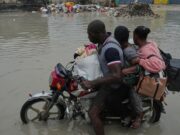
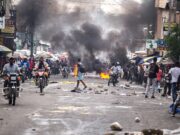
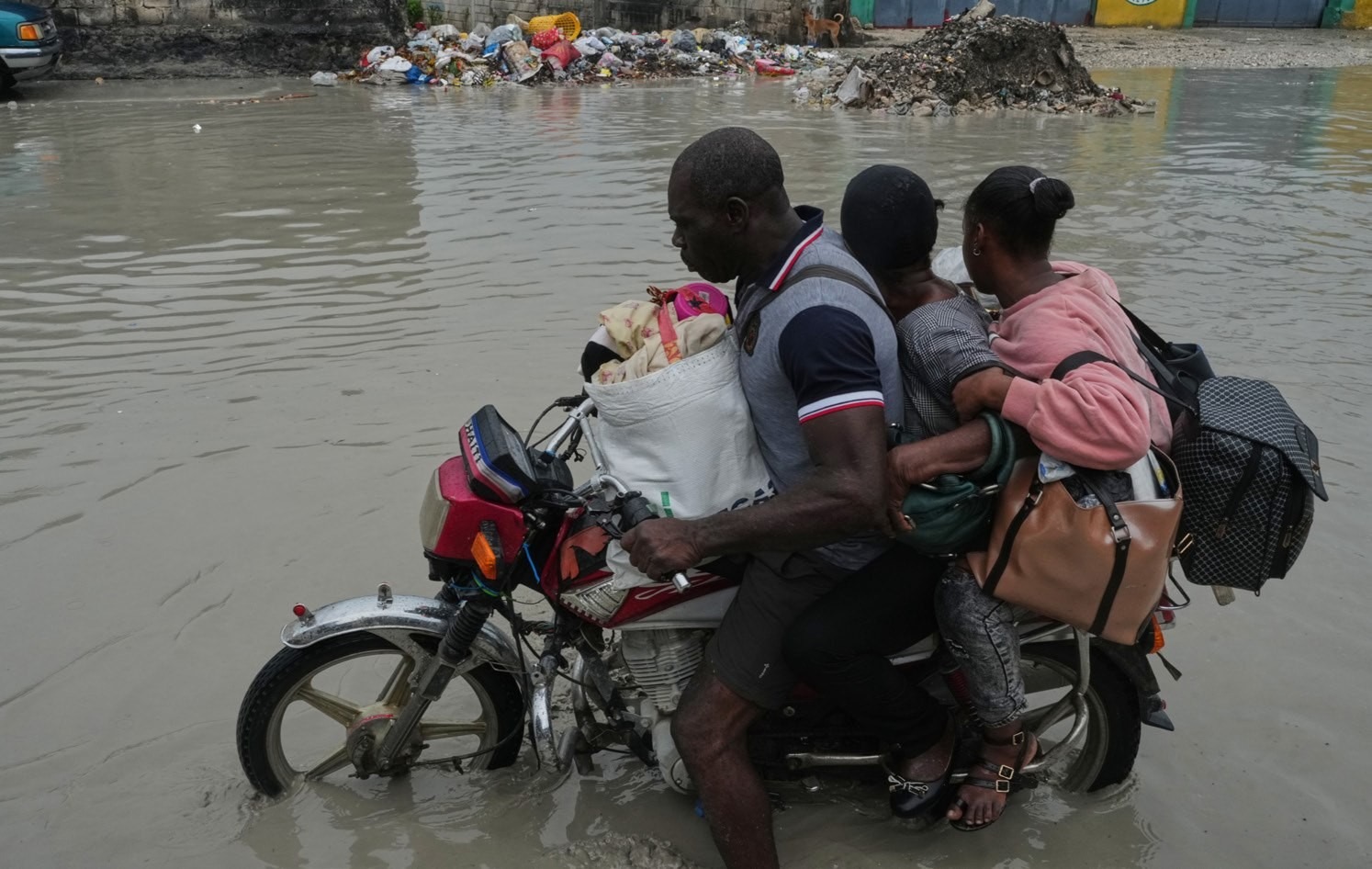
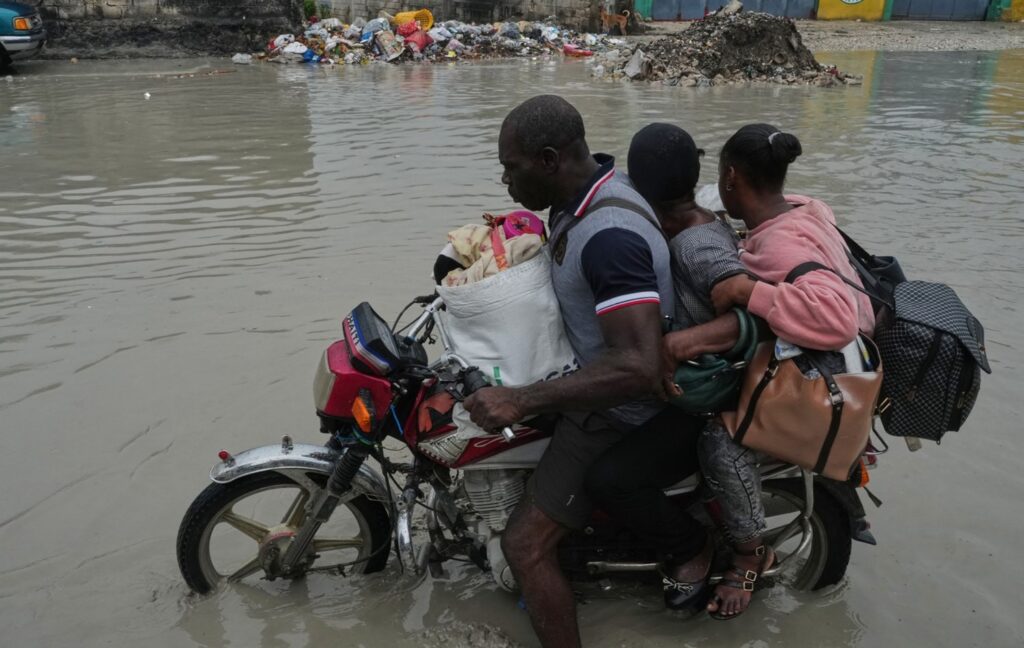
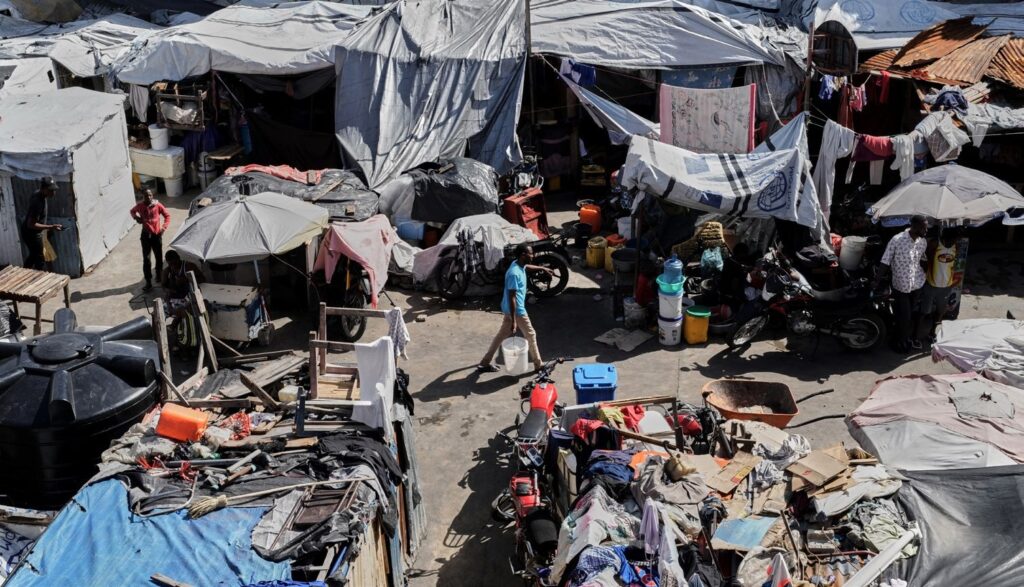
Problems in Haiti exacerbated after the assassination of President Moïse. Today, nearly 1.5 million people are internally displaced due to gang activity, and more than half of Haiti’s population needs humanitarian assistance, according to a recent report by Human Rights Watch (HRW).
From January 2023 through June 2026, more than 19,000 people in Haiti were killed in violence involving criminal groups, “self-defense groups” and government security forces, the report says.
The annual death toll rose by about 24% between 2023 and 2025, and more than 3,000 people were killed during the first six months of 2026.
Haiti is divided into 10 departments. So-called criminal groups primarily operate in Port-au-Prince, Haiti’s capital, in the Ouest (West) department, but the HRW report states the groups have expanded into rural communities in at least five departments.
They are allegedly carrying out sexual violence, controlling territory, terrorizing and punishing residents and forcibly displacing communities.
How these groups are getting guns and equipment is not widely known. Haiti does not manufacture firearms or ammunition. According to the UN, the weaponry is coming from the U.S. and also across the border from the Dominican Republic.
According to the non-profit ITIAHaiti, “Haiti’s gang violence is sustained by supply chains that extend beyond its borders and reach into its own security institutions.
United Nations investigations document weapons trafficked from the United States, ammunition diverted from Dominican security-force stockpiles, and supplies originating from Haitian public inventories recovered from armed groups.”
Now, with the termination of Haiti’s Temporary Protected Status (TPS), which allowed eligible Haitian nationals to live and work in the U.S., the U.S. government has been deporting Haitians back to a country marked by instability.
