







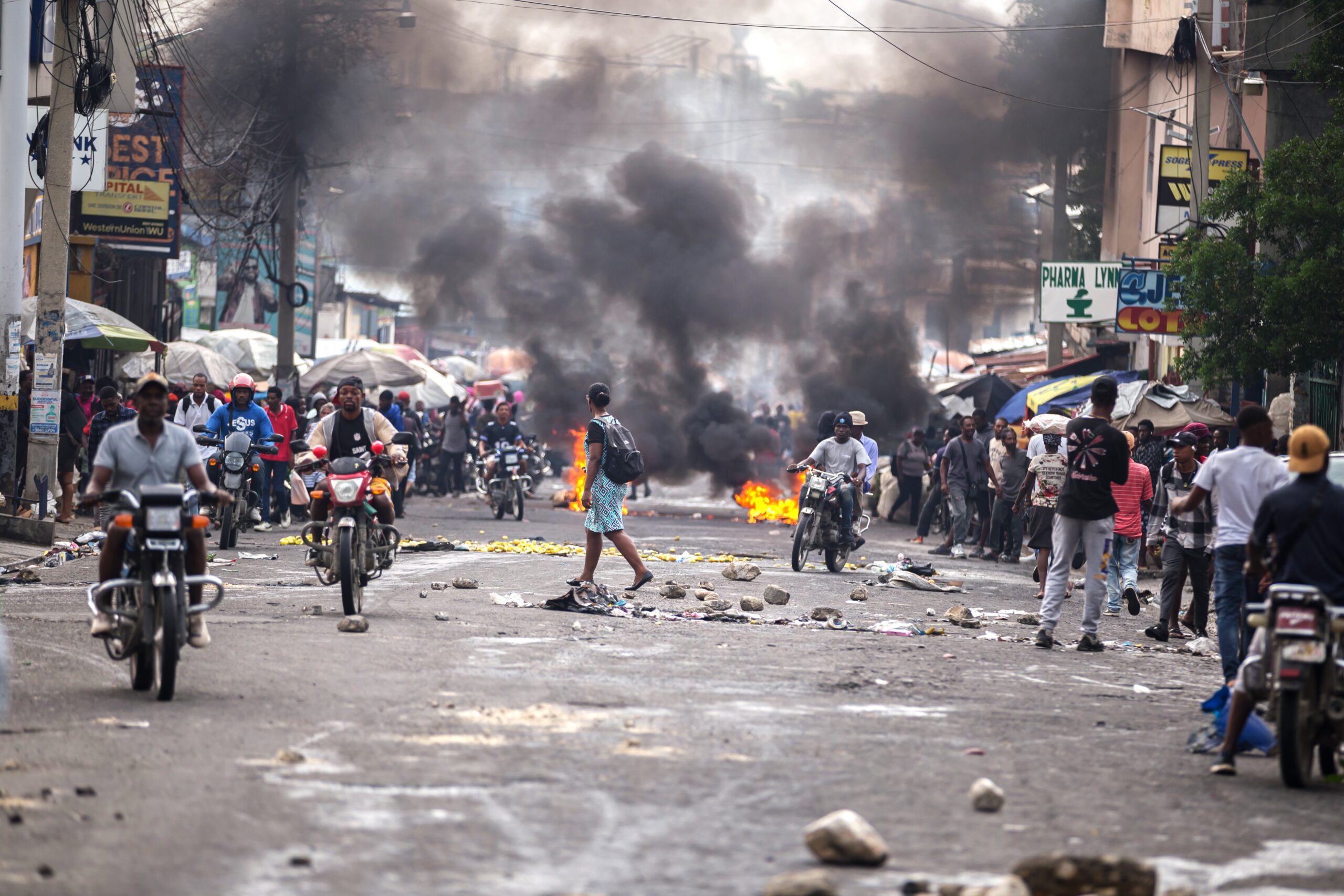

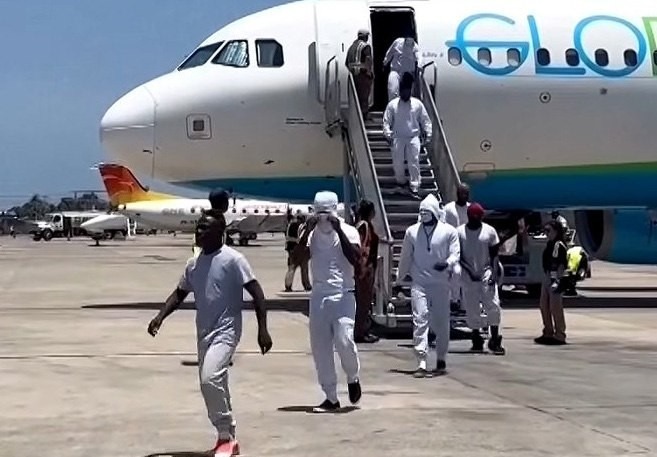
A United States deportation flight lands at the Cap-Haïtien International Airport in northern Haiti. When deported Haitians step off the plane, they step into a country riddled with political instability, gang warfare, displacement and severe resource shortages.
This was the case for 749 Haitians deported on nine U.S. flights between Aug. 20 and Oct. 21, according to figures cited by EL PAÍS, a Spanish newspaper headquartered in Spain. These flights have continued since the July 27 termination of Haiti’s Temporary Pro-tected Status (TPS), which allowed eligible Haitian nationals to live and work in the U.S.
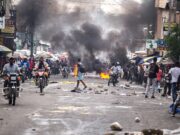
Upon arrival in their home country, Haitian deportees are immediately faced with challenges about where to live, where to work, and above all, how to stay safe, as international security personnel attempt to break up the control of armed groups over various communities.
“Haiti is not in a position to receive these people, whether they come from the United States, the Dominican Republic, Cuba, Chile or Brazil. They are all arriving to a place that cannot support them,” Allie Pasieka of the International Rescue Committee told EL PAÍS from Port-au-Prince.
“Even if they can reach their families, assuming they can move around, they will probably face the same vulnerabilities as those families. It is not a country with sufficient resources to support these people. “Haiti is right now a humanitarian disaster.
So, sending anyone here contributes to that humanitarian disaster,” she added. She visited Artibonite, one of Haiti’s 10 departments, located in the central part of the country, and described a health care system on the brink of collapse, with only two hospitals in the region she visited still operating.
Only one of the hospitals was accessible without crossing into gang-controlled territory, and even then, the hospital needed beds, medicines, medical equipment and power, Ms. Pasieka explained.
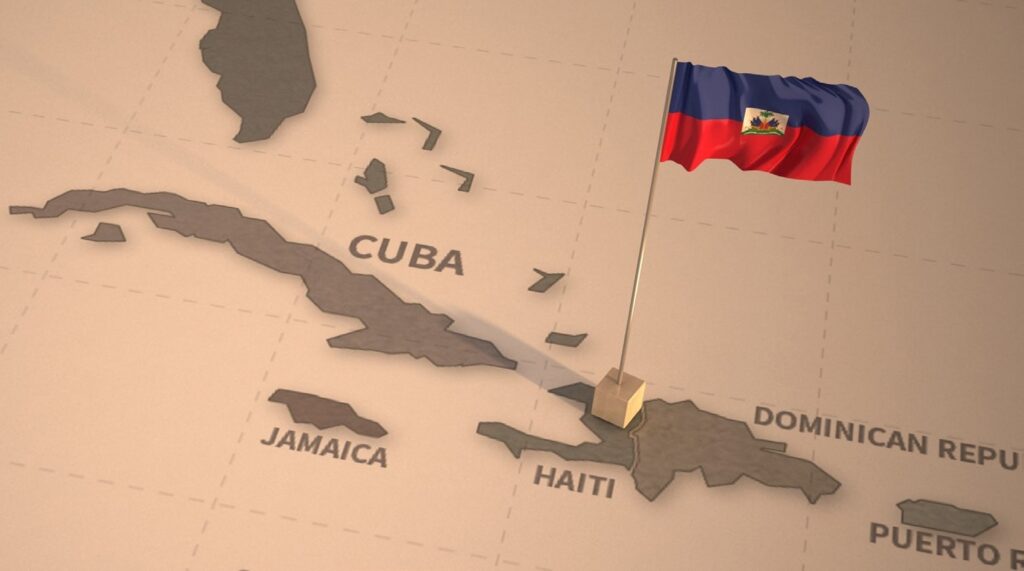
Human Rights Watch’s senior researcher for the Americas, Nathalye Cotrino, visited Cap- Haïtien in August and interviewed 44 deportees who arrived on the first two flights since the termination of TPS for Haiti. “The main thing they are saying is that they need money and job opportunities.
And that if they leave Haiti, it will be for another country that allows them to work, not for the United States,” she said to EL PAÍS. “They are thinking maybe of trying to go to Brazil, to Chile or to nearby Caribbean places, because it’s less costly to arrange that trip.”
She shared that Haitians leaving their native country “are not fleeing only the violence but also a prolonged humanitarian, economic and political crisis.”
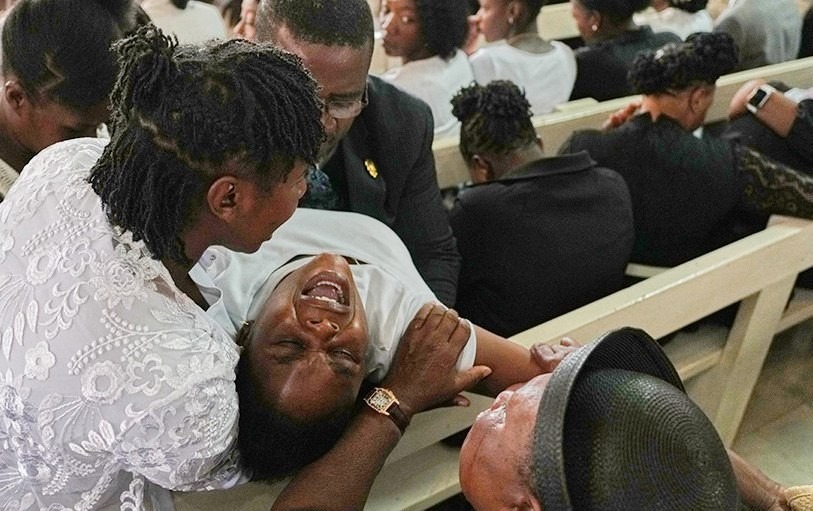
At an Oct. 19 United Nations Security Council briefing, Carlos Ruiz Massieu, the UN secretary-general’s special representative for Haiti, reported that between July and September, more than 1,000 people had been killed in Haiti, more than 400 had been injured and more than 100 had been kidnapped.
Deaths and injuries associated with security operations accounted for 52% of recorded casualties between July 1 and October 1, according to the UN secretary-general’s October report. The report attributes 808 casualties to security operations, including 148 people who were not associated with gangs.
Mr. Massieu also reported that nearly 1.5 million Haitians have been internally displaced, including 740,000 children. Sexual violence is also rampant, with 689 women and girls reportedly raped by gang members in July and August, according to the UN briefing.
Although much of the current gang violence has been concentrated in Port-au-Prince and surrounding communities, armed groups have increasingly expanded their activities into other departments. In Port-au-Prince, located in the Ouest (West) department, armed groups retain extensive territorial control, including over neighborhoods and transportation routes.
Other areas of the Ouest Department have experienced ambushes of security forces, fights over territory and revenue between armed groups and deadly attacks on civilians. Armed groups have expanded attacks into rural communities, and attacks have affected farmland, homes and public infrastructure.
“On the ground, we are witnessing increasing reliance on retaliatory violence against communities, including hostage-taking and other forms of intimidation, as gangs seek to undermine State authority, preserve territorial control and spread fear,” Mr. Massieu said.
Despite the crisis, the country is attempting to prepare for its first national elections since 2016. Mr. Massieu described more than 35 political parties and groupings and more than 3,500 registered candidates. As of Oct. 5, more than 750,000 voters had registered, out of an estimated 6.5 million eligible voters.
The first round of presidential and legislative elections was originally scheduled for Dec. 13, and the second round for Feb. 21, 2027. However, Haiti’s Provisional Electoral Council postponed the elections indefinitely, according to UN News.
The presidency has remained vacant since the assassination of Haitian President Jovenel Moïse in July 2021. The terms of Haiti’s last elected officials expired in January 2023, leaving the country without nationally elected officials for nearly four years. Interim and transitional officials have exercised authority while the country’s parliament remains vacant.
Election challenges include armed groups controlling areas where residents must register, campaign, and vote, as well as questions about the eligibility of certain candidates. At the Oct. 19 briefing, Mr. Massieu cautioned: “The repeated announcement of electoral dates without a true assessment of their feasibility only serves to weaken the credibility of Haitian institutions.”
Security forces in Haiti, including an international, UN-backed Gang Suppression Force, which supports the Haitian National Police, have attempted to crack down on the violence. El Salvador has contributed soldiers to the force.
Though security forces in Haiti are intensifying their operations, the gangs are not giving up but instead are adapting their tactics, according to the UN briefing. As of Oct. 12, the Gang Suppression Force had more than 1,500 uniformed members.
On Oct. 18, an armored vehicle transporting Salvadoran personnel was attacked near Port-au-Prince. Four Salvadoran aviation technicians went missing following the attack, prompting search-and-rescue operations.
El Salvador deployed additional special forces to aid in the search. Approximately 1,000 Salvadoran troops had arrived in Haiti in late October, a Haitian security official told Reuters on Oct. 27.
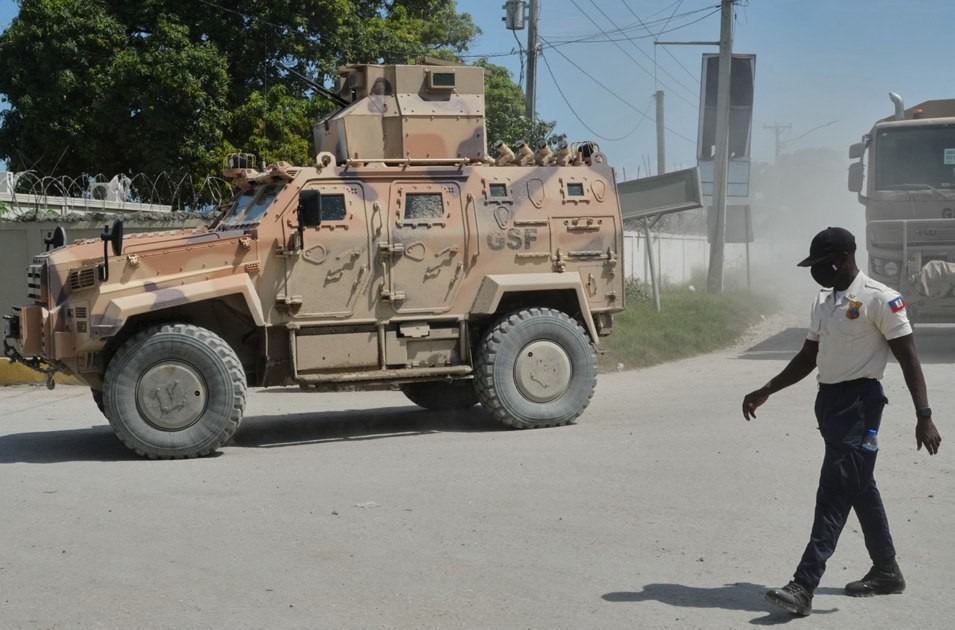
The UN Security Council extended the mandate for the Gang Suppression Force to March 31, 2027.
During the UN briefing, Mr. Massieu acknowledged that security operations alone are not enough to create lasting stabilization in Haiti. “Sustainable progress requires a comprehensive Haitianled approach that combines territorial recovery with a sustained State presence and coordinated efforts in disarmament, dismantlement, and reintegration, with particular attention to children recruited by gangs,” he said.
As Haitian citizens and international parties work to stabilize the Caribbean country, Haitian Americans are also fighting to improve their home country through economic development and government reform. (See related story on page 3)
“We send more than $4 billion in remittances to the country to our people. People are involved in education. It builds schools. People are involved in assistance through agriculture,” Cook County, Illinois, Judge Lionel Jean Baptiste said to
Judge Baptiste has been instrumental in creating a “Marshall Plan” for Haiti’s economic recovery and redevelopment.
“We fight for the rights to vote, the right to dual citizenship. There is an effort, now, to try to move forward in the process to get the election done because we’ve been in a transition since 2021. … We’re fighting for reform inside the government,” he said.
“We’re looking to influence the new leadership that may be coming to office, so that they can look beyond the United States for alliances to try to bring support from People’s Republic of China, from Ghana, South Africa, Egypt, Dubai, and everybody that they could bring in, in terms of the support system, to move the country forward.”
