








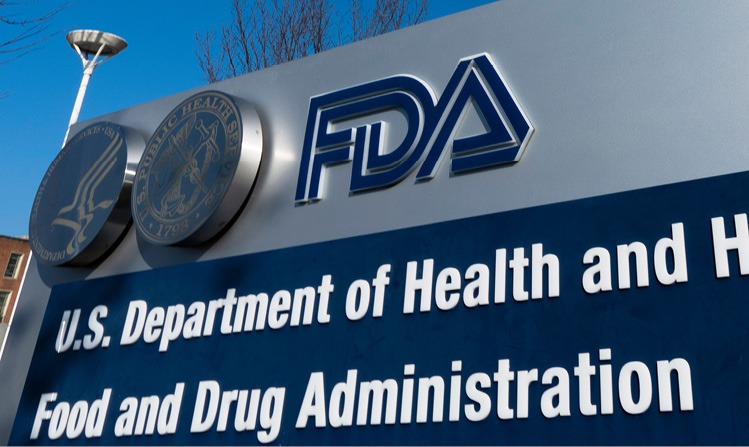

From taco shells to blueberry bags, the U.S. Food and Drug Administration (FDA) and Centers for Disease Control and Prevention (CDC) have tracked at least four major multistate outbreaks—spanning produce, dairy, and frozen fruit—that together sickened thousands of people and reignited questions about whether federal recall systems are moving fast enough to keep pace.
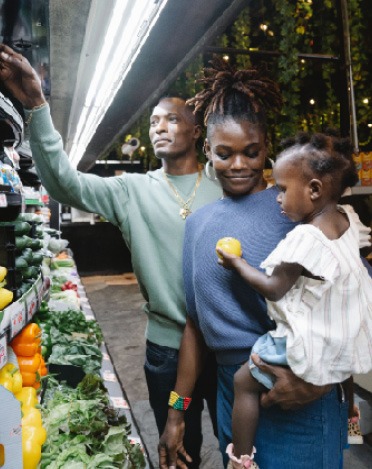
By far the largest outbreak this year involves Cyclospora-contaminated iceberg lettuce sourced from central Mexico and reportedly supplied by Taylor Farms. Cyclospora is a parasite that can cause cyclosporiasis, an intestinal illness. The lettuce made its way into thousands of Taco Bell locations before the link was identified. As of the FDA’s August 27 update, lab results had confirmed 11,458 illnesses across 20 states directly traced to the recalled lettuce, with 495 hospitalizations and two deaths in Michigan.
For decades, the Most Honorable Elijah Muhammad and His National Representative, the Honorable Minister Louis Farrakhan, taught the importance of Black people growing their own foods amid dangers associated with depending and relying on food grown, regulated and sold by the government or by unreliable sources.
Minister Farrakhan in a 2010 interview with The Final Call under the headline, “Why We Must Produce Food and Control Our Food Sources,” attributed problems on the food horizon to “our food growth is in the hands of those whom we call the Merchants of Death.”
“They’re not caring about how food is raised or how to protect the earth and its nurturing qualities,” he said. “Pesticides and chemicals are being used; hormones are used to grow livestock at faster rates and chemicals are used for the growth of vegetation.”
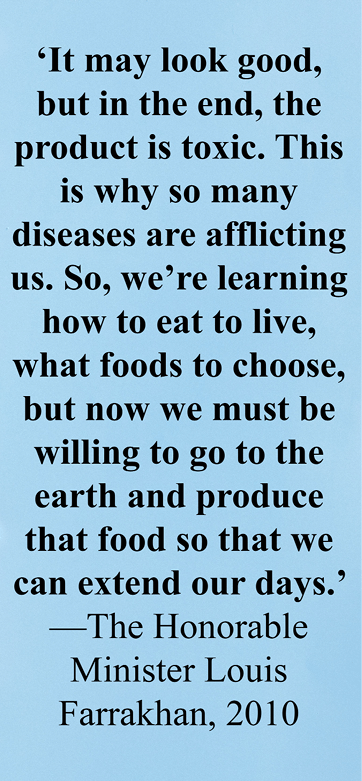
Minister Farrakhan continued: “It may look good, but in the end, the product is toxic. This is why so many diseases are afflicting us. So, we’re learning how to eat to live, what foods to choose, but now we must be willing to go to the earth and produce that food so that we can extend our days.”
Brother Dr. Ridgely Mu’min Muhammad, manager of the Nation of Islam’s Muhammad Farms in Georgia, emphasized that the more fundamental problem is how far modern food travels before it reaches a plate.
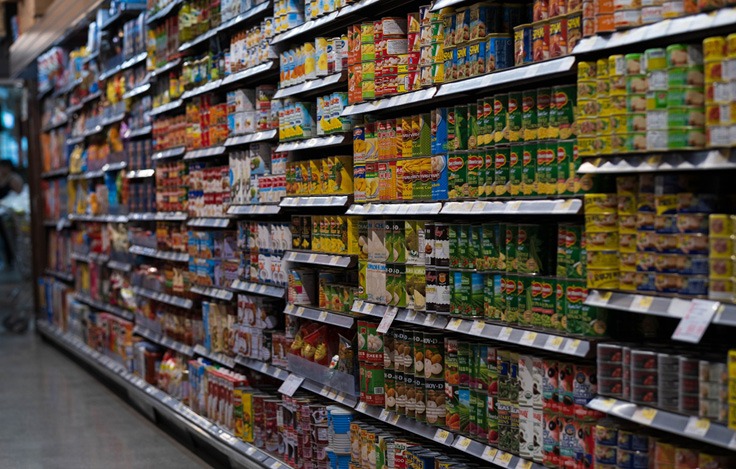
“It’s no telling where that food comes from, and how many times it’s been handled by either humans or equipment,” he said, describing a food system built on long chains of growers, processors, distributors, and retailers rather than direct, local sourcing.
In addition to attributing recall risks to globalized food production, extensive handling, weak inspection, and unsafe agricultural practices, including manure runoff entering irrigation systems, Bro. Dr. Ridgely Muhammad contrasted modern food systems with local gardening, washing, cooking, and same-day consumption.
“People are so used to being able to go and get any type of produce or any type of anything to eat any time they want it. They don’t realize what the possibilities of error are,” he said.
He recalled a time when people grew, washed, and cooked their own food. Agriculture itself began as an alternative to hunting, fishing, and gathering, he said. Instead of foraging for what nature provided, people started saving seeds from the crops they wanted, planting them near their homes or villages, and then simply going out to gather what they needed each day.
“As a matter of fact, when we went to Cuba in 2006, every vacant lot in Havana, there was a garden, raised bed garden,” said Bro. Dr. Ridgely Muhammad, who was among a delegation from the Nation of Islam with the Honorable Minister Louis Farrakhan on a trip to Cuba. Without refrigeration, he said, residents simply “go out to the garden in the area, and they would go to the stand and buy what they wanted for that day”—fresh food obtained daily rather than stored and shipped.
Unfortunately, most people have stepped back from growing or preparing their own food entirely, he stated. “We don’t want to cook anymore, so we allow somebody else not only to grow the food, but to mix the food up and to prepare the food and to cook the food. We don’t have any idea where the food comes from nor how it was handled,” Bro. Dr. Ridgely Muhammad said.
Further, he pointed to thinning government oversight as compounding food recall risks. “When government cuts down on the inspectors for inspecting the food system, and you have people who cheat, trying to compete, you left yourself open for such incidents as Salmonella and these other incidents.”
Food-safety advocacy groups have expressed similar concerns, pointing to reduced federal inspection and surveillance staffing as a factor in how outbreaks have unfolded.
“Consumers deserve recall notices that are clear, specific, and actionable,” said former USDA official Sandra Eskin, now CEO of Stop Foodborne Illness.
When done correctly, she told The Final Call, recall messages clearly state what the issue is, what products are affected, and exactly what to do next. “When that information is shared quickly and clearly, it not only reduces public health risks, but it also helps consumers feel more confident that the food industry is taking their safety seriously,” she continued.
The case count crept upward for weeks even after Taylor Farms voluntarily pulled their product on July 17, a delay FDA attributes to the up-to-six-week lag required to confirm whether a sick person belongs to a given outbreak. The FDA has since conducted onsite inspections at Mexican growing and processing facilities and says it is confident the implicated lettuce is off the market, though the investigation remains open.
Taylor Farms has said it voluntarily suspended all iceberg lettuce sourcing and production from central Mexico and commissioned an independent review of food safety protocols at the implicated facility. “We are confident in our food and food safety systems and will continue to be transparent as more information becomes available,” read a company statement online.
According to CDC data cited by U.S. PIRG (Public Interest Research Group) Education Fund, a consumer advocacy organization, regulators tracked at least seven cyclospora outbreaks this summer—the Taylor Farms lettuce outbreak plus six unidentified sources—totaling more than 18,445 illnesses and 990 hospitalizations across 47 states as of August 31, with more suspected cases pending. The lettuce outbreak alone ranks as the third-largest foodborne outbreak in U.S. history.
The report also noted that separately, a Salmonella Javiana outbreak traced to Sinaloa-grown jalapeños (distributed by Coast Citrus) sickened 431 people in more than 30 states, hospitalizing 57. A limited late-July recall snowballed into recalls by Whole Foods, Taylor Fresh Foods (the legal and corporate name of Taylor Fresh Farms), NatureBest, Salata, and 18 USDA-flagged meat/poultry products. PIRG notes Chipotle switched suppliers July 20, but USDA didn’t warn the public until August 8, a gap it says allowed preventable illnesses.
The report also notes that a smaller outbreak involves organic frozen blueberries from Chile’s Frutas y Hortalizas del Sur, linked to GreenWise (Publix) and, since September 2, Great Value (Walmart) berries in 16 states—17 illnesses, six hospitalizations, no deaths, as of September 3.
The FDA’s remote review of Frutas y Hortalizas del Sur’s Chilean facility raised enough concerns that it added the company to Import Alert 99-35, allowing future blueberry shipments to be detained at the border unless the issues are resolved.
The FDA also reported on its website that a Listeria outbreak tied to Clover Hill Dairy’s cheese has ended. CDC closed the case in August after tracing 15 illnesses back to March 2023; 14 were hospitalized and one died. The cheese was resold under multiple names—La Colonia, Selectos Latinos, Kesso—making it hard for consumers to track.
The FDA’s response has leaned on import alerts and root-cause facility inspections, like the Chilean assessment and on-site visits to Mexican lettuce growers. Critics say it’s still too slow: the 2022 Food Traceability Rule, meant to speed recordkeeping for high-risk foods, was delayed from January 2026 to July 2028. PIRG says 2025 data show faster tracing could have curbed dozens of downstream recalls.
PIRG also cites a 2025 GAO report on fragmented federal food safety oversight, plus 2025 data showing many outbreaks lack identified sources, recalls, or allergen compliance.
Separately, food safety veterans including Ms. Eskin, weighed in on whether recalls are increasing or is detection just improving?
“Food companies initiate recalls for a number of reasons—contamination with bacteria and other pathogens (or the likelihood of such contamination), unlabeled allergens, and foreign objects (e.g. plastic or metal fragments). Stop Foodborne Illness focuses on reducing pathogenic contamination so we do not focus on the number of recalls, but instead the number of people who have gotten sick from them,” she told The Final Call.
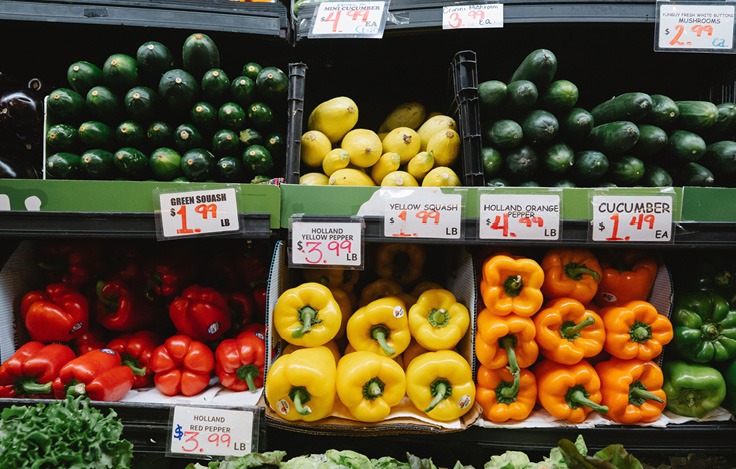
In terms of what regulatory gaps still need closing, she said the prior administration proposed stricter standards for Salmonella contamination in poultry, but the current administration withdrew that proposal.
“It would protect public health,” she said.
According to Ms. Eskin, the major gap in the FDA’s regulatory oversight is the delay in making the traceability rule enforceable. The Food Traceability Rule requires persons who manufacture, process, pack, or hold foods on the Food Traceability List (FTL) to maintain certain records and make records available to FDA, she explained.
Currently, the lag time between when illness starts and when a recall is issued is generally three to four weeks, but it can stretch to six weeks or longer depending on the pathogen, she emphasized.
Beyond the four major outbreaks above, the USDA’s Food Safety and Inspection Service has issued a string of smaller, unrelated recalls in recent weeks, including Shanghai Ravioli’s uninspected Buffalo chicken items, Indus Foods’ uninspected pickled goat/chicken, Corte Argentino’s beef lacking import reinspection, and Ukrop’s baked dishes contaminated with metal slivers, per FSIS’s active alerts page.
None of these five are connected to the jalapeño, blueberry, lettuce, or cheese outbreaks detailed above; they reflect the routine, ongoing pace of recall activity FSIS handles independent of any single outbreak investigation.
The reason, Minister Farrakhan said during his interview, is “that we are interested in food and the raising of food and how—and the correct foods to eat—is because that is the only way we can prolong human life and that is the gift of the Honorable Elijah Muhammad from Allah to teach us what foods to eat and what foods to store in our houses.”
He continued: “If we go to the Teachings of the Honorable Elijah Muhammad, all economies are based on land and what the land produces.”
“If we now have no earth that we can call our own, then our food consumption is based on what others raise and how others raise that food. So we’re at the mercy of others because we don’t have earth that would give us sustainable agricultural growth and progress,” Minister Farrakhan said.
“The Honorable Elijah Muhammad gave us an example. When he was here in the 1960s, we went to Georgia and purchased 5,000 acres of land. We went to Alabama and purchased another 8,000 or 10,000 acres of land. We went to Honduras and bought another 20,000 acres of land and the Honorable Elijah Muhammad had an ad in our paper at that time, Muhammad Speaks, that said we wanted to lease one million acres of land. Why? Because we wanted to produce a sustainable agricultural program that would give us health, maintain our health and sustain us in a proper way.”
