

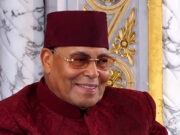








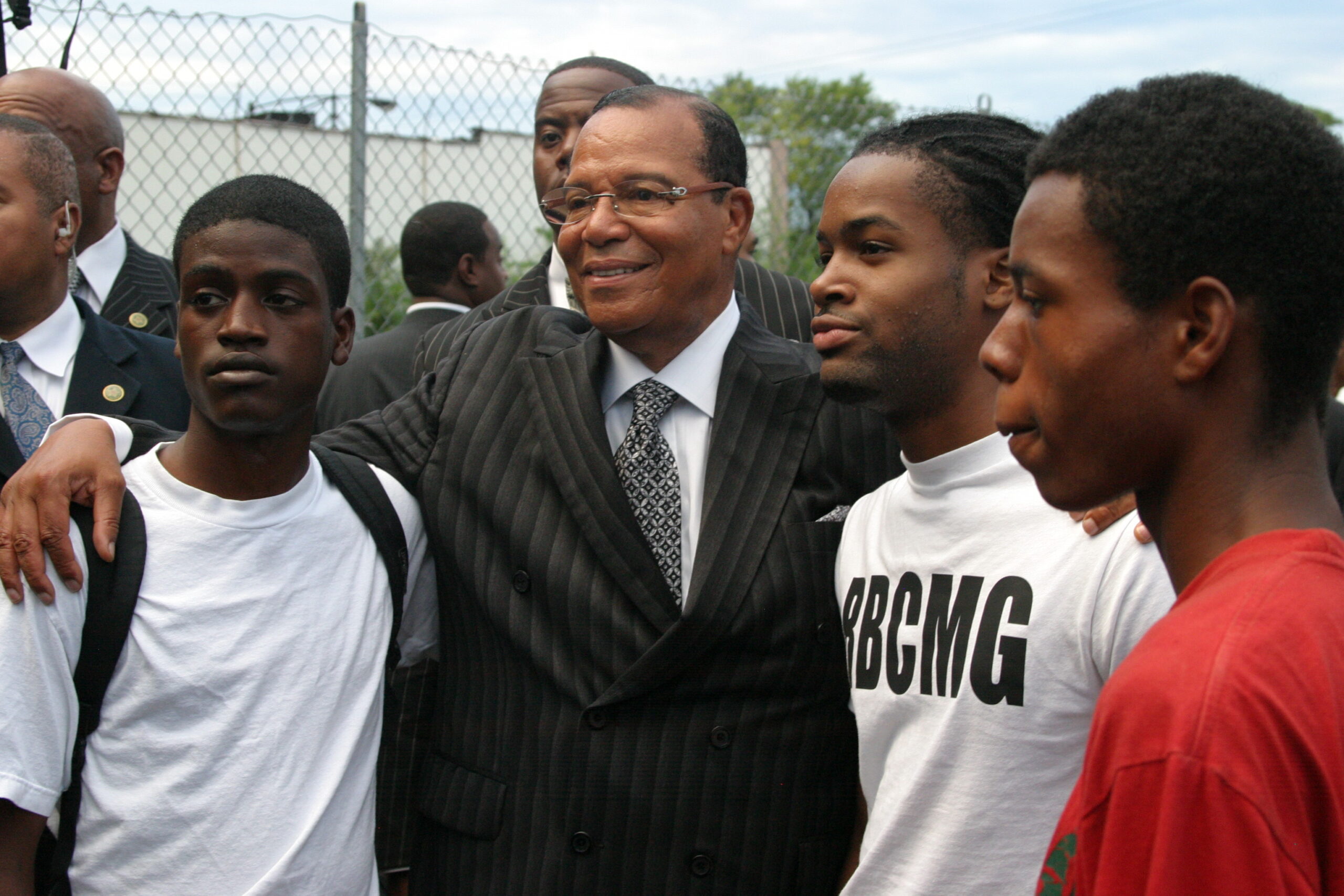

As the month of August ended and the month of September began, popular radio show host Charlemagne Tha God aired a short clip of a message delivered by the Honorable Minister Louis Farrakhan as the “Positive Note” for the day.
This clip that he also shared on his social media platforms reminded me of my studies into the example demonstrated by the Honorable Minister Louis Farrakhan.
Our study of Minister Farrakhan is a study of not only his teaching, but also a study of him as the teacher of “the Teachings” of the Most Honorable Elijah Muhammad, the Eternal Leader of the Nation of Islam.
The Minister’s words are often studied as they are frequently the subject of controversy, which all paradigm changing truths are in their beginnings.
But from my vantage point, the motivation and personal example of Minister Farrakhan deserve more study. There is a rich ample supply of wisdom and leadership principles found within a study of the sterling personal example of Minister Farrakhan.
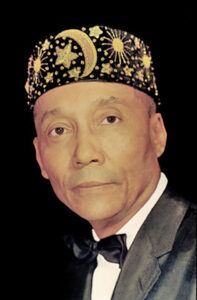
Elijah Muhammad
The clip that Charlemagne posted on his Instagram page included the following profound and timely words from our beloved Minister from the message, “Exposing the Christmas Myth,” from December 22, 1985.
Consider the following words by Minister Farrakhan: “I’m just telling you straight up; you can take it or let it alone. I am from a teacher that loves you. I wasn’t prepared like this in college. College don’t prepare Black folk to be loving and patient to Black folk.
God has to prepare your heart—number one, to love your people. Because your own people are going to envy you, your own people are going to try to kill you, your own people are going to hate you, your own people are going to misunderstand you.
But you can’t give in; you’ve got to love them more than they hate you. That’s right. And that’s why there aren’t too many people who can stand up in front of you and have any longevity—you wiped them all out.
“But you didn’t wipe out my father, and you won’t wipe out his child, because I’ve got enough love in me for you to conquer every vestige of hate in you, for yourself and for me. Look, there isn’t anything you can say against me, about me, to me, to turn me around from my love for you.
You could attempt to kill me; the only thing that could stop me is that you killed me, but I would go to my death loving you, because I know that you are a better person underneath all the rubbish. I know that you are the people of God. And because I know that, I will continue to work until I see God coming to the surface. Do you hear me?
God is in you. But if you don’t work with Black people, you can’t bring God to the surface in Black people. You’re going to make somebody try to kill you because you’re just that ornery… . The Honorable Elijah Muhammad said that he was told by Master Fard Muhammad to ‘take plenty.’…”
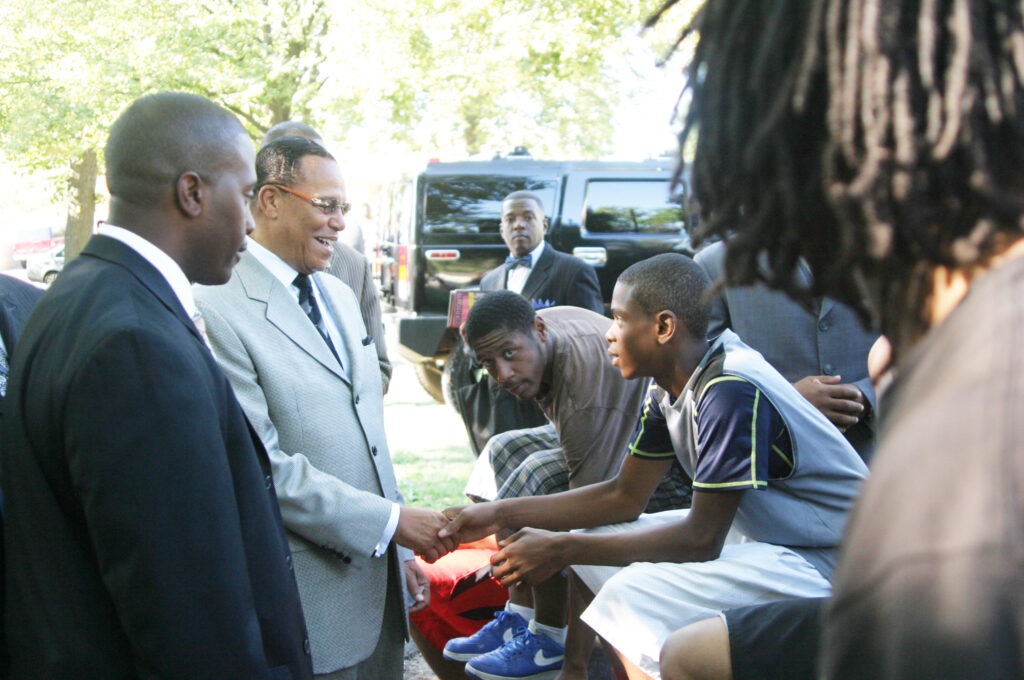
Troublesome conditioning belies righteous nature
The profound words spoken by Minister Farrakhan in the clip played by Charlemagne Tha God help offer guidance to a burgeoning group of young and talented brothers and sisters within the Black community, and whose talents and rising profiles is helping to catapult them into leadership positions.
Many who observe cultural trends within the Black community recently witnessed the public and on-air venting by Invest Fest founder Rashad Bilal, reacting to some members of the Black community who offered criticisms of certain aspects of the popular Atlanta conference known as Invest Fest.
On The Blackout Podcast, Mr. Bilal stated: “I’m not even on the Black thing no more. I never was on the Black thing. ‘Not a Black event.’ I seen somebody say, ‘Oh there was White people …’ yeah, they’re qualified to be there.
You think I’m going to just cater to Black people just to get torn down by Black people? You’re out of your f**ing mind. It’s gonna be even more White people next year. And the Spanish and the Filipinos. I’m done. It’s been real. All you’re gonna do is criticize and tear it down and not pay and want to get in for free anyway.”
After viral negative reactions to his statements flooded the social media platforms, Mr. Bilal offered an apology for his words said in frustration over the criticisms coming from within his own community, the Black community.
As a student of the Honorable Minister Louis Farrakhan, I have found that it is helpful to follow the character and leadership profile of the Minister and not just his words.
To assist me in being a better emulator of my beloved teacher, in seeking to love my people more than they hate themselves, I have sought to familiarize myself with the conditions of my people that cause us to oftentimes criticize and tear down our own leaders.
My study of history helps me to see that we are not naturally so dysfunctional in our relationship with our leaders. My study of history helps me to appreciate the fact that distrust of our leaders and general distrust of one another was insisted upon by those who enslaved our fore-parents and ruled over us as oppressors.
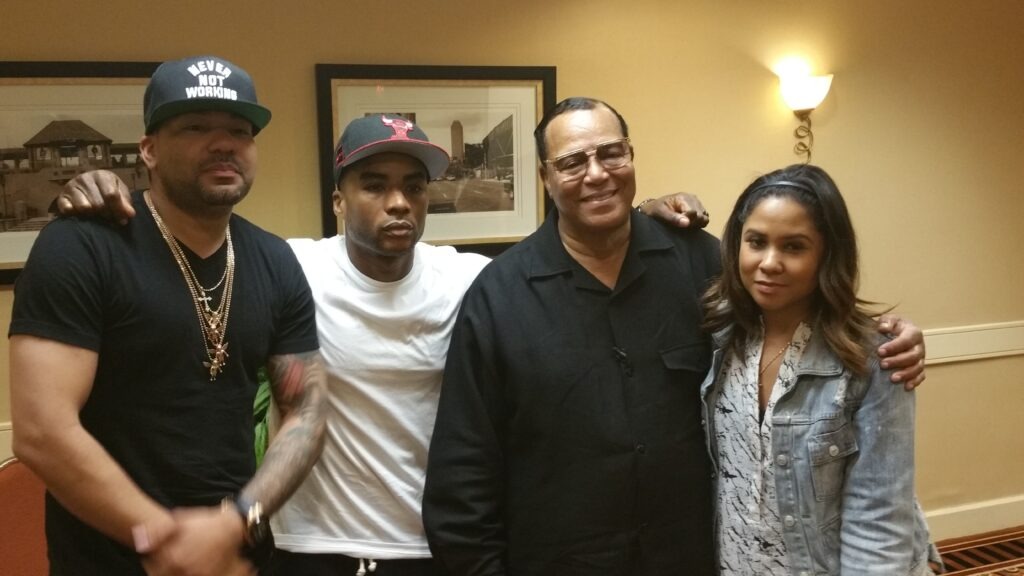
Consider some of the insightful observations of a man who is recorded in history to have been the leader of the largest mass movement of Black people in American history. He offers this candid admission of the Black community’s criticism toward our own leaders and organizations.
The Honorable Marcus Mosiah Garvey stated: “The Aptitude of the Negro To Disobey Orders Coming From Himself”—The Negro in Western civilization, because of his environments that force upon him a complete inferiority, is the most stubborn individual to discipline within the race.
He has but little, if any, respect for internal racial authority. He cannot be depended upon to carry out an order given by a superior of his own race. If the superior attempts, in his presence, to enforce the order he is undermined and accused of ‘putting on airs.’
If the order is entrusted to a lieutenant, he, in turn, changes the order to suit himself and endeavors to constitute himself the superior individual. In my experience, as head of the largest serious Negro organization in the world.
I have found that to every hundred orders given to be executed for the absolute good of the organization and the race, not two percent of them have been carried out in their entirety. This lack of obedience to orders and discipline checkmates the real, worthwhile progress of the race.
This accounts for the Negro’s lack of racial nationalistic ideal. The only cure for him is his removal to an atmosphere entirely of his own, where he would be forced under rigid civil and other discipline to respect himself and his own racial authority.”—Philosophy and Opinions of Marcus Garvey, Volume II, Part 1
Mr. Garvey’s observations might be explained by considering the insights of Black History Month founder Carter G. Woodson, who stated: “Living in an environment where the actions of almost any colored man were suspected as insurrectionary, Negroes were frequently called upon to tell what they knew and were sometimes forced to say what they did not know.
Furthermore, to prevent the slaves from cooperating to rise against their masters, they were often taught to mistreat and malign each other to keep alive a feeling of hatred. The bad traits of the American Negroes resulted then not from an instinct common to the natives of Africa.
But from the institutions of the South and from the actual teaching of the slaves to be low and depraved that they might never develop sufficient strength to become a powerful element in society.”
—The Education of the Negro Prior to 1861: A History of the Education of the Colored People of the United States from the Beginning of Slavery to the Civil War
Further important explanations of how our people seemingly overtly criticize Black leaders and each other include Dr. Alvin Poussaint who stated: “Most psychiatrists and psychologists would agree that the Negro American suffers from a marred self-image, of varying degree, which critically affects his entire psychological being.
It is also a well-documented fact that this negative self-concept leads to self-destructive attitudes and behavior that hinder the Negro’s struggle toward full equality in American life.
The Caucasian American socialized the Black man to internalize and believe all of the many vile things he said about him. They encouraged and rewarded behavior and attitudes in Negroes that substantiated their indicting stereotypes.
Black men were happy go-lucky, lazy, stupid, irresponsible, etc. Our mass media disseminated these images with vigor on radio, in movies, etc., and like unrelenting electric shocks conditioned the mind of the Negro to say, ‘Yes, I am inferior.’
Not only have Black men been taught that Blackness is evil and Negroes ‘no-good,’ they have, in addition, been continually brain-washed that only ‘White is right.’…Black men were taught to despise their kinky hair, broad nose, and thick lips.”—Black-on-Black Homicide: A Psychological-Political Perspective
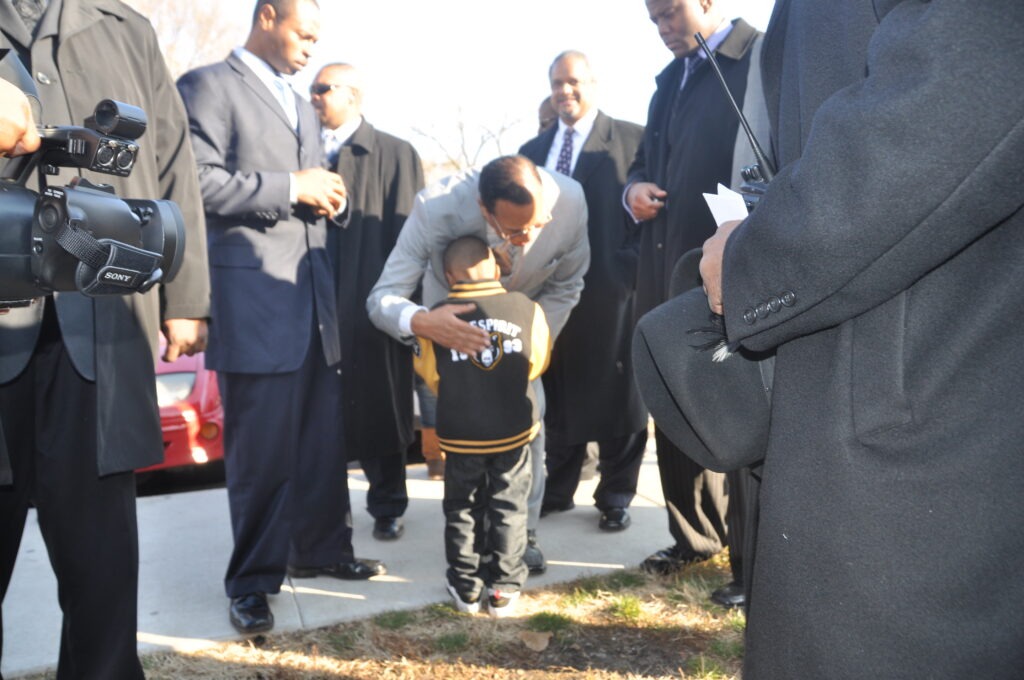
Master W. Fard Muhammad: ‘Take plenty’
The root of Minister Farrakhan’s very powerful demonstration of unconditional love for Black people in America, and all of those who struggle for justice throughout the human family can be found within the noble demonstration of Allah in the Person and The Great Mahdi Master W. Fard Muhammad.
Master W. Fard Muhammad wrote in a September 7, 1933, letter to the Most Honorable Elijah Muhammad the following: “I have hard labor to go through with misunderstanding on the part of my people in this part of the planet. However, I have treasured all my life love for the lost-found Nation of Islam … .”
This root of love for a people who at times misunderstand that love, is what has caused Minister Farrakhan to be able to shout publicly at what so many are afraid to whisper or even think privately. Theology professor Andre C. Willis has noted Minister Farrakhan’s long career of defending our people in the following words:
“There is simply no Black person in the world that has—over so many years—been as consistent, as unrestricted, and as forthright in defending the humanity of Black people throughout the world against its attackers.”
Love, specifically “perfect love” is according to the scripture the main ingredient for courage. For the Bible in 1 John 4:18 states “perfect love casts out fear.”
It is this love that is the “fuel for Farrakhan.” The Minister’s extraordinary love for us is something that has been given to him from Allah (God) and it has been nurtured by the Most Honorable Elijah Muhammad.
Studying Minister Farrakhan is studying a man who has a divine anointing on his life to love a people who are at times difficult to love. The anointing on the Minister inspires his ability to defend us.
He boldly stated his position regarding defending Black people in his message “The Case For Separation,” delivered March 11, 1990.
“Defend your people. Yes, sir. Defend them. Yes, sir. With all the truth that you know, defend your people. Yes, sir. Even in their apparent wrong, I say defend your people. Never, never take the White man’s side. Never take the White man’s side against your people.
Never take his side, even if it appears that our brother is wrong, don’t take the side of the enemy. You see one of your brothers switching down the street, and some White man says, ‘Look at that.’ Don’t you say, ‘Yeah, look at that.’ You say, ‘Probably if he hadn’t met your fathers, he wouldn’t be that way.’
“If they say, ‘Look at that nigger snatching” pocketbooks,’ say, ‘Yeah, maybe if he had the right kind of education and a job opportunity, he wouldn’t have to snatch no pocketbook.’”
I believe that all who seek to serve as leaders within the Black community should study the example and way of the Honorable Minister Louis Farrakhan and adopt him as the pattern for our leadership. As the old saying goes, “You can’t lead the people, if you don’t love the people.”
And Minister Farrakhan proves that we must be willing to love our people, in spite of the lingering residue of self-hatred that the enemy socially engineered among us.
Brother Demetric Muhammad is a Memphis-based author and student minister in the Nation of Islam and a member of the Nation of Islam Research Group. Follow him on X, formerly Twitter @BrotherDemetric. Read more at www.researchminister.com.
