










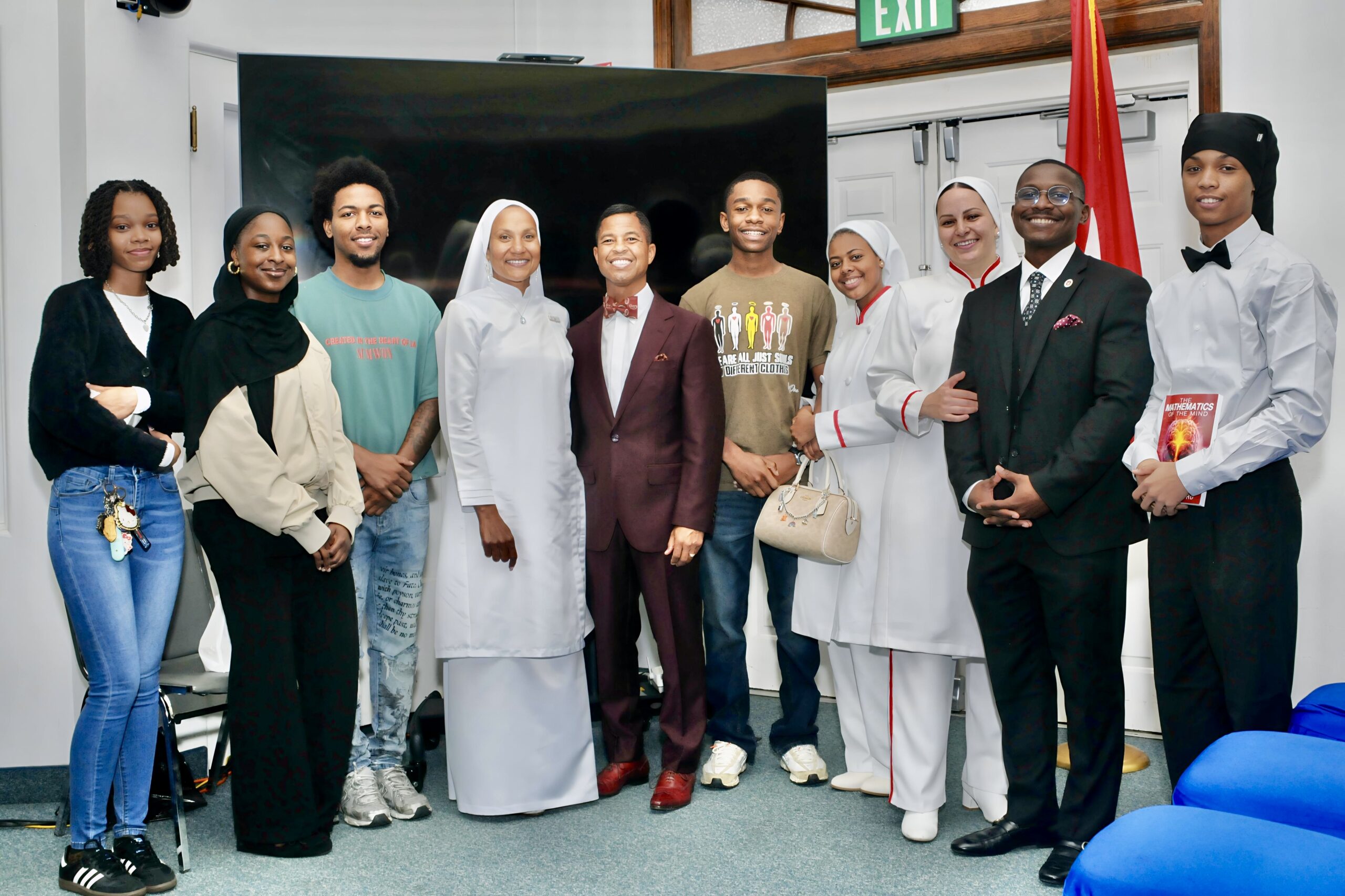

ST. LOUIS—The Most Honorable Elijah Muhammad teaches Black people the importance of marriage and family. His National Representative, the Honorable Minister Louis Farrakhan, like his teacher, says that strong marriages and families equal a strong Nation.
“Marriage is a key institution if we are going to build a strong family. If we are not concerned about family, then we are not concerned about our people and our Nation. If we have a weak family, we have a weak Nation. If we have a strong family, we have the potential for a strong Nation.
Strong family is only built upon a strong relationship between the male and female, called husband and wife,” Minister Farrakhan explained in his message, “How To Give Birth To A God,” part 5, delivered August 9, 1987.
In the ongoing effort to develop and cultivate family and community, Muhammad Mosque No. 28 hosted its first Black Family Week in St. Louis, July 11-19. The week kicked off July 11, with Student Minister Ishmael Muhammad.
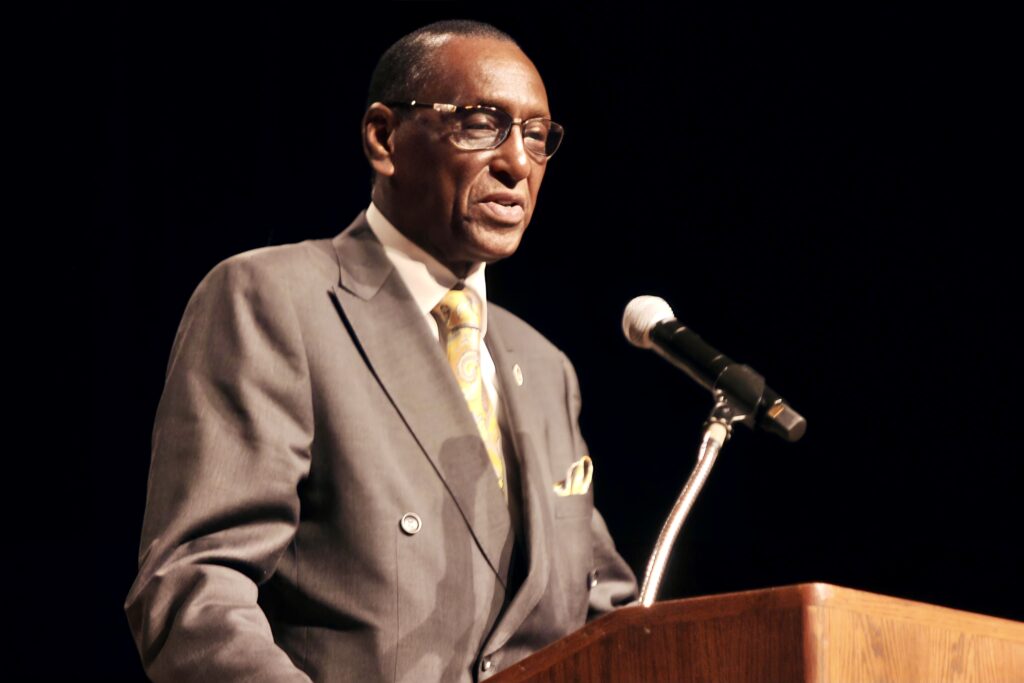
National Assistant to the Honorable Minister Louis Farrakhan, who delivered remarks at the HBCU campus of Harris-Stowe State University, and events concluded July 19, with Student Minister Nuri Muhammad of Mosque No. 74 in Indianapolis.
According to Student Minister Donald Muhammad of Mosque No. 28, Black Family Week served as a launching pad for future activities designed to help strengthen the Black community.
Participants and attendees listened intently to messages addressing the foundational crisis facing Black America.
Student Min. Ishmael laid the foundation for the week by delving deep into the importance of family and marriage. He connected the deterioration of Black family structures to a broader crisis of lack of knowledge of self. “What was originated and instituted by God must be respected accordingly.
If we don’t give due respect to that which is of God, we offend Him and from this offense a series of offenses take place,” he said, lifting words from the Honorable Minister Farrakhan. “Therefore, we must look again at what God intended when He instituted marriage among the original parents of the human family,” he continued.
Student Min. Ishmael presented some very sobering statistics and information. “With everything that we have suffered and what is going on now in the Black community, there is a plan of genocide.
Look at these statistics: 47% of Black mothers are raising children as single mothers, compared to 25% of Hispanics and 14% of White mothers. Approximately 63-64% of all Black children live in single-parent households,” he said.
These numbers reveal a crisis unique to Black America, rooted in a fundamental disconnection from knowledge of self and collective purpose. Student Min. Ishmael emphasized that correcting family problems must begin with marriage and knowledge.
“We don’t know the nature of the female. We don’t see the woman from the perspective of (Allah) God. We have become our worst enemy toward our women and ourselves.
The enemy has made us into himself because we kept feeding from his mind and refused to take the mind that God offered us. If we would have adopted that mind, we wouldn’t be in the condition we are in today,” he told the audience.
The 1965 Moynihan Report (officially titled, “The Negro Family: The Case For National Action”), written by Assistant Secretary of Labor Daniel Patrick Moynihan, examined the link between Black poverty and family structure. At that time, the out-of-wedlock birth rate among Black people was 25%. By 1981, that figure had risen to 68%.
Student Min. Ishmael traced this destruction directly to U.S. government interference. “You have to understand that we have been dealing with an enemy from the highest places of government,” he explained.
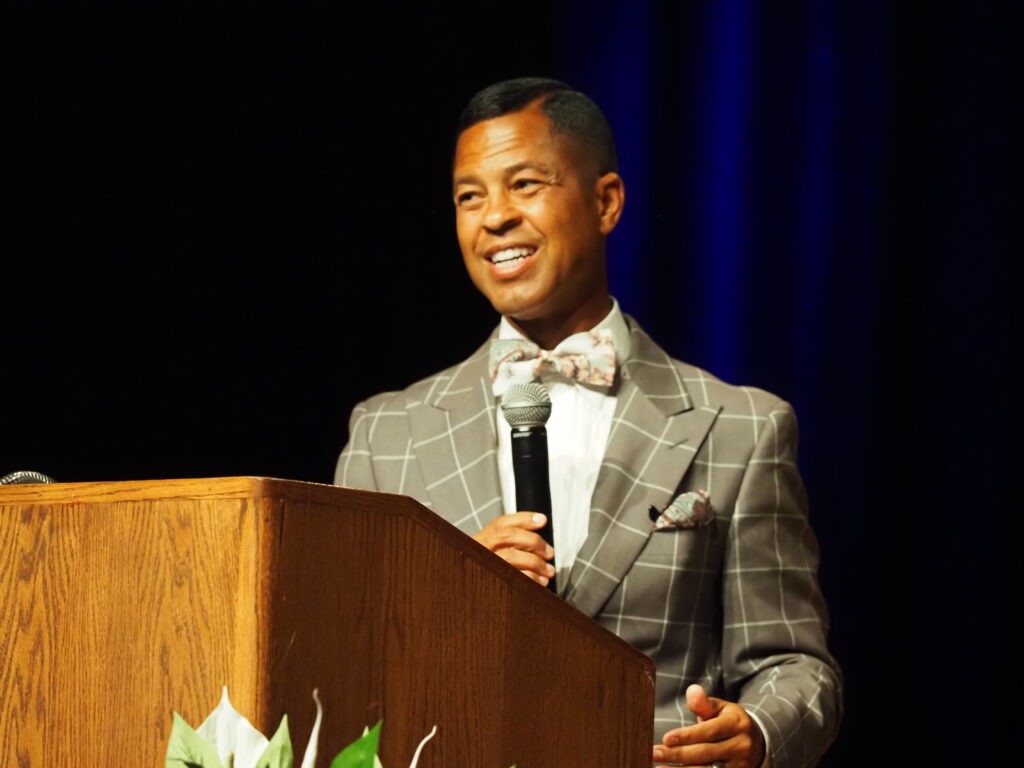
“When the government of the United States, through its COINTELPRO programs, infiltrated Black organizations during the 60s, they determined that Black folks should not unite.” he explained.
“By the time the 1980s came, crack cocaine flooded our neighborhoods. We didn’t invite these drugs in; we don’t own the weapons. Drugs came into the community, breaking up families. The incarceration rate quadrupled, and now we are fighting each other. But we are not beyond repair and the reach of God.”
More than an event
Student Minister Donald Muhammad shared the broader purpose of the week-long gathering. “Black Family Week is more than an event; it is a call to rebuild our homes, strengthen our communities, and reconnect our people to God, to one another, and to our divine purpose. When we strengthen the Black family, we strengthen the future of our nation.”
Brother Malik Ahmed is co-founder of Better Family Life. He shared with The Final Call the idea and origin of Black Family Week. “When I grew up in New York, the Muslim community kept their feet and ears to the ground. We must reproduce that energy.
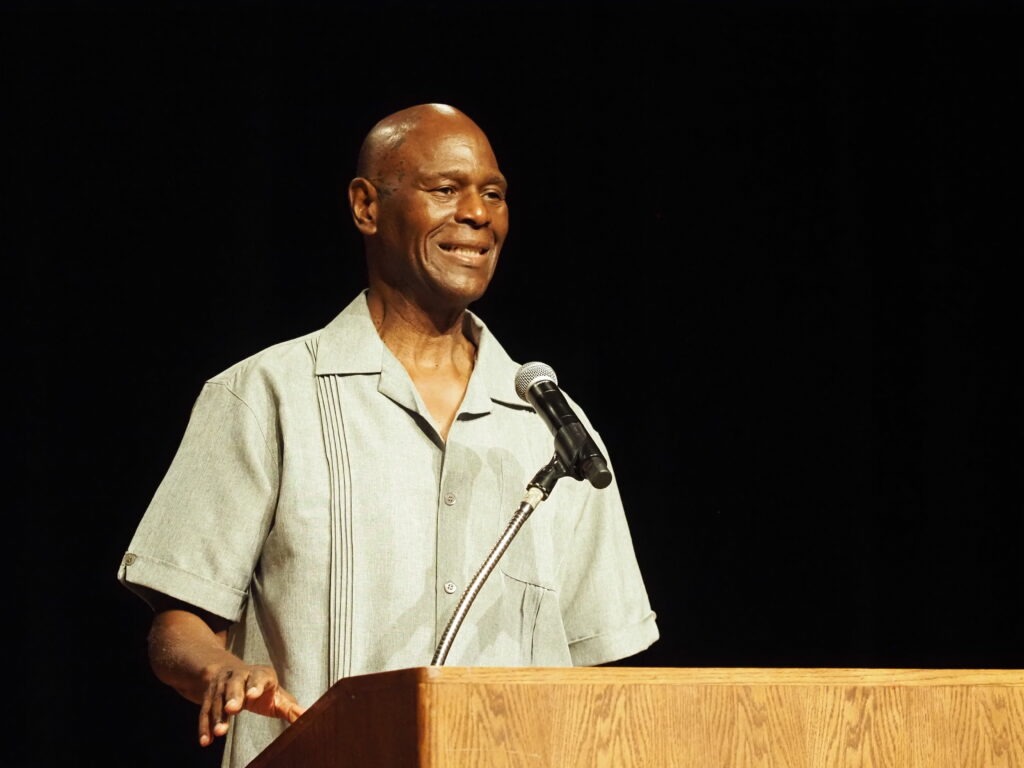
Photos: J.A. Salaam
I remembered in 1974 when the Honorable Minister Farrakhan organized a Black Family Day on Randall’s Island. There were over 72,000 people there, and the traffic was so bad that Brother Akbar Muhammad, may Allah be pleased with him, went and had them fly Minister Farrakhan in by helicopter,” he shared.
“A few weeks later it became Harlem Week, which brought out two million people over a three-week period. So, when I came to St. Louis in 1982, I said I’m going to do a Black Family Week. From 1984 to 2018, Better Family Life presented Black Family Week every year.
Today, Muhammad Mosque No. 28 and Better Family Life have merged this idea, which means we all possess Black Family Week as something we will do together. So, we all can have a better family life.”
Brother Talibdin El-Amin, publisher of the St. Louis Argus newspaper, emphasized the importance and need for such a gathering. “The Black Family Week is essential in forming a foundation for success in the family and ultimately the community as a whole.
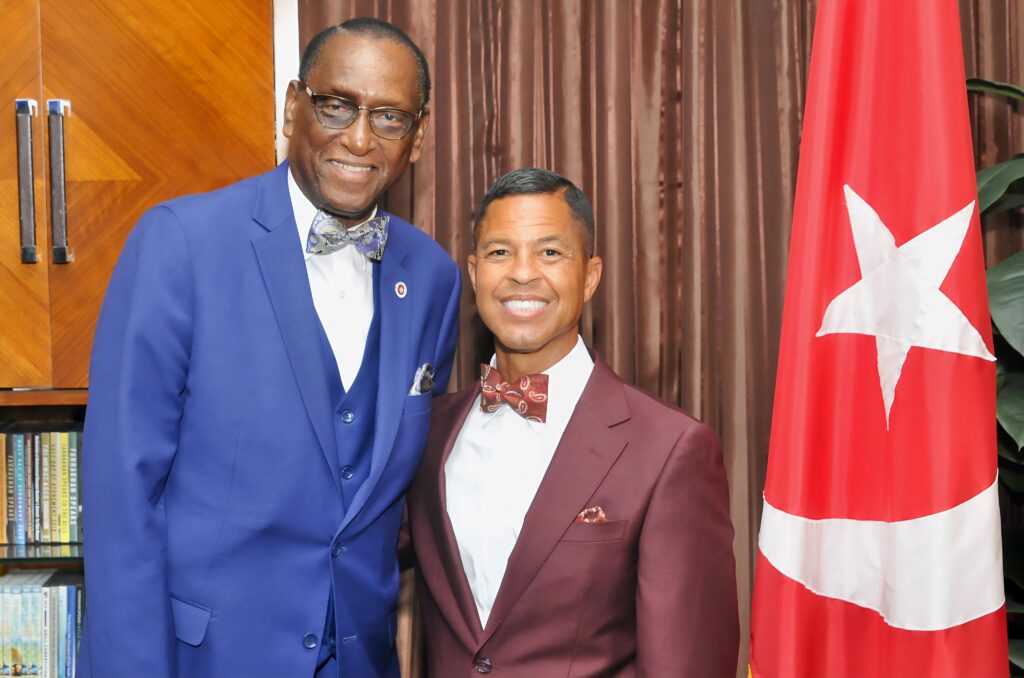
Photos: Cartan X
Much of the impact of social and economic dysfunction and disparities could be mitigated with a strong family foundation. Black Family Week is one key in helping to answer the call the Honorable Minister Louis Farrakhan put forth to make our communities a safe and decent place to live.”
Participants and attendees responded with deep appreciation. Zachary Harrell from Imperial, Missouri, said, “This was a powerful message and a great reflection of the Life-Giving Teachings. This message can wake us up to the world we are living in and to know how to follow God’s path.”
Nathaniel Jackson agreed. “The impact of this message on our community is about showing love to one another and working together.” Jeremiah McCall Jr., age 21, told The Final Call, “Student Minister Ishmael emphasized the importance of self-improvement, and if one of us works on ourselves, it will affect our community as a whole.”
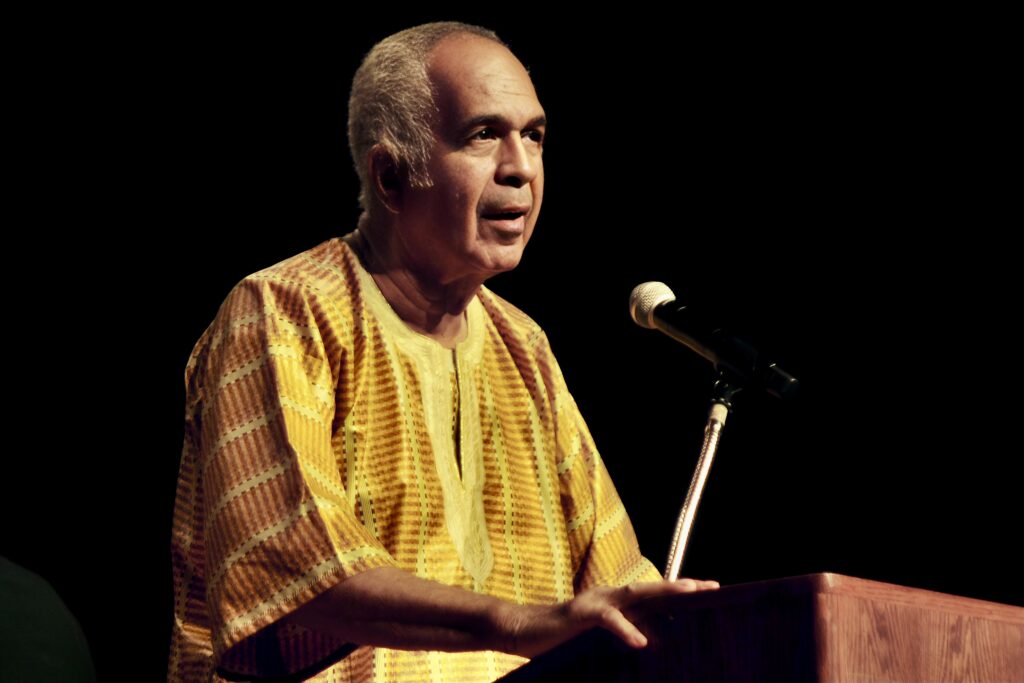
The week of events concluded on July 19, at Harris-Stowe State University again with Student Minister Nuri Muhammad, who delivered a powerful message centered on unity, love for self, and collective responsibility to build safe and decent communities, as taught by the Honorable Minister Louis Farrakhan.
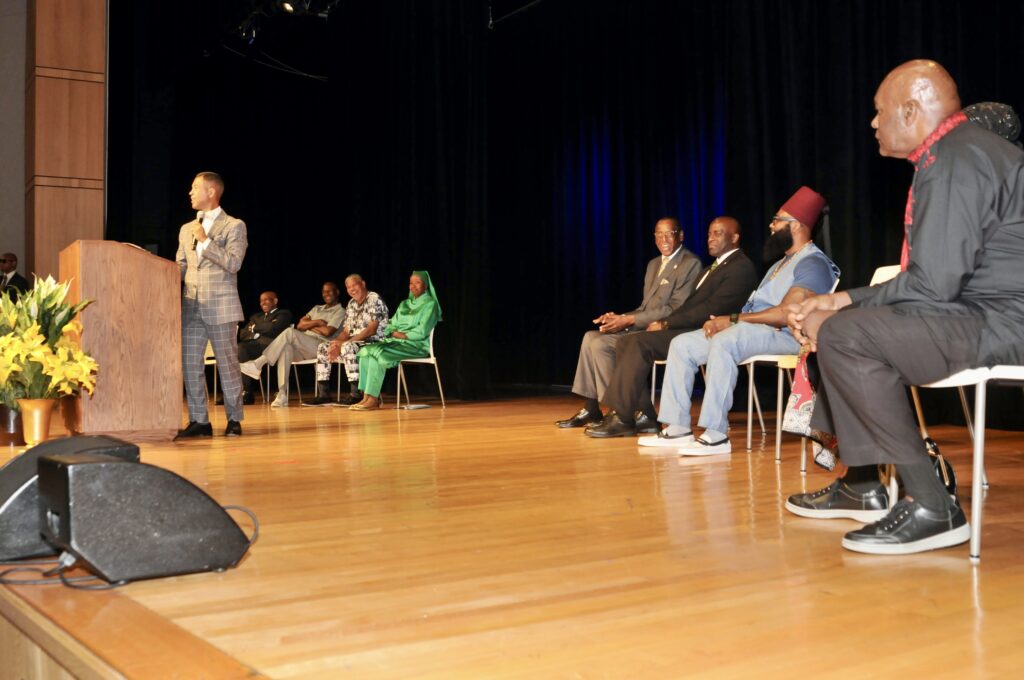
“The power of our community is the Black family,” said Student Min. Nuri. “Words have power and will become flesh. They can create a reality, and Allah (God) used words to bring things into existence,” he said. “Like when we call each other brother and sister, those words make you feel like family.
You become the uncles and aunts to the children and when they are acting up or getting out of line, the uncle and aunt can correct them. When we speak the same language of accountability and love, we create the conditions for safe communities. It takes a village to raise a child, so find someone to speak positive words to our children.”
Like Student Min. Ishmael, he also emphasized to attendees that the condition of Black communities is directly tied to the unity of Black people. “If we don’t come together as a people, we cannot build the safe and decent communities our families deserve.”
Love, unity, community
For people who attended Black Family Week events, the messages resonated. Kevin Cahill-Bey was impacted by the message of unity. “This message of love and unity has the impact of being contagious for the good of our community. It’s something that we need … .”
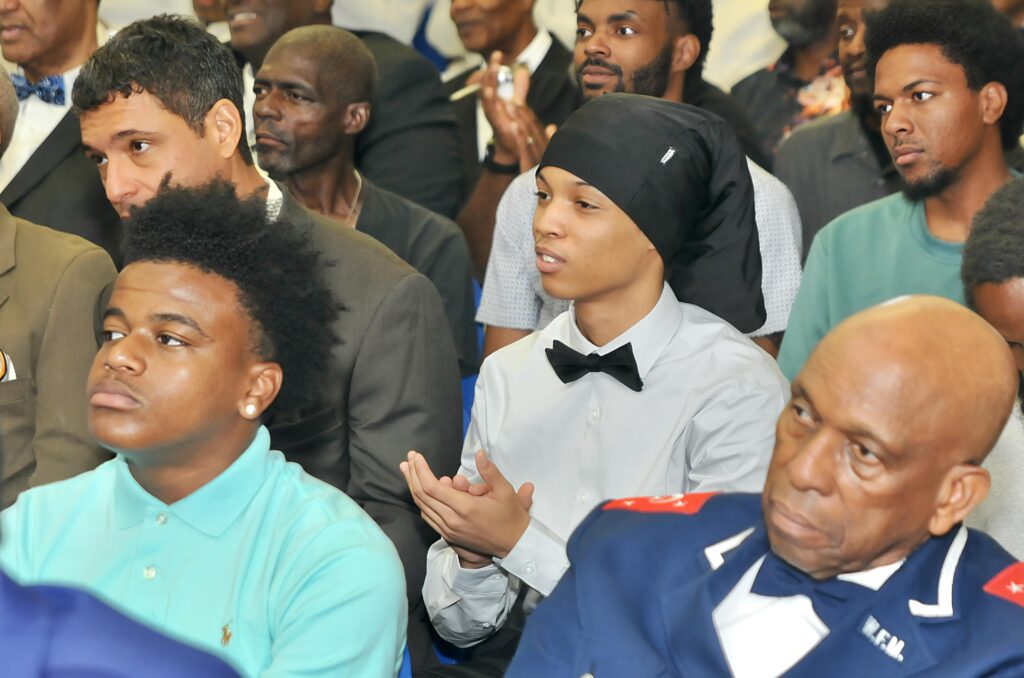
Ryan Sutherland shared, “One specific thing that really stuck with me was learning how to love a woman and being able to keep the family together and how important it is. Also, the reciprocation of it, and the woman learning to respect a man. I took plenty of notes.”
Tera Roberts was moved to tears. “Brother Nuri always brings the information about how to look at self first and then be able to bring that out into the community, which is a very good need right now for our community,” she said. Ms. Roberts also said that the information shared should be shared with families, friends and especially young people.
James Trust said he initially came to hand out pamphlets but ended up staying to hear more. “Man, he put a lot on my heart. Just how to respect the woman and the family unit, the whole family dynamic in general, and how it affects our neighborhood and our community as a whole. So, it was very powerful. It really impacted me.”
Yaphett El-Amin agreed, stating that the message was powerfully moving, motivating and uplifting. “He motivated me to expand my thinking and activate my thinking, particularly from the standpoint of doing more to spend with our own selves. You always know it, but putting it into action (is important).”
Alex Watkins was also inspired. “People need to realize the family has been destroyed systematically. If we are going to be smart people, we have to systematically bring the family back. Two things happened after segregation. We lost church and we lost school. We’ve got to bring ourselves back to that.”
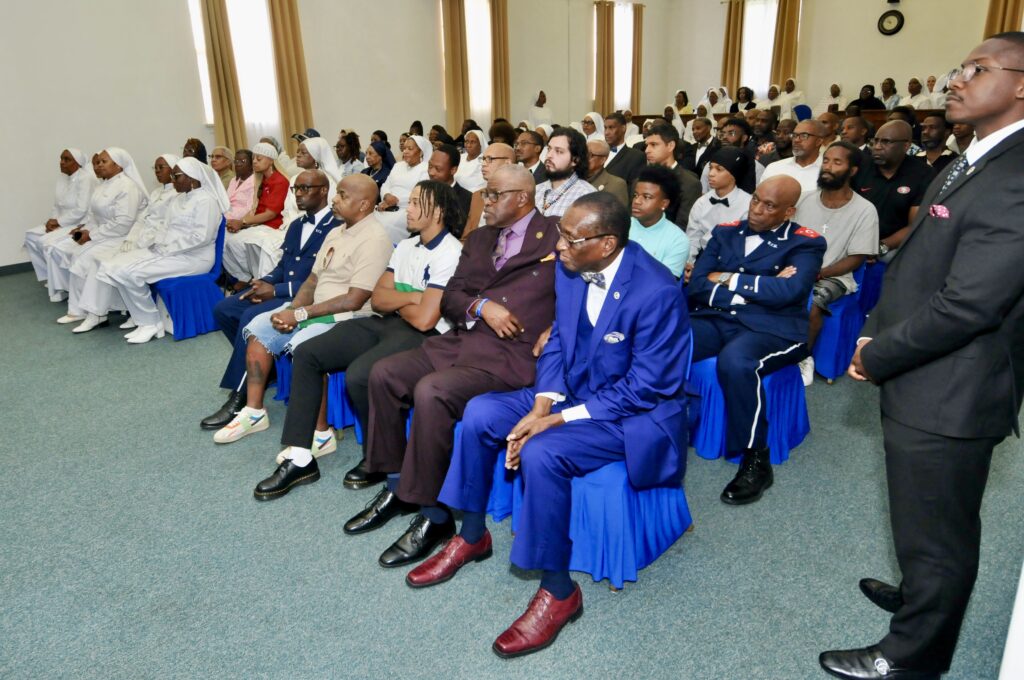
Latricia Davis, a first-time guest, said, “His message was very positive, uplifting, and reassured me that we do need this type of training and learning within our community, for sure.”
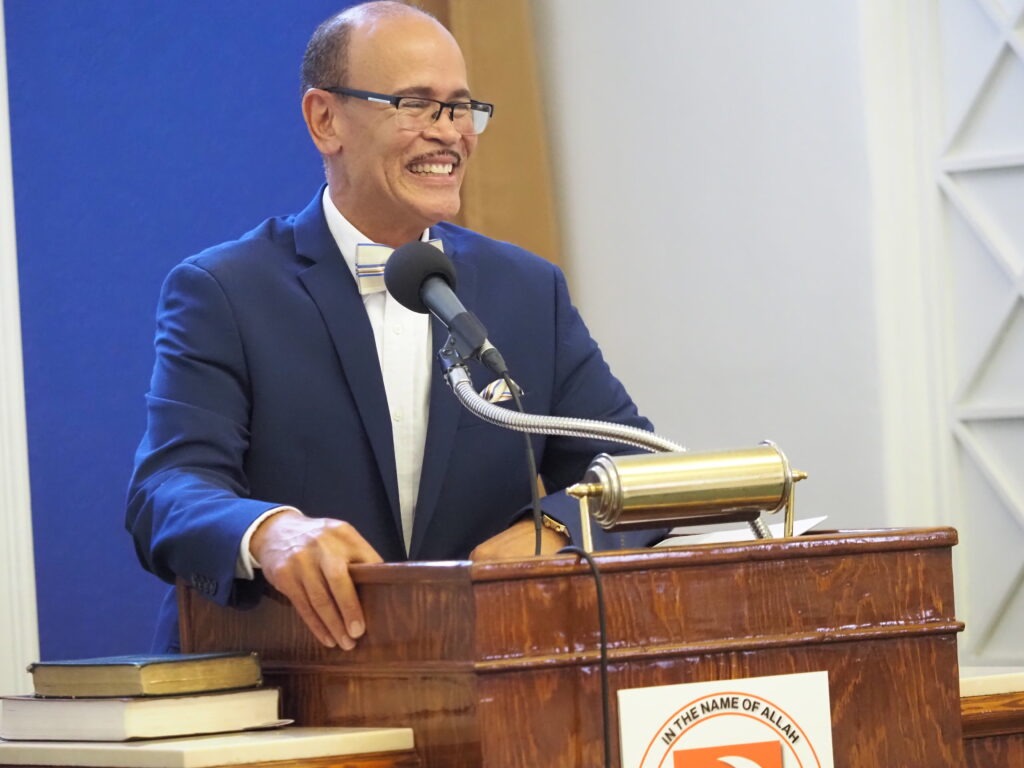
Rev. Duane D. Burch summed up the week and the needed presence of Black men working together with Black women to better and strengthen the bond between the two and the Black community.
“Too often the portrayal of the Black man and Black woman in the media, or the way we represent ourselves in public, or the depravity of our education, or the lyrics in our music, or the disproportionate incarceration (or killing) of our Black brothers and sisters create a stereotypical perception of our race,” he said.
“Black Family Week, however, reinforces the true fiber and fabric of what the family looks like. This week also encourages both men and women to wear their respective roles of responsibility and to take pride in who God has made them and the purpose for which we are all here.
We were reminded to love and respect one another. There are times when a refresher course or an encouraging word is needed to keep the fire lit. Just that nudge may be all you need to be the Black man that your family, our youth, and our community need you to be.”
Black Family Week in St. Louis stands as a testament to the commitment of the Nation of Islam and the broader Black community to strengthen the foundation of family, marriage and community unity.
As the community moves forward, the impact of this week will hopefully continue to resonate, inspiring families to rebuild, reconnect, and reclaim their rightful place as architects of thriving, safe and dignified communities.
