












Award-winning journalist says iconic Black Muslim dessert tells a story of faith, liberation and Nation of Islam history
CHICAGO—For generations, members of the Nation of Islam have carried bean pies across America. That enduring tradition recently received national recognition when journalist Ahmed Ali Akbar earned a James Beard Foundation Media Award June 13 for telling the story behind one of the Nation’s most enduring symbols.
Ahmed Ali Akbar, a former Chicago Tribune reporter, won the James Beard Foundation Media Award in the Foodways category for his Tribune article, “The Hunt for the Bean Pie Street Sellers of Legend, and How This Dessert Is a Symbol of Liberation for Many Black Muslims.”
The award-winning feature explored the history, cultural significance and enduring legacy of the bean pie in Chicago and throughout various Black Muslim communities throughout the country.
For many in the Nation of Islam, the recognition honored far more than a dessert. It affirmed a story rooted in the Teachings of the Most Honorable Elijah Muhammad, the principles of healthy eating, Black self-help, economic independence and the familiar sight of a well-dressed brother offering Muhammad Speaks and then, The Final Call newspaper alongside a fresh bean pie.
“I’m very shocked and surprised,” Mr. Akbar said after receiving the award. Beyond the professional recognition, he said winning the award was spiritually fulfilling because the story represents the transformative experience of the Black Muslim community.

He said he pursued and submitted the story because he wanted readers to understand how deeply meaningful the bean pie is to Black and Muslim communities throughout America.
For Mr. Akbar, the assignment was also deeply personal.
In an exclusive Final Call interview, he reflected on growing up eating bean pie while attending the Islamic Center of Saginaw, Michigan. During his James Beard acceptance remarks, he said he was raised on “a diet of anti-colonialism and Black Muslim theories of civil rights.”
He described it as a profound blessing to be the child of immigrant Muslims who was “physically, intellectually and spiritually nourished by a dish that symbolized Black liberation from the historical effects of slavery.”
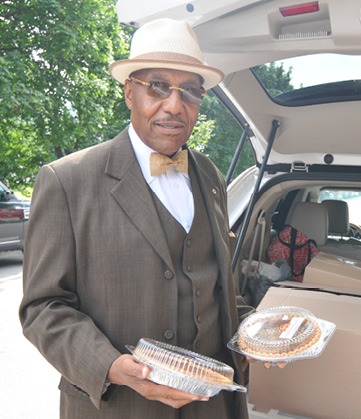
Mr. Akbar said one of the greatest joys of reporting the story was traveling to Chicago’s South Side to meet Brother James 40X, a legendary bean pie salesman whose decades of distributing bean pies and The Final Call newspaper have helped preserve one of the Nation’s most recognizable traditions.
Bro. James, who attends Mosque Maryam in Chicago, later joined Mr. Akbar at the James Beard Awards ceremony, bringing the story full circle from the streets of Chicago to one of the country’s highest honors in food journalism.
For generations, that tradition has been carried through a dessert unlike any other.
The bean pie, made with navy beans, cinnamon and other baking spices, has long been compared to sweet potato or pumpkin pie. But among Black Muslims, it represents much more than a dessert. It symbolizes healthy living, Black pride, entrepreneurship and the effort to nourish both the body and the mind.
Mr. Akbar said the assignment began with curiosity about bean pie ice cream at Shawn Michelle’s Homemade Ice Cream before expanding into a much larger story about Black Muslim history, entrepreneurship and community.
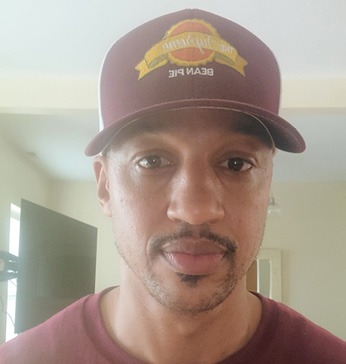
“I realized that Chicago had a very good claim,” he said, explaining that he discovered Chicago’s central role through institutions such as Supreme Bean Pie, Salaam Restaurant, Shabazz restaurants and other historic businesses that promoted the pie nationwide.
Mr. Akbar said he encountered several historical accounts regarding the bean pie’s origins, but said his reporting ultimately focused less on identifying a single creator than on documenting the communities that preserved and promoted it.
“Food becomes meaningful not because of the dish, but because of the people who promoted and shared it,” Mr. Akbar said. “It’s about the people and how they’ve nourished their community through this incredible history of healthy eating.”
Among the people who helped Mr. Akbar tell that story was Bro. Elijah Bey, manager of Supreme Bean Pie. Bro. Elijah said his own connection to the pie began almost from birth.
“I can’t even tell you when my first experience was,” he said. “That’s how young your brother came up on it.”
Raised in a Black Muslim bakery family in Oakland, Calif. Bro. Elijah relocated to Chicago in 2017 to help with the bean pie.
To Bro. Elijah, the bean pie represents one of the Nation of Islam’s most recognizable contributions to Black America. “It’s a staple in our Black community,” he said. “The bean pie is a unique pie.”
He described it as more than a healthy alternative to traditional desserts. It serves as a bridge between the Nation of Islam and the broader community.
That mission comes to life one customer at a time.
Bro. James 40X, whose decades of distributing bean pies alongside The Final Call newspaper have made him a familiar face throughout Chicago, said loyal customers return week after week for the pies, with some purchasing several at a time. He said introducing first-time customers to the bean pie is one of the most rewarding parts of his work, often offering them a sample so they can experience it for themselves.
For Bro. James, however, selling bean pies has always been about more than selling desserts. “It’s basically just like The Final Call, trying to get our people to eat healthy,” he said. “If you’re going to get a good teaching in The Final Call, if you’re going to read good, you may as well eat good too.”
That shared mission continues to guide the work of Supreme Bean Pie today.
Bro. Elijah said the proceeds support Muhammad University of Islam.
“The number one purpose is to fund Muhammad University of Islam,” Bro. Elijah said of the independent educational system and school established by the Most Honorable Elijah Muhammad and continued by the Honorable Minister Louis Farrakhan.
For Mr. Akbar, the reporting was never simply about tracing the origins of a dessert. It was about documenting a living tradition.
One aspect of his reporting that mattered most, he said, was refusing to treat the bean pie as a curiosity or novelty. “I think it’s important to just learn from different communities and not treat them as if they’re oddities,” he said, “but that they are important to somebody’s history.”
His reporting also explored how the Most Honorable Elijah Muhammad’s emphasis on healthy eating, self-determination and economic development shaped generations of Black Muslims.
The Tribune feature noted that the Nation of Islam’s food programs addressed nutritional disparities decades before concepts such as “food deserts” and “food apartheid” became common in academic and public policy discussions.
Today, institutions including Supreme Bean Pie, Shawn Michelle’s Homemade Ice Cream, Imani’s Original Bean Pies and Paradise Desserts continue preserving and expanding that legacy, introducing new generations to one of the most distinctive foods in the Nation of Islam culture.
The James Beard Media Award has introduced a wider audience to a tradition that members of the Nation of Islam have carried for generations, affirming that the story of the bean pie is also a story of faith, healthy living, entrepreneurship and Black self-determination.
