










WASHINGTON—In what participants called a historic gathering, more than two dozen Black organizations and leaders from across the diaspora recently convened a virtual town hall to reaffirm their decades-long solidarity with Cuba and to coordinate action against the intensified U.S. economic blockade crippling the island nation.
The meeting, dubbed “1st All African Town Hall Meeting on Cuba in North America,” was held July 20 and was organized by the Zimbabwe-Cuba Friendship Association and facilitated by Black Workers for Justice, the Communiversity and a coalition of veteran organizers, bringing together elected officials, medical professionals, educators, journalists and grassroots activists. Participants were all united by what they described as a shared history of struggle against racism and imperialism.
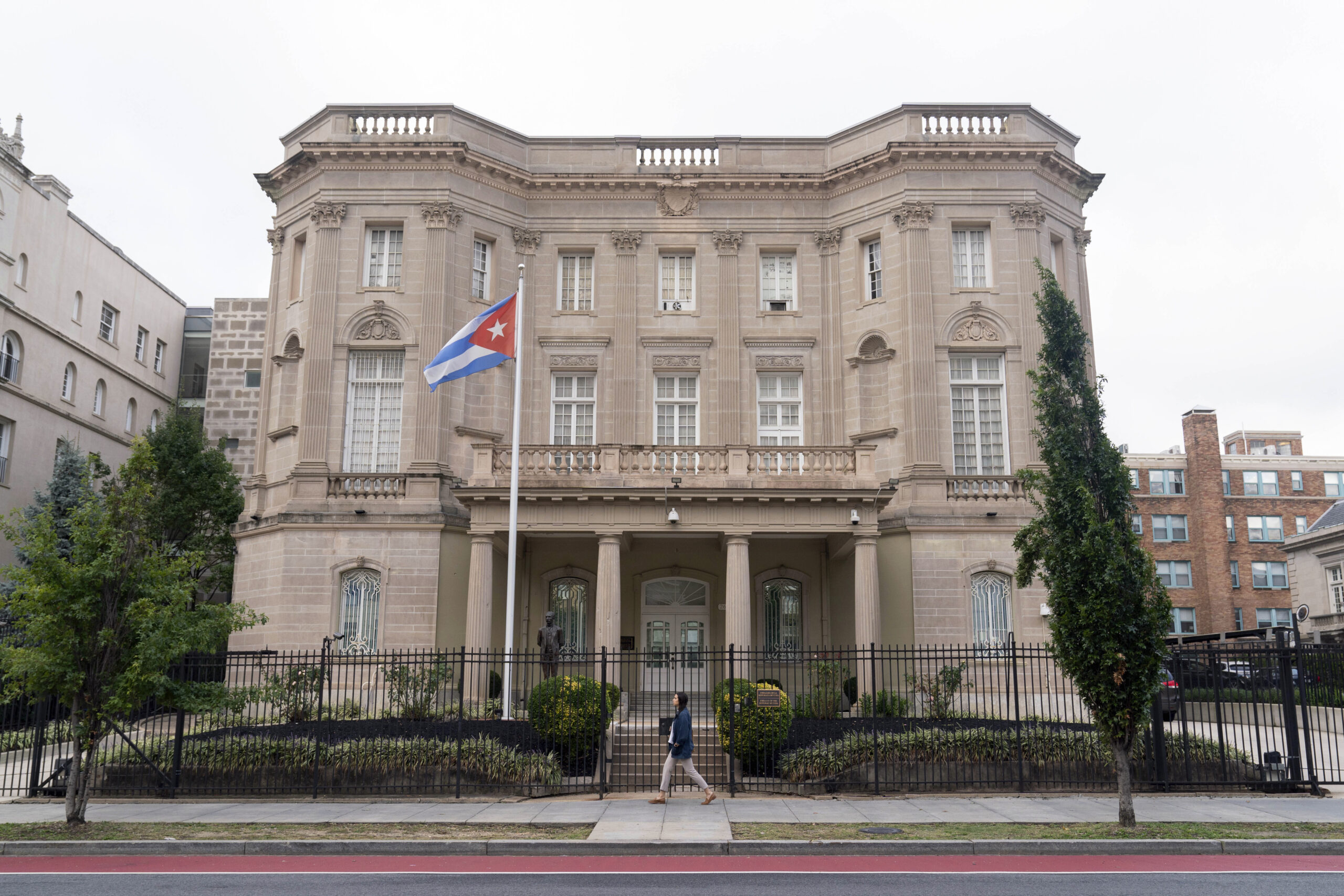
Tanieris Diéguez La O, deputy chief of mission at the Cuban Embassy in Washington, delivered an emotional keynote address detailing the devastating human cost of the blockade, which has been tightened since January.
“We are talking about more than 100,000 people waiting for surgeries,” Ms. Diéguez said. “We are talking about the working and the function of the dialysis machine, or the incubator for the newborn babies, or the refrigerator for the vaccines.”
She reported that Cuba’s infant mortality rate has more than doubled, to 9.9 deaths per 1,000 live births, up from about four in normal times, and that nearly 3,000 patients depend on dialysis treatment now compromised by energy shortages caused by U.S.-driven fuel disruptions.
“Behind these numbers are not only statistics,” she said. “They are names, they are family, they are parents who have lost their children, and no political disagreement should ever justify the preventable suffering of a child.”
Despite the hardships, Ms. Diéguez emphasized that Cuba has not closed a single hospital or privatized its healthcare system. “Our doctors continue showing up every day,” she said. “They are like heroes.”
Dr. Rosemari Mealy, author of “Fidel and Malcolm X: Memories of a Meeting,” underscored that the relationship between Black America and Cuba “has never depended on the political circumstances or the mood of the moment.”
“This has been very historical, and what connects us goes much deeper,” she said. “We share a long history rooted in the enduring legacy of Africa, in the wounds left by colonialism, and our common struggle for dignity and self-determination as people of the Global South.”
The town hall opened with a moment of silence led by Shafeah M’balia, executive director of the Communiversity, for “all those who have struggled, who have died, who have given resistance to colonialism around the world.”
Ashaki Binta, national strategic organizer for Black Workers for Justice, set the context for the gathering, noting that participants represented “decades and decades of work in solidarity with Cuba.”
“We’re certainly all united here in our opposition to the treatment of Cuba, the blockade, and the whole history of aggression against Cuba,” Ms. Binta said.
The program featured brief testimonies from participants chronicling their organizations’ histories of Cuba solidarity work.
Obi Egbuna Jr., external relations officer of the Zimbabwe-Cuba Friendship Association, detailed efforts ranging from appeals in support of Cuba’s Henry Reeve International Medical Brigade during the COVID-19 pandemic to the establishment of the Shirley Graham Du Bois-William Worthy Media Friendship Collective. He also highlighted cultural work, including children’s plays and art shows dedicated to Assata Shakur and Cuba’s medical brigades.
Dr. Mealy, joining from New York, announced she was heading to Cuba with a solidarity delegation for the July 26 commemorations of the Cuban Revolution. She and Omowale Clay of the December 12th Movement have launched a “Blacks for Cuba Coalition” to take the issue to the streets of Harlem and beyond.
Ms. M’balia described the Communiversity’s pillars of work and announced the launch of a humanitarian aid campaign targeting women’s and children’s hospitals in Santiago de Cuba and Guantánamo.
Former Alabama State Senator Hank Sanders, who served 35 years in the legislature, recalled first traveling to Cuba in 1986 and later leading efforts to open agricultural trade exceptions. “Alabama is certainly one of the most conservative and reactionary states in the United States,” he noted, “but we felt the more we could open it up, the more we could build those relationships.”
Dr. Lucille Perez, a former president of the National Medical Association (NMA), recalled leading a 50-person delegation to Havana, where the group was hosted by President Fidel Castro at the Palace of the Revolution. She directed participants to a recent webinar and news statement on Cuba by the NMA’s current president, Dr. Roger A. Mitchell Jr.
The gathering produced concrete proposals for moving forward. Zaki Baruti, president general of the Universal African Peoples Organization, proposed a National Day of Solidarity with the Cuban people, including rallies at federal buildings and coordinated shipments of material aid.
“We most recently shipped some 8,000-plus books to Gambia to help build a library,” Mr. Baruti said. “Let’s do a national day where we are supplying some type of needed supplies for the Cuban people.”
Colette Pean of the December 12th Movement seconded the call, emphasizing the need to bring Cuba solidarity directly into Black communities. “We must keep it in our community,” she said. “We go to be represented as Black people everywhere to support Cuba, but it is crucial to bring the education to our wider community.”
Tony Menelik Van Der Meer of the Communiversity outlined plans for a delegation to Santiago de Cuba and Guantánamo, including a “suitcase delegation” of young people carrying needed supplies. He also proposed a broader campaign to get city councils to pass solidarity ordinances and to engage churches, sororities, fraternities and unions.
“We want to align the Black community so that we could raise the consciousness,” Mr. Van Der Meer said. “This is a unique opportunity for us to develop a united front and engage in the serious work.”
Dr. James Pope of Winston-Salem State University described taking approximately 40 students and six faculty members to Cuba over the years, developing relationships with Cuban scholars and institutions. “Most people will say that when the students would go with me on those trips, they would be Cuban by the time they leave,” he said.
Gabriela Castillo, liaison for African Diasporic Affairs at the Cuban Embassy, closed the formal proceedings with thanks to the participants.
“Real friendship shows up when times are tough, like this one for the Cuban people,” she said. “Listening to all of you gives us hope, a lot of hope, and in this moment, hope is something very important to move forward.”
