





WASHINGTON—In a sweeping 100-page report, the U.S. State Department has unjustly accused Cuba of allegedly orchestrating a sophisticated, decades-long campaign to encourage far-left extremism, run espionage rings and cultivate influence networks inside the United States. The recent report, released July 20 and titled “Cuba:
The Capital of 21st Century Communism,” places Black progressive movements, activists and organizations squarely in its crosshairs, falsely portraying them as unwitting or willing instruments of a foreign adversary’s campaign to “erase the United States from the Earth.”
The report asserts that since 1959, the Cuban government has waged “a sustained campaign of subversion against the United States” that “has infiltrated the highest reaches of the U.S. government, recruited and cultivated generations of American activists, (and) backed an unprecedented wave of left-wing terrorism on American soil.”
It describes Cuba as the “beating heart of a new and distinct kind of Marxism, forged around an overriding resentment and fundamental hatred of the United States.”
State Department officials previewed the document at a meeting with representatives of more than 60 countries, where Secretary of State Marco Rubio.
Who is of Cuban descent, said the small island nation’s intelligence and ideological networks have “helped build the far-left in our country and in our hemisphere,” adding that the government in Havana “remains inextricably linked to far-left groups and movements across and beyond the West.”
Not surprisingly, what is omitted from the State Department’s narrative is the decades-long war the U.S. government has waged against Cuba, which has included: unjust, crippling sanctions, numerous attempted assassinations of the late revolutionary and president, Comandante Fidel Castro, active attempts to destabilize the country through subversive activities and much more.
The Honorable Minister Louis Farrakhan, National Representative of the Most Honorable Elijah Muhammad, a friend of Comandante Castro, often pointed out the good that the Cuban government has done.
“When Fidel Castro rose to leadership as president in Cuba, he transferred land from the rich to the poor. He inherited an illiterate country, but today Cuba has 100 percent literacy. He inherited homeless people, but today every person in Cuba has a home.
In Cuba, citizens have free education, free health care—but America does not like Fidel Castro because he was good for the people,” Minister Farrakhan said, in a message he delivered November 7, 2005, titled: “Jesus: The Guide for the Public Servant.”
In a 2016 letter Minister Farrakhan wrote upon the passing of Comandante Castro, he stated in part: “Long live the memory of Fidel Castro. Long live the Cuban people who have endured this savage blockade for over 50 years and have produced magnificent things in medicine, in science, in culture for the world to receive. Long live the Cuban revolution.
And may we be on the side of those who admit that we were once blind but it’s our time to see as the confusion of Western heads of state and government is so clear that they are going blind.
The confusion that exists in the Heads of State and government of the Western world will continue. They will continue to break apart as the poor, the weak, the Black, the Brown and the Red will continue to rise by the grace of Allah (God).”
Dr. Wilmer Leon, political scientist, author and commentator, offered a searing critique of the State Department report’s underlying logic, comparing it to historical patterns of dehumanization used to justify violence against non-White communities and countries.
“One of the tactics that America loves to use, as it deals with its adversaries, is the creation and promotion of the boogeyman,” Dr. Leon said. “What this report is doing, and is baselessly doing, is trying to rationalize criminal behavior by the United States by claiming that Cuba is engaged in terrorism, domestically in the United States, and internationally.”
He continued: “Donald Trump loves to do the same thing with Iran by claiming that the government in Iran is insane, that they’re evil, that they’re stupid people. It’s a dehumanization tactic that is primarily used against countries of color.
It plays right into the dominant American ethos, in terms of White supremacy. It’s also very similar to the tactic that the United States used to dehumanize Native Americans and to rationalize the Trail of Tears.
This is a tactic that the United States has used against Venezuela. It’s a tactic that the United States has used against Libya, and as Gil Scott-Heron would say, ‘an endless list that won’t be missed when at last America is purged.’”
A report weaponized against Black solidarity
Central to the report’s thesis is the false claim that Cuba has strategically cultivated and exploited Black activism in the U.S. as a vehicle for revolutionary change. The document devotes an entire chapter, “Racial Revolution,” to Havana’s historical relationship with Black activists, portraying figures like Kwame Ture (formerly Stokely Carmichael).
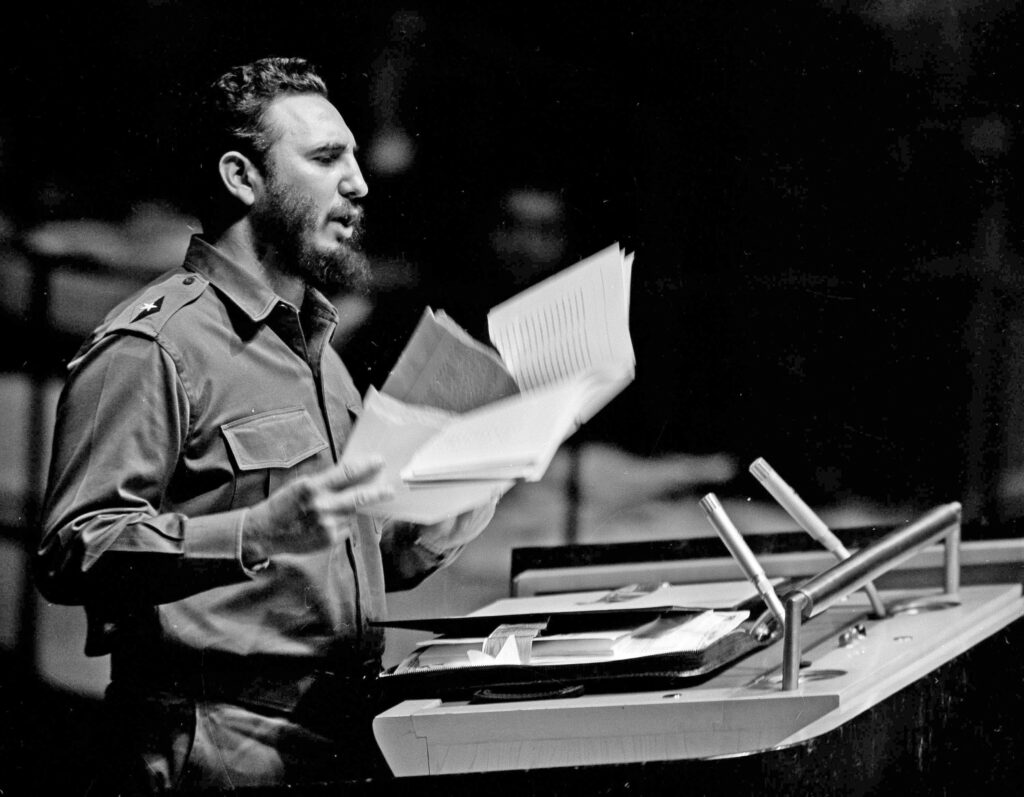
Angela Davis and Assata Shakur as products of Cuban influence rather than of America’s own centuries of racial oppression. It also references the time in 1961 when Comandante Castro came to Harlem in New York for the UN General Assembly and met with Nation of Islam Minister Malcolm X and was received by a cheering crowd.
The report alleges that Cuba has long sought to organize American “minority” groups as “internal revolutionary agents,” quoting a former senior Cuban intelligence officer who testified that one of the government’s directives was to exacerbate “the racial problem in the United States.”
It claims Cuban president Fidel Castro “boasted that his agents in the United States were so industrious and well-placed that they had the capacity to create race riots at a moment of his choosing.”
The document asserts that Cuban state-backed broadcasts and writings played a “foundational role in the formation of Black Power ideology,” citing Robert F. Williams’ “Radio Free Dixie” broadcasts from Havana, which it says urged Black Americans to “take up armed struggle against their country.”
Nowhere, the report claims, has Cuba’s “Shakur strategy” been more pronounced than in the modern Black Lives Matter movement, alleging that the movement’s public language and ideology are infused with the influence of Assata Shakur.
The Black liberation activist wrongly convicted in the 1973 death of a New Jersey state trooper in a trial she and her supporters long denounced as unjust. She escaped prison, received political asylum in Cuba and lived there until her death in 2025.
The report also characterizes the Black Alliance for Peace, a frequent collaborator with the National Network on Cuba, as having created a “database” mapping U.S. military and law enforcement locations, which the document describes as a tool to help activists “strategize how and where to organize and agitate” against U.S. targets.
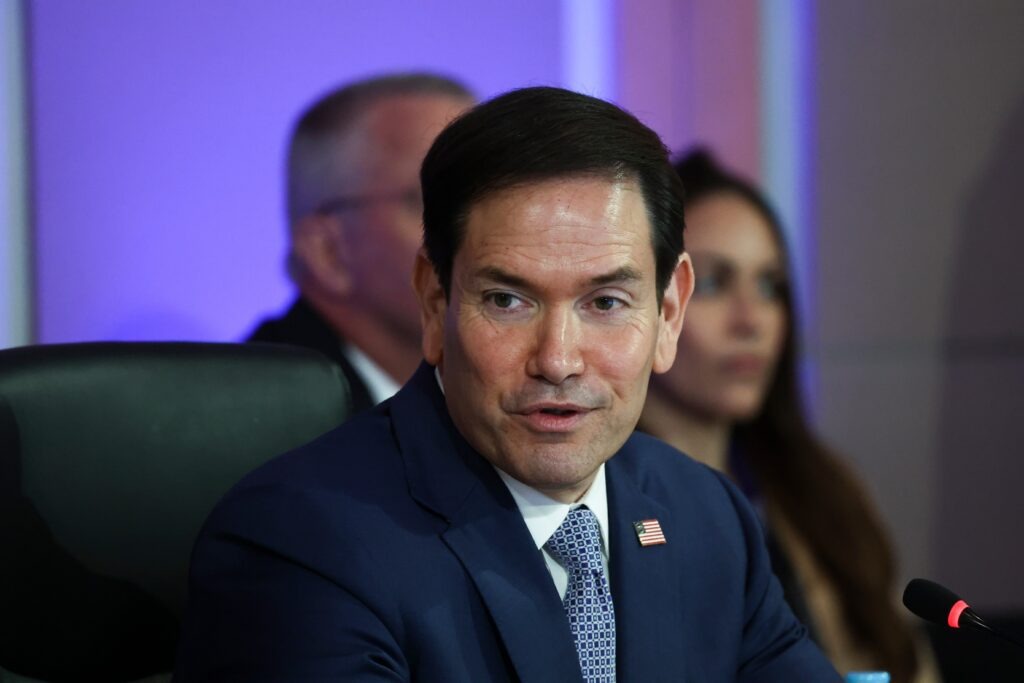
Photo: Eloisa Lopez/Pool Photo via AP
So-called front groups and ‘fellow travelers’
The report identifies U.S.-based organizations it describes as part of Cuba’s so-called influence network. Among them is the National Network on Cuba (NNOC), a coalition of more than 60 American groups committed to lobbying for an end to the U.S. embargo.
The report highlights a “National Rapid Response Plan” distributed by NNOC that it says outlines a strategy for “coordinated nationwide actions” at federal institutions, military bases and ICE detention centers within 24 hours of any U.S. military action against Cuba.
The report describes the Cuban Institute of Friendship with the Peoples (ICAP) as the central hub of Cuba’s international influence operation, noting it is led by Fernando González Llort, who served 15 years in U.S. prison as one of the “Cuban Five.” The State Department sanctioned ICAP and its travel agency, Amistur, in June, accusing them of supporting Cuban intelligence activities.
The People’s Forum, Code Pink, the Democratic Socialists of America (DSA) and the National Lawyers Guild are also named. The report details their delegations to Cuba, meetings with Cuban officials and advocacy against unjust U.S. policy, noting that the DSA has sought formal communication with Cuban ministries and that Code Pink has come under federal scrutiny over its funding sources.
The report concludes that Cuba has fused espionage, propaganda and political advocacy into “a single revolutionary project,” and warns that Havana’s fundamental objective remains what it was when Comandante Fidel Castro marched into the capital in 1959: a hemispheric Marxist revolution that erases the United States.
Community responds: Defamation and dehumanization
Activists and supporters of Cuba solidarity have forcefully rejected the State Department’s characterization, calling the report a calculated attempt to criminalize dissent and delegitimize Black internationalism.
Obi Egbuna Jr., external relations officer of the Zimbabwe-Cuba Friendship Association and a former U.S. correspondent for Zimbabwe’s The Herald, told The Final Call the report is part of a long pattern of imperial aggression.
“It’s up to those of us who understand how the world benefits from Cuba and their dedication to their principles to defend them,” he said. “We’ve seen this happen before. We’ve seen this unfold too many times. Trump and Rubio are trying to finish what Kennedy started,” he said, referring to former U.S. President John Kennedy.
In 1961 under President Kennedy, a failed CIA-backed military operation known as the Bay of Pigs was launched. Nearly 1,500 Cuban exiles attempted to overthrow Comandante Castro’s government, but were swiftly defeated.
“The first seven presidents of this country tried to annex Cuba. The imperialists are sore losers. They do not want a flourishing socialist revolution in this hemisphere and will do anything to pursue regime change,” said Mr. Egbuna.
Luci Murphy, a longtime D.C.-based activist, warned that the report is designed to intimidate and isolate friends of Cuba. “They are making a list of all of the friends of Cuba and potential friends of Cuba, so that we will be scared, so that we will think that they’re coming after us,” Ms. Murphy said. “We need to hang together. We need to really be in touch with each other and connected,” she said.
Aid with one hand, pressure with the other
Just one day after the report’s release, the State Department announced that the first U.S. humanitarian flight had departed Miami for Cuba on July 21, carrying food and hygiene kits for up to 700 families.
The delivery, made through Catholic Relief Services, is the first installment of a $100 million assistance commitment Secretary Rubio announced in May and follows $9 million in earlier U.S. support distributed through the Catholic Church on the island.
The State Department said direct delivery by local parish representatives “will ensure critical U.S. assistance reaches everyday Cubans in need, without any opportunity for regime diversion or theft.”
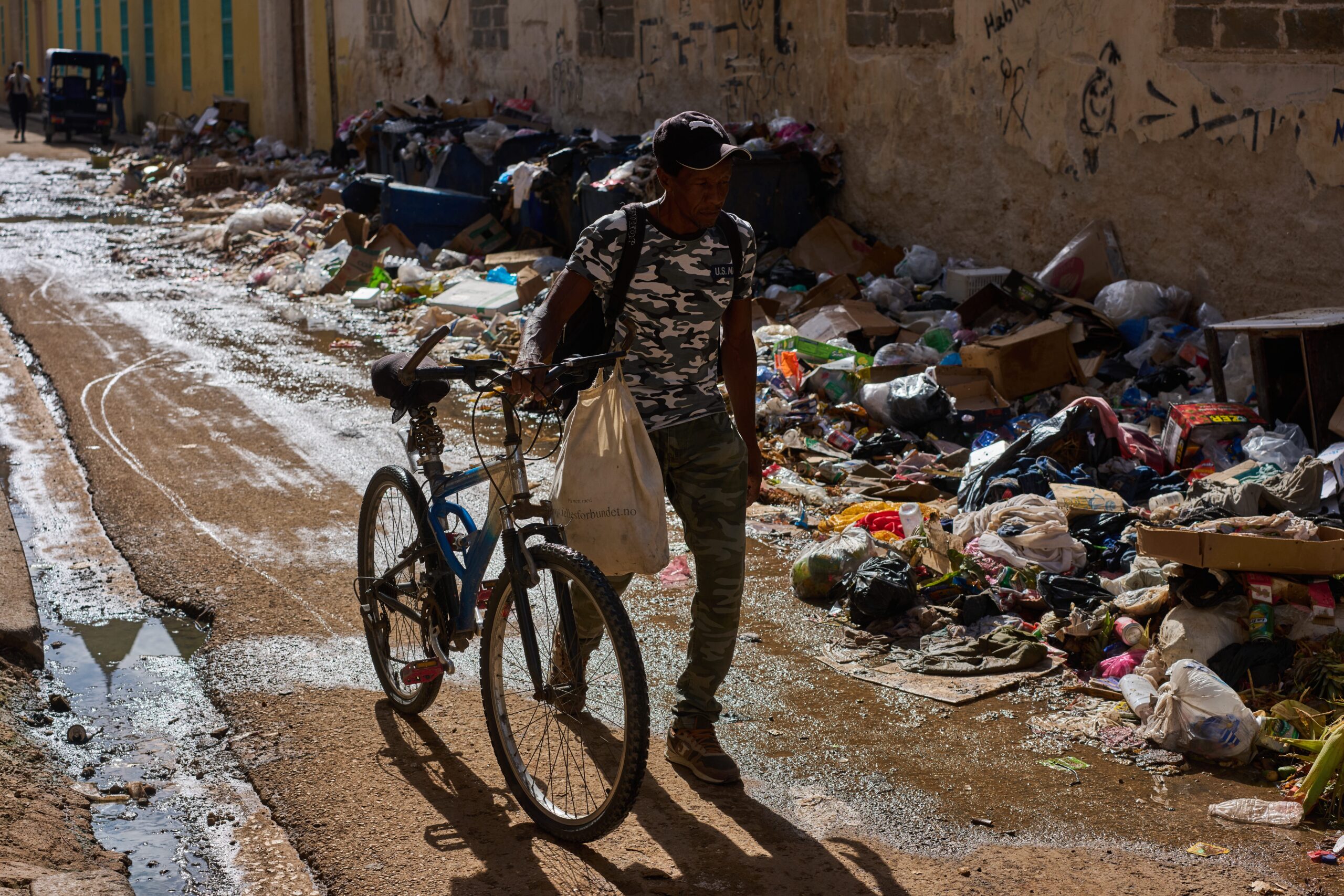
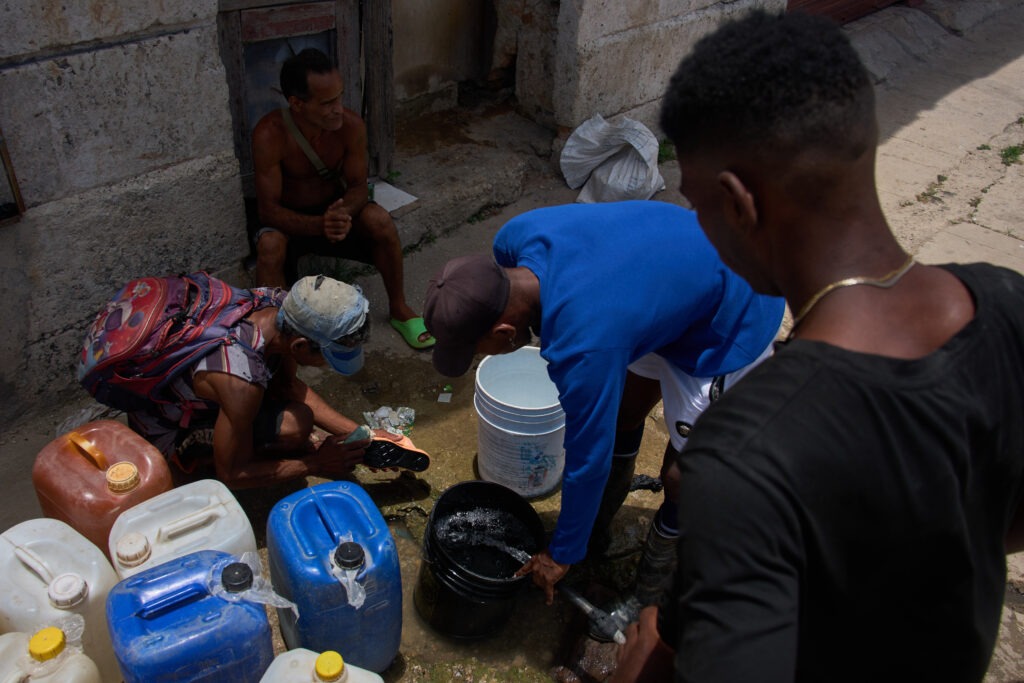
But the aid arrives even as Washington tightens its stranglehold on the island, blocking most oil shipments and piling on financial sanctions that Cuban officials blame for the very blackouts and shortages the aid purports to relieve.
Havana was initially wary of the offer, which the administration says is designed to help Cuba’s people but not its government, and rejected accompanying U.S. calls for political reforms before agreeing to accept the assistance amid talks with Trump administration officials.
For solidarity activists, the juxtaposition, a $100 million pledge delivered alongside a report branding Cuba’s friends as agents of subversion, captures the contradiction at the heart of U.S. policy.
The Fight Continues
As the Trump administration escalates its pressure campaign against Cuba, including executive orders expanding sanctions, tariffs on countries that supply oil to the island, and public discussion of potential military intervention, the State Department report serves as a blueprint for further action against domestic organizations and individuals who advocate solidarity with the island nation.
The administration has already sanctioned ICAP and Amistur, and federal authorities have detained and deported a Cuban national associated with the organization.
A federal grand jury in Manhattan is examining potential foreign-agent and tax violations involving the financial network of Neville Roy Singham, the husband of Code Pink co-founder Jodie Evans and a major benefactor of the group.
For Cuba solidarity activists, the message of the report is clear: the U.S. government views their advocacy not as legitimate political expression but as part of a foreign intelligence operation. Yet, the sentiments from people in this article and expressed by others is plain; they are not backing down.
