








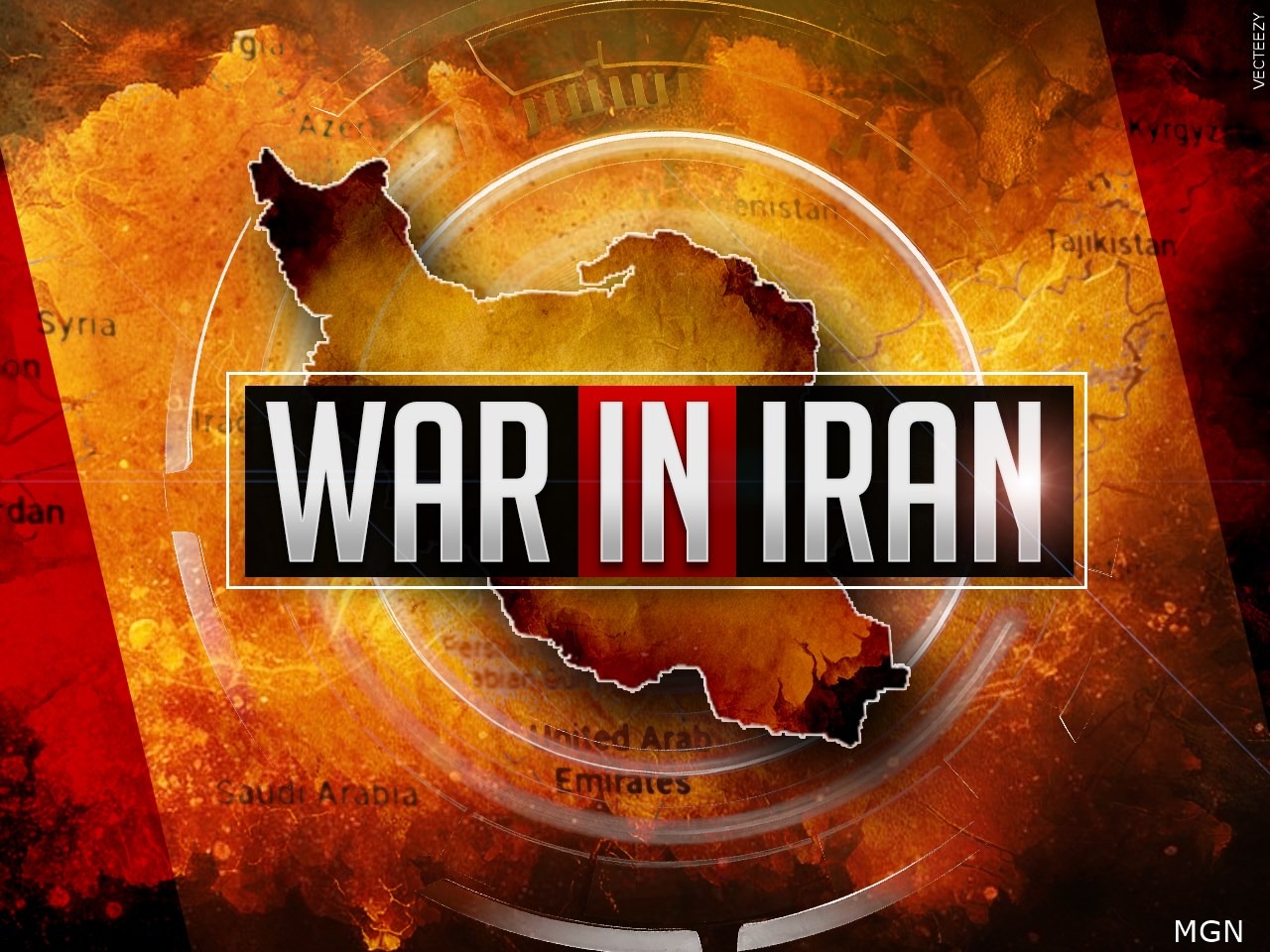

More threats to the global economy and the likelihood of an expanded and extended war in the Middle East presented itself as the U.S. launched and has continued a two-week missile assault on Iran. President Donald Trump reiterated July 23 intentions to launch a “massive attack” on the Islamic republic that would be “bigger and better” than before.
The protocols Iran implemented regarding authorized passage through the Straight of Hormus were being violated. Iran took deterrant measures to respond to these violations. America used that as justification to restart the attacks on Iran.
Ansar Allah, the Yemeni resistance group also known as Houthis, entered the fray July 13 when they launched missiles into Saudi Arabia in response to the Saudi bombing of a Sanaa International airport runway, forcing a plane carrying Houthi and Iranian officials returning from the funeral of Iran’s Ayatollah Ali Khamenei to divert to another airport.
Houthi forces called for an embargo on Saudi ships, effectively blocking them from using the Bab al- Mandeb Strait to put their oil on the high seas. The Saudis had diverted their ship traffic to the Bab al-Mandeb Strait from the Strait of Hormuz that had been closed by Iranian forces.
The International Monetary Fund (IMF) estimates between 12-15% of global maritime trade passes through the Bab al-Mandeb Strait, the India Times reported. Meanwhile, the Strait of Hormuz sees about 20% of global oil consumption pass through the strait.

Both waterways are vital to the global economy.
The Strait of Hormuz has been shuttered to most ship traffic by Iran as a result of the breakdown of a Memorandum of Understanding (MoU) agreed to by the U.S. and Iran to start a process for peace talks.
At Final Call press time, Saudi Arabia had launched more strikes on Hodeidah, a city held by Ansar Allah resistance fighters, according to media reports.
President Trump, in an ever-increasing effort to find a way out of the war, has warned Iran to return to the negotiating table or face a hail of missiles.
Activist Muhammad Sankari of the U.S. Palestinian Community Network sees the only peaceful way out of the war with Iran is America withdrawing forces from the Gulf. Mr. Trump has instead decided to escalate attacks because he can’t admit to defeat, he said. The Memorandum of Understanding was an admission of defeat, he said.
“The only options in front of him are escalation or capitulation. For Trump, I think capitulation is political suicide,” Mr. Sankara told The Final Call. “He can’t say this was a useless war of choice,” so escalation is his only option, and escalation brings an escalated response, he said.
The MoU, which President Trump violated several times prior to the latest escalation, was viewed positively by the American public. On July 20, the president posted a Big Data poll on his Truth Social site to demonstrate the popularity of his actions and to promote a “Trust In Trump” narrative.
The poll was published on June 29, prior to the latest unpopular escalation of hostilities. The American public has consistently opposed the U.S.-Israel unprovoked war on Iran and the president’s disapproval rating has consistently hovered around 60%.
Media reports increasingly reveal costly destruction to U.S. military bases in the Gulf region as a result of Iranian attacks. The war also cost 17 service members’ lives and hundreds of injuries.
The New York Times and the Intercept have reported that hundreds of casualties have not been reported by the administration has drawn outrage from Republicans and Democrats in Congress.
“American servicemen and women are dying, and gas and fertilizer prices are soaring. It’s time to end this war,” Rep. Thomas Massie, a Kentucky Republican opponent of the war, wrote on X on July 23, following the passing of a non-binding War Powers Resolution vote to end the war.
Ohio Republican Warren Davidson, a former U.S. Army Ranger, has posted that the Constitution “gives Congress the solemn responsibility to authorize military action.”
“When American service members are put in harm’s way, Congress should debate the mission, define the objective, and ensure our servicemembers know that their elected representatives have their back.” President Trump consistently has sidestepped Congress in pursuit of the war.
The damage to military bases has sparked conversations about moving U.S. facilities in the region to Israel. A broader and more controversial discussion has started about a joint U.S.-Israel Defense Technology Cooperation bill in Congress.
The relocation conversation started after extensive damage by Iran to at least 20 U.S. sites in the Middle East, the Jerusalem Post reported, with an estimated $400 million required to rebuild the Naval Support Activity (NSA) base in Bahrain.
The U.S. is also considering moving command centers underground, according to the Times of Israel.
Opposition to joint operations
The controversial U.S.-Israel Defense Technology Cooperation Initiative is more concerning on Capitol Hill. The proposal, Section 219 of the 2027 National Defense Authorization Act (NDAA), calls for expanding the two nations’ defense cooperation in research and development, weapons production, supply chain integration and long-term planning.
Some opponents of Section 219, initially introduced as Section 224, suggest that it was Israel’s Prime Minister Benjamin Netanyahu that persuaded Mr. Trump to launch the joint attack on Iran. They also argue it would damage U.S. sovereignty and make it harder to measure than direct military aid, arms sales or appropriations that Congress votes on separately.
“Codifying the integration of our military technology and supply chains with those of any other country is dangerous,” said Rep. Massie on theintercept.com. “Enshrining this broad agreement and the permanent position it creates in legislation removes the flexibility of future presidents to withdraw from such an arrangement.”
Morgan State political science professor Wilmer Leon questioned if “saner minds” in the administration would “want to be beholden to the wishes of Mossad,” the Israeli intelligence agency.
“If the United States were to tie itself to the Israeli military and Israeli intelligence to that degree, we move from being allies to being operatives, and I don’t think they’re willing to do that.”
In early June, military.com reported that the Pentagon had raised the “Israeli spy threat” to “critical,” its highest level.
The threat level was raised because “U.S. officials reportedly believe Israeli intelligence services have intensified efforts to collect information regarding internal American deliberations involving Iran and conflicts in the Middle East,” military.com reported.
The White House and Israel have denied the allegations described in those reports.
A letter from Israeli Prime Minister Benjamin Netanyahu to Rep. Marlin Strutzman (R-IN) expressing appreciation for endorsing “my plan” to shift defense cooperation “from aid to partnership” suggests Israeli policy objectives, military.com reported.
Prof. Leon said many of President Trump’s foreign policy mistakes can also be attributed to his emasculation of the diplomatic corp.
“Donald Trump doesn’t have any diplomats. He’s decimated the State Department,” he said. “Steve Witkoff isn’t a diplomat. He’s a mediocre businessman. Jared Kushner isn’t a diplomat. He’s a mediocre businessman.
The Secretary of State (Marco Rubio) isn’t a diplomat. They are … ideologues that only know militarism,” he said, referring to Mr. Trump’s special envoy, son-in-law and secretary of state, respectively.
Mr. Sankari said the “fundamental strategic misunderstanding” by the Trump administration was that Iranians would “just roll over and accept subservience.”
“The Iranians view this as the survival of their revolution and sovereignty. No nation wants to be subservient to a colonizer. That was Trump’s fundamental misunderstanding of the Iranian people. So now, the United States and the West are stuck,” he said.