










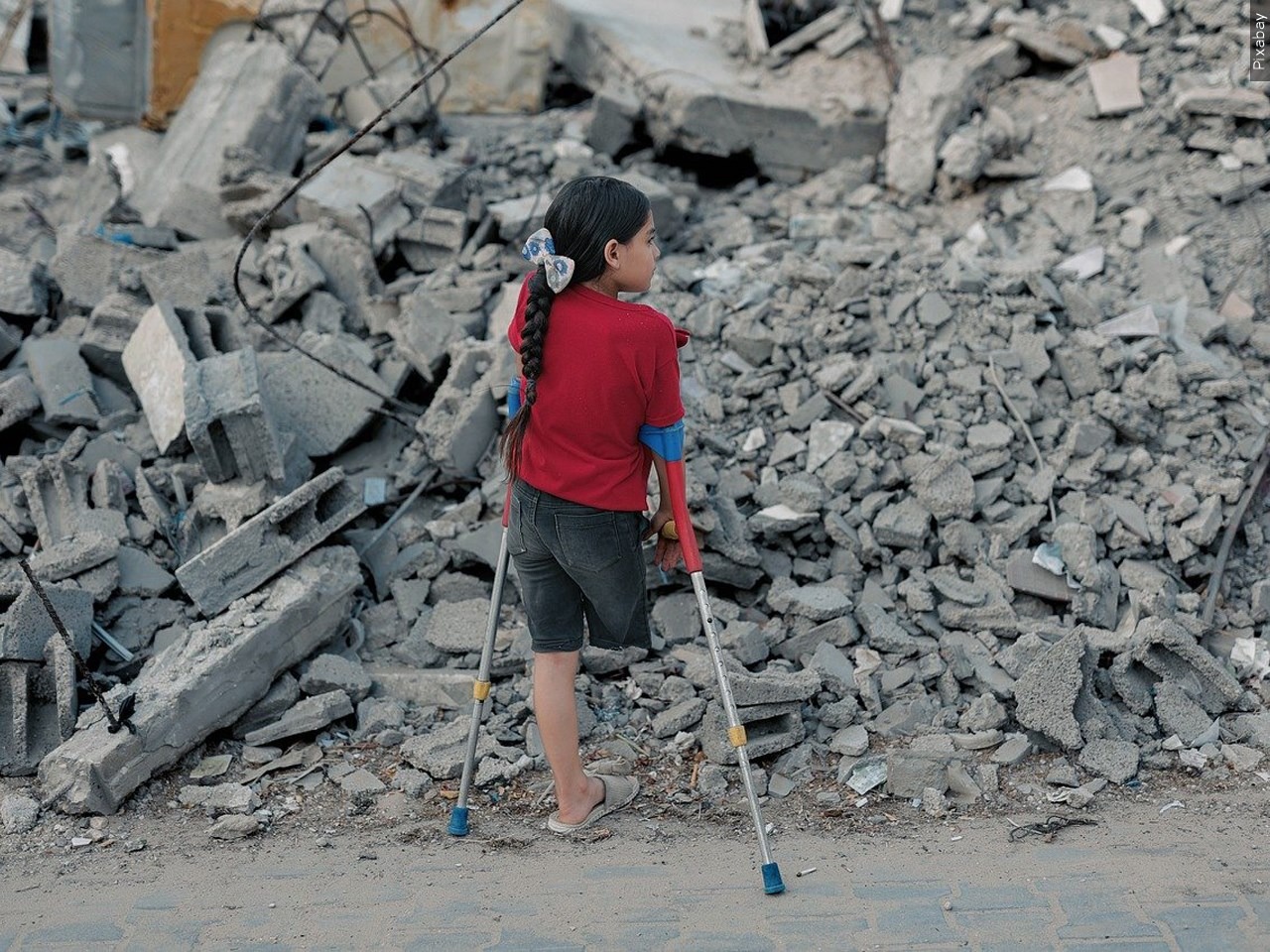

A scourge of evil is spreading far and wide, with America’s foreign policy driven by a war-hawkish administration. It can be seen in the ongoing crisis of the Middle East, where a genocidal war on Palestinians by the U.S.-backed State of Israel continues.
With America’s backing, Israel is also endangering the region with war fronts in Lebanon and Syria, and is also provoking further conflict with the Islamic Republic of Iran.
Many have long opposed what they argue is an errant foreign policy. Among the voices for balance and change are Allah’s (God’s) Divine Servants, the Most Honorable Elijah Muhammad and His National Representative, the Honorable Minister Louis Farrakhan of the Nation of Islam.
Both men warned America that this is a time of universal change and cautioned about the fate of great powers that misruled in the past.
“Tyrants of the world have to be sat down and a government from God has to be established so that the suffering of humanity will end,” Minister Farrakhan shared in a January 2017 post on Twitter, the social media platform now called X.
Minister Farrakhan’s remark is one of many warnings he has given over decades of cautioning world leaders about the dire consequences of their decisions.
Collectively for 96 years, Minister Farrakhan and his teacher, the Most Honorable Elijah Muhammad, forewarned of a “Universal Government of Peace” being established to eradicate the burden of corruption, injustice, inequality, and misrule on the planet.
America aids and abets the crisis
According to the Congressional Research Service, Israel is the largest cumulative recipient of U.S. foreign assistance since World War II. For decades, successive U.S. administrations and Congress have maintained substantial aid to Israel, dating back to Israel’s inception in 1948. Under a 10-year 2019–2028 Memorandum of Understanding, Israel receives $3.8 billion per year guaranteed by the U.S. government.
To date, the United States has provided Israel $174 billion (current, or non-inflation-adjusted dollars) in bilateral assistance and missile defense funding. The enormous assistance to Israel continues, while social service programs and support for the American poor are being curtailed domestically.

In addition to the aid disparity, U.S. public opinion toward Israel declined throughout 2025. The downward trend is reflected in a July 2025 poll by the Chicago Council on Global Affairs, which found that pluralities of Democrats and Independents said the United States is providing Israel with too much political support and military aid in its war.
Republicans appear increasingly satisfied with American–Israeli relations since President Donald Trump returned to office. According to the poll:
• Americans give Israel a lukewarm rating of 50 on a 0-100 scale, where 100 represents the most favorable rating. This is the lowest rating Israel has ever received in council polling dating back to 1978.
• More Americans now say Israel is playing a negative role in resolving the key challenges facing the Middle East (61%) than a year ago (54%).
• Americans are closely divided between those who say current Israeli actions are justified (27%) and those who say they are not (29%). But a plurality of Americans was not informed enough to opine (42%).
• Nearly half support continuing U.S. military aid to Israel until Hamas is dismantled or destroyed (47%, similar to 49% in 2024).
The Trump administration, like previous administrations, remains committed to Israel, notwithstanding America’s own domestic situation and waning sentiment toward Israel.
As it currently stands, there is no indication that the onslaught against Palestinians and regional hostilities will abate. This appeared clearer following a meeting between President Trump and Israeli Prime Minister Benjamin Netanyahu in late December. The leaders met about the region and phase two of the American brokered so-called “peace plan” that was established in October 2025.
Prospects for peace are unstable
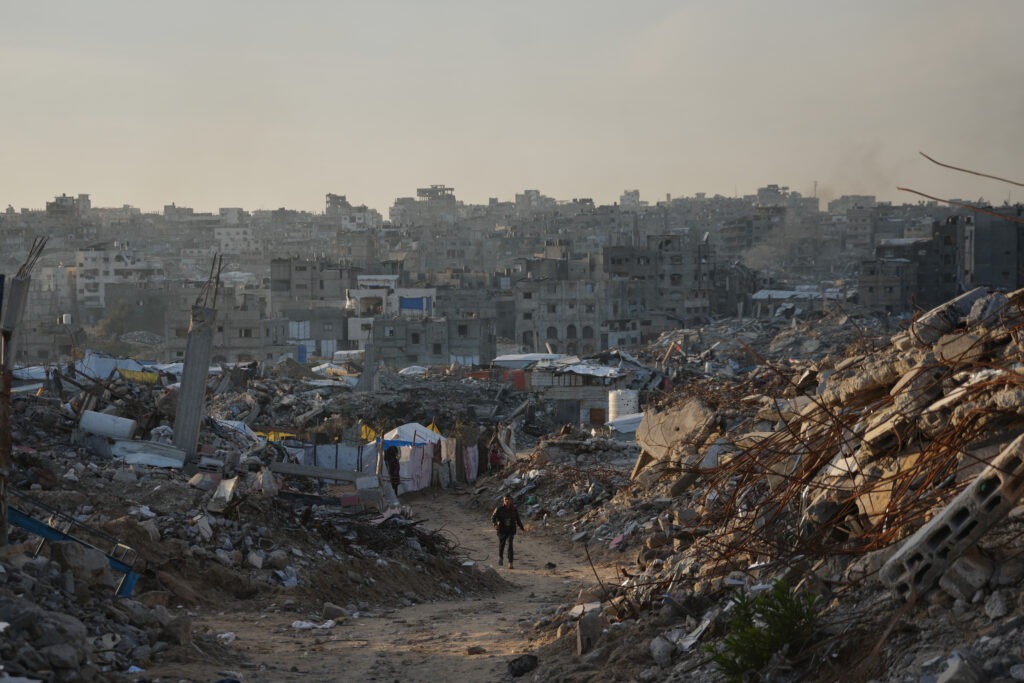
The genocide in Gaza continues despite U.S. rhetoric that its multi-phased plan, touted to achieve peace in the Middle East, is moving forward. Part of the agreement includes a post-war government in Gaza that does not include Hamas. Another point requires a complete disarmament of Hamas, which the resistance group rejects, while Israel’s illegal occupation still exists.
Prime Minister Netanyahu indicated that if Hamas is not disarmed peacefully, Israel will resume military engagement to force it. In like warmonger fashion, Mr. Trump levied his own threats at Hamas.
“They’re going to be given a very short period of time to disarm, and we’ll see how that works out,” President Trump told reporters on Dec. 29.
There was no Palestinian representation at the December meeting held at President Trump’s Mar-a-Lago estate in Florida. Although pushed as the pathway to end the conflict and achieve Middle East peace, the unstable deal has been marred by constant allegations of violations by both sides.
Given past broken agreements, confidence that Prime Minister Netanyahu wants to end the conflict is thin. During the course of the war, the Israeli leader was accused of slow walking the peace process and obstructing multiple truces.
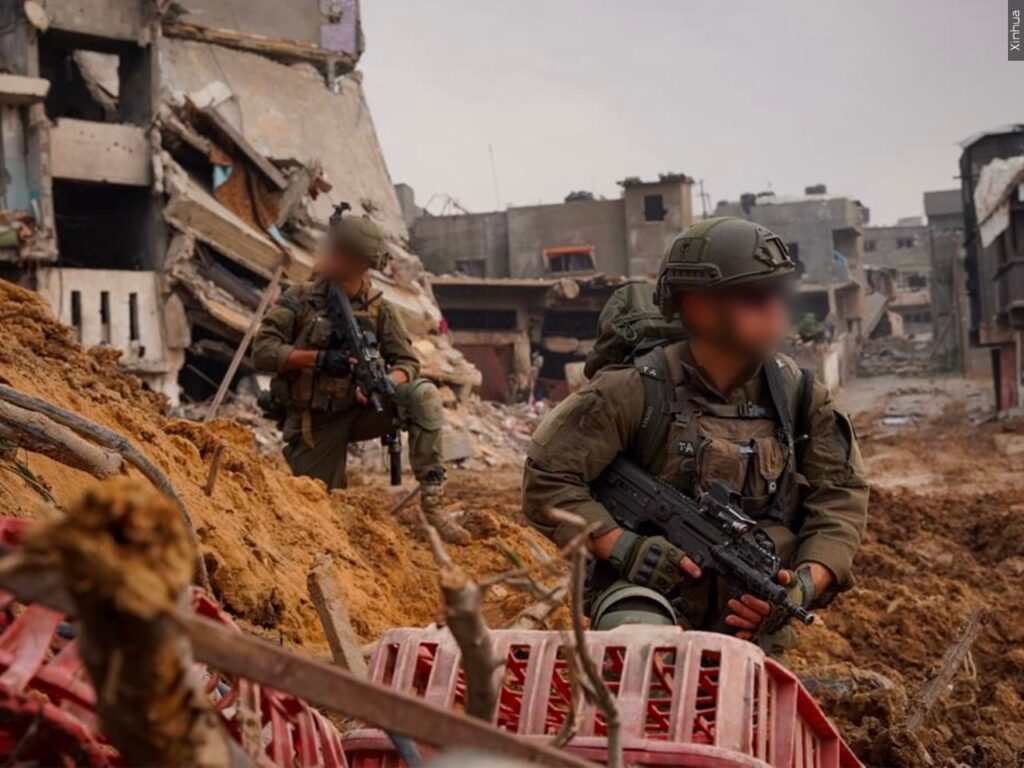
Questions also persist about who will actually make up the post-war government in Gaza. The U.S. president is pushing for the next phase of the deal, which includes Gaza reconstruction and the establishment of the transitional Board of Peace led by him and comprising other leaders.
A contentious part of the plan calls for demilitarizing Gaza and establishing an International Stabilization Force (ISF), which was approved by the UN Security Council in mid-November.
Hamas disagreed with the resolution, saying it fails to meet Palestinians’ rights and demands and seeks to impose an international trusteeship on the enclave that Palestinians and resistance factions oppose, reported Reuters.
“Assigning the international force with tasks and roles inside the Gaza Strip, including disarming the resistance, strips it of its neutrality, and turns it into a party to the conflict in favor of the occupation,” the group added.
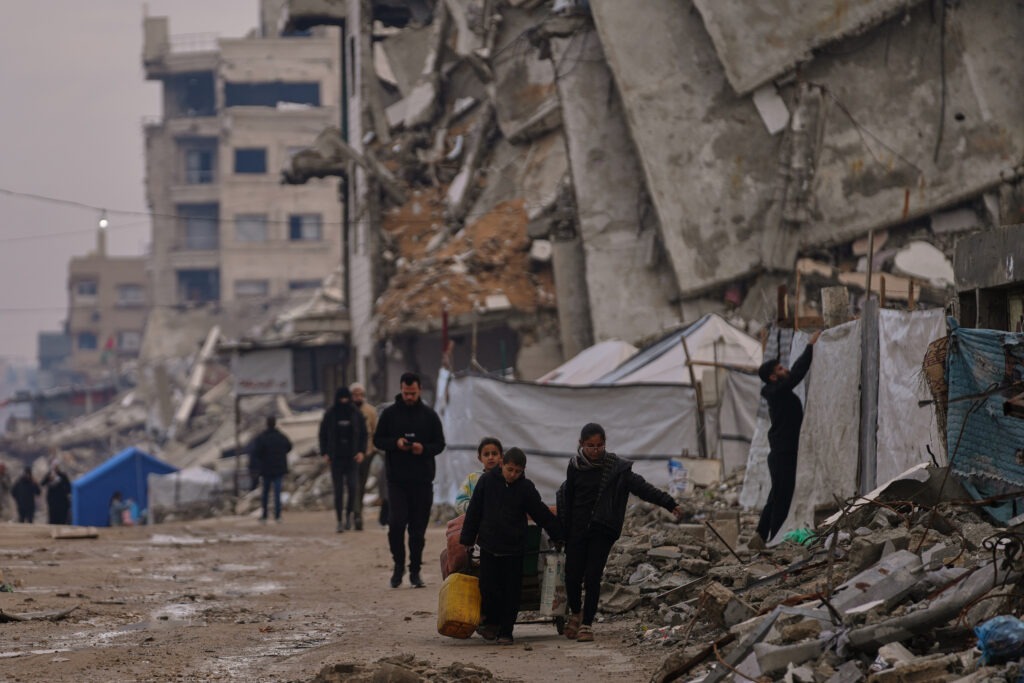
Meanwhile, Israel is doubling down on repression by imposing debilitating restrictions on humanitarian assistance to Palestinians, now suffering through a brutal winter season and deadly Storm Byron.
“Civilians are now wading through sewage, mud and debris, with no proper shelter,” said Bushra Khalidi, Oxfam Occupied Palestinian Territory Policy lead, in a Dec. 12 statement. “This is not a failure of preparedness or capacity; it’s the direct result of the systematic obstruction of aid,” she said.
The Israeli authorities continue to block the entry of basic shelter materials, fuel and water infrastructure, leaving people exposed to entirely preventable harm. “When access is denied, storms become deadly. This suffering is being manufactured by policy, not weather,” Ms. Khalidi stated.
Israel is also still blocking the necessary aid from entering Gaza. The regime recently announced it will ban several humanitarian agencies from doing the necessary work in Gaza to provide relief.
The UK-based The Guardian reported, “The list of groups hit by the ban include some of the world’s best known humanitarian organizations such as ActionAid, International Rescue Committee and Médecins Sans Frontières (MSF).”
The announcement by Israel on Dec. 30 was made by its Ministry of Diaspora Affairs and “comes amid fierce storms that in recent days have destroyed thousands of tents in Gaza, exacerbating an already acute humanitarian crisis,” the outlet reported.
“Foreign ministers of 10 nations expressed ‘serious concerns’ about a ‘renewed deterioration of the humanitarian situation’ in the devastated territory, saying the situation was ‘catastrophic.’”
A joint statement on Gaza from the foreign ministers of Canada, Denmark, Finland, France, Iceland, Japan, Norway, Sweden, Switzerland and the United Kingdom was released Dec. 30.
“As winter draws in, civilians in Gaza are facing appalling conditions with heavy rainfall and temperatures dropping. 1.3 million people still require urgent shelter support. More than half of health facilities are only partially functional and face shortages of essential medical equipment and supplies. The total collapse of sanitation infrastructure has left 740,000 people vulnerable to toxic flooding,” the statement read in part.
The foreign ministers demanded that Israel allow the non-governmental organizations to render help in Gaza; lift unreasonable restrictions on imports considered to have a dual use, including urgently needed medical and shelter equipment and also, “open crossings and boost the flows of humanitarian aid into Gaza.”
Amid these conditions, Israel still sent relentless airstrikes on already obliterated areas of displaced people. Israeli forces have carried out strikes across the Gaza Strip as they persist with their genocidal war and violations of the so-called ceasefire agreement. By Dec. 28, Israel had committed nearly 1,000 violations since the ceasefire agreement, resulting in the deaths of 418 civilians and injuries to more than 1,100.
In a Jan.1 press release, Gaza’s Government Media Office said 2025 saw a near-total collapse of the Strip’s humanitarian and health systems due to sustained Israeli military operations.
The office noted that 2025 was exceptionally harsh on Palestinians, with more than 2.4 million people subjected to policies of systematic killing, ethnic cleansing, and forced starvation.
The occupation forces reduced the Gaza Strip to rubble, destroying infrastructure on an unprecedented scale and razing entire residential neighborhoods, forcibly displacing more than two million people and killing more than 71,000 Palestinians.
“Who could do to another human being what is being done to our Palestinian family, and let it happen and not think of a humanitarian crisis?” said Minister Farrakhan, during his Saviours’ Day 2024 message, “What Does Allah The Great Mahdi And The Great Messiah Have To Say About The War In The Middle East?”
Man’s inhumanity to man can sum up the atrocities Israel continues to heap on Palestinian life. The scale of repression cannot be overlooked, warned Minister Farrakhan. He stressed that what is happening to the Palestinians should be of concern to humanity.
“The crisis is not just what is happening to the Palestinians. The crisis involves what is happening to you, what is happening to me; what is happening to human beings who are more concerned with what they will lose by standing up, rather than standing up and facing the consequence of their stand, knowing that God will bring them out victorious,” he said.