








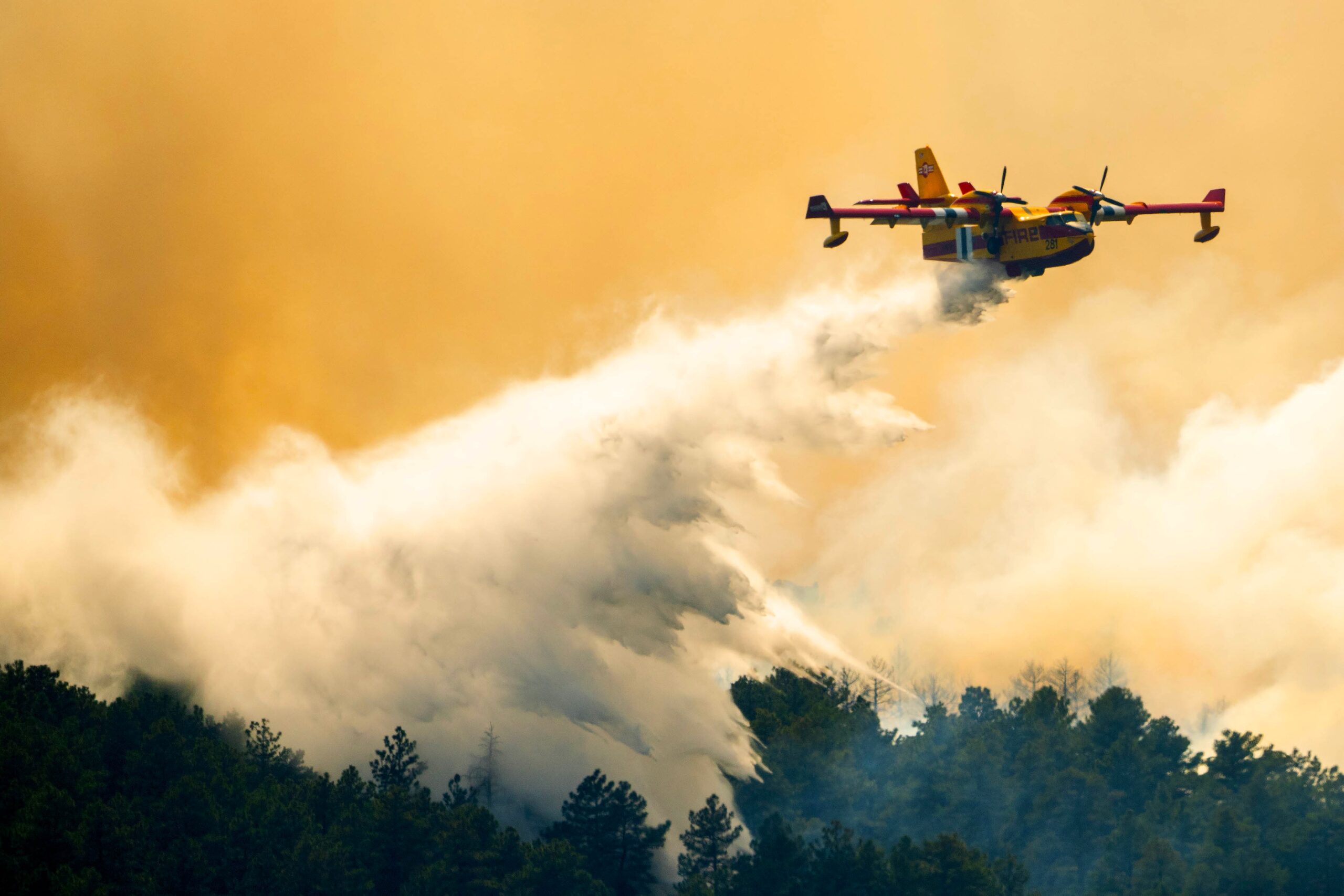

ALBUQUERQUE, N.M.—It’s already been a deadly year for firefighters, and authorities have been putting resources where they can more quickly pounce on wildfires before they get out of hand and increase the possibility of additional loss of life and property.
Fire managers try to anticipate nature’s next move, placing thousands of firefighters, hundreds of engines, batteries of bulldozers, and fleets of helicopters and air tankers where they’ll make the biggest difference.
This year, they’re dealing with persistent drought made worse by record-low snowpack levels and consecutive days of hot, dry and windy weather. Hundreds of homes have burned, three firefighters were killed battling flames in Colorado, and a helicopter helping with another Colorado fire crashed into a reservoir, killing the pilot.
National preparedness has yet to reach its highest level, but resources are getting stretched as new fires pop up daily.
“The U.S. Wildland Fire Service is prioritizing pre-positioning of crews, engines and aircraft in areas with the highest likelihood of wildfire activity,” the agency said in an email to The Associated Press when asked about available resources. “This allows for quicker initial attack when new wildfires ignite, which is often the most effective way to keep fires small.”
U.S. preparedness level ratchets up
The National Interagency Fire Center, a collection of federal and state agencies that support on-the-ground wildfire fighting efforts, sets the preparedness level at 1 to 5 based on fire activity, resource demands, weather and conditions on the ground that can be fuel for a fire. By late June, surging wildfire activity prompted coordinators to move the needle to level 4 and begin funneling more crews to the hottest spots.
The national fire center has confirmed more than 2,100 fires since the beginning of July. The explosion of fire activity across the West led to the assignment of more highly skilled and experienced incident management teams. Some have traveled from Alaska and California to help with fires in the Great Basin region.
As of July 14, 17 such teams were overseeing nearly 17,000 people spread across more than a dozen states. It’s typical to see preparedness increase in July and August, but fire managers are hopeful they can juggle resources to avoid maxing out.
Over the past decade, fire managers have reached the top preparedness tier an average of 25 days annually, with the longest stretch happening in 2021, according to federal statistics. The earliest the designation ever occurred was June 21, 2002.
The most recent outlook shows above normal wildfire potential in July from the Four Corners region—where New Mexico, Arizona, Colorado and Utah meet—North to Oregon, Idaho and Washington. It’s not expected to simmer down until September.
Christopher Dunn, an assistant professor of wildfire risk science at Oregon State University, said those outlooks help determine how and where to mobilize resources. Those resources shift as the fire season moves from region to region.
In a busy year, states must weigh whether to free up resources to help elsewhere or pressure federal officials to keep crews in reserve in case of increased risk. That’s what Dunn describes as hoarding resources. (AP)
