

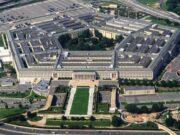





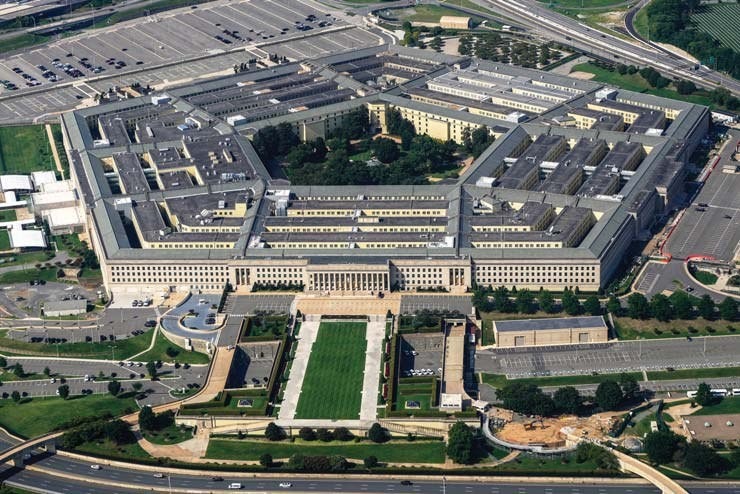

As part of the country’s national security posture and as an “insurance policy” to protect U.S. military base operations from potential disruptions, U.S. Secretary of Defense Pete Hegseth recently ordered major installations to prepare to operate separately from the local communities they currently depend on. The defense secretary released the information in a Pentagon memo dated September 30.
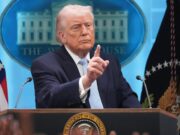
“Effective immediately, I establish FORTRESS America as a program of the Department of War,” Sec. Hegseth wrote in a memo to senior Pentagon leadership, commanders within the combatant commands, and agency and field activity directors. “The program aligns basing and infrastructure projects to ensure they are collectively advancing toward greater independence. It puts America first, and it does what should have been done long ago,” he said.
FORTRESS (Federal Operations for Resilience, Troop Resources, Energy, Supply and Survivability) is a Pentagon program to harden major military bases through an initiative to operate independently for at least 90 days with its own power, food, water, fuel, communications and supplies in the event of cyberattacks, wartime disruption, sabotage or other emergency situations.
“All Military Departments, Defense Agencies, and Field Activities shall support its execution without reservation,” Sec. Hegseth said. “We will put America first, we will defend the American homeland, and we will build a permanent structure equal to the moment. We begin today,” the memorandum said in part.
In his subsequent State of the Force address at Marine Corps Base Quantico, also September 30, he told the officers and non-commissioned officers present that FORTRESS America would require every military base to generate its own power independent of the civilian grid, that rare earths and other strategic minerals would be mined and processed in the U.S. and that other supplies, from food, water, medicines and munitions, would be stored and maintained on those bases. This would let them continue operating uninterrupted by crises or shortages outside their gates.
“We are hardening every installation on American soil against cyber intrusion, sabotage, and drones,” Sec. Hegseth said during his address. “And we are securing the high ground and the airwaves. Our satellites. Our spectrum. Our ability to see, to navigate, and to talk to one another,” he said. He also said their plans include the building of new military bases inside the United States.
As cuts to federal spending, rising prices, and inflation continue to ill-effect the poor, the elderly, and place additional stressors upon the middle class, the National Defense budget estimate for Fiscal Year 2027 is projected to top $1.03 trillion or more, according to a recent report from the Office of the Under Secretary of Defense Comptroller. In the face of this, FEMA (Federal Emergency Management Agency) announced that the burden of providing aid during times of national, regional, or local crises will be shifted from the federal government to the individual states.
According to an October 20 online article by Politico: “FEMA tells states to handle disasters on their own,” the agency’s administrator, Cameron Hamilton, “told state officials Tuesday they must increase their financial reserves and emergency capabilities to handle most disasters on their own, without federal help,” during a conference in Little Rock, Arkansas, where he described the Trump Administration’s “long-planned shift of disaster responsibilities to states.”
“Every state must have the appropriate financial reserves” and other abilities “to ensure that recovery efforts can start immediately and not necessarily be held up simply because of the federal [disaster] declaration process,” the article quoted the FEMA head as saying.
“The agency will face substantial challenges—both logistically and politically—preparing states to take a lead role in disaster prevention and recovery,” POLITICO continued, adding that many state disaster agencies are often underfunded and understaffed while heavily dependent on federal dollars and resources.
The Honorable Minister Louis Farrakhan cautioned about America’s military budget, its cuts to FEMA, and the potential fallout during crises. On page 31 of his book, “A Torchlight for America,” published in 1993, Minister Farrakhan writes in part, “The military budget is as great as during war time, yet senators in states with strong weapons industries fight for military budget increases so that contracts can remain in their states—in effect saying to hell with the country and its budget woes.”
He warned, “Allah (God) has a way of showing His disapproval to those who are wise enough to read the signs. FEMA, the Federal Emergency Management Act, was enacted to finance emergencies and recoveries from national disasters. Natural disasters are God’s way of indicating His displeasure and are a sign of impending doom. FEMA doesn’t have enough money to pay for the earthquakes that hit San Francisco during the World Series a few years ago. FEMA does not have enough money to pay for Hurricane Hugo, Cyclone Omar, the hurricanes in Hawaii, the tornadoes that have torn up Tampa Bay, and Hurricane Andrew. All of these catastrophes increase the budget deficit. And more of these catastrophes are on the way to America with ever-increasing rapidity. This is God’s way of nudging or forcing government leadership to accept real solutions to the country’s problems. Jehovah used 10 plagues against Pharaoh. Those 10 plagues, including natural calamity from snow, rain, hail and earthquakes, are seen in the world today, particularly in America.”
Dr. Wilmer Leon is a lecturer in the political science department at Morgan State University and a radio talk show host. He told The Final Call that the Trump Administration is preparing the United States for a perpetual state of war, shifting federal priorities away from the general welfare of the people and toward the interests of the military-industrial complex.
“I think in the near term for the American citizen, it’s evident that the focus on the social safety net and the focus on investing in American infrastructure or the improving of the quality of life for the American people is secondary,” Dr. Leon explained.
“This is following the very same pattern as every other empire in the history of the world. We’ve seen this movie before,” he said. “We’ve seen it in Rome, we saw in it Greece, we saw it in Türkiye with the Ottoman Empire. We’ve seen it in Britain with the British Empire,” he said.
“Every empire comes to an end, and it seems to center around overreach, militarization that it can’t afford to sustain, and changing technology that it is not prepared to adapt to,” Dr. Leon insisted. “I think that they are desperately trying to stay afloat, understanding that they are really drowning and they are drowning as a result of their own arrogance and they’re drowning as a result of their inability to understand reality and adapt to it as they need to adapt to it and the American people are going to suffer,” he warned.
“What FEMA’s move signals to me is more evidence that the government is running out of money because of all the money that’s been shifted to the military-industrial complex,” Dr. Leon added. He noted that the American people must accept that, during times of emergency, little or no help will come for them and that solutions must come from the bottom up.
“The landscape is shifting and we’re not prepared for that,” Dr. Leon explained. “I was telling my students (that) America hasn’t begun to suffer and because the economic stratum in this country is such that the folks on the bottom are catching hell and the middle-class is starting to catch hell.”
—William P. Muhammad, Contributing Writer
Final Call staff contributed to this report.
