











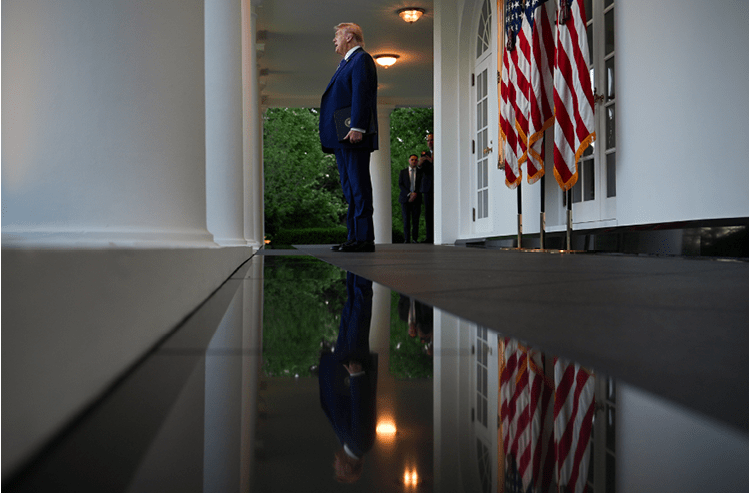

The Trump administration ended federal oversight of local police departments a year ago, arguing the excessive-force and racial-discrimination problems documented under the prior administration were untrue or already fixed. A new report from the American Civil Liberties Union (ACLU) says its own review of records suggests otherwise.
The report, “Regressive Policing Under President Trump,” released June 30, updates the ACLU’s Seven States Safety Campaign, tracking municipal police and county sheriff’s departments in Tennessee, Massachusetts, New York, Arizona, Mississippi, Minnesota and Kentucky—states where earlier civil rights investigations by the Department of Justice (DOJ) had already found patterns of police abuse.
Last May, the ACLU and local partners filed coordinated public records requests across the seven states for use-of-force reports and related documents. The ACLU received more than 600 records, though many agencies delayed or withheld documents required under state law.
In a statement, Dr. Jenn Rolnick Borchetta, deputy director of policing at the ACLU’s Criminal Law Reform Project, said their “preliminary review of these records suggests that many of the same problems identified by the DOJ persisted at the exact moment the federal government was using those claims to justify walking away.”
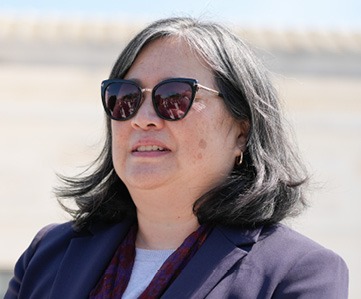
Photo :AP/Mariam Zuhaib
Since then, she added, the Trump administration “has been actively encouraging the same types of aggressive policing tactics that the DOJ has found to be dangerous and unconstitutional.
If the federal government refuses to protect people’s constitutional rights, we deserve transparency about whether the known police misconduct in our communities is being taken seriously.”
ACLU’s preliminary review found excessive force remains a problem—including improper escalation against people in mental health crises, misuse of Tasers, and internal reviews that may fail to catch improper force—and that racial discrimination identified in the DOJ investigations has persisted.
The report cites specific cases in each jurisdiction that it says mirror the misconduct the DOJ originally documented:
In Louisville, the ACLU says an officer punched a handcuffed man twice in the face after he spit at him—the kind of disproportionate retaliatory force DOJ had flagged earlier.
In Minneapolis, the report described an officer who pinned a woman’s neck with a knee for roughly five minutes during a low-level call instead of de-escalating, and another who used a Taser twice on a man holding grilling tongs, continuing after he’d already been stunned once and dropped the object.
In Rankin County, Mississippi, the report says deputies used a Taser on a restrained, unarmed man in the county jail after he refused to make his bed—and that a supervisory review found “no issue” with using a Taser on an unarmed detainee who didn’t exit a cell opening on command.
In Mount Vernon, New York, state arrest data and the ACLU’s review both show Black residents disproportionately affected, and that most people who had a weapon or Taser drawn on them weren’t armed.
The DOJ had found Mount Vernon, strip-searched nearly everyone arrested, including two women, ages 65 and 75, over a suspected drug transaction that turned up no contraband. The ACLU’s request for strip-search logs since 2023 came back nearly blank.
In Worcester, Massachusetts, the report says the department’s public policies still contain no guidance on preventing or disciplining officer sexual misconduct, despite a 2025 pledge to address the DOJ’s findings.

The city also withheld use-of-force records citing a Massachusetts domestic-violence privacy statute the ACLU says has been applied more broadly than similar laws elsewhere.
In Memphis, which declined to enter a consent decree, the city formed a voluntary reform task force that the report says has since gone quiet. The city denied the ACLU’s records request outright, on invalid legal grounds, and did not comply until the ACLU and Stand for Children Tennessee sued in February.
The report also cites that a federal task force deployed to Memphis after the DOJ withdrew its findings has engaged in racially biased, aggressive traffic stops in majority-Black neighborhoods (ProPublica, Nov. 3, 2025).
“In Memphis, we’ve seen firsthand what happens when there are questions about police conduct but not enough transparency and accountability to answer them,” said Cardell Orrin, executive director of Stand for Children Tennessee.
“At a time when increased state and federal law enforcement activity is raising new concerns about people’s rights and safety, public access to local police records is more important than ever,” Mr. Orrin said.
“People deserve to know whether the misconduct identified by the DOJ is continuing and whether law enforcement agencies are taking meaningful steps to change their practices and protect the rights of the communities they serve,” he added.
Reneé Hall, president of the National Organization of Black Law Enforcement Executives (NOBLE) and former chief of the Dallas Police Department, said the report highlights a regression from the racial reckoning the country underwent in 2020,
When departments nationwide embraced the idea that change was needed, building on 21st-century policing reforms under President Barack Obama. “And that was kind of the foundation that reform was based out of,” Ms. Hall said.
She said that after killing of George Floyd in 2020, police departments “all over the world, almost,” discussed the need for change and what it meant for officers and communities. “What we see today is actually the total opposite of that. Not by all police agencies,” she said.
“The report highlights the unchecked and unfettered ability for those individuals from the federal government to operate in a manner that is disruptive and antithetical to what we put in place for many years around police reform.
It’s actually being rolled back and we’re seeing that in their tactics and in the investigative process,” she said. She added that she hopes Homeland Security’s current leadership holds officers accountable and runs investigations more properly and with dignity.
Ms. Hall, who also served as deputy chief of the Detroit Police Department, traced the patterns in the report back further, to the beginning of policing, created out of slave patrols, then matriculating through the Jim Crow, the 80s, 90s, and early 2000s, permeating from its inception.
“There are challenges each and every day. There’s a culture of law enforcement that does not just go away because you say that you’re going to do something different,” she told The Final Call.
Asked how she weighed the DOJ’s claim that the problems were already fixed against her own decades in the field, Ms. Hall replied, “I would say that statement is disingenuous.”
She also argued that use-of-force numbers alone don’t tell the full story. “I respect that we have numbers on a page and a paper, but I think it has to go a tad bit further,” she said.
Departments should be asked what they did after an incident, she said, pointing to Memphis, where the police chief handled a fatal use-of-force incident “textbook” and “better than most people have ever handled any of these tragic incidents,” yet still gets backlash.
Hall argued that critics focus on the officers involved without examining what the chief did afterward—the training and accountability she required to prevent it happening again. “I think there has to be a little bit of follow up,” she said.
Ms. Hall said meaningful accountability requires layered systems—body cameras, early-warning systems tracking whether an officer is “a habitual offender of use of force,” and follow-up on what action results.
She said community oversight builds trust but stopped short of endorsing civilian boards with disciplinary power, saying agencies discipline more strictly than the oversight boards she’s observed.
Hamid Khan, an organizer with the Stop LAPD Spying Coalition, placed the ACLU’s findings in a longer history of oversight failures in Los Angeles, citing the Los Angeles Police Commission and independent investigations launched after the Watts uprising and the Rodney King beating. “Every time it’s been such an expose of these oversights,and the failures,” he said.
In his illuminating book, “A Torchlight for America,” written in 1993, the Honorable Minister Louis Farrakhan, addressed the problems with policing in the U.S.
“Our 14-year-olds and 18-year-olds are killed in police stations and the police offer lies to explain their deaths, such as they hanged themselves with their own shoestrings and other such foolishness.
All too often, the Justice Department of the U.S. government is weak in pursuing the truth about what the Black community believes are wrongful deaths at the hands of law enforcement,” Minister Farrakhan wrote
“They fear our youth. They fear the gangs because prior to the gangs, the police were the only gang in town. Often, the police are running or compromising with the dope business, the prostitution business and the criminal element in the society.
Many officials do not desire to see young Blacks organized, fearing that they may join together and one day do unto law enforcement what the law enforcement officers have been doing unto us.
This is not to say that all police are corrupt. But when we see so many incidences of police corruption, such as the Rodney King case and others, then the entire law enforcement system loses our trust,” Minister Farrakhan continued.
Mr. Khan pointed to a federal consent decree imposed on the LAPD after the Rampart scandal (1998-2000), which he said required dash cameras in patrol cars as a reform measure. “We found out that out of the 300 patrol cars that they installed dash cams, the cops broke antennas on 95 of them, all in the South Bureau,” he said.
According to Britannica.com, in the scandal, “more than 70 officers were implicated in misconduct, including unprovoked beatings and shootings, planting and covering up evidence, stealing and dealing drugs, and perjury.”
Mr. Khan argued that reform proposals, while worth documenting, don’t reach the core issue. “It is the intent to cause harm. And that’s what the police have been doing, because that’s exactly what their function has been,” he said, also tracing modern policing back to slave patrols enforcing property law.
“So, policing in this country is more of a counterinsurgency operation than anything else. And it is by design—it is intentionally done,” Mr. Khan told The Final Call.
His organizing work, he said, aims at ending rather than reforming the current model of policing, since oversight bodies have repeatedly failed and new investigations tend to follow, not prevent, high-profile incidents.
Chief Hall also reflected on the Black community’s relationship with law enforcement, saying many people shy away because of its history.
She referenced a sentiment that surfaced in 2020, when Black officers faced suggestions, they were “not Black enough” for serving in law enforcement, and argued that change has to come from within the profession as much as from outside pressure.
“If we could change it from the outside, it would already be changed,” said Ms. Hall.
The essence of reports such as these demonstrate what the Most Honorable Elijah Muhammad has taught.
In The Muslim Program, in “What The Muslims Want,” Point Number 6, it says in part: “We want an immediate end to the police brutality and mob attacks against the so-called Negro throughout the United States.”
