







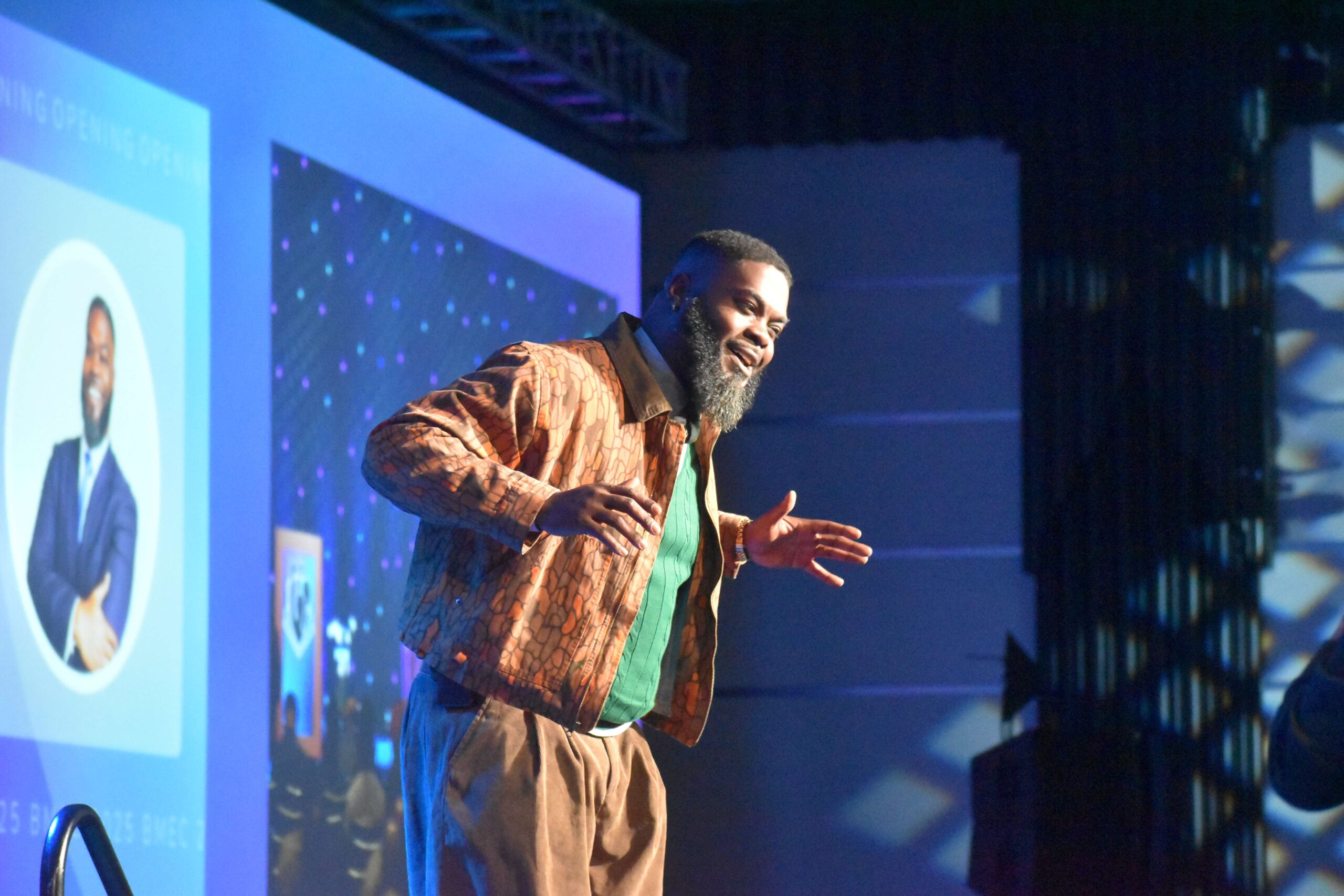

PHILADELPHIA—The Lowes Hotel buzzed with energy from November 20-22 as more than 1,400 national educational leaders gathered for the 8th annual Black Men in Education Convening, hosted by the Center for Black Educator Development.
The event, themed “Power to the Pupil: History, Hip Hop, and the Future of Teaching and Learning,” was a powerful testament to the resilience, innovation, and determination of Black educators and their communities.
The convening tackled pressing issues in education, including systemic inequalities, leadership, wellness, and the urgent need to strengthen the Black teacher pipeline.
What stood out this year was the remarkable presence of first-time attendees, many of whom were young educators under 40, leading workshops and discussions. Their voices, alongside those of seasoned scholars and activists, created an intergenerational dialogue that underscored the importance of centering student voices in education.
The event featured several presenters, including Dr. Leslie Fenwick, author of “Jim Crow’s Pink Slip;” Dr. Greg Carr, Chair of Afro-American Studies at Howard University; Dr. Lisa Delpit, author of “Other People’s Children;”
Dr. Chris Emdin; and Grammy Award-winning artist and educator Lupe Fiasco. Each brought unique perspectives to the table, weaving together history, culture, and actionable strategies for change.
The Most Honorable Elijah Muhammad, the Eternal Leader of the Nation of Islam, understood the vital need for Black teachers to educate Black students and the overall importance of education.
In the 1930s, the Honorable Elijah Muhammad and the pioneers of the Nation of Islam removed their children from the public school system—where they were subjected to mistreatment and miseducation—and established an independent school, Muhammad University of Islam. His work and sacrifice laid the base for independent education.
His National Representative, the Honorable Minister Louis Farrakhan, spoke about this importance in a message on October 14, 2018, to mark the 23rd Anniversary of the Million Man March and Holy Day of Atonement in Detroit.
“(The Most Honorable) Elijah Muhammad taught us if a man won’t treat you right, what would make you think that man would teach you right? In the public schools, the enemy wants to make us better tools of service for him. When we took our children out of the public school, they came to the school and arrested the teachers.
Elijah Muhammad went to the jail and said, ‘I am their teacher so if you’re going to arrest them, arrest me too.’ Today if you have an independent school, somebody paid a price. If you have Afrocentric education, somebody paid a price,” Minister Farrakhan said.
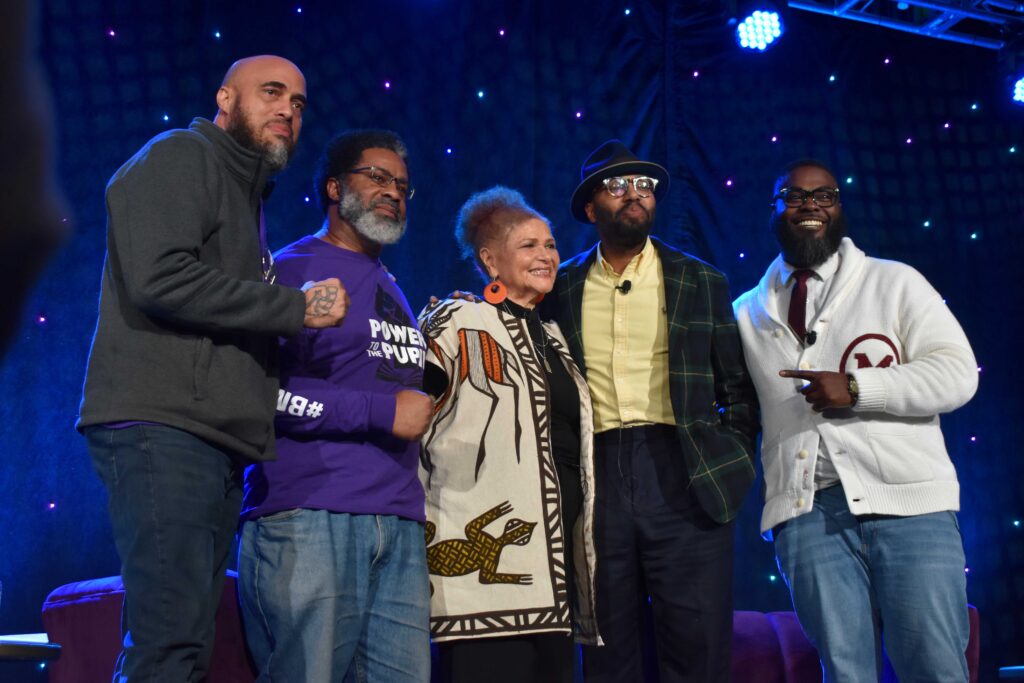
Building a pipeline of Black educators
At the conference, Dr. Fenwick’s opening remarks set the tone for the convening. She highlighted the devastating impact of the Brown v. Board of Education decision, which led to the loss of more than 1,000 Black educators. “We need more than teachers; we need warriors,” she declared, igniting a sense of urgency among attendees.
In an interview with The Final Call, Dr. Carr reflected on the systemic barriers facing Black males in education. “White supremacy has always been the challenge,” he stated.
“Rebuilding the pipeline of Black educators is critical, but it requires community involvement, particularly from Black men.” Dr. Carr also questioned the long-term effects of integration, suggesting that it often came at the cost of Black self-determination and community strength.
Sharif El-Mekki, CEO of the Center for Black Educator Development, shared with The Final Call the importance of this year’s theme, “Power to the Pupil.”
“Our work is about uplifting and empowering our youth,” he explained. “Students’ voices and experiences are critical. They’ve always been the spark of revolutionary movements, including in education.”
Mr. El-Mekki also highlighted the challenges of hosting such a conference in today’s political climate. “We’ve lost sponsors because we are unapologetic about our mission,” he said. “But this is an opportunity to practice ‘for us, by us.’ Our community has always been the source of enduring change.”
Mr. Winston Cox, Board Chair of the Center for Black Educator Development, delivered an enlightening message that connected the legacy of hip-hop to the creativity and resilience of today’s youth.
“Our young people are and have always been at the tip of the spear of our freedom movement,” he said, urging attendees to listen to and elevate student voices.
The convening was more than just a dialogue—it was a call to action. Through panel discussions, workshops, and breakout sessions, attendees gained tools to recruit and support Black educators, build community-driven initiatives, and create culturally affirming educational environments.
According to conference organizers, the ultimate goal is to rebuild a national Black teacher pipeline and improve outcomes for historically marginalized students.
Dr. Tony Watlington Sr., the Superintendent of the School District of Philadelphia, highlighted the importance of representation in an interview with The Final Call. “Our children can’t be what they don’t see,” he stated. “We need more Black teachers and leaders who reflect the student populations they serve.”
During a workshop titled “The Black Power Movement and Education for Liberation,” Dr. Howard Fuller explained that he agrees that Black people must establish our own “Freedom Schools and parallel schools.”
“Your job is to educate our children for liberation. We must teach them not to simply accept the world as it is, but to develop the skills and mindset needed for the practice of freedom, which is the transformation of their world.”
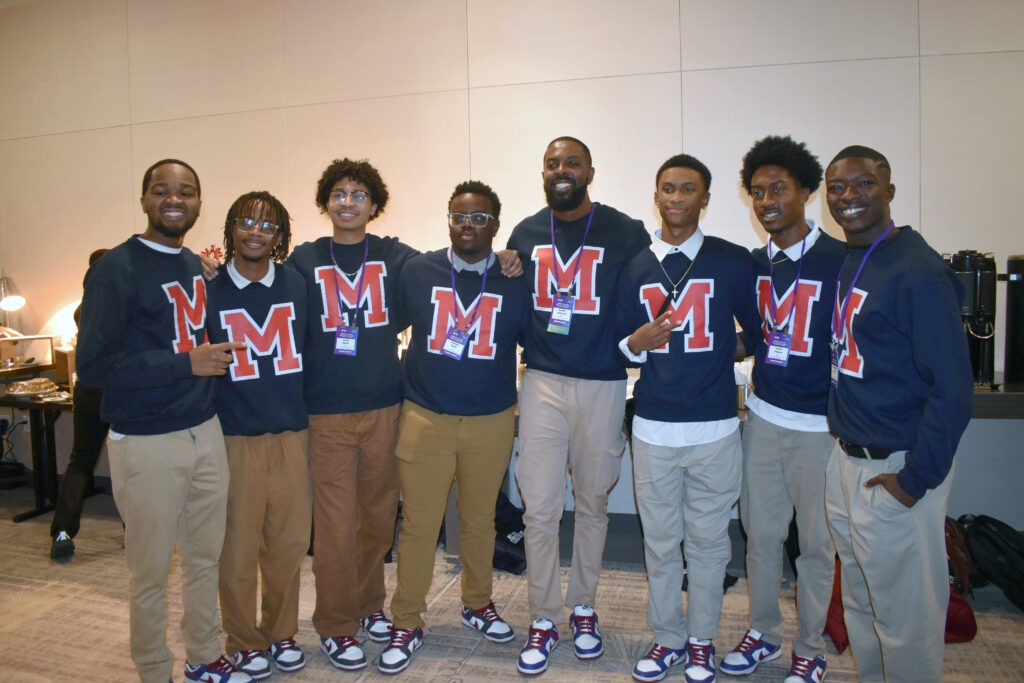
The fight continues
Black educators and community organizations are finding themselves at the center of political battles over what can be taught in schools. Addressing this issue head-on at the conference’s conclusion, Mr. El Mekki spoke about a current battle.
The Center for Black Educator Development is now part of a lawsuit against the current presidential administration, joining forces with the National Education Association and the ACLU.
The case, “National Education Association (NEA) v. U.S. Department of Education,” was filed in March and challenges a directive warning districts that partnerships with equity-focused organizations could cost them federal funding.
For Mr. El Mekki, the issue is not just about education policy but about ownership of taxpayer dollars. “The government doesn’t produce money. That is taxpayer money. That is Black people’s money. It’s like a bank taking your funds and then threatening you, saying, ‘If you say anything about truth, justice, or equity, we’re keeping your money.’”
His organization views the lawsuit as part of a longer struggle. “This isn’t a fight we would have chosen or one we would take on alone,” he said. “But at some point, you have to draw a line. We are part of this reluctantly, but with determination. This is part of the long, difficult arc of the work that simply has to be done.”
As the convention concluded, the atmosphere was one of hope and determination. “Moments like this remind us that we are not alone,” said Dr. Carr. “When we come together, we catch a glimpse of what a nation looks like—a nation built on unity, resilience, and the power of education.”
The Most Honorable Elijah Muhammad, in Point No. 9 of “The Muslim Program” in “What the Muslims Want,” found on the inside back page of The Final Call newspaper, gives guidance on the importance of an independent and transformative educational system for the Black community.
Point No. 9 states: “We want equal education—but separate schools up to 16 for boys and 18 for girls on the condition that the girls be sent to women’s colleges and universities. We want all Black children educated, taught and trained by their own teachers.
Under such schooling system we believe we will make a better nation of people. The United States government should provide, free, all necessary text books and equipment, schools and college buildings. The Muslim teachers shall be left free to teach and train their people in the way of righteousness, decency and self-respect.”
