






The Caribbean’s campaign for reparatory justice entered a new phase as leaders of the CARICOM Reparations Commission (CRC) recently traveled to the United Kingdom, declaring that the movement has moved beyond seeking apologies and is now pressing for negotiations over reparations for the crimes of slavery and colonialism.
“We are now entering the second stage of this movement, the stage of negotiation,” Professor Sir Hilary Beckles, chairman of the CARICOM Reparations Commission, declared during a media briefing at the University of London that was live streamed. There is a growing sentiment among Caribbean nations that “Europe owes us!”
The four-day mission to Britain from July 13-16, marked the commission’s second official visit as a collective body. It comes after a series of major international developments that supporters say have shifted reparations from a moral appeal to a growing legal and diplomatic movement.
In March, the United Nations General Assembly adopted a landmark Ghana-led resolution declaring the Trans-Atlantic trafficking of enslaved Africans and chattel slavery the “gravest crime against humanity.” The measure passed 123-0, though the United Kingdom was among 52 nations that abstained.
The vote represented another milestone in what Caribbean leaders describe as a growing international consensus that slavery and colonialism require legal remedies, not simply historical acknowledgment. Caribbean leaders say the resolution strengthens the commission’s position that reparations have moved beyond moral appeals into the realm of international law and diplomacy.
Sir Beckles, an internationally recognized historian, said the movement has moved decisively beyond symbolic gestures. “We have had an avalanche of apologies—governments, corporations, institutions, churches, and families that were directly enriched are offering apologies,” he stated. “Now those apologies must become programs of reparatory justice.”
The CRC delegation included Dorbrene O’Marde, chairman of the Antigua and Barbuda Reparations Support Commission; Eric Phillips, chairman of the Guyana Reparations Committee;
Professor Verene Shepherd, vice chair of the UN Committee on the Elimination of Racial Discrimination; Ambassador David Comissiong, Barbados’ ambassador to CARICOM, and Dr. Ron Daniels, convenor of the U.S. National African Reparations Commission.
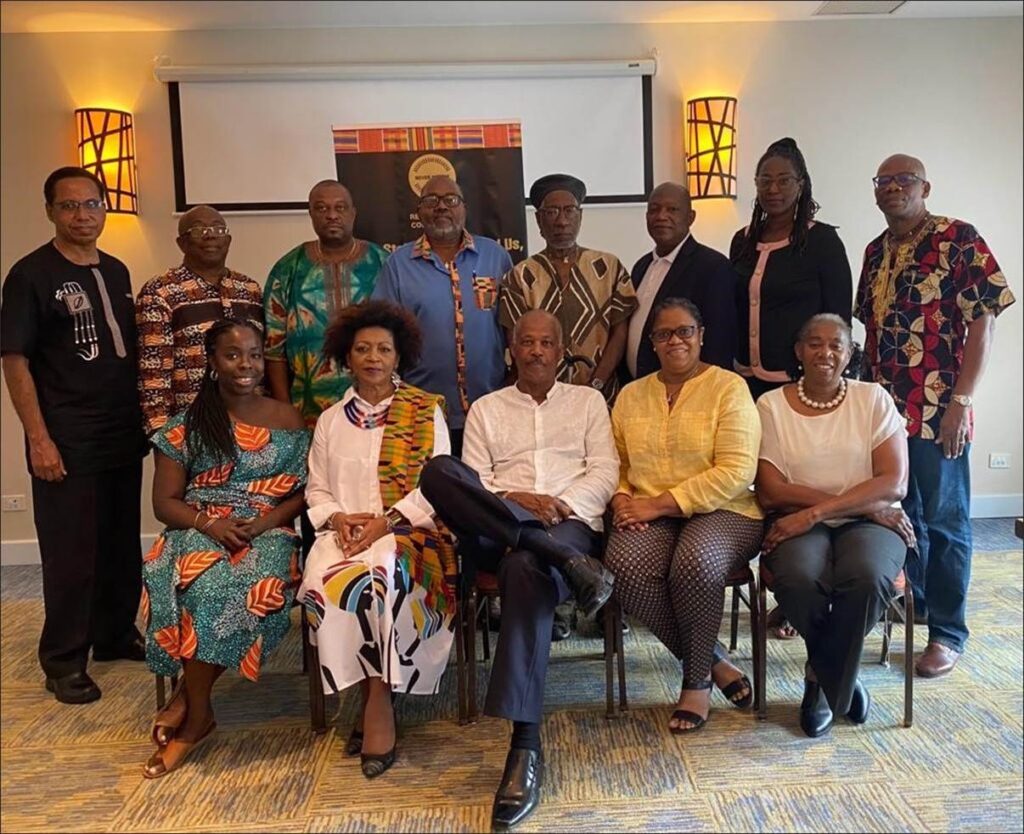
The London mission followed the June 2026 High-Level Consultative Conference on Reparations in Accra, Ghana, which brought together governments, legal scholars, international organizations, and civil society leaders to develop a unified strategy for advancing reparatory justice throughout Africa and the African diaspora.
Earlier in July, CARICOM Heads of Government approved the revised “CARICOM Ten-Point Plan for Reparatory Justice: A Manifesto for the Coming Enlightenment,” strengthening its legal arguments and emphasizing the disproportionate impact of slavery and colonialism on women and girls.
Armed with the revised reparations framework and strengthened by recent international developments, commission leaders arrived in London expecting former colonial powers to engage the issue directly. Instead, Britain’s decision to abstain from the United Nations vote underscored the political challenges that remain.
Members of the CARICOM Reparations Commission expressed disappointment that Britain abstained from the United Nations vote. “We are calling for a dialogue of decency,” Sir Beckles said. “For us, this is a moral and ethical matter.”
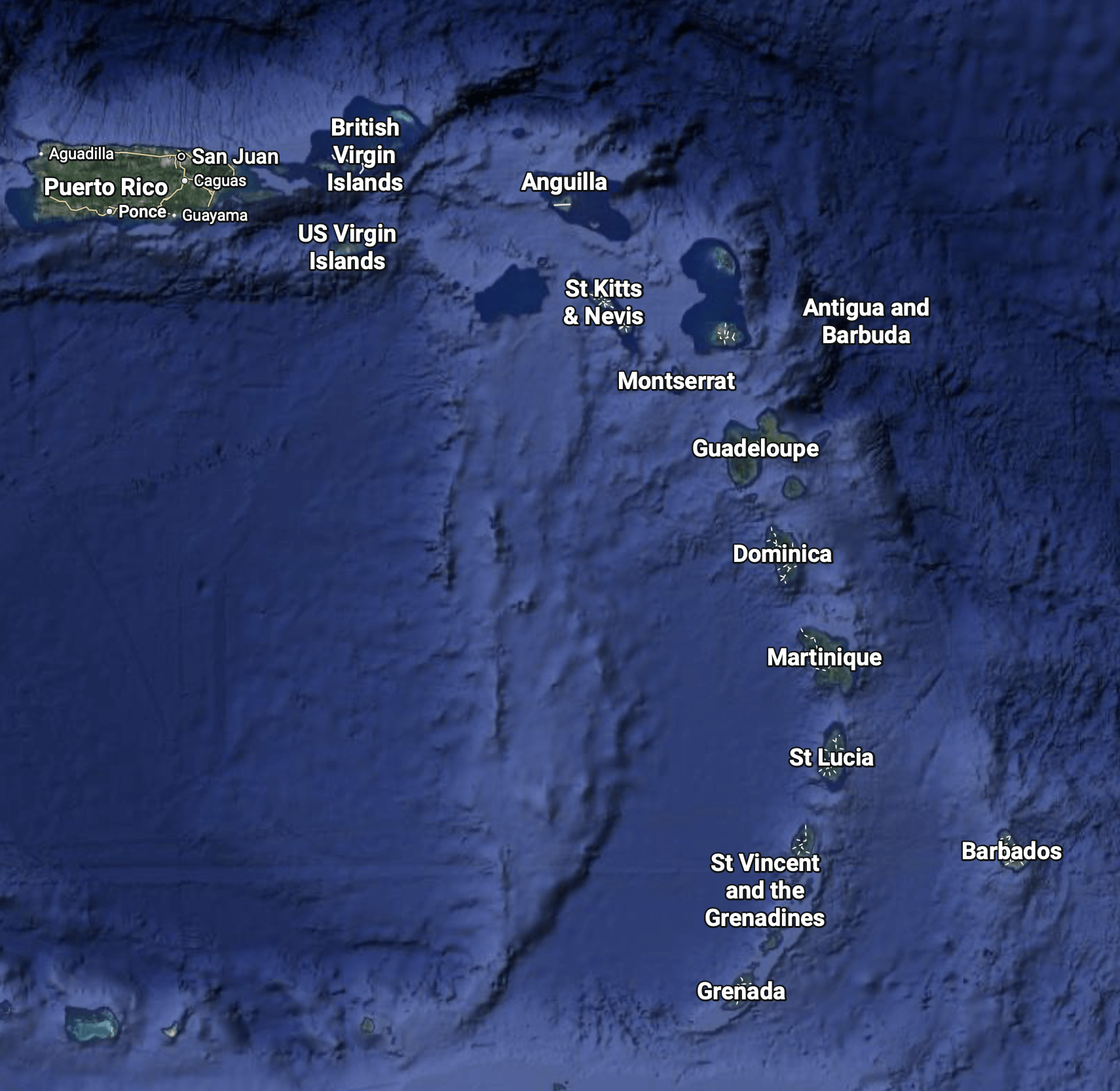
As the CARICOM Reparations Commission outlined its priorities, members emphasized that reparatory justice extends well beyond financial compensation. They argued that unfinished decolonization remains one of the Caribbean’s greatest reparatory issues. Nearly 20 British, French, Dutch and American territories throughout the region remain under colonial administration.
“Reparations is a legal remedy,” Sir Beckles argued. “The first component of repair has to be the recovery of nationhood, national sovereignty, and self-determination.”
Supporters and advocates of reparatory justice say the movement has reached a turning point. Following years of apologies from universities, churches, financial institutions and corporations that profited from slavery.
Caribbean leaders insist the next phase must involve direct negotiations with European governments over legal responsibility and concrete programs of repair. For the commission, acknowledgment without meaningful action leaves the legacy of slavery largely untouched.
Ambassador Comissiong said Caribbean leaders sought reparations as part of independence negotiations decades ago, but Britain rejected those appeals. “We are determined,” he said, “that the colonies that still exist today will pursue reparations and decolonization together, ensuring that compensation for centuries of colonial exploitation becomes part of their journey to full independence.”
The delegation also met with senior leaders of the Church of England, which has acknowledged that it profited from the Trans-Atlantic Slave Trade and has begun exploring reparatory measures. “The Church of England, in doing what it did, sent a very positive signal to the rest of British society and to the British government in particular,” Sir Beckles said.
Commission members reaffirmed that repatriation remains a longstanding demand, particularly among Rastafari communities. “We believe that the governments that participated in the kidnapping and theft of African people should come to the table to negotiate how those who wish to return home may do so and be resettled,” Eric Phillips said.
The divine perspective
The Honorable Minister Louis Farrakhan, National Representative of the Most Honorable Elijah Muhammad, raised the question of what the UK and other European countries owe to Black people they held in bondage and continue to colonize.
In a message he delivered August 5, 2017, titled “Reparations: What Does The U.K. And Europe Owe Us?” Minister Farrakhan said, “The subject matter that you desired for me to address is, ‘Reparations: What Does the United Kingdom and Europe Owe to Us?’
And by ‘us,’ we mean the sons and daughters of Africa that are in the Caribbean, or from the Caribbean; the sons and daughters of Africa from the continent of Africa, and those from Africa—the sons and daughters of Africa—in European capitals.”
Minister Farrakhan also stated, “What does the United Kingdom and Europe owe to those whom they formerly enslaved and colonized? Well, if the Biblical law of justice is applied, ‘a life for a life’:

Tens of millions of us have been destroyed in the Middle Passage of the Transatlantic Slave Trade; tens of millions of us have been destroyed on the African continent.
If Europe were to pay for the lives of Black and Brown and Red and Yellow people who have lost their lives under colonialism and slavery, I don’t think too many Europeans, White Europeans, would be left if that law were applied,” he said.
“And then when you think of what Europe gained from our enslavement: When I was last in London—they don’t allow me to come there now; but, when I was last there, what a beautiful capital city London was, London is, as the capital of the British Empire. What a beautiful city Paris is, and Amsterdam and Berlin, and Rome and Palermo.
But all those capitals, all the stones in the streets, all the beautiful buildings that your artists and craftsmen have built, were built on the backs of those whom your ancestors enslaved and colonized,” Minister Farrakhan continued.
Student Minister David Muhammad is the Nation of Islam Student Minister for Trinidad and the Eastern Caribbean. He is also chairman of the Trinidad and Tobago Board of Directors of the National Library and Information Systems Authority. He told The Final Call that in his view, the CRC’s 10-point plan aligns with the Nation of Islam’s historic demands for freedom, justice and equality.
The CRC’s 10-point plan includes: a full and formal apology; an indigenous peoples development program; repatriation and resettlement; restitution of cultural heritage and cultural reconnection; remedying the public health crisis; capacity-building and development through education and training;
Compensation for gender-based violence and assault on family; psychological rehabilitation; the right to sovereignty and development: technology, innovation and entrepreneurship and debt cancellation, monetary compensation and decolonization.
The Most Honorable Elijah Muhammad introduced The Muslim Program which includes, “What the Muslims Want,” and “What the Muslims Believe,” which is published on the inside back page of The Final Call.
The Muslim Program calls for land sufficient to establish an independent territory where Black people can build their own economic base, educational institutions and businesses within a Nation of our own
In “What the Muslims Want,” in Point Number 4 it states: “We want our people in America whose parents or grandparents were descendants from slaves, to be allowed to establish a separate state or territory of their own—either on this continent or elsewhere.
We believe that our former slave masters are obligated to provide such land and that the area must be fertile and minerally rich. We believe that our former slave masters are obligated to maintain and supply our needs in this separate territory for the next 20 to 25 years—until we are able to produce and supply our own needs.
“Since we cannot get along with them in peace and equality, after giving them 400 years of our sweat and blood and receiving in return some of the worst treatment human beings have ever experienced, we believe our contributions to this land and the suffering forced upon us by white America, justifies our demand for complete separation in a state or territory of our own.”
Student Minister David Muhammad emphasized that the Nation of Islam teachings are rooted in self-determination, self-help, and the responsibility to “do for self.”
He referenced the Honorable Minister Louis Farrakhan’s 2004 Saviours’ Day address titled, “Reparations: What Does America and Europe Owe? What Does Allah (God) Promise?”
He said the Honorable Minister Louis Farrakhan made clear that while governments bear responsibility for repairing the damage caused by slavery and colonialism, Black people also have a responsibility to participate in their own restoration.
While insisting that governments and institutions enriched by slavery have a moral and legal obligation to repair the damage they caused, the Nation of Islam has consistently taught that Black people must simultaneously rebuild themselves through faith, education, economic development and self-determination.
“What do you owe? You owe us everything,” Minister Farrakhan said in his 2017 message. “But of course, you can’t pay with all your lives; you can’t pay with the ill-gotten wealth that you have, and what you have stored away for the ‘rainy day’—but you must pay.
So reparatory justice is the cry of all of the Caribbean; it’s the cry of Africa, it’s the cry of Asia. It’s the cry of those who are the sons and daughters of those who paid with their lives, and with their slave labor and their colonial labor,” he said.
Building a broader movement
While Caribbean leaders focused on negotiations with Europe, reparations advocates in the United States discussed expanding representation in the growing international movement. The London mission also highlighted efforts to unite reparations movements across the African diaspora.
Dr. Ron Daniels, convenor of the National African Reparations Commission (NARC), addressed representation for the African diaspora in the United States, noting that the revised framework seeks to include stateless people within the Global African partnership on reparations.
“We are delighted that our relationship with the CARICOM Reparations Commission has resulted in an increased awareness of the need to provide a formula for stateless people like we in the United States to be represented,” Dr. Daniels stated.
The Commission also welcomed Martinique as the newest associate member of CARICOM and expressed its commitment to integrating all Caribbean territories, including French, Dutch, and British colonies, into the reparation’s framework.
Professor Verene Shepherd, who also serves as vice chair of the United Nations Committee on the Elimination of Racial Discrimination, emphasized the importance of Article 15 of the International Convention in monitoring territories that remain under colonial administration and ensuring that decolonization remains an international priority.
Looking ahead, Sir Beckles noted that King Charles III has previously acknowledged that reparations are “a conversation whose time has come.” Commission leaders said they expect reparatory justice, sovereignty and decolonization to figure prominently when Commonwealth leaders gather in Antigua and Barbuda later this year.
For Sir Hillary Beckles, reparatory justice is ultimately about completing a process that should have begun generations ago.
“Were I the king,” he said, “I would arrive in Antigua and Barbuda and say … ‘The time has come to let the people go … to usher in the decolonization process … to break the chains of imperial governance.”
Final Call staff contributed to this report.
