









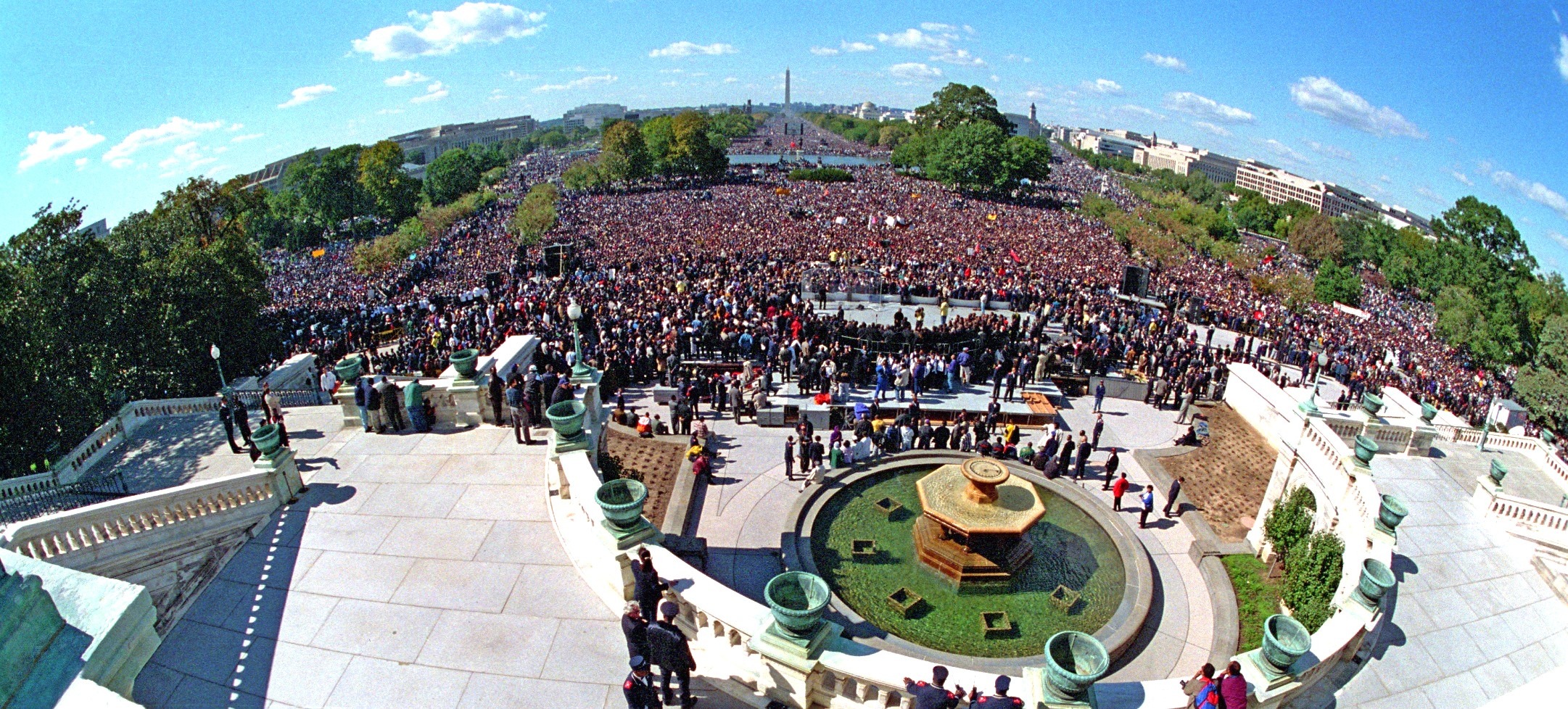

Question: What’s the point of still celebrating the anniversary of the Million Man March?
The Honorable Minister Louis Farrakhan: The same point that everyone does in celebrating holidays of great events in the history of a nation. The Million Man March was something that was never done before and may never be done again. It was a great moment in our history and it should be studied because the unity and peace that nearly two million men found in one day is what we hope we can produce every day of our lives.
—“The Teachings 2.0: Twitter Sayings of the Honorable Minister Louis Farrakhan, Volume 1”
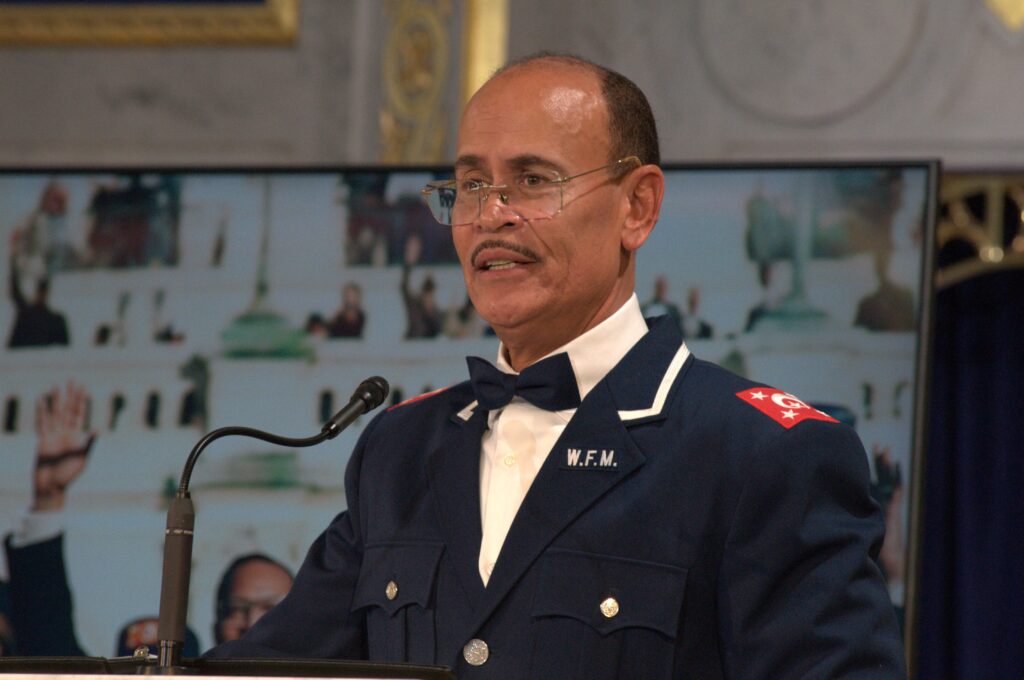

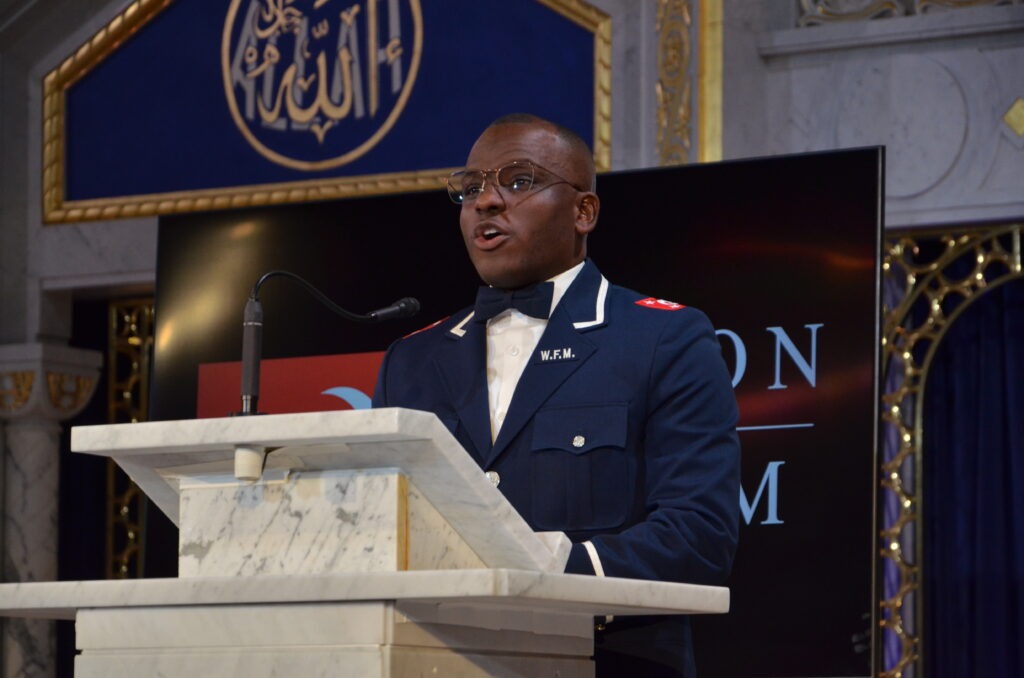
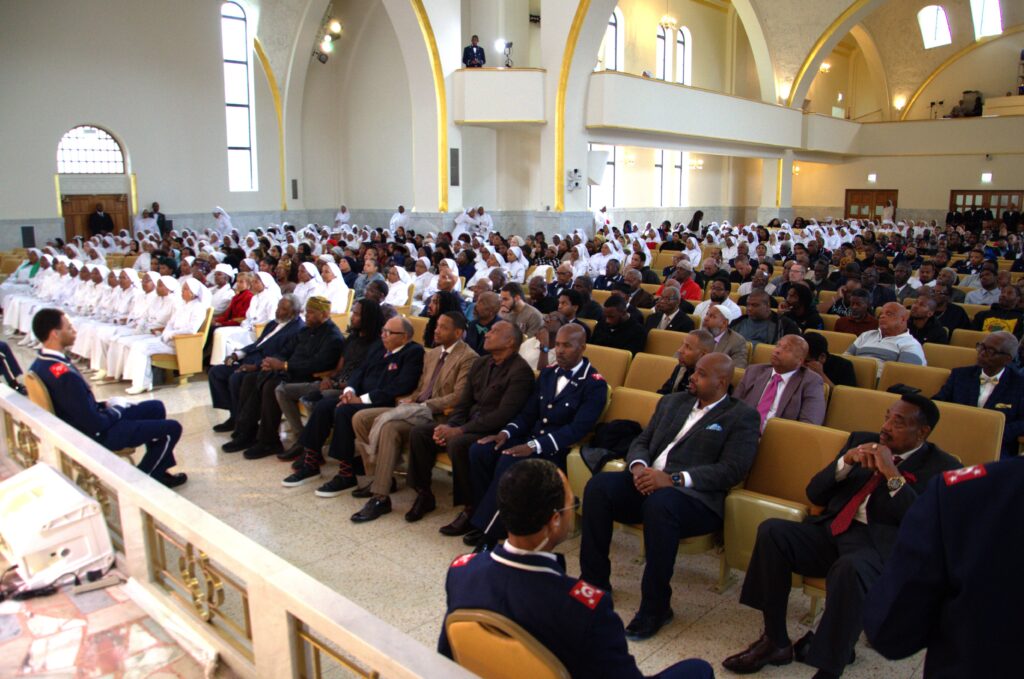
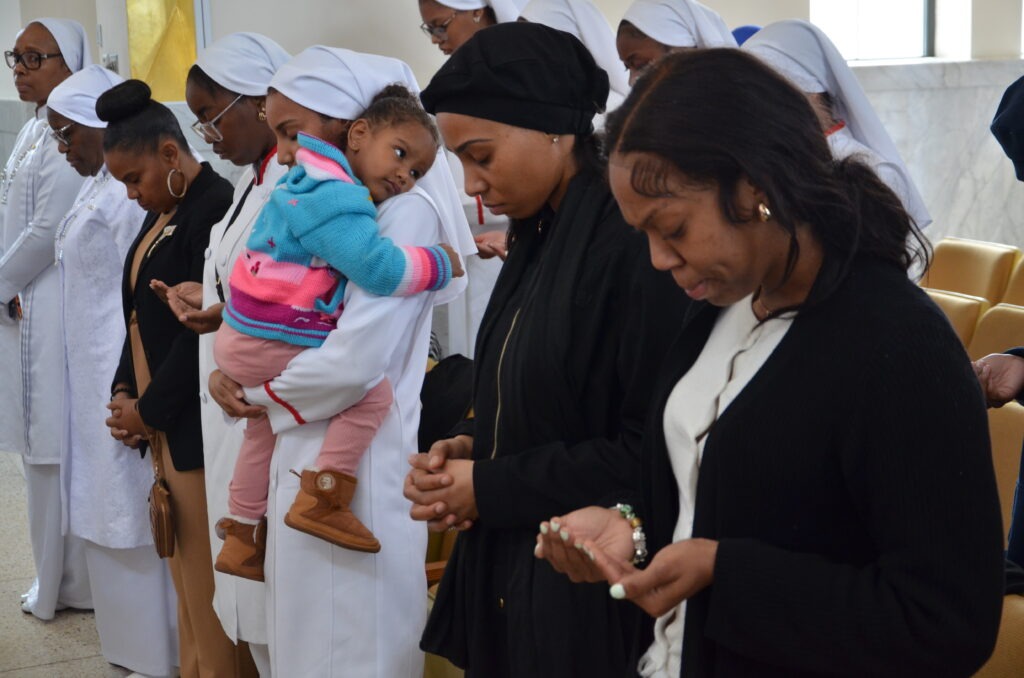
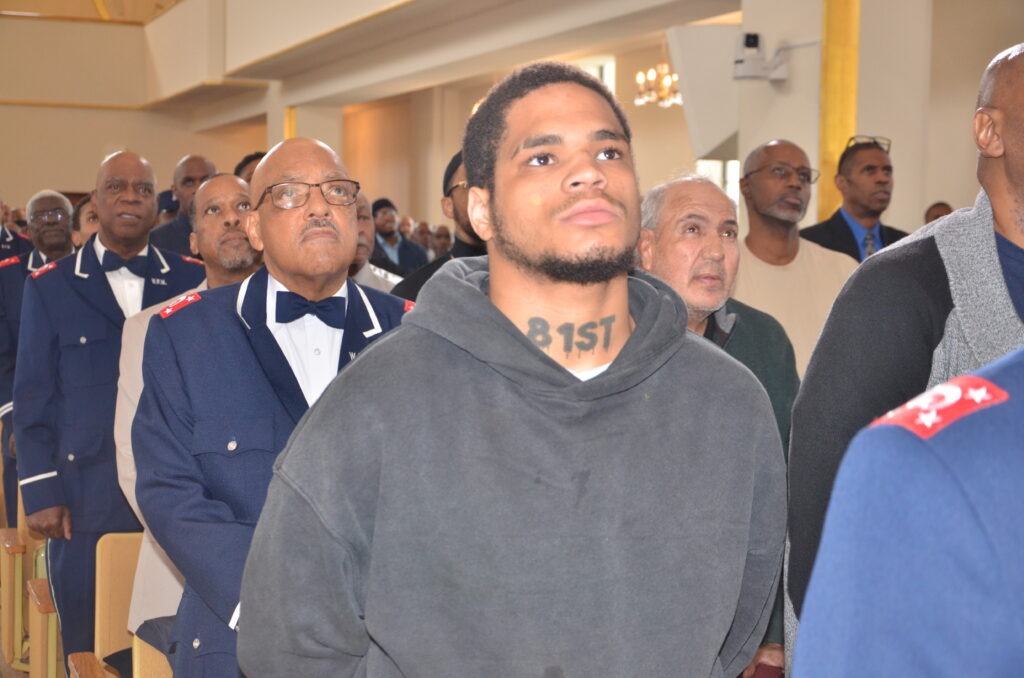
CHICAGO—A capacity crowd filled the sanctuary of Mosque Maryam Oct. 19 to observe and celebrate the 30th Anniversary of the historic 1995 Million Man March, described by Student Minister Ishmael Muhammad as “the greatest gathering ever and assembly of men in the history of the world.”
Delivering opening remarks before playing a video of the entire speech given that day on the National Mall in Washington, D.C., by the Honorable Minister Louis Farrakhan, Student Minister Ishmael, National Assistant to Minister Farrakhan, said the call was vocalized by the Minister, but the source of the call was from Allah (God) Himself.
“People ask, ‘how did you pull that off,’” he said during a program that was live streamed internationally via the internet. “The Minister has said, for us to take credit, that we were such great planners and such great organizers, would be false. We did the best we could. And the best we would never have achieved it. It was God from the very beginning of the call all the way to the very end,” he said, paraphrasing Minister Farrakhan’s words.
Speaking to an audience of youth and elders, some who attended the Oct. 16 March and others not yet born, Student Minister Ishmael said another generation is here that knows nothing, [or] very little, about the historic gathering of nearly two million Black men.
The social, political and economic conditions of that time are what gave rise to the Million Man March, he said. Minister Farrakhan was concerned about the “degenerate cultural images of Black men being portrayed throughout the world by the media. The Minister felt the community was being set up for destruction,” he said, adding, “I’m not so sure it’s not the same today.”
Emphasizing his point, Student Minister Ishmael reminded the audience that Minister Farrakhan had warned for years that the federal government would send the military into Black communities with a mind to kill.
“They are coming in, not to just arrest, detain our brothers and sisters from Venezuela, Mexico and other Latin American countries. They use that as a pretext to come in and break down the doors of our homes, arrest us on the street.”
President Bill Clinton was pushing a Crime Bill whose architect was then Democrat Senator Joe Biden of Delaware, he added. Called by many a Contract “On” America because of its impact on the Black community, the agenda, coupled with the Crime Bill, led to the mass incarceration of Black men, Student Min. Ishmael told the audience.
The enemy’s trap
“It was an all-out assault on the Black male. They were building prisons and now the prison industrial complex needed these cells to be filled,” Student Min. Ishmael continued.
In the 30 years since the March, Black artists began adopting a culture of “trap life” in the music, he said, continuing, “Why trap life? Because the enemy has been laying traps for us all along. All of these things were happening while we were planning the Million Man March.”
The inspiration to call men to Washington germinated during a 1994 speech to 10,000 men in New York, Student Min. Ishmael said. As plans for the March materialized, Rev. James Bevel, a civil rights leader and aide to Dr. Martin Luther King Jr., suggested the theme of atonement for the March. The All-African Peoples Revolutionary Party (A-APRP), led by activist Kwame Ture (Stokley Carmichael), saw in the call a Day of Absence, Student Min. Ishmael explained.
“That day was observed with no work, no school, no play, no spending at the stores except if we spend with our own,” he said.
The Million Man March was officially dedicated as a Day of Atonement during a meeting of spiritual leaders at Rankin Chapel on the campus of Howard University. Unlike previous civil rights marches on the nation’s capital, The Million Man March would not be appealing to the government for “Jobs and Justice,” but instead calling Black men to “make a living sacrifice” of themselves—seeking atonement with Allah (God), reconciling differences with one another and accepting the responsibility to make Black communities “safe and decent places to live,” Student Minister Ishmael said.
Despite the purity and purpose of the call, “the enemy” did everything possible to derail the March. Divisive narratives spewed in national media questioned why women weren’t invited; they played the Christian-Muslim card; they disparaged the fundraising, Student Min. Ishmael said.
The March would not be sponsored by corporate America as others had been. Everybody had to pay their own way. The Million Man March was the only one to release a public audit of funds raised, he said.
“At the end of the March there were unpaid bills to the tune of nearly $500,000. Minister Farrakhan paid for that out of his pocket!” Minister Ishmael concluded.
“The enemy did everything to separate Farrakhan from the March, even the message he gave …,” Student Min. Ishmael said. “When we heard that call, we knew it wasn’t a call of a man. It was the call of God in a man to Black men. There is no way we would have responded if Minister Farrakhan’s heart was not a heart after the heart of God. You cannot say Minister Farrakhan does not love his people. He has a 70-year track record. It took a man of noble character and integrity to call that March.”
The vital role of Black women
The program began with remarks from Sister Asia Muhammad, a student in the ministry class, who commented on the role of women in the March. She named some who spoke, including Mother Tynnetta Muhammad, wife of the Honorable Elijah Muhammad; Cora Masters Barry, wife of Mayor Marion Barry; Dr. Betty Shabazz, widow of Malcolm X; activist Queen Mother Moore; Dr. Dorothy Height, president, the National Council of Negro Women; and Dr. Maya Angelou. Prominent women seated on the dais included Nation of Islam First Lady Mother Khadijah Farrakhan, wife of Minister Farrakhan and Student Minister Ava Muhammad.
“Some people were concerned [the March] was biased against women,” Sister Asia said. “That was not the case. The Million Man March and the spirit of atonement and reconciliation … was never an effort to step away from women; it was an effort to step toward women. We are taught in the Nation of Islam that a nation can rise no higher than its women.”
“As the sun rose on the Mall in this nation’s capital of Washington, D.C., hundreds of thousands of Black men were standing together in unity, willing to sacrifice their lives and their time based on the principles of freedom, justice and equality,” said Student Min. Daniel Muhammad in opening remarks.
Introducing Student Min. Ishmael, he said, “It’s one thing for those of us who were either very little or yet to be born to blow our trumpets about an event such as the Million Man March, but it’s entirely different to have an eyewitness account.” Long Live the Spirit of the Million Man March!
To view the special October 19 program in its entirety, visit media.noi.org.
