






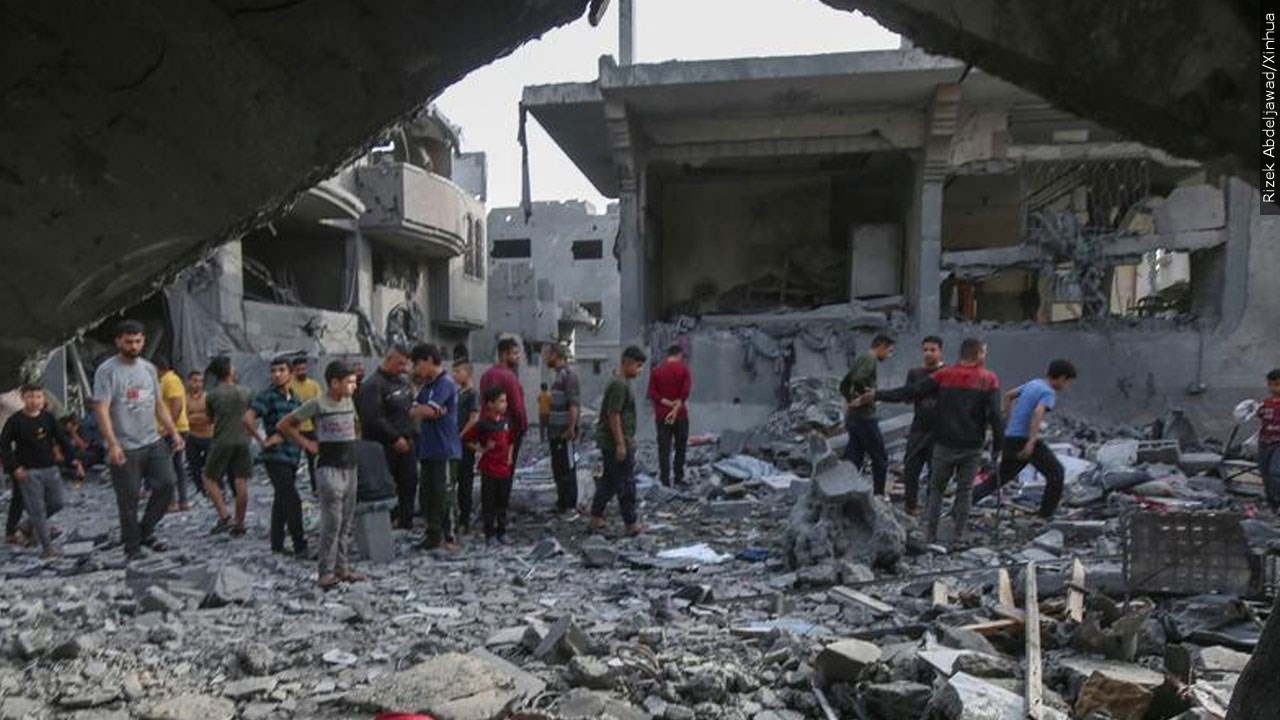

Dr. A.V. Mohamed, chairman of Juma Masjid in Durban, South Africa, recently resigned from the KwaZulu-Natal Inter-Religious Council after accusing the organization of refusing to condemn the genocide and humanitarian crisis in Gaza publicly.
According to legacy.visitdurban.travel, “Juma Masjid Mosque is the largest mosque in the Southern hemisphere and it dominates Durban’s central Indian district.” So, Dr. Mohamed’s resignation from an interfaith group he co-founded is not going unnoticed.
I recently interviewed Dr. Mohamed, who spoke from his home in Durbin about the aim and purpose of the group and his decision.
The KwaZulu-Natal Inter-Religious Council was founded in 2007, he explained. “It is made up of all these religious groups (Bahal, Buddhist, Christian, Hindu, Jew, Muslim and traditional African religions) in the Providence of KwaZulu Natal, which is the largest Providence in the Republic of South Africa,” he told Africa Watch.
In his role as vice chair, he said he interacted with every community and every religious group. “It was more of a relationship to empower each other. The social cohesion, means ‘Ubuntu’ (I am because you are) coming together of everybody in the name of humanity,” he said.
“We are all humans, and we need to stand as one. Not as a religious body of a particular religious faith, or a particular linguistic group. And this was our aim and objective.”
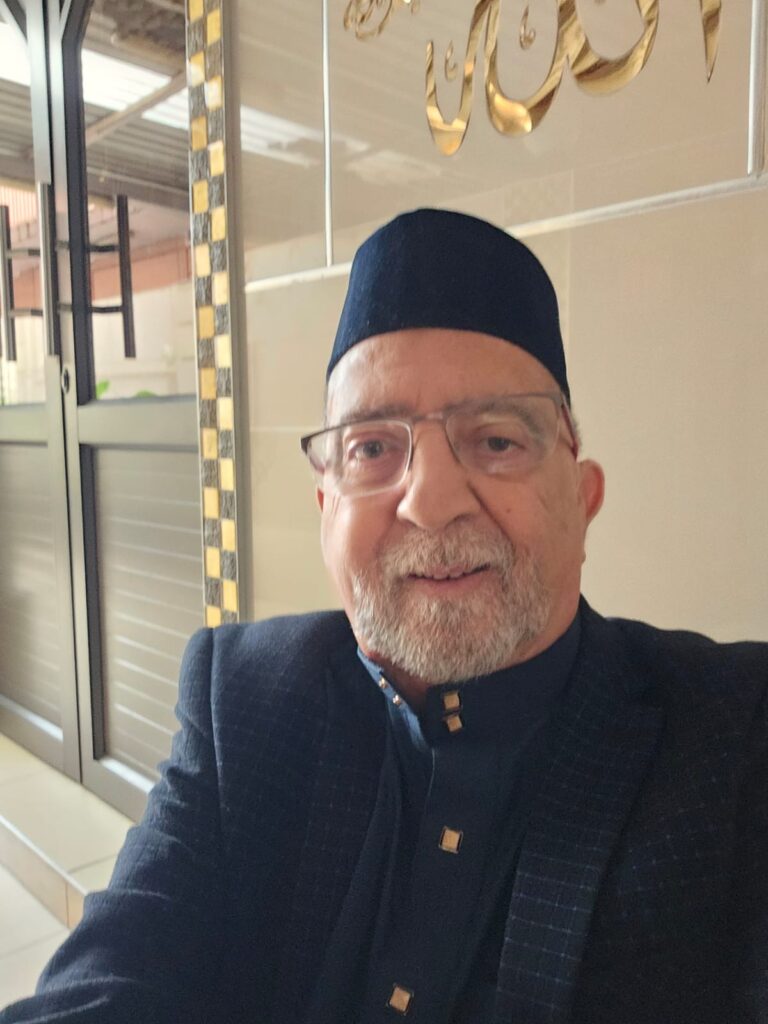
During another interview, Dr. Mohamed explained that he is a humanitarian. In comments he made, which appear on the South African news platform IOL, Mohamed stated,
“I am known around the world as a humanitarian, so I cannot associate myself with people who are afraid to make comments on such urgent humanitarian issues.
The narrative surrounding Palestine transcends religion and politics. It’s fundamentally about human rights and the duty we have to condemn the starvation of fellow human beings.”
He elaborated to Africa Watch, “My eyes see mass genocide, blatant disrespect for humanity, the killing of women and children, who are innocent with no food to eat, no water to drink.
They don’t even have shelter to protect themselves from the elements. And, on top of that, they are prisoners in their own land. Imagine a six-year-old child not knowing where her next piece of bread will come from.”
He further explained his decision to leave the KwaZulu-Natal Inter-Religious Council. “After 69 years of humanitarian work, I refuse to associate with an organization that has shown such profound disregard for justice and compassion.
The council’s paralysis, whether due to indifference or complicity, has rendered it irrelevant in the fight for humanity. Despite raising this issue directly, the only response directly, was a cordial, yet empty engagement by (members), with no meaningful acknowledgement,” he said.
He also felt that, in solidarity with his conscience, having studied and attained a Ph.D. in humanities, he was doing a disservice to his course of study and service to humanity if he stayed, he explained. “So, while my hands were being tied by the organization I represented, I felt it was in the best interest of all that I resign,” he said.
In response to Mahomed’s resignation, in a statement to the South African newspaper, the Post, the KwaZulu-Natal Inter-Religious Council expressed “deep regret and gratitude” for Mahomed’s many years of tireless service.
The statement continued, “As a founding member, his contribution to interfaith dialogue and social cohesion in the province have been invaluable.”
The statement also said that while the council recognized Mahomed’s “frustrations and concerns,” it remained committed to its founding mandate of promoting peace, unity, and the well-being of all in KwaZulu-Natal through collaboration among diverse faith communities.
However, it appears that Mohamed is not the only member of the group who is concerned about its stance on Gaza. A recent edition of Southern Africa’s Muslim newspaper, Al-Qalam, reported that Islamic scholar Shaikh Rafeek Hassen, founder of the Islamic Interfaith Research Institute.
Said he will quit the same interfaith organization he recently joined unless it publicly condemns Israel’s genocide in Gaza. The article, titled “Another Muslim leader may quit interfaith council over Gaza genocide,” was published July 25.
Shaikh Hassen told Al-Qalan that he joined the group because he believed his expertise in the field of interfaith dialogue would make a difference in local communities. However, during his initial meeting with the group, Hassen said he was taken aback by Dr. A.V. Mohamed’s resignation.
Concerning Dr. Mohamed’s resignation, Hassen told the outlet, “It is shameful that an institution claiming to represent religious leadership can remain silent in the face of such blatant inhumanity.
How can we purport to uphold divine values, while ignoring the suffering of our fellow human beings? This is not just a failure of leadership but a betrayal of faith itself.”
Follow Jehron Muhammad on X @Africawatchfcn
