











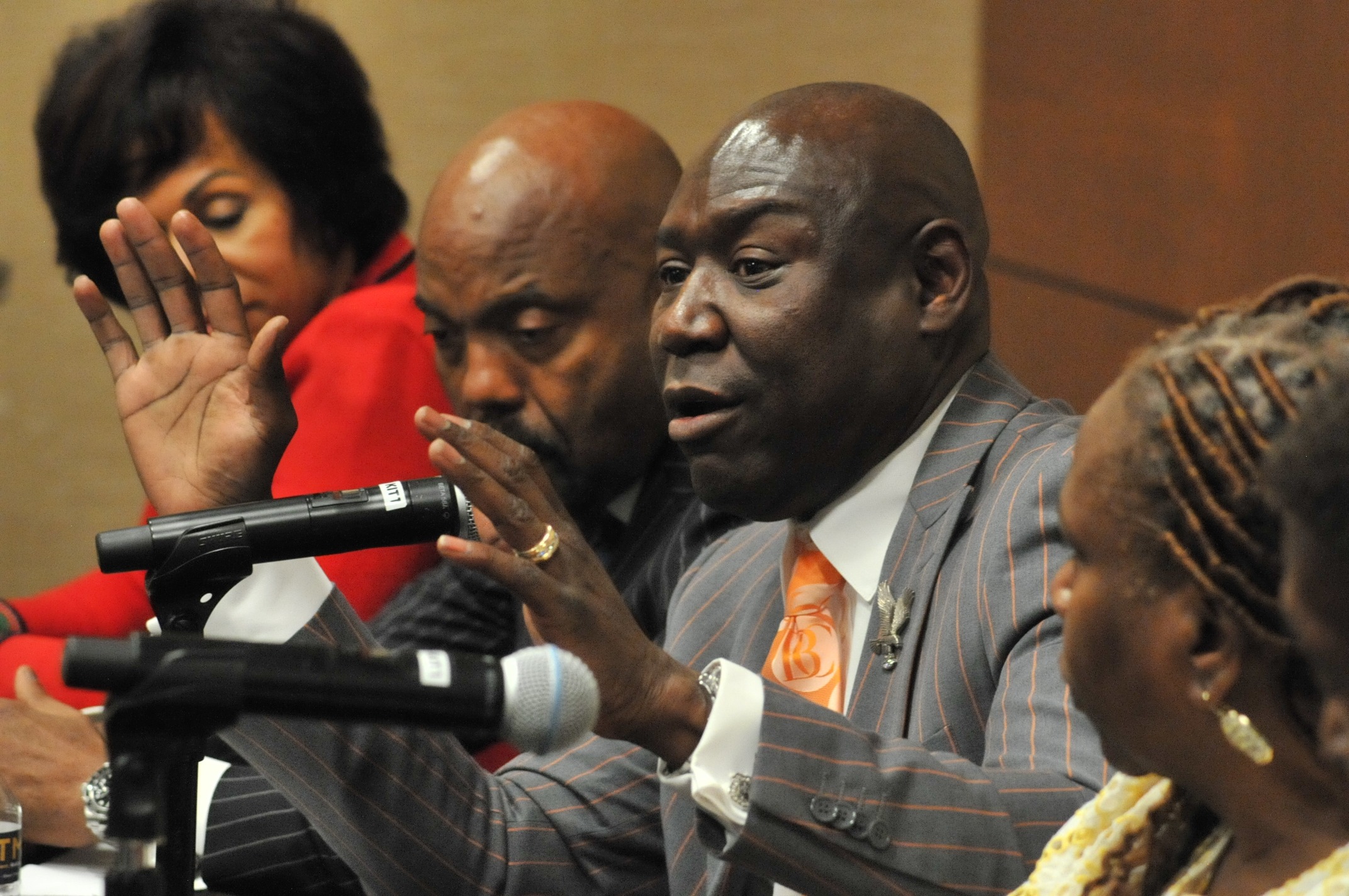

CHICAGO—For 100 years, they’ve fought the power—not just in courtrooms, but in classrooms, boardrooms, and the streets. At the National Bar Association’s (NBA) Centennial Convention in Chicago,
Black attorneys and legal professionals gathered not only to celebrate their legacy, but to sharpen their legal swords for the battles ahead—from voter suppression and mass incarceration to AI bias and educational inequality.
“This bar association has always been about infinite hope,” outgoing NBA Preside
t Wiley S. Adams told The Final Call. “Regardless of the times that we are going through, we’ve been through worse. We will come through this.”
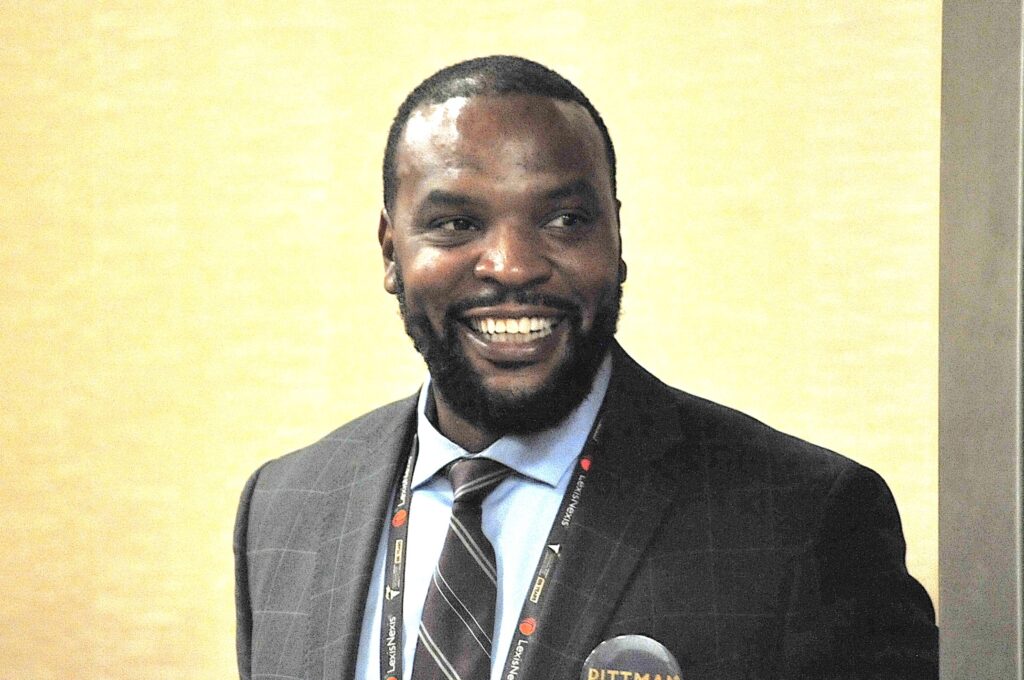
Held from July 26 to August 1 in downtown Chicago, the convention brought together thousands of attorneys, judges, law students, and public servants from across the nation. From honoring civil rights giants, powerful plenary sessions and workshops, the week showcased the full spectrum of Black legal excellence—past, present, and future.
“We are in Chicago,” civil rights attorney Ben Crump told The Final Call. “A place where we have so many of our national leaders evolve from—Rev. Jesse Jackson, Minister Louis Farrakhan, and President Barack Obama—all raised in leadership here. So, it is appropriate that we are in Chicago for the centennial celebration of the National Bar Association.”
Legal resistance then and now
Since its founding in 1925, the National Bar Association has played a pivotal role in nearly every major civil rights milestone in the 20th and 21st centuries.
Its members contributed to the legal strategy behind Brown v. Board of Education (1954), the landmark Supreme Court decision that declared racial segregation in public schools unconstitutional.
During the Civil Rights Movement, NBA attorneys worked alongside Thurgood Marshall and the NAACP Legal Defense Fund to desegregate schools, protect voting rights, and represent activists unjustly arrested during protests across the South.
In more recent decades, the NBA has stood at the forefront of efforts to combat police brutality, racial profiling, and voter suppression. Members of the association have served as lead counsels in high-profile civil rights cases involving the deaths of Trayvon Martin, George Floyd, and Breonna Taylor.
And have advocated for federal reforms through testimony before Congress and amicus briefs filed in key Supreme Court cases. Through its sustained legal advocacy, the NBA has helped shift public policy and consciousness on the issues that continue to define the Black experience in America.
The convention opened with a nod to the historical legacy of Black attorneys who have long battled racism in the courtroom, the legislature, and the streets. In one of the most high-powered panels of the National Bar Association’s Centennial Convention.
Prominent civil rights attorneys urged a bold, strategic approach to handling complex litigation under Section 1983, which provides an individual the right to sue state government employees and others acting “under color of state law” for civil rights violations.
“This isn’t just about the law—it’s about saving lives,” said Atty. Crump, who pointed to recent cases like the violent arrest of a Florida college student, William McNeil Jr., as examples of systemic injustice. “If we don’t make it matter in the courtroom, it won’t matter in the culture.”
Panelists discussed the economic, procedural, and emotional weight of civil rights litigation. “Preparation is everything,” said C.K. Hoffler, past president of the NBA. “This kind of work demands more than just lawyering—it demands vision, heart, and strategic endurance,” she added.
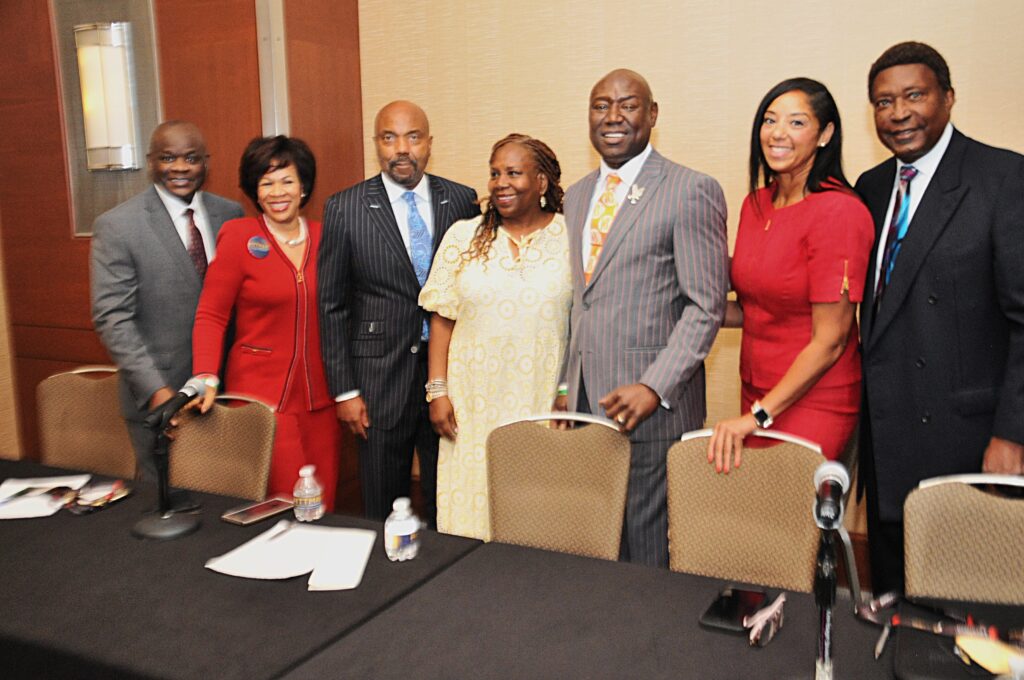
Atty. Crump emphasized that lawyers must be both legal advocates and cultural translators. “You have to win in court, and you have to win in public opinion,” he said. “If not, justice becomes performative.”
Joined by renowned attorneys such as Ben Crump, John Burris, Carl Douglas, Bernarda Villalona, and Daryl K. Washington, as well as Justice Cenceria Edwards and Aubrey Pittman, panelists reminded attendees that civil rights cases are never just about one client—they’re about changing culture.
Whether confronting police brutality, wrongful death, or constitutional violations, these attorneys are not only seeking justice—they are working to shift the legal landscape one verdict at a time.
“We have to educate our jury pools, our communities, and fellow attorneys—while holding those in power accountable,” said Atty. Bernarda Villalona, seasoned trial attorney with 19 years of experience.
This theme echoed through sessions addressing police misconduct, judicial bias, and the racialized weaponization of the law. In one of the most gripping moments, Attorney Crump recounted a recent case involving the Jacksonville Sheriff’s Office, where a young Black college student, William McNeil Jr., was assaulted during a traffic stop.
“McNeil simply asked, ‘Why are you stopping me?’ It was 4 o’clock in the afternoon. The officer said it was because his headlights weren’t on. But it wasn’t raining or foggy. When McNeil asked to speak to a supervisor, they dragged him out, beat him, and slammed his head against the concrete. And the sheriff—a Black man—tried to justify it.”
Judge Edwards reminded attendees that fairness must remain central. “The law has to be applied with integrity, regardless of politics,” she said.
Dismantling the school to prison pipeline
The session titled “Dismantling the School-to-Prison Pipeline: Juvenile Justice and Educational Equity” delivered a sobering and urgent message: Black youth are being criminalized, not nurtured—and the legal community must respond.
From there, the session continued into a powerful critique of a system that funnels students from classrooms into courtrooms. Fulton County, Georgia District Attorney Fani Willis opened with a declaration of purpose:
“I don’t believe you change systems unless you’re inside of them. As a prosecutor, I fight every day to keep children out of the system. I’ve stopped charging kids for things that used to be common—like school fights. These are not criminal acts. They’re developmental behaviors.”
District Attorney Willis said she has made it her mission to reimagine prosecution—not as a tool of punishment, but as an instrument of transformation. Speaking at the convention, Atty. Willis emphasized the urgent need to shift how society responds to youth behavior, particularly in Black communities.
Her reforms reflect a deep commitment to dismantling the school-to-prison pipeline, a system she believes criminalizes poverty, trauma, and adolescence. “I fight every day to keep children out of the system,” she declared.
“We don’t need to reform this culture of criminalization—we need to uproot it entirely.” In her view, real change requires more than slogans; it demands structural courage from those within the system to push for justice over convictions.
Attorney Kevin Jones detailed the structural harm: “We’re watching policies change the entire identity of school discipline. Metal detectors, zero-tolerance policies, and criminalizing a 13 year old’s outburst—these are feeding the pipeline. We need to interrupt that cycle with legal advocacy and cultural understanding.”
Darryl Auguste, Assistant State’s Attorney at the Cook County State’s Attorney’s Office, pushed for holistic solutions: “We need prosecutors who refuse to charge petty school offenses. We need public defenders in every school district. We need counselors who see potential, not problems. We need lawyers who listen.”
Atty. Willis closed the session with a charge that resonated throughout the NBA gathering: “It takes all of us. If you’re a teacher, teach with love. If you’re a lawyer, fight with truth. And if you’re in the system—like I am—change it from within. That’s how we dismantle this pipeline.”
The convention also emphasized wellness, legacy, and unity. Daily prayer breakfasts, wellness retreats, and HBCU alumni gatherings created a holistic environment of support and spiritual nourishment.
For Iris McCollum Green—former senior trial attorney at the U.S. Department of Justice Civil Rights Division and the legal mind behind the landmark Supreme Court case State of Washington v. Seattle School District No. 1—the struggle for educational justice is far from over.
A lifelong civil rights advocate, Atty. Green helped dismantle school segregation through federal litigation, only to witness new forms of exclusion emerge in their place.
“We thought we needed to have access because where I grew up, you had hand-me-down books,” she said. “Those things were rectified. However, the compassion and the care that educators put in our heads disappeared.”
Now, she warns, even basic access to education is being eroded once again by political forces opposed to systems and programs that pushed for progress. “We’re fighting the same war under a different heading,” she said.
Reflecting on the NBA’s centennial gathering, Atty. Green offered a word of caution and encouragement to the next generation of Black attorneys: “They need this bar association because when they suffer hard times—even if they graduated from top law schools—they’re told they can’t write or aren’t good enough. Where do they come? Here.”
During an impromptu conversation, a powerful discussion unfolded between three trailblazing Black women attorneys who are reshaping the legal field—not only by their casework, but by how they show up for their clients, families, and communities.
For Jennifer Norton, founding attorney at Norton Estate Planning and Elder Law Firm, LLC, purpose means aligning your personal mission with the professional tools of the law. “Being an attorney is powerful,” she said. “It gives us a voice in places we’re often shut out of—and I wanted to make sure I used that voice intentionally.”
Atty. Norton, who specializes in elder law and legacy planning, spoke candidly about how her personal experience with her grandmother’s care shaped her legal path.
“When my grandmother developed Alzheimer’s, I watched our family struggle through a legal and financial maze. That lit a fire in me to make sure other Black families have what they need to protect their loved ones and preserve wealth.”
She emphasized that estate planning isn’t just for the wealthy—it’s a justice issue. “We’re talking about generational wealth, land retention, and health decisions. If we’re not at the table helping our people get these documents in order, we’re setting them up to lose everything.”
Atty. Nequosah Anderson, founder of Anderson Law Firm, PLLC, brought an unapologetically honest tone to the conversation. For her, authenticity is both a business strategy and a survival tool.
“When I first started my firm, people told me to tone it down—my name, my style, even how I wore my hair,” she said. “But I made a decision early on: I’m bringing my full self to where my power is.”
Atty. Anderson described how her clients, often from communities distrustful of the legal system, find relief in seeing someone who looks like them and understands their struggle.
“We can’t underestimate how important representation is. When my clients walk in and see me—a young Black woman with locs—they know they don’t have to code-switch or translate their pain. I get it.”
She challenged her colleagues to redefine success. “I don’t want just a big firm. I want to build a practice that feels like home for my team and my clients. Safe. Powerful. Black-owned and unapologetic.”
Atty. Ashley Stepp, managing partner at Rippy, Stepp & Associates, closed the conversation with a reminder that the future of law lies in mentorship and movement-building.
“When I passed the bar, I didn’t just celebrate for me—I celebrated for every little Black girl who didn’t think she could,” said Atty. Stepp. “Because this isn’t just about getting a license. It’s about what you do with it.”
Atty. Stepp described her commitment to mentoring young attorneys and interns as part of her broader vision for the profession. “We can’t just climb the ladder—we have to build new ones. I’m committed to mentoring law students who are the first in their families to go this route. Because if we don’t, who will?”
Reflecting on the weight of representation, she added, “You walk into a courtroom and sometimes you’re the only Black woman there. That’s a lot. But we don’t just carry the weight—we carry the wisdom. And we make space for the next sister coming behind us.”
