
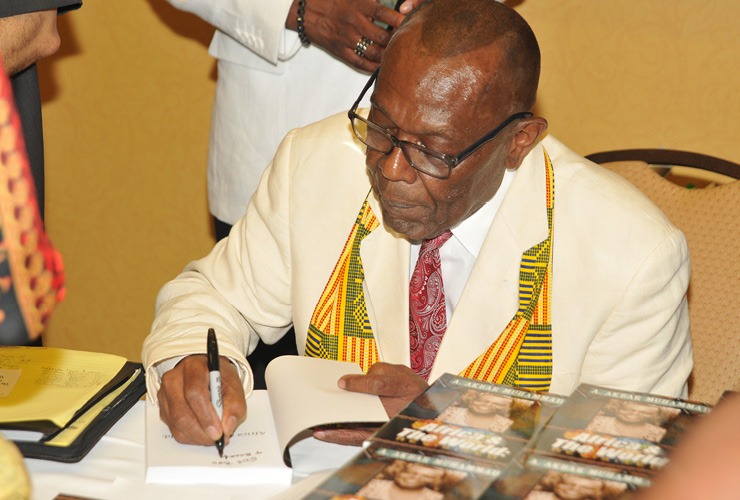

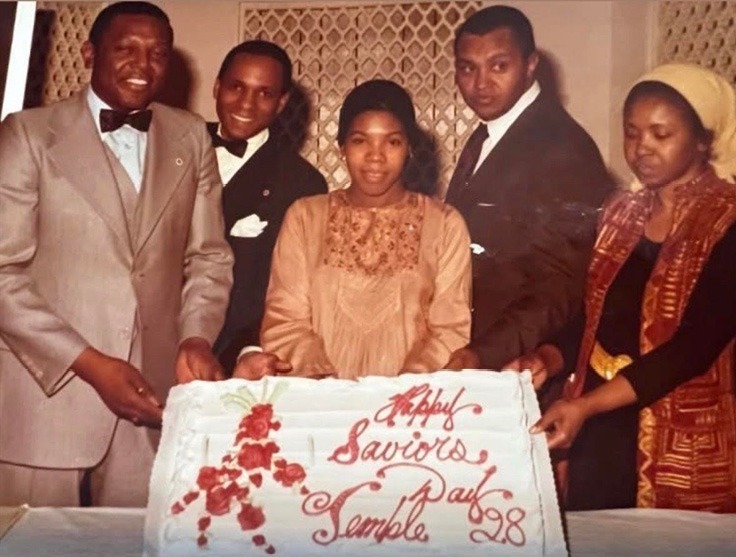
ST. LOUIS—During the summer of 1975, the city welcomed “a special friend,” Minister Abdul Akbar Muhammad, then known as Brother Karriem Abdel Aziz, who arrived to head the Nation of Islam’s Temple No. 28. It was shortly after the departure of the Most Honorable Elijah Muhammad and a time of transition of the Nation that was now led by His son, Imam Warith Deen Muhammad.
However, between the autumn of 1977 and the spring of 1978, Bro. Akbar began working with the Honorable Minister Louis Farrakhan, who had vowed to rebuild the Nation of Islam.
Min. Akbar would go on to travel to more than 180 countries as the International Representative of Minister Farrakhan and the Nation of Islam, meeting with presidents, kings and heads of state.
Yet those who knew him best say his lasting impact was not measured in diplomatic halls or foreign capitals. It was measured in the lives he changed, one by one, in St. Louis.
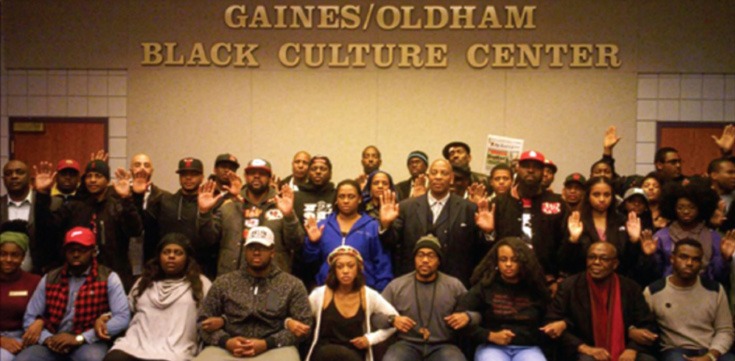
Student Minister Donald Muhammad of Muhammad Mosque No. 28 was among the first in the city to witness Min. Akbar’s impact. Describing him as an impressionable mover and shaker, he said, Min. Akbar “was reaching out into the community and bringing people of leadership into the mosque, like politicians, pastors and community leaders.” The mosque was packed every Sunday, said Student Min. Donald.
Student Min. Donald also recounted the pivotal moment when Min. Akbar aligned himself with the rebuilding effort under Minister Farrakhan. Min. Akbar had an office on Boyle Avenue in St. Louis when Minister Farrakhan came to town to meet, Student Min. Donald recalled.
“That was the first time I had ever come that close to the Minister (Farrakhan) in a small room. Minister Farrakhan was telling us how he was going to rebuild the Nation of Islam. We agreed to help him and we got started. In the rebuilding process, we went to East St. Louis to not clash with the followers of the Imam,” he said.
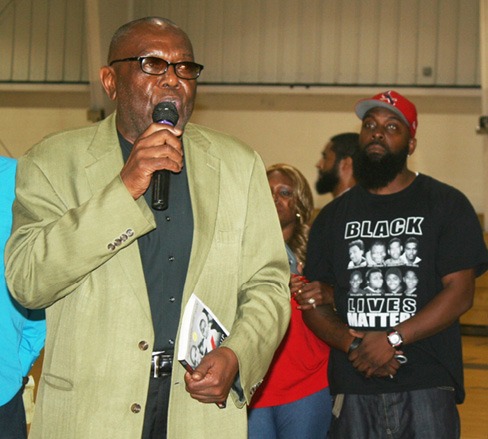
That decision required a physical home for the believers, one that East St. Louis, Ill., former Mayor Carl Officer provided. “When the Nation needed a building for a Temple in East St. Louis, I remember how folks that wasn’t our color questioned me of why I would allow them (N.O.I.) to get that building,” he recounted to The Final Call.
“I told them, ‘because they asked and I felt it was an appropriate position.’ We had a vacant building, and they would do a good job maintaining the building and having a place of worship and education for people. It just made sense to me, and I was proud to do it,” he said.
“When I think about Minister Akbar, first and foremost was his friendship. I appreciated his character and the way he served not only the Nation but, quite frankly, how he served the Minister (Farrakhan). His devotion to Allah (God), you never can diminish that kind of love. He was an honorable brother.”
The East St. Louis building itself carried a heavy history, once a funeral home turned abortion clinic. Under Min. Akbar’s direction, working alongside his captain Eddie Aziz, approximately 30 brothers and sisters pooled their resources and labor to transform the space into a place of life. Their collective work made possible the grand opening and dedication on May 3, 1981, with Minister Farrakhan as the special guest speaker.
Min. Akbar was known for three sayings that defined his standard: “Men sharpen men;” “Men make things happen;” and “Excuses are a sign of weakness.” These were not slogans. They were the operating code of every man who worked alongside him and the testimony of those men bears that out completely.
Bro. Jame Muhammad, a student of Min. Akbar since 1981, said, “I got my X in 1981 and he was my minister. I left the Nation and had been gone over 20 years. My wife passed away in 2018. I got his number and asked him if he would do the eulogy.
He said, ‘Yes, Brother, I’ll do that. Give me the date and the time.’ Now, here’s a brother that’s been with kings and rulers all over the country, but he had time for his little brother. He led by example.”
Kevin Bryant, who helped Min. Akbar compile his writings, said their relationship was a “paternal bond” built on mutual respect. “Bro. Akbar was a walking library, one of the last true griots (historian) of our time,” he said.
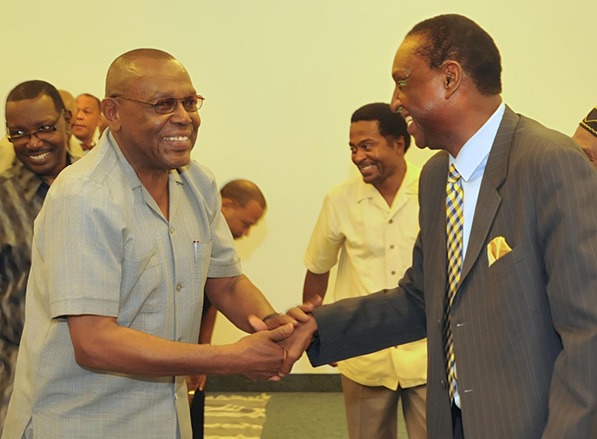
“The greatest impact he had on me didn’t happen in a meeting with a head of state, but across the dinner table during our time in Africa. I am a better man for knowing him and a wiser one for having had the honor of being his student.”
When the late Kwame Ture (formerly Stokely Carmichael) came to St. Louis prior to leaving for Africa to transition, Min. Akbar and business mogul Michael V. Roberts Sr. collaborated on a fundraiser for the revolutionary leader.
“We raised more money at our two events than they raised at a larger event in D.C. after ours,” Mr. Roberts said. “I was ultimately enstooled as Roberts in Ghana. So many of my contacts and experiences in Ghana were as a result of Brother Akbar coming to meet me while I was there,” he added.
“Minister Akbar was a gift from God,” St. Louis attorney and activist Jerryl Christmas commented. “His leadership, intellect and passion for Black people and Africa is unmatched. He was the catalyst for exposing the Black boys and girls in our Rites of Passage program to Africa on five different occasions. His impact on St. Louis will never be forgotten.”
Steve Conley, who served as Min. Akbar’s technology consultant, said Min. Akbar’s accounts of meeting presidents and leaders across Africa and the Caribbean while traveling with Minister Farrakhan were “life-changing.”
“He was a dear friend and a teacher I listened to intently, a walking library and historian who lived the history. He directly influenced my move to the Caribbean and my decision to do business in Africa. I am forever grateful. Rest in power, my friend. Your influence lives on,” he told The Final Call.
“He would talk with us about how to act as men, how to carry ourselves, how to teach each other, looking into the field of business, getting in business ourselves. He had me to read all the time. He made me want to be better,” said businessman George Hairston, who joined the Nation of Islam under Min. Akbar.
Sister Pamela Muhammad, 74, who served as Min. Akbar’s Student M.G.T. and G.C.C. Captain (Muslim Girls Training and General Civilization Class, women of the N.O.I.), remembered Min. Akbar as a task master but was always in a gentle teaching mode.
“You couldn’t be stagnant. You had to always be working,” she said. “He was like a father, big brother, grandfather, mentor, all of that to my son and I. If the Minister [Farrakhan] said it, Brother Akbar tried to make it so. He was the Minister’s right arm,” she said.
Bro. Talib Muhammad, 71, said working with Min. Akbar, for nearly 25 years, allowed him to travel to three continents and visit many N.O.I. mosques.
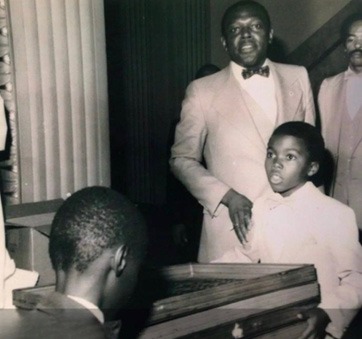
“It was one of the greatest experiences that I could ever have in life. I learned how to become a diplomat. No one sits around Akbar and does nothing. He’s going to find something for you to do. This (St. Louis) is Akbar’s city. When he was the minister, Akbar made this city jump. His legacy is going to have to live through us,” he said.
Student Minister Ralph Muhammad of Mosque No. 28B in East St. Louis, Ill., said Min. Akbar was a “brother, mentor, confidant, spiritual guide, advisor and a father figure.” Min. Akbar officiated his wedding and the weddings of two of his children.
“Thank you, Brother Minister Akbar, for your love, kindness and tolerance. You will always be a part of me and my family,” Student Minister Ralph said.
Bro. Anthony Shahid, who first met Brother Akbar in 1975 as a young man, spoke with the conviction of someone still measuring the magnitude of the loss of such a servant and consequential human being.
“He was a giant amongst giants. He made stars, he made geniuses, he made us learn how to work, and he really burned Islam into our hearts,” Bro. Shahid, a longtime activist, said.
Recounting the 180 nations visited by Min. Akbar, he added: “Minister Farrakhan had a quiet man working behind the scenes, making sure he didn’t miss nothing, and he never worried about being in the highlight. He was always humble.”
Perhaps one of the most pivotal moments in St. Louis history where Min. Akbar made a tremendous impact was during the Ferguson uprising in the aftermath of the fatal shooting of unarmed 18-year-old Michael Brown Jr., on August 9, 2014, by a Ferguson, Mo. police office.
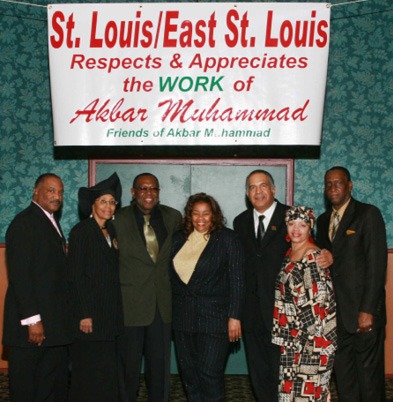
Ferguson is a suburb of St. Louis. After the shooting, Min. Akbar returned to St. Louis and went directly to the streets, standing alongside the youth, politicians and activists demanding justice for the Brown family. He helped organize a Ferguson October rally, where an estimated 10,000 people marched through downtown St. Louis protesting police brutality.
He also supported the slain teens’ parents, Michael Brown Sr. and Lezley McSpadden-Head, by assisting in their historic journey to Geneva, Switzerland, in 2014 to address the 53rd Session of the United Nations Committee Against Torture.
St. Louis businessman Ajuma Muhammad added a final word that encapsulated everything: “No words are able to describe what he means to the world. You say St. Louis, or you say Chicago. He was known in New York. He was known in Atlanta.
But all those places were too small. He wasn’t containable. What Allah blessed him with, he didn’t do nothing but just produce and raise the dead. He loved to pray and he never would let you praise him. His humble words were ‘All Praises Are Due to Allah.’”