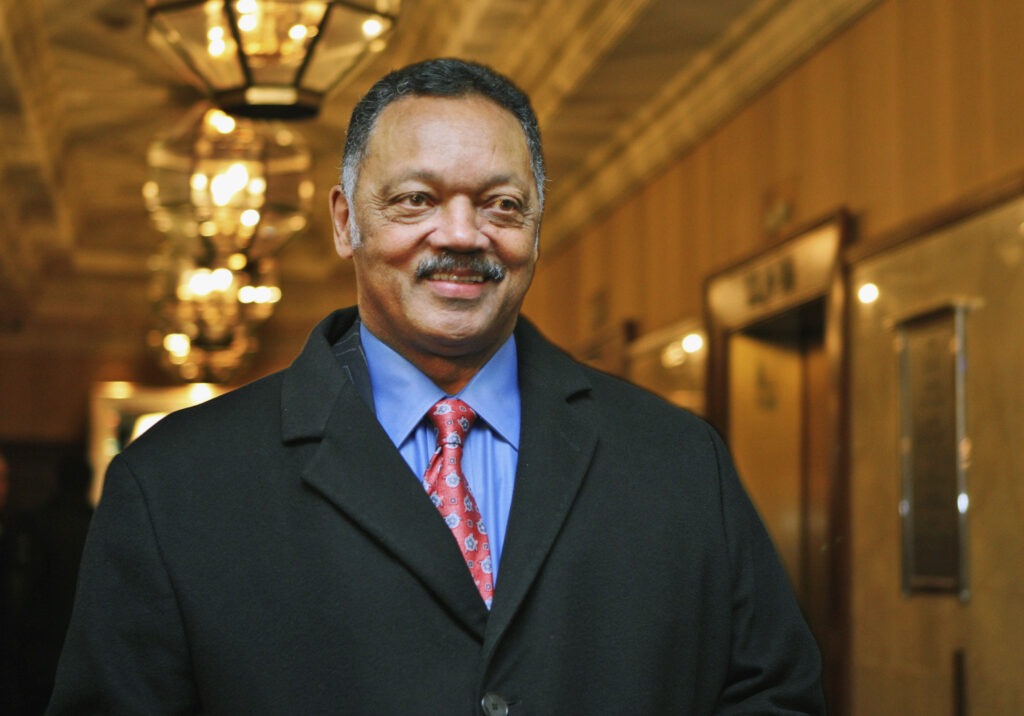






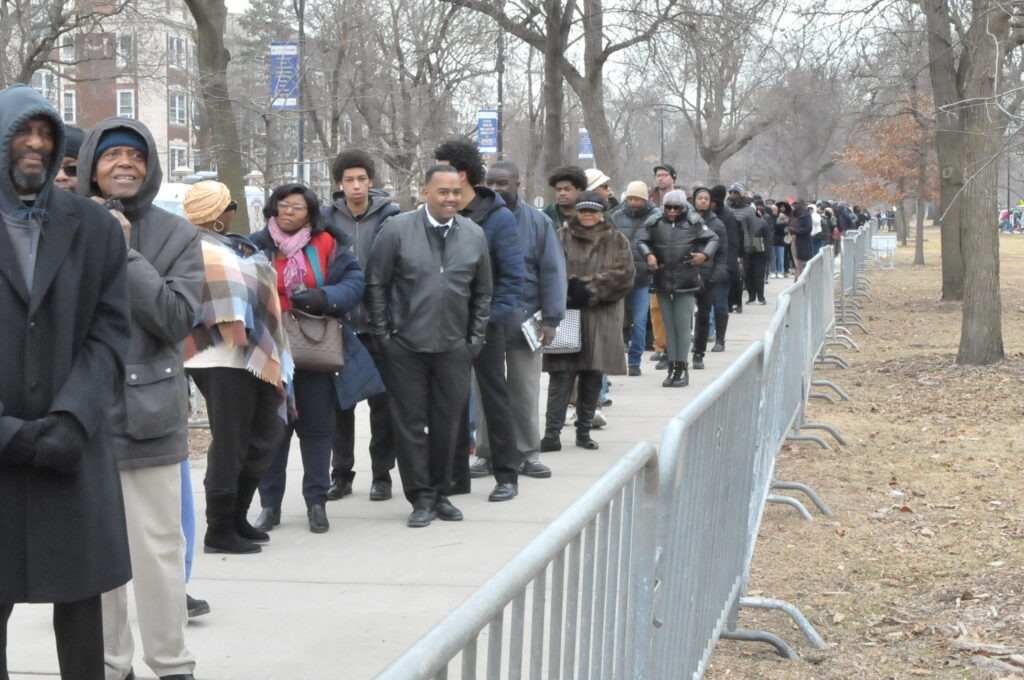
CHICAGO—Grief and gratitude met at the doors of the Rainbow PUSH Coalition as the sun rose over the building. Before 8 a.m., mourners were already lined up along the block. Some stood in quiet prayer. Others spoke softly about marches, boycotts and Saturday meetings that shaped their lives. When the Jackson family procession arrived, a color guard escorted the casket inside as elders who marched in the 1960s stood shoulder to shoulder with young organizers born decades later.
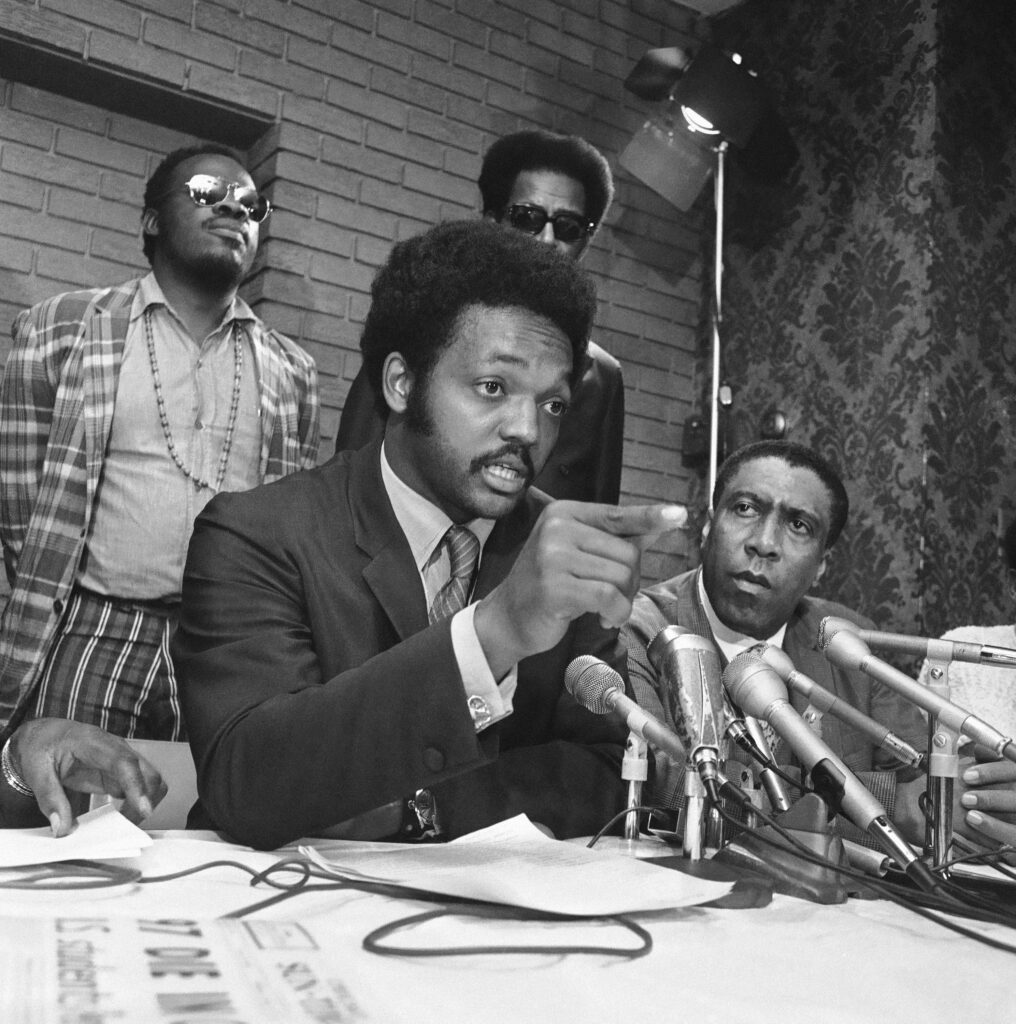
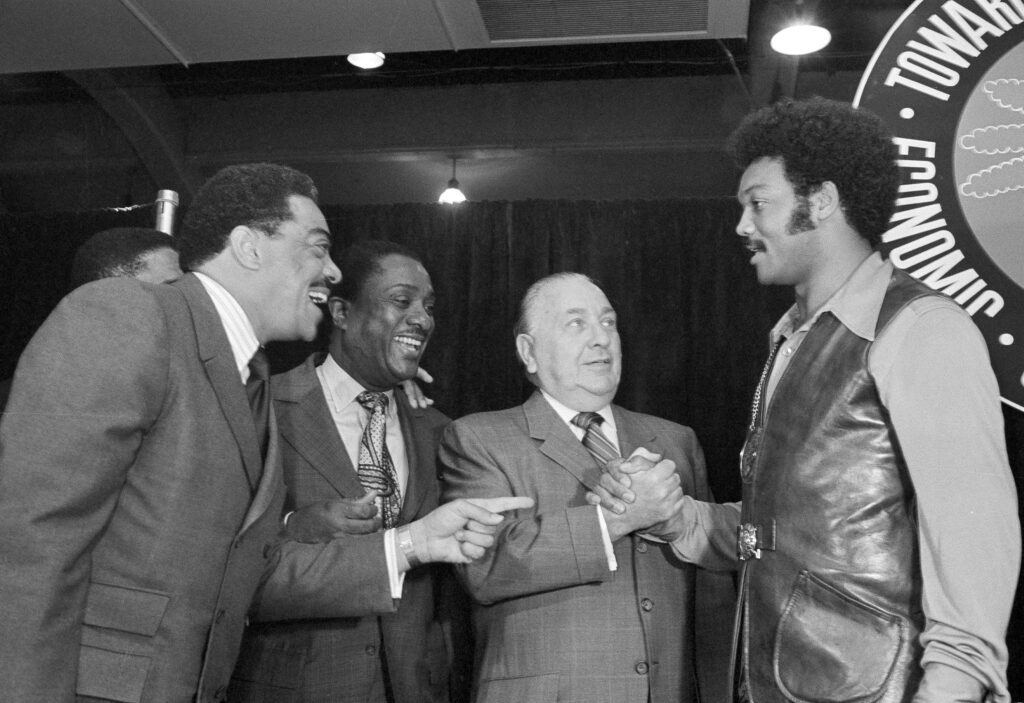
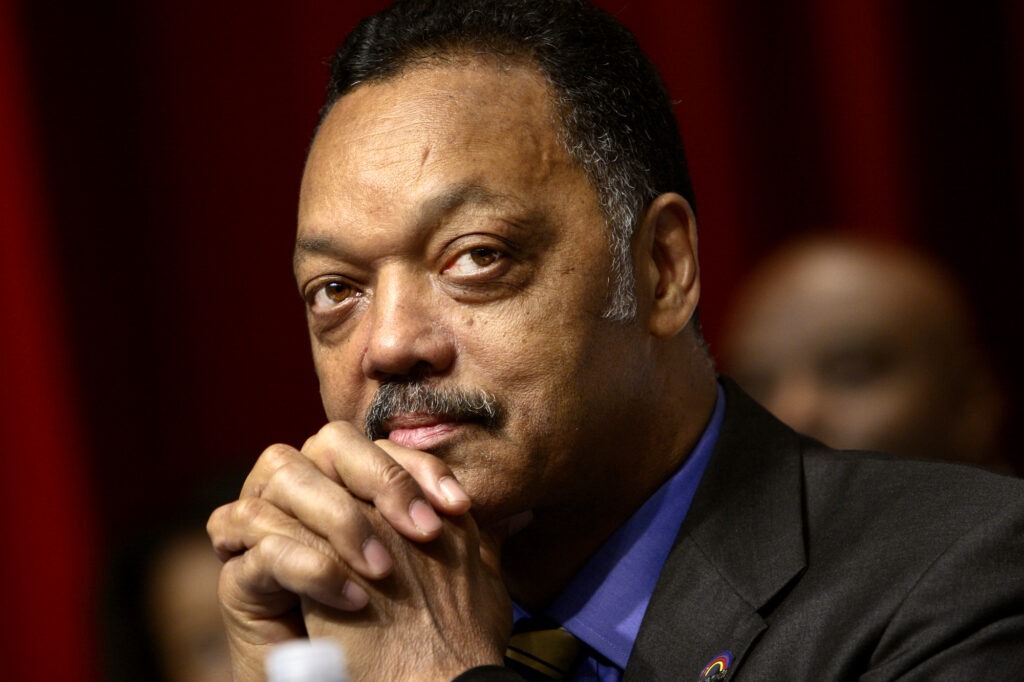
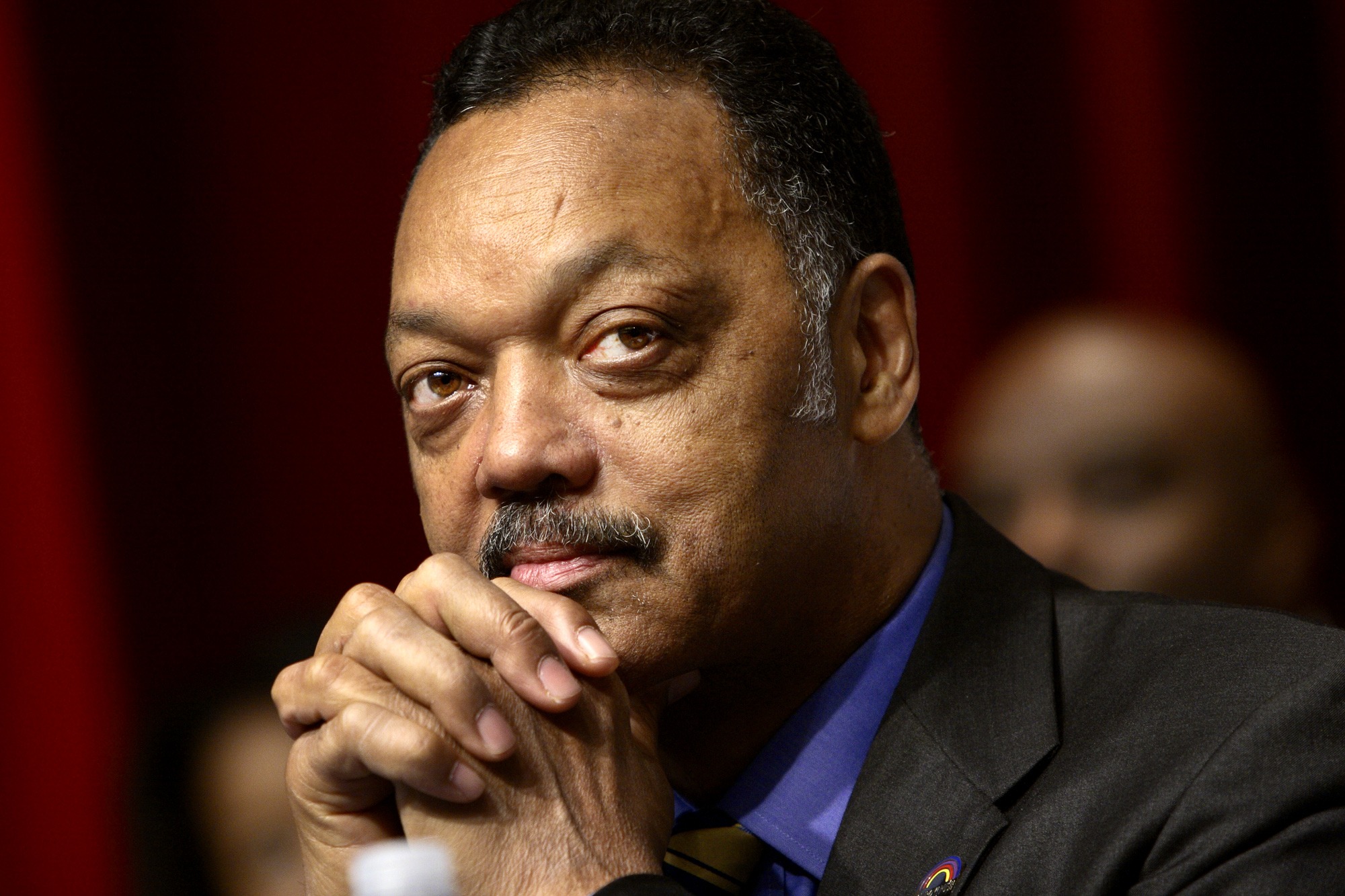
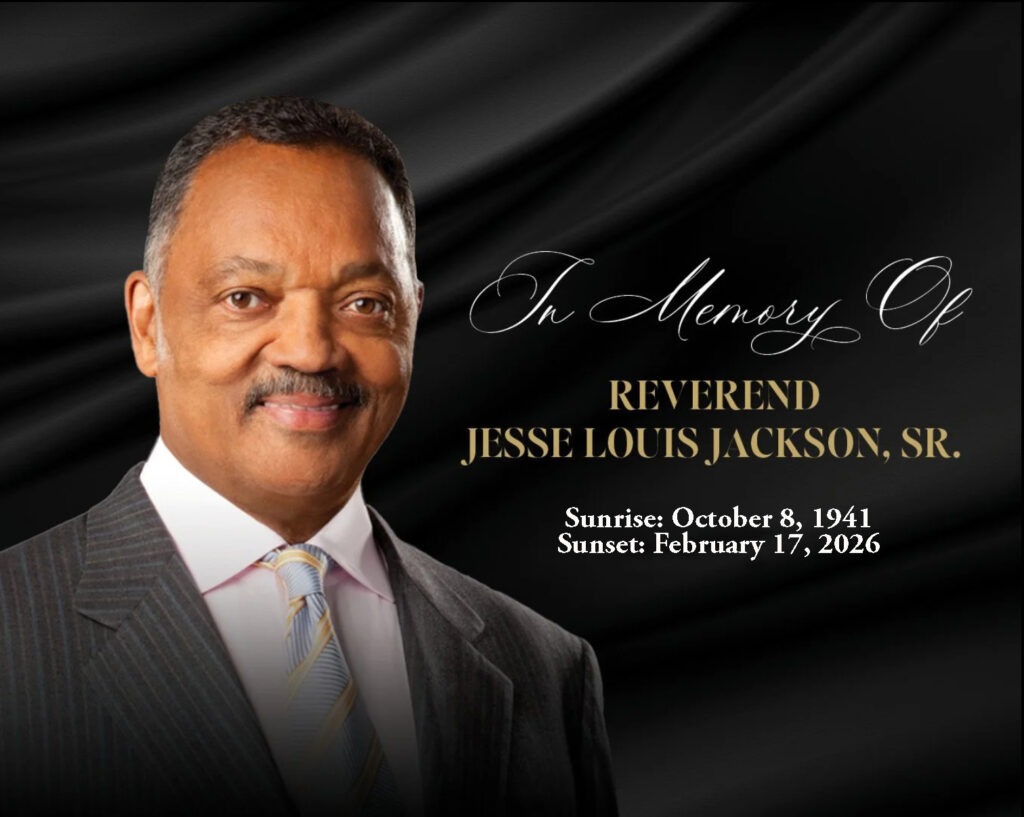
The Lying in Repose for Reverend Jesse Louis Jackson Sr., held Feb. 26 and 27, was not merely a public viewing. It was Chicago’s civic memory gathering to honor one of its master builders.
Inside, the mood moved between solemn reverence and spontaneous affirmation. The Final Call observed children wiping tears after viewing his body, clutching the hands of parents and grandparents who whispered, “That’s the man who told us we were somebody.” Moments later, the quiet would break. From the line outside came an impromptu chorus: “I am somebody!” The words echoed down the block, rising above grief into declaration.
Mourners filed slowly down the aisles toward the casket placed before the stage, marking the beginning of a week of remembrances stretching from Chicago to South Carolina and Washington, D.C., before returning home again. The Jackson family followed the hearse from Leak & Sons Funeral Homes in solemn procession. Pallbearers carried the casket up the steps of the building Rev. Jackson helped found in 1971, as dignitaries, including Rev. Al Sharpton, Chicago Mayor Brandon Johnson and former Congressman Bobby L. Rush, gathered inside.
“Though it’s a day of mourning, it’s certainly a day of honor and celebration,” Mayor Johnson said.
Jesse Jackson Jr. thanked the public for the outpouring of support and called the moment an opportunity to set aside political division and reflect on a man who brought people together locally and globally.
Attendees received commemorative bookmarks bearing Rev. Jackson’s image. The small keepsakes felt intentional—silent encouragement to read, to learn, to grow and to become advocates for change, just as he had urged generations to do.
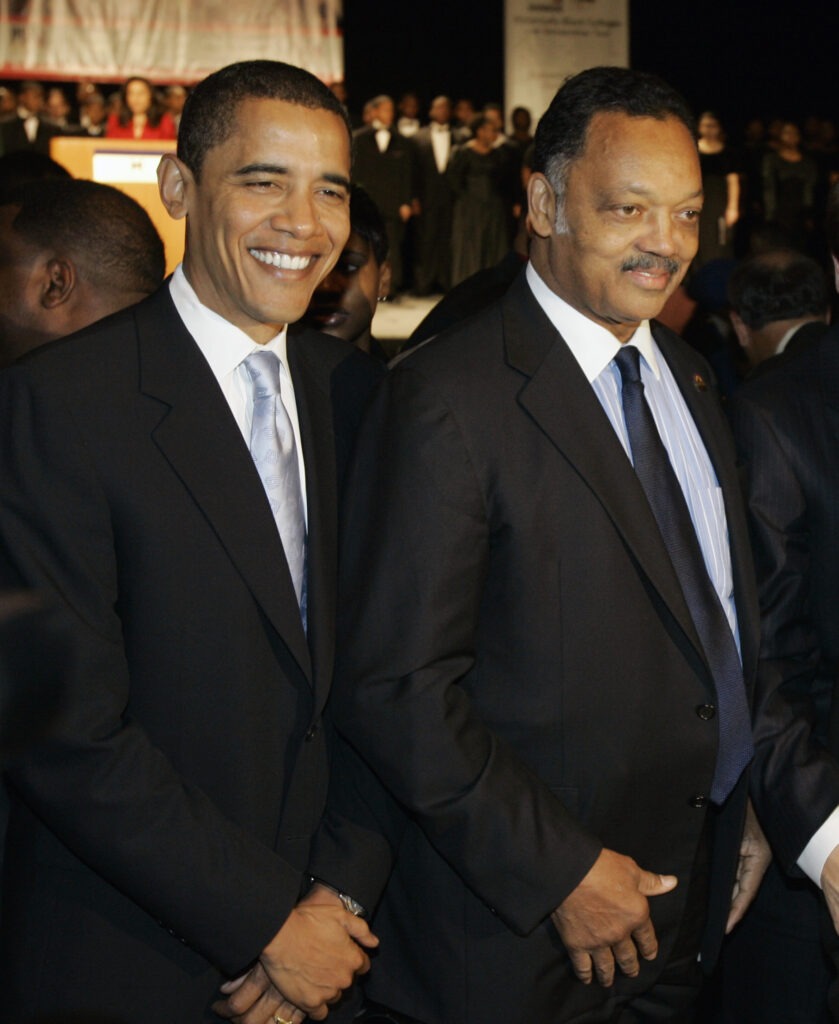
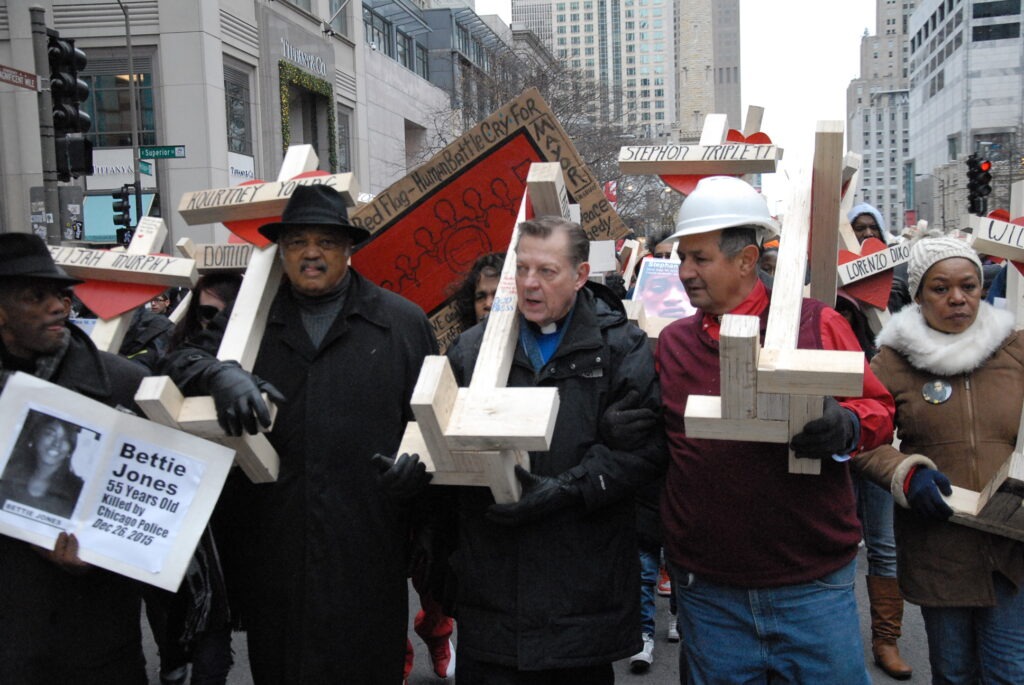
In Chicago, the city that shaped his organizing genius, the tribute carried deeper resonance. Here, Rev. Jackson was not only a statesman. He was neighbor, pastor, strategist in equity and police brutality cases, and architect of modern Black political power who, despite access to the White House under multiple administrations, chose to live among the community he fought to uplift.
Chicago made him and he remade Chicago
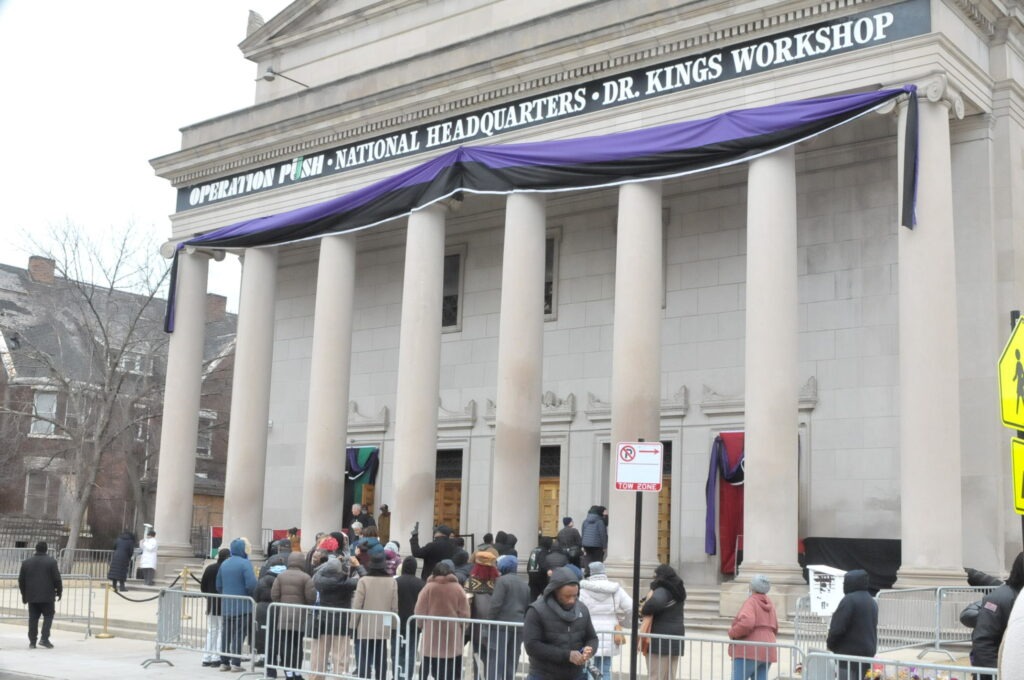
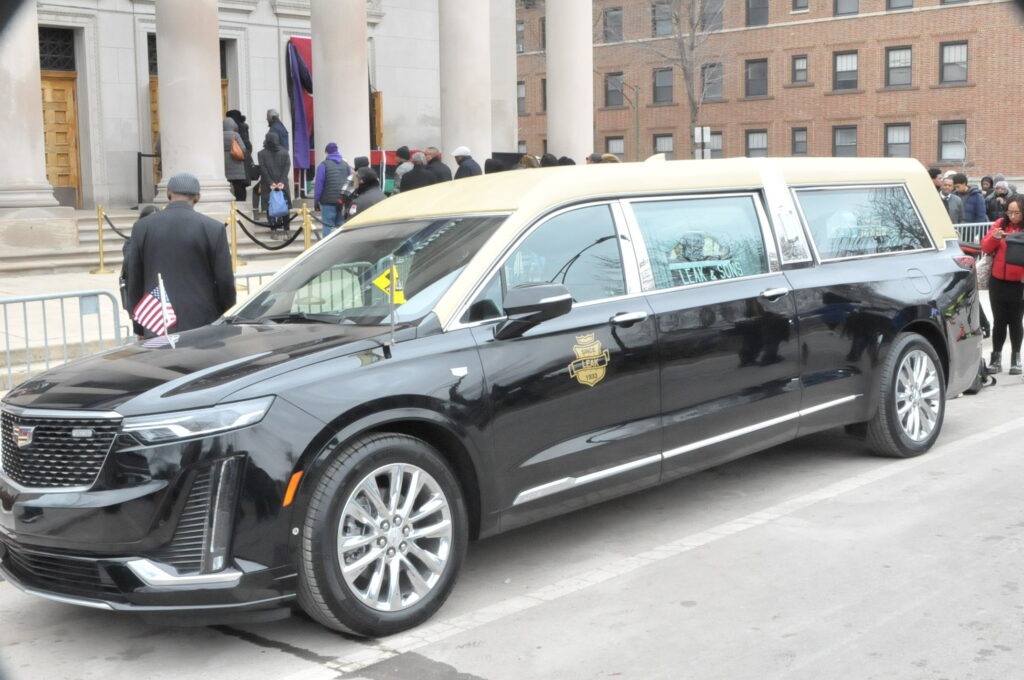
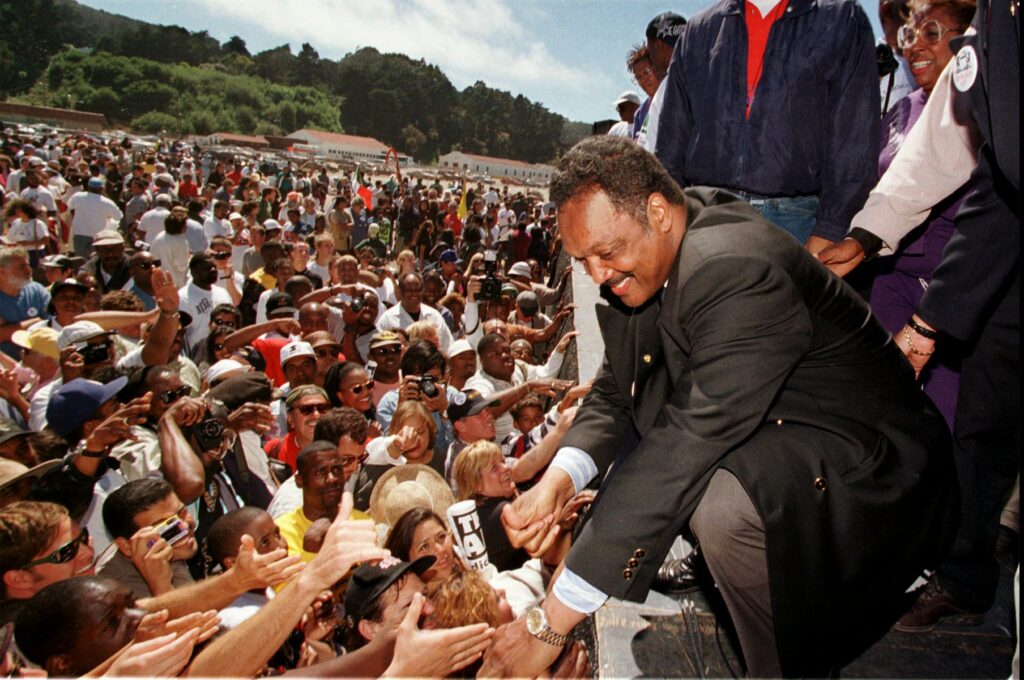
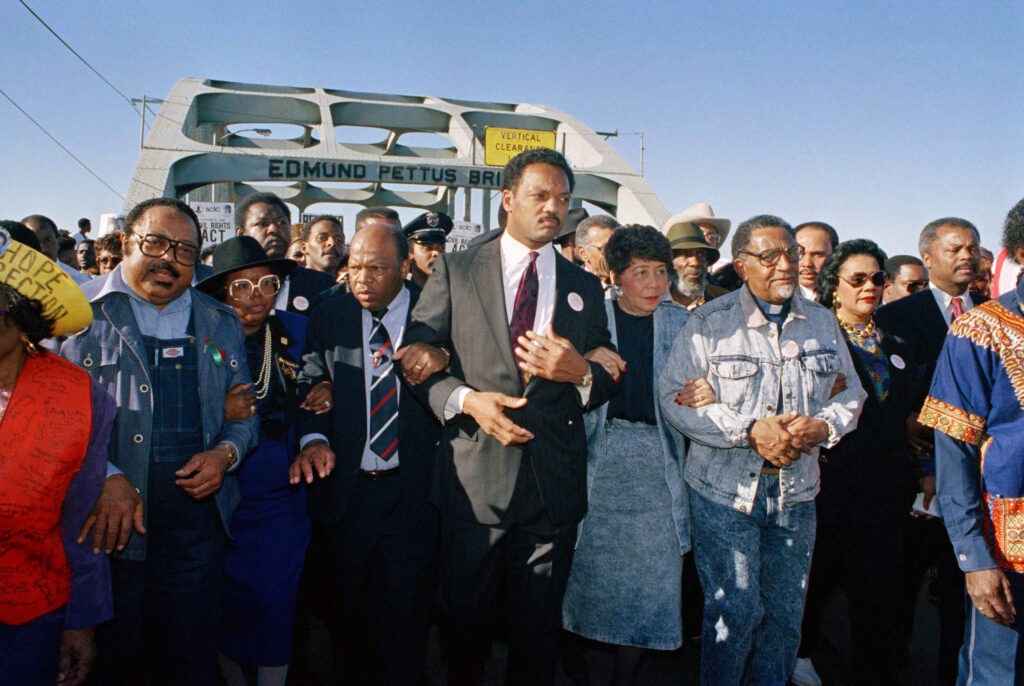
Long before presidential debates and international diplomacy, Rev. Jackson was organizing in Chicago’s neighborhoods. Through Rainbow PUSH, he led corporate accountability campaigns and economic boycotts that pressured major companies to hire Black workers and invest in underserved communities. Rooted in Operation Breadbasket and South Side church activism, his work reshaped the city’s economic landscape.
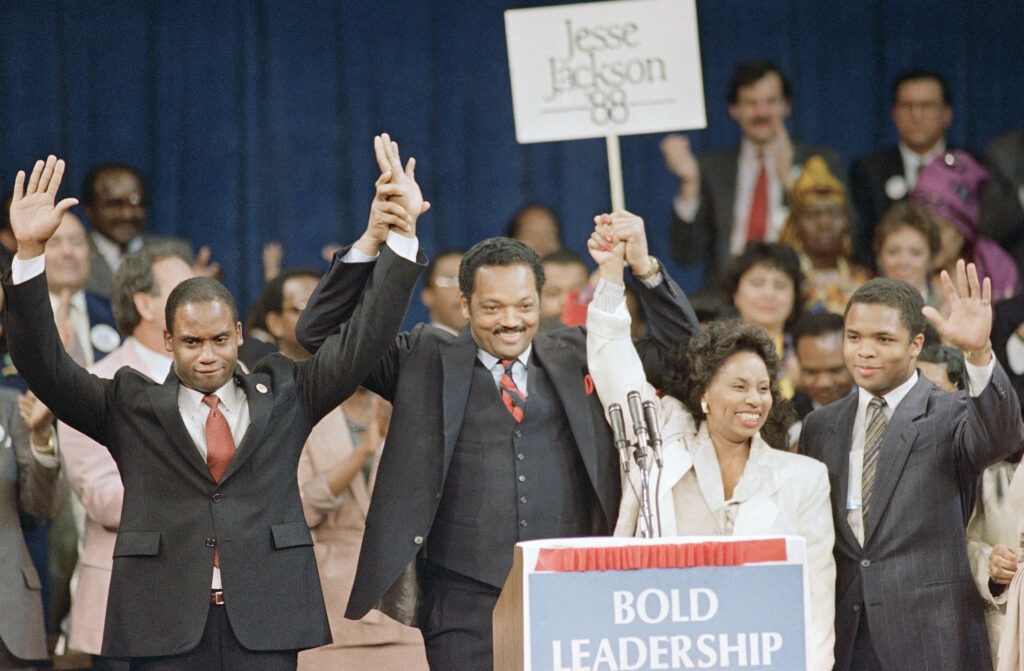
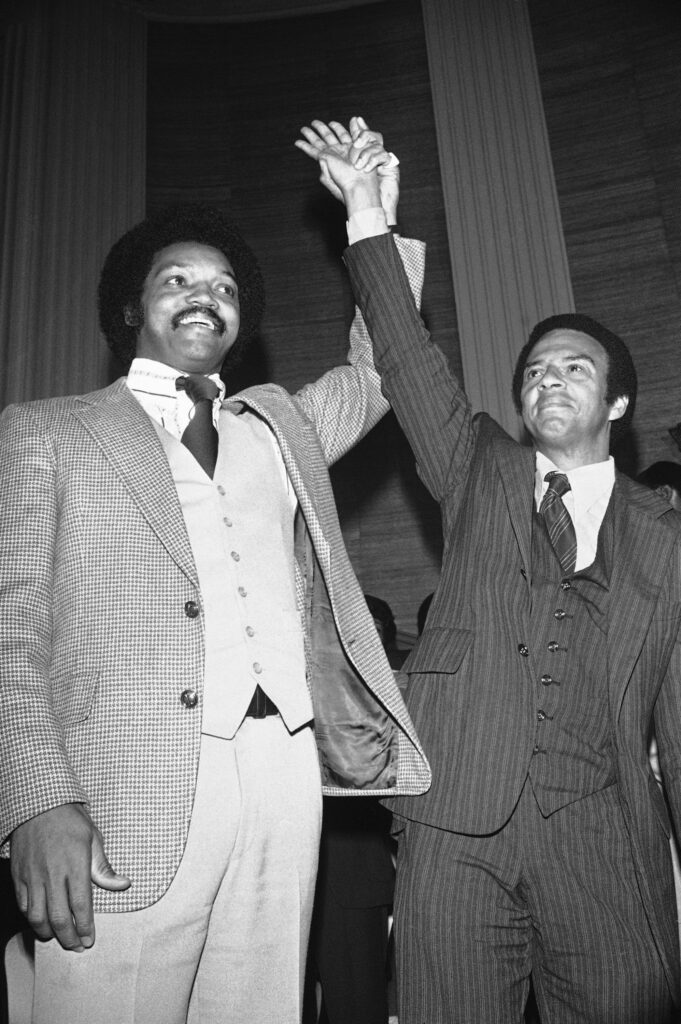
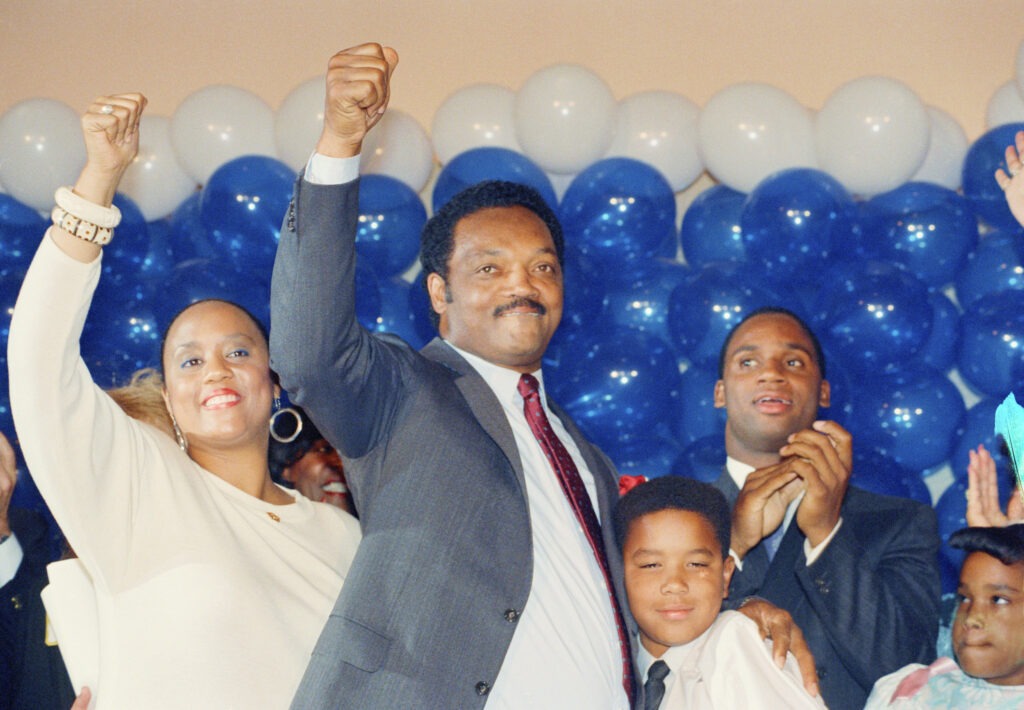
By the 1980s, he had refined what became known as coalition politics—uniting Black voters, labor, faith communities, Latinos and progressive Whites around shared demands for justice. His 1984 and 1988 presidential campaigns expanded Black voter participation and shifted the national conversation toward economic equity and social inclusion.
“He leveraged power in high places, but he never lost touch with everyday people,” said Omar Shareef, who has known Rev. Jackson since 1983. “We have to continue bringing down the walls for the next generation.”
Equally significant were the institutions he built. Weekly Saturday meetings at Rainbow PUSH became a civic forum where pastors, elected officials, labor leaders and grassroots activists addressed the community directly. Annual conventions brought national and international figures to Chicago to debate policy, human rights and economic justice. Those gatherings transformed the Kenwood neighborhood, bordered by Bronzeville, Hyde Park and Washington Park, into a permanent organizing hub, reinforcing the principle that Black political power requires structure, discipline and continuity.
A spiritual campaign in political terms
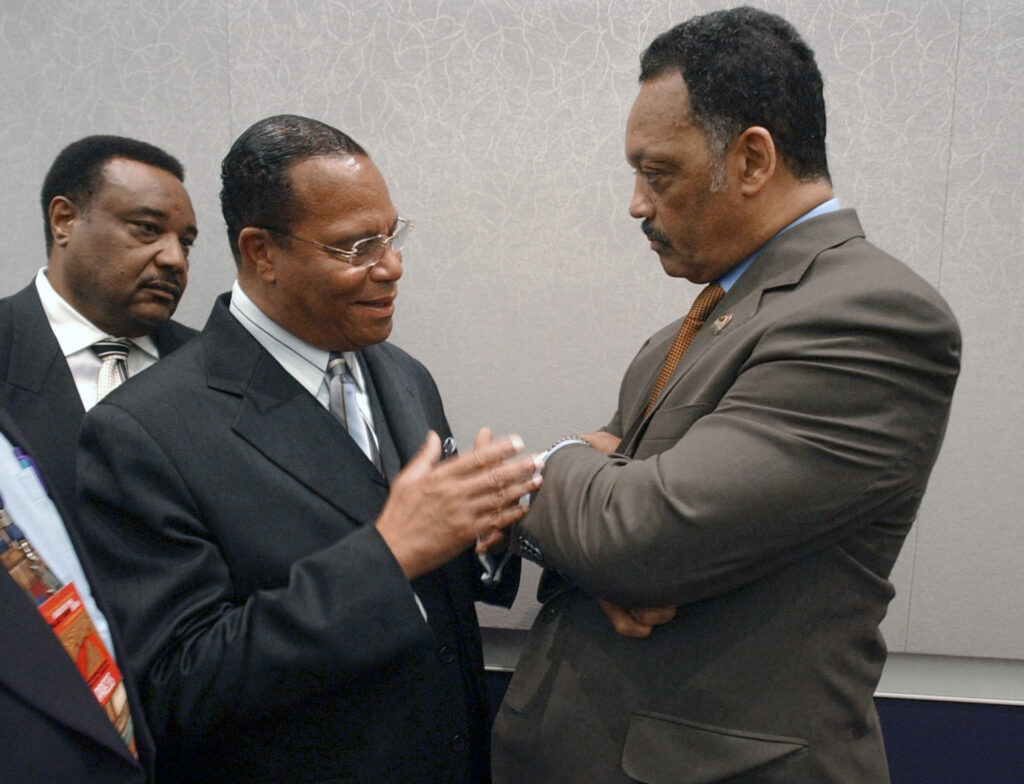
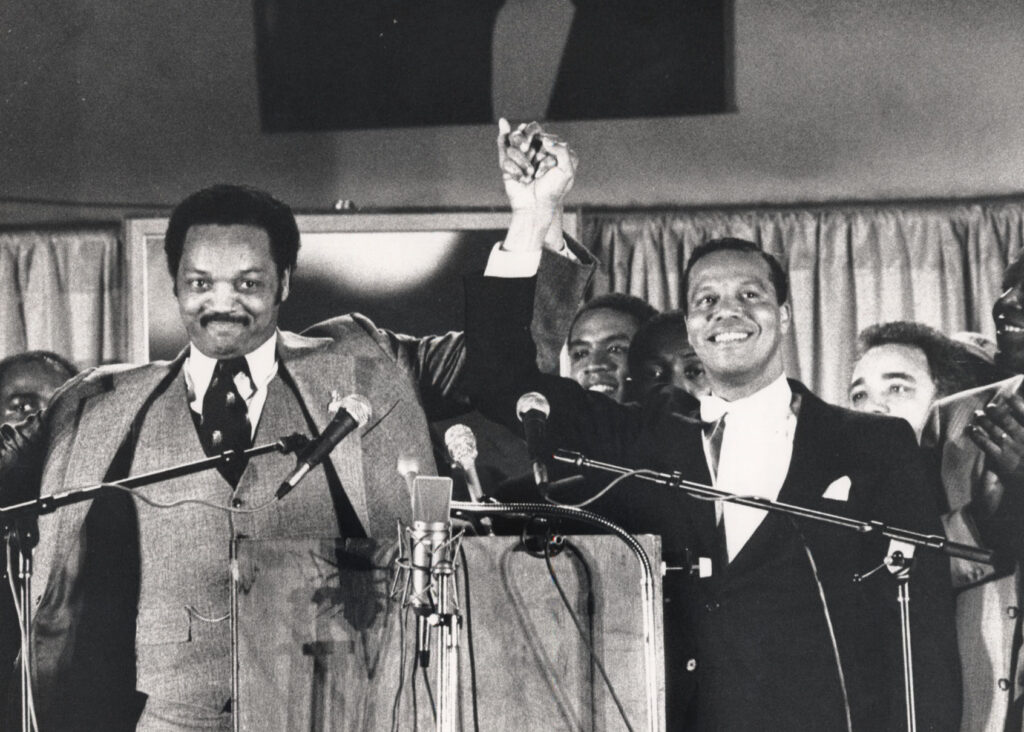
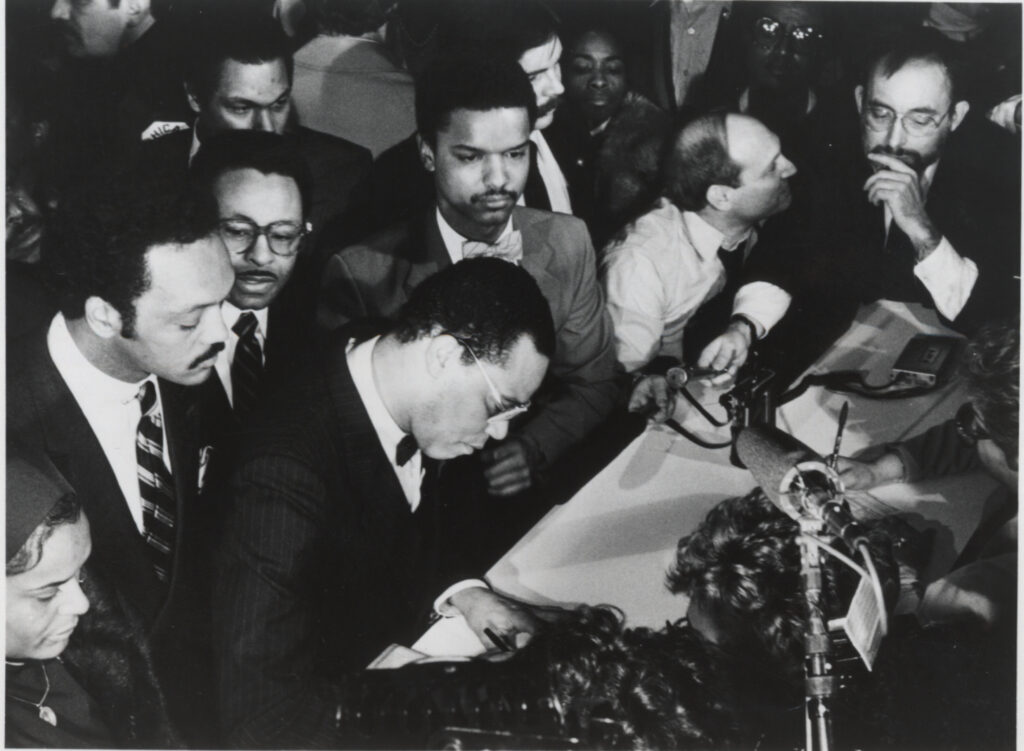
Rev. Jackson’s 1984 presidential bid unfolded during a heightened racial climate. His candidacy challenged the American political establishment in ways few campaigns had before. In that atmosphere, the Honorable Minister Louis Farrakhan, National Representative of the Most Honorable Elijah Muhammad, publicly defended Rev. Jackson’s campaign, rejecting suggestions that his involvement was politically harmful.
Speaking May 3, 1984, at a conference of the Association of Black Journalists in New York, Minister Farrakhan described the effort as “a spiritual campaign couched in political terms,” arguing that stepping back would signal disunity at a moment when Black America was awakening politically.
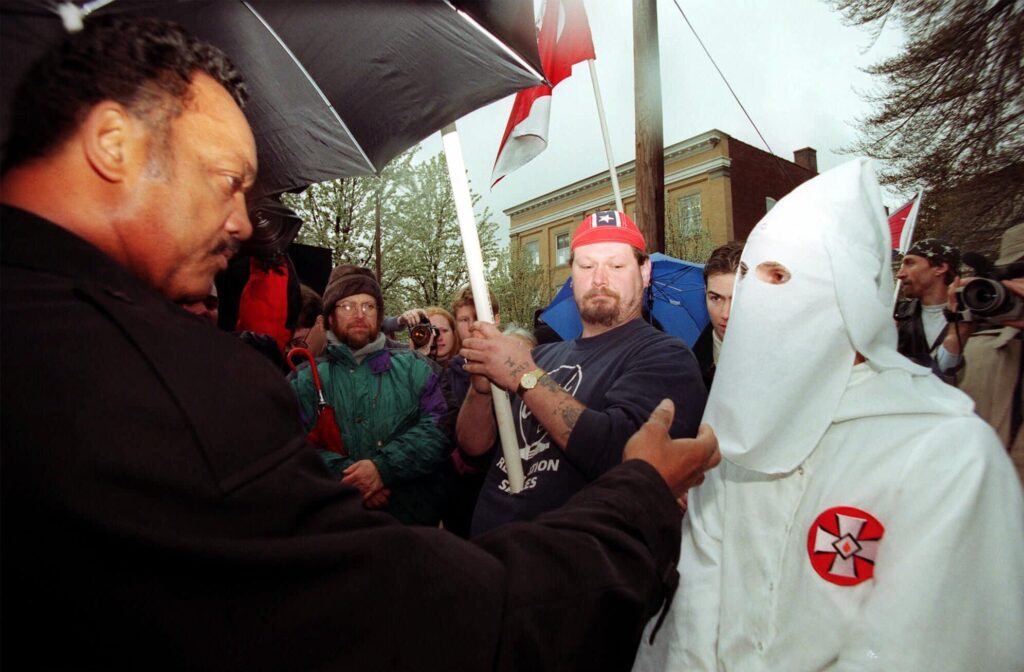
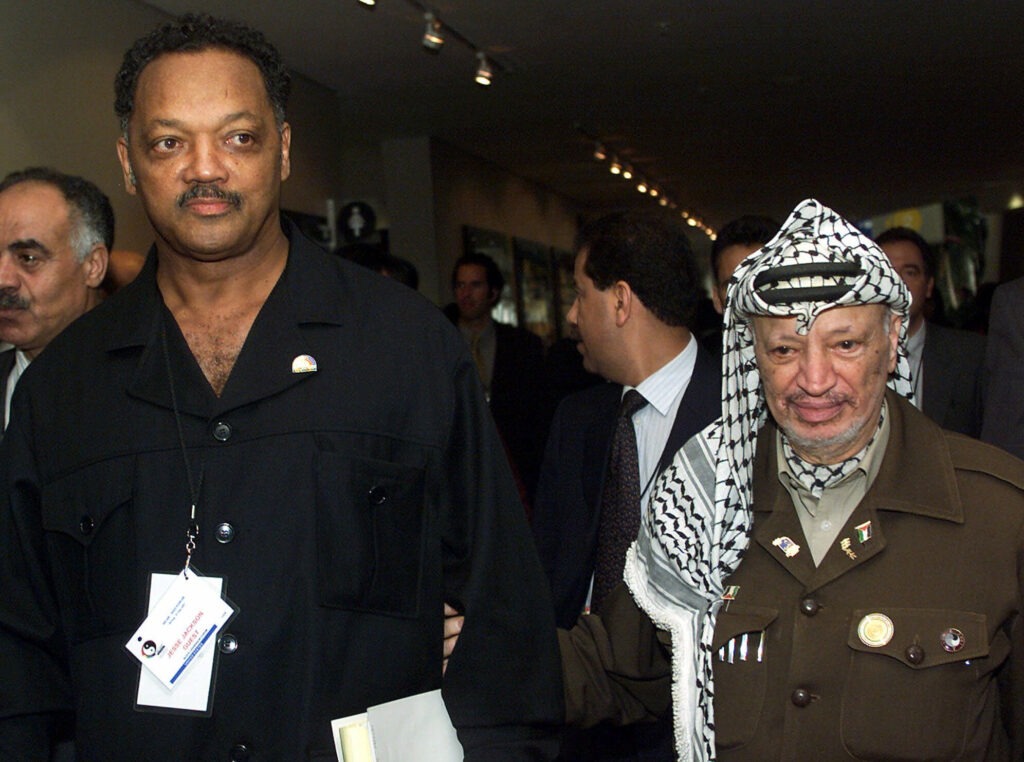
When Rev. Jackson ran, he came under heavy criticism and threats from members of the Jewish community for his balanced Middle East position and his advocacy for the Palestinian people. Rev. Jackson had met with and advocated for Yasser Arafat of the Palestinian Liberation Organization. Rev. Jackson and his family were threatened. To protect his brother, Minister Farrakhan dispatched the F.O.I. (Fruit of Islam, the men of the Nation of Islam) to protect Rev. Jackson and his family.
In a message delivered “July 21, 2019, titled, “The Man Jesus and How Not To Fall Into Idolatry,” Minister Farrakhan said that the F.O.I. , “… handled the assignment with great dignity and love.”
In another message titled, ‘If Satan Cast Out Satan, His House is Divided Against Himself; How Then Will His Kingdom Stand?’ delivered October 30, 2016, Minister Farrakhan shared additional details on this important history.
“When my brother, Reverend Jesse Jackson, asked me in 1983 at the 20th anniversary of the March on Washington if I would help him, because he was about to announce his running for the nomination of the Democratic Party for the presidency of the United States, I said, ‘Well, Rev. Jackson, I would have to think about it.’ So, I went back to The Final Call building, which was our headquarters at that time, and I asked laborers in The Nation, male and female, who had been around the Honorable Elijah Muhammad for a long time: ‘Should we do something like that?’ I wouldn’t tell them what my thought was because this is not a ‘cult.’ I really believe in freedom, justice and equality; so I never order people, I just tell you what the truth and what the facts are, and leave it to you. And if I give an order, I try to give it with a smile—that’s the way my Teacher taught me,” Minister Farrakhan explained.
“After asking them, they agreed that we should help Rev. Jackson. And that’s what I wanted to do; because if he wanted to run for the presidency of the United States, that’s big. And so ‘the bigger picture’ was ‘submit yourself to help your brother,’ and that I did. … Members of the Jewish community: When we were saying ‘Run, Jesse, Run!’ they were saying, ‘Ruin Jesse, Ruin!’ Then some members of the Jewish Defense League (JDL) wanted to attack Rev. Jackson and his family, so the F.O.I. stood up to protect Rev. Jackson before the Secret Service had that responsibility. But when I spoke up against members of the Jewish community, not knowing that I was turning over a hornet’s nest … the hornets came out to sting me,” Minister Farrakhan said.
“So, there came a time when Rev. Jackson had to let me go as his surrogate speaker; and he said some words that I said—which I didn’t say. But, it’s okay; it was convenient. The bigger picture was Rev. Jackson,” said Minister Farrakhan.
Throughout the years, Minister Farrakhan and Rev. Jackson maintained their bond of brotherhood.
More than four decades later, during the annual Nation of Islam Saviours’ Day message on February 22, 2026, delivered by Student Minister Ishmael Muhammad, Minister Farrakhan revisited that history and reflected on his relationship with Rev. Jackson in the aftermath of his brother’s passing. “You don’t know our relationship,” he told the thousands of people in the audience.
Recalling the historic 1995 Million Man March, Minister Farrakhan described Rev. Jackson approaching him privately. “And he said to me, Minister Farrakhan, how much time are you gonna give me to speak?”
Minister Farrakhan said he refused to limit him. “I said, ‘Oh, Reverend Jackson, I can’t give you any time. You get up and say whatever it is you want to say, and when you finish, we’ll move on with others.’ I never told my brother 10 minutes, five minutes. That’s my brother.”
Minister Farrakhan concluded his remarks on his brother with loyalty: “And I will never be found dogging his name when he did so much to help a people rise to win. … That’s my brother.”
Institution builder, not just candidate
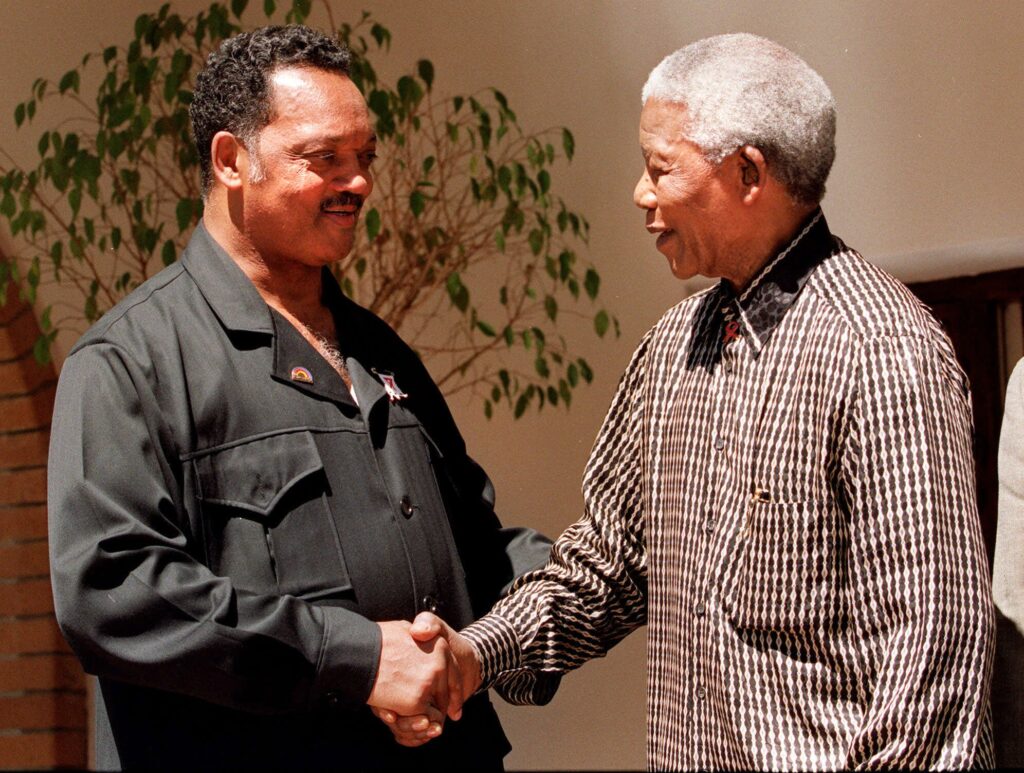
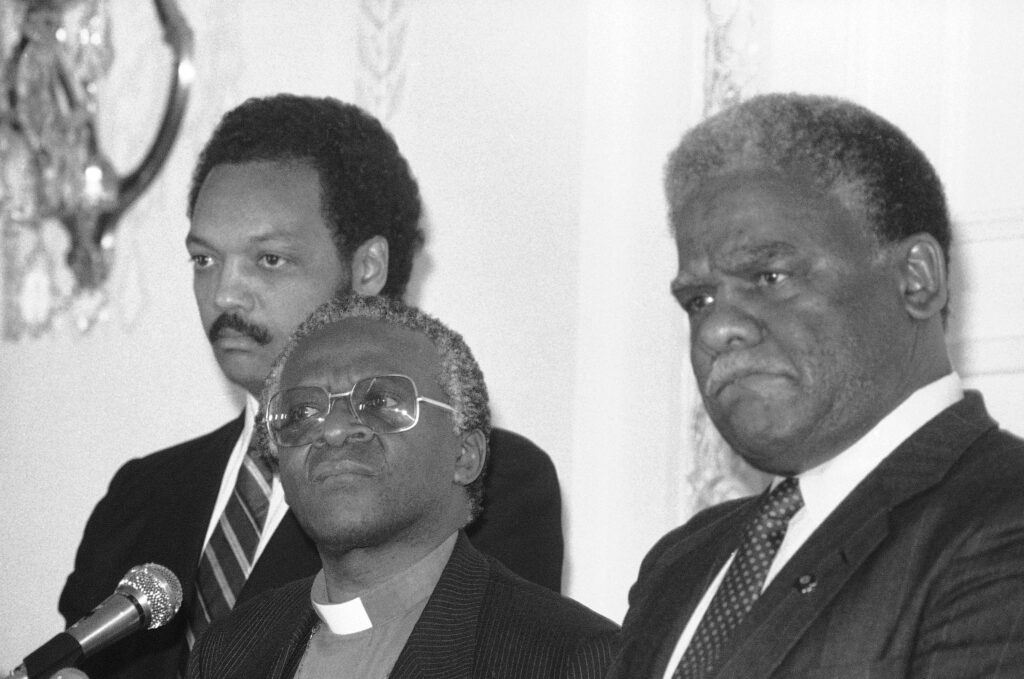
Rev. Jackson’s legacy rests not only in votes but in infrastructure. Rainbow PUSH became a pipeline for civic leadership, producing advocates, diplomats and elected officials. His international interventions, from negotiations abroad to anti-apartheid advocacy, demonstrated the global reach of a movement rooted in Chicago.
For many Chicagoans, that empowerment was personal.
“The giant has fallen among us,” Mr. Shareef said. He traveled with Rev. Jackson for years and later helped care for him as his health declined. “He powered through his pain. He always thought he was still on the playing field.” Even in a wheelchair, Rev. Jackson pressed corporations to meet with Black leaders before opening stores and mentored young professionals. “He leveraged power in high places, but he never lost touch with everyday people,” said Mr. Shareef.
Generational impact: A living testament
The crowd at Rainbow PUSH reflected generations shaped by his influence.
Afrika Porter, who grew up inside the organization, said Rev. Jackson shaped her identity from childhood. “Reverend Jackson told us first that we were somebody. He spoke life into us,” she said. “I am because of Reverend Jackson. We are because of Reverend Jackson.”
Outside, Bro. West Side repeated the words that defined an era. “Keep hope alive. Keep hope alive. And always remember, I am somebody.” His voice joined others who turned waiting into witnesses as he highlighted that Rev. Jackson was an example for the youth.
Carolyn Ruff, an activist and former Rainbow PUSH choir member, described Rev. Jackson as inseparable from Chicago’s identity. “He was Chicago. Keep hope alive. He always encouraged people that they are somebody,” she said.
Brian McCoy, youth sports advocate and longtime Rainbow PUSH member, reflected quietly. “Committed, faithful.” For young people learning Jackson’s story for the first time, he offered guidance: “Read about Jesse Louis Burns. That was his name before it was Reverend Jesse Louis Jackson. Then you’ll know that anything is possible.”
From mourning to mobilization
Rev. Jackson lay in repose at Rainbow PUSH, 930 E. 50th St., on Feb. 26 and 27. Thousands passed the open casket. His remains will travel to Washington, D.C., and South Carolina, including a lying in state at the South Carolina State House in Columbia.
Chicago’s People’s Celebration is scheduled for March 6 at House of Hope, followed by a private homegoing service at Rainbow PUSH.
Organizers frame the observances not as an ending but as a charge—to translate grief into organizing around voter engagement, economic empowerment and coalition building.
Rev. Jesse L. Jackson Sr.’s legacy lives in Chicago’s alliances, its political confidence and its insistence that Black voices belong at every table.
The torch has been passed. The question now is whether the city that shaped him will carry forward the courage that helped reshape the nation. Final Call staff contributed to this report.