









The United States has launched what it calls a Board of Peace initiative that effectively places Gaza’s postwar reconstruction and economic future on the global market.
Initially framed as a path to recovery for a war-ravaged area, decimated by Israel’s genocide of the Palestinian people, the plan invited dozens of governments to buy their way into the decision-making process, with permanent seats costing $1 billion.
At a sideline event during the World Economic Forum in Davos, Switzerland on January 22, 19 nations signed on, formalizing an approach to Gaza’s future that critics argue replaces political self-determination with managed recovery under foreign control.
Although the lofty initiative was announced last year as part of a two-phased so-called ceasefire deal and post-war redevelopment of Gaza, the charter signed by the leaders was absent of any mention of Gaza, Palestine or Palestinians, in lieu of nine pages outlining an expanded vision for world peace.
However, for justice advocates, what went unspoken was an entire people’s anti-colonial struggle for freedom, self-determination and statehood. This includes ongoing atrocities in Gaza, the Occupied West Bank and East Jerusalem.
“It ignores Gaza,” said Phyllis Bennis, director of the New Internationalist Project at the Institute for Policy Studies referring to the Board of Peace charter. “The only thing we know about Gaza is the genocide continues,” she said. “There is no ceasefire. There is maybe a slow fire,” Ms. Bennis explained.
The board was initially proposed last year as part of a two-phased ceasefire deal and to bring peace across the Middle East. It was approved by the United Nations Security Council Resolution 2803 (2025) last November with a mandate to oversee reconstruction, governance.
And stabilization of a post-war Gaza. It received 13 votes in favor, and none against, with permanent members China and Russia abstaining.
In explaining Russia‘s abstention, Ambassador Vasily Nebenzya said the Council was in essence “giving its blessing to a U.S. initiative on the basis of Washington’s promises,” and “giving complete control over the Gaza Strip to the Board of Peace and the International Security Force,” a multi-nation transitional military.
Working under the board’s authority is a 15-member body of Palestinian technocrats (civilian experts) called the National Committee for the Administration of Gaza (NCAG). They are meant to oversee day-to-day governance, public services, and transitional administration of Gaza.
Although NCAG will be headed by Dr. Ali Shaath, a civil engineer and former deputy minister of Planning and International Cooperation in the Palestinian Authority, notably absent from the “plan” are any guarantees of Palestinian statehood or an end to Israeli occupation.
Along with the board and the NCAG is a security component called the International Stabilization Force (ISF), led by U.S. Major General Jasper Jeffers. The ISF will be tasked with the demilitarization of Gaza including the disarmament of Hamas and managing of security during a controlled transition.
However, critics argue that this effectively internationalizes Israeli security control rather than ending it. So far, Hamas has maintained, that relinquishing their weapons, while Palestinian statehood is not in play is not an option. It is unclear which countries will contribute troops to the ISF, which was also mandated by the UN.
The UN Security Council resolution approving the board and the international civil and security presences is authorized until Dec. 31, 2027, subject to further action by the Council. Reauthorizing the ISF will be done in “full cooperation and coordination with Egypt and Israel” and the member states involved in the force.
Notwithstanding, the Security Council Resolution giving legal legitimacy to the Board of Peace specifically for Gaza, some observers note it was duplicitous that the board’s inaugural charter chaired by President Donald Trump makes no reference to Palestinians, Gaza or the Security Council mandate.
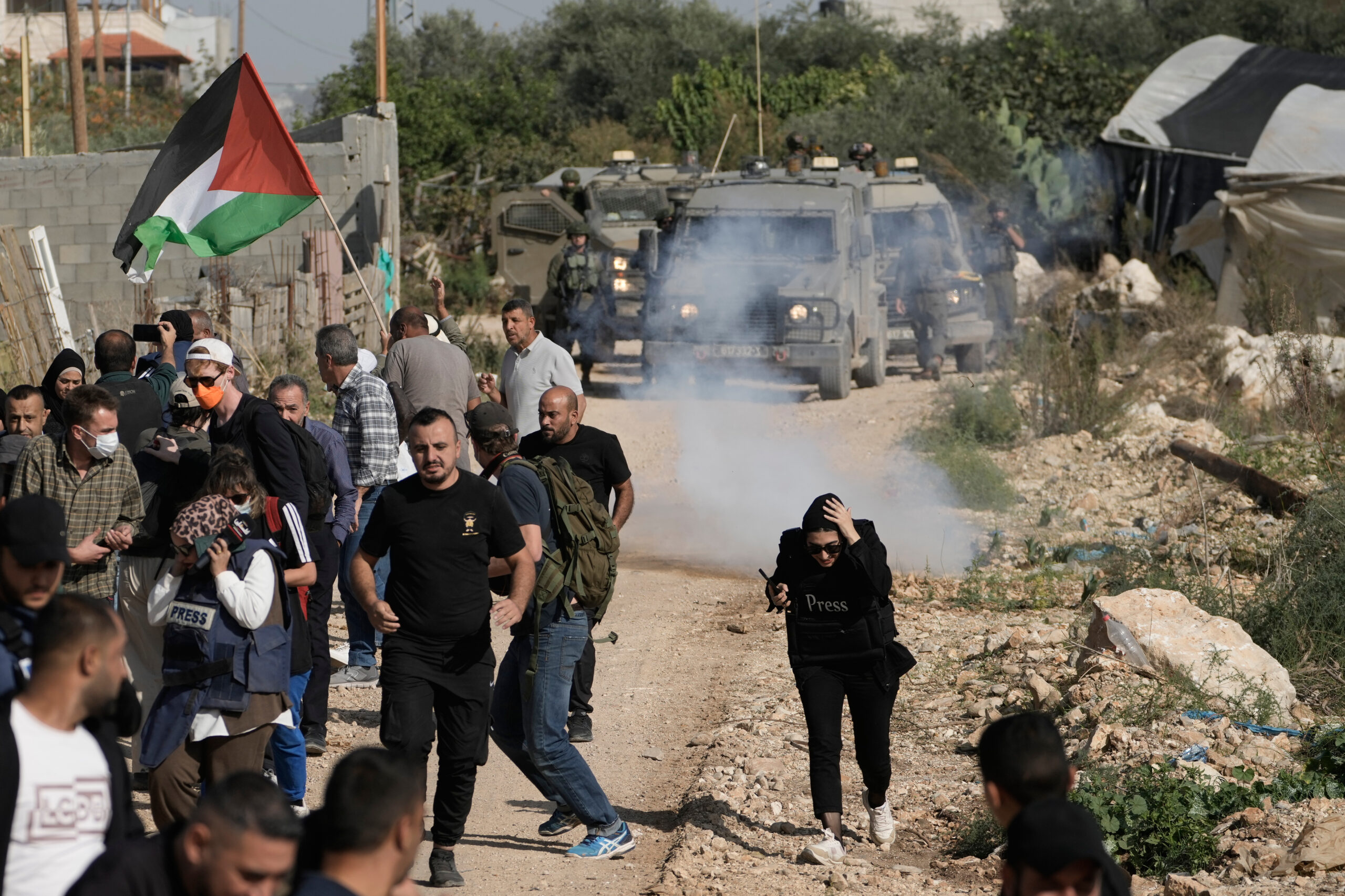
Meanwhile, the atrocity continues
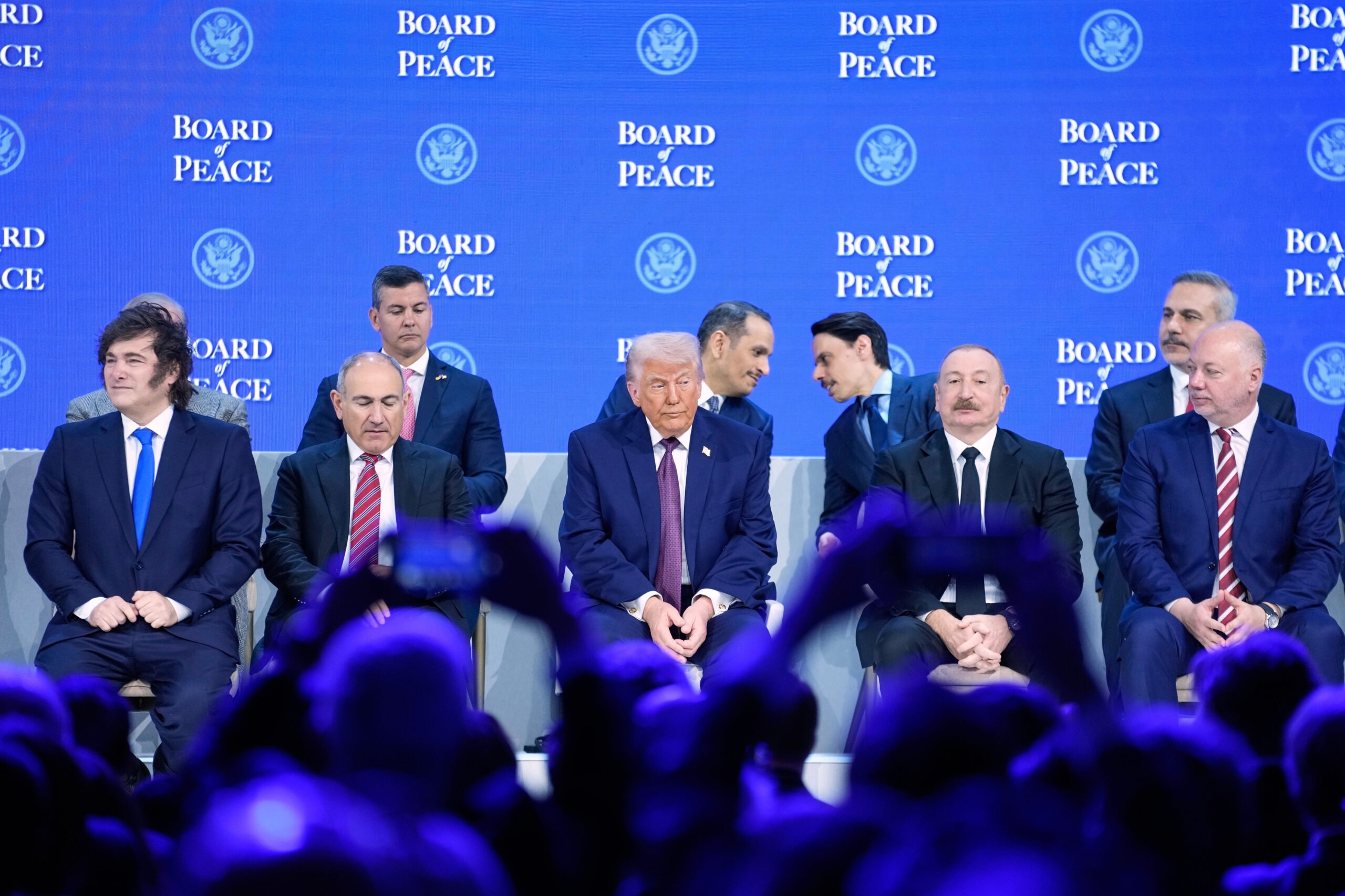
Photo: AP Photo/Markus Schreiber
While the scale of daily casualties may no longer reach the levels of 150 or 200 deaths, lethal violence continues. On many days, five, 10, or 20 Palestinians are still killed by Israeli airstrikes.
At the same time, almost daily reports document children and infants dying from hyperthermia, hunger, and the lack of basic medical care. The lower numbers do not diminish the reality that death remains a constant presence, for Gaza’s most vulnerable.
“So, all of that is still going on. There is still a genocide going on,” said Ms. Bennis.
For Israel, it’s about power. “It’s about settler colonialism … making it an empty land that can be repopulated with Jewish Israeli settlements,” Ms. Bennis explained.
Genocide is not only defined by mass killing. Under the UN Genocide Convention, it also includes causing serious harm, deliberately creating living conditions that make a group’s continued existence impossible.
In this third form, genocide can occur by systematically denying water, food, shelter, and medical care, forcing people to flee to simply survive. Creating such conditions, when done intentionally, meets the legal definition of genocide.
Basically, the so-called “Board of Peace” comprises of billionaires and colonizers at the exclusion of the colonized, observers and analysts argue. According to reporting from Al Jazeera, the foreign ministers of Pakistan, Egypt, Jordan, the United Arab Emirates, Indonesia, Türkiye, Saudi Arabia and Qatar said they would be joining the Trump-led board in a joint statement that was released Jan. 21.
Senior Trump advisers Steve Witkoff, his son-in-law Jared Kushner, Secretary of State Marco Rubio, World Bank President Ajay Banga and former British Prime Minister Tony Blair are also on the board.
“They’re united in trying to neutralize the Palestinians and really put an end to the Palestinian cause altogether,” said Richard Becker, author and political analyst with the Act Now to End War and Racism (A.N.S.W.E.R.) Coalition. “The idea is that they (Palestinians) would have no real say,” reasoned Mr. Becker.
Whatever the Israeli government or the Trump administration may state publicly at any given moment, their underlying objective, many Palestinians and critics argue, is to bring the Palestinian national cause to an end once and for all.
This perception is reinforced by developments beyond Gaza: while the humanitarian catastrophe there continues, Palestinians in the West Bank face escalating repression from Israeli settlers and security forces, with little distinction between the two.
Daily incidents—including home and vehicle burnings, assaults, and killings—are reported across the West Bank, unfolding in parallel with Gaza’s devastation. Together, these realities contribute to a sense that the crisis is not confined to a single territory but reflects a broader, coordinated oppression of Palestinian life.
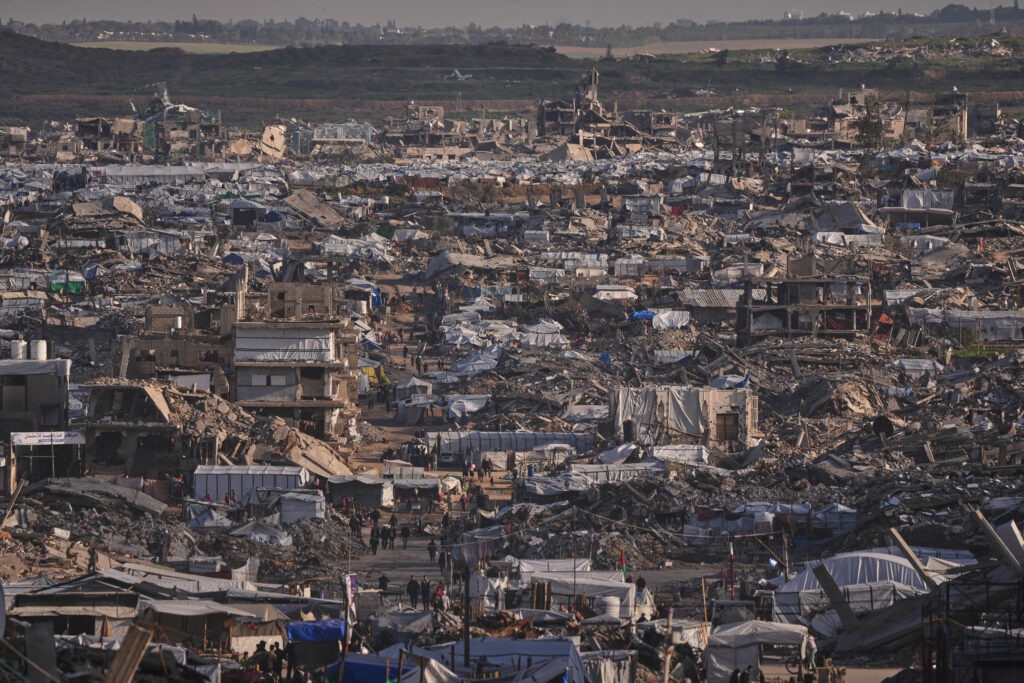
Members of the board
President Trump’s “Board of Peace” was supposed to run the affairs of Gaza as part of the peace plan and to end Israel’s genocidal war on Palestinians, yet it doesn’t reference any plans for Gaza or the Palestinians. But credibility and controversy mar the formulation because of certain problematic leaders and nations and even those complicit in the atrocities in Palestine.
Most prominent is Israeli Prime Minister Benjamin Netanyahu who has an active arrest warrant against him from the International Criminal Court for alleged war crimes in the Gaza war. In addition, Israel is financially and militarily sustained by the U.S. and Europe while it engages an illegal occupation, genocidal war, and ethnic cleansing of Palestinians.
Observers argue that Israel cannot survive without America and Europe. Some view Israel having a seat on the board as contradictory, being it is a direct party to the crises the group is claiming to mitigate.
For Mazin Qumsiyeh, professor and researcher at Bethlehem University in Palestine, the “Board of Peace” is another mechanism advancing repression and tyranny.
“Basically it’s like (Benito) Mussolini establishing a ‘Board of Peace’ to take charge of the remnants of the survivors of the Holocaust, with the support of (Adolf) Hitler to finish off the job of managing the survivors,” Mr. Qumsiyeh told The Final Call from Bethlehem.
“And then getting the League of Nations to approve this ‘Board of Peace’ and so-called peace plan,” he added. “This is how I look at it, because to me, Trump and Netanyahu are like Hitler and Mussolini,” said Mr. Qumsiyeh.
The harsh criticism is part of a growing distrust of the U.S. mischief-making and aggressive posture in the global arena. Last year President Trump advocated America “take over” Gaza and “own it” and rebuild the war-ruined enclave into a Riviera of the Middle East. At the board sign in ceremony, renderings were featured depicting “New Gaza” with skyscrapers and waterfront development.
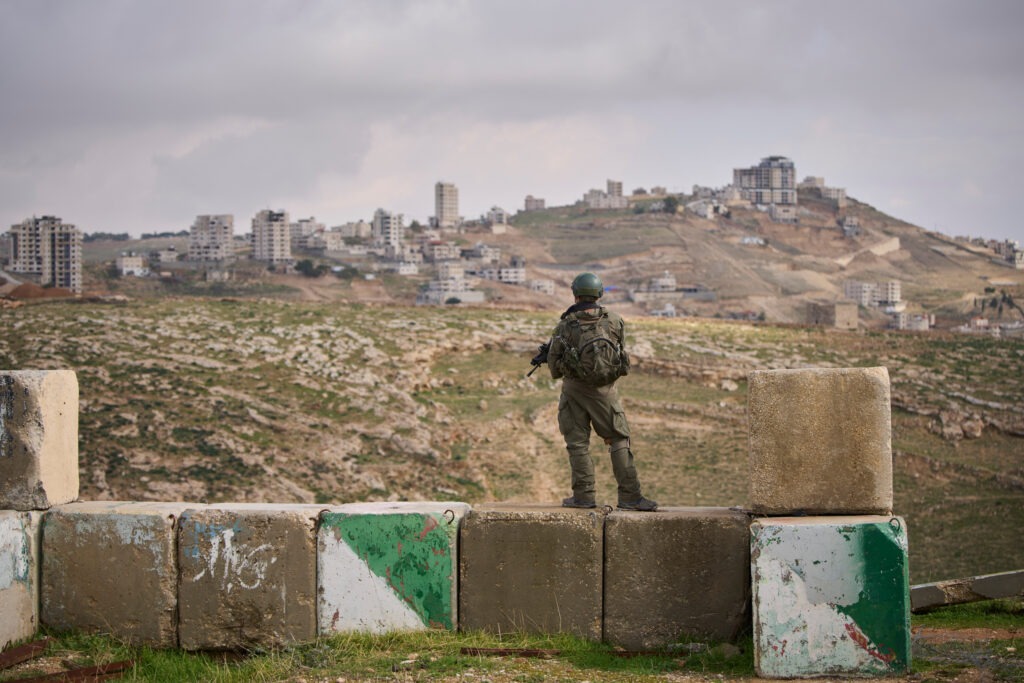
Board of ‘Peace’ and imperialism
The Gaza take over is part of a cadence of imperialism and the U.S. threatening nations like Iran, Venezuela, Cuba, and Greenland for control, destabilization or annexation.
Framing the board as a peace body is deceptive as the ongoing effort to relocate Palestinians and takeover Gaza, is for business interests. Critics point out that this is evident because of multi-billion-dollar reconstruction plans, and as well as the gas reserves in the shores off Gaza.
Every effort to end the war since October 2023 was met with pushback by Mr. Netanyahu and Israeli officials. The war has taken tens of thousands of Palestinian lives.
Mr. Netanyahu being bent on perpetual war was addressed by the Honorable Minister Louis Farrakhan, the National Representative of the Most Honorable Elijah Muhammad of the Nation of Islam.
During his February 2024 Saviours’ Day address titled “What Does Allah, The Great Mahdi and The Great Messiah Have To Say About The War In The Middle East?” Minister Farrakhan explained the conflict as a war that Mr. Netanyahu knew would preserve his place as a great Jewish leader.
“People do strange things when their hatred is so great of the people that they are killing; that their intention was to cleanse Gaza of every Palestinian that lived there and cleanse the West Bank and East Jerusalem so that Israel would not be bothered with Palestinians anymore,” Minister Farrakhan stated.
Minister Farrakhan also pointed to a broader agenda driving Netanyahu’s war, and the annihilation of Palestinians which is the pursuit of energy and regional dominance. Under the cover of war, Israel sees an opportunity to seize Gaza’s offshore gas reserves and build the long-envisioned Ben Gurion Canal.
A project meant to rival Egypt’s Suez and reshape regional trade. At stake is not just Gaza, but the map of the Middle East and ambitions for “Greater Israel.” Gaza is valuable real estate for business exploitation.
“Because ‘the greater good’ he (Netanyahu) was thinking of was what’s in Gaza right now: Billions of dollars of oil and gas is under the foot of the Palestinians, and they want it for themselves,” said Minister Farrakhan, and likened it to America’s own history of devaluing human life for riches of the land.
“Here, in America, the White people that saw value in the land of the native people that had wealth under that land, they gave them the permission (‘Okay, you go there’), because they didn’t think there was any value! But when they found out there was value, they killed those native people to get the value,” explained Minister Farrakhan.
“And that’s what they’re doing now to the Palestinians, because they want to build a great canal, bigger than the Suez Canal, because there are billions and billions of dollars of oil and gas in Gaza, and the waters around Gaza,” he said.
