










At the beginning of the new year, the U.S. government escalated its intimidation tactics toward Greenland and has ramped up efforts to take control of the island nation, threatening military invasion and threatening allied European countries with tariffs for not backing its plans.
After speaking with Mark Rutte, the secretary general of the North Atlantic Treaty Organization (NATO), at the World Economic Forum in Davos, Switzerland, on Jan. 21, U.S. President Donald Trump canceled the planned tariff and said he would not use force to acquire Greenland. In a Truth Social post, the president announced the “framework of a future deal” regarding Greenland.
Despite the formation of a high-level working group agreed upon between U.S., Danish and Greenlandic officials at a previous meeting on Jan. 14, officials from Greenland were left out of the conversation between the two American and European leaders, and details of the “framework” were not shared publicly.
“That’s totally unacceptable, that the United States and NATO haven’t informed what is going on,” Aaju Peter, a defender of Inuit rights, said to The Final Call.
“We already have a high-level working group that is going to work together moving forward, and Trump is just trying to go above this high-level working group that has been agreed upon between Greenland leaders, the Dane and the elected officials in the United States. He cannot just do this unilaterally.”
“NATO in no case has the right to negotiate on anything without us, Greenland. Nothing about us without us,” Aaja Chemnitz, a Greenlandic member of the Danish parliament, told the BBC on Jan. 22.
Though backtracking on his threats, President Trump has not stopped demanding to acquire Greenland. His aggressive targeting of Greenland received condemnation from Denmark, Canada, several NATO countries and Greenlanders themselves.
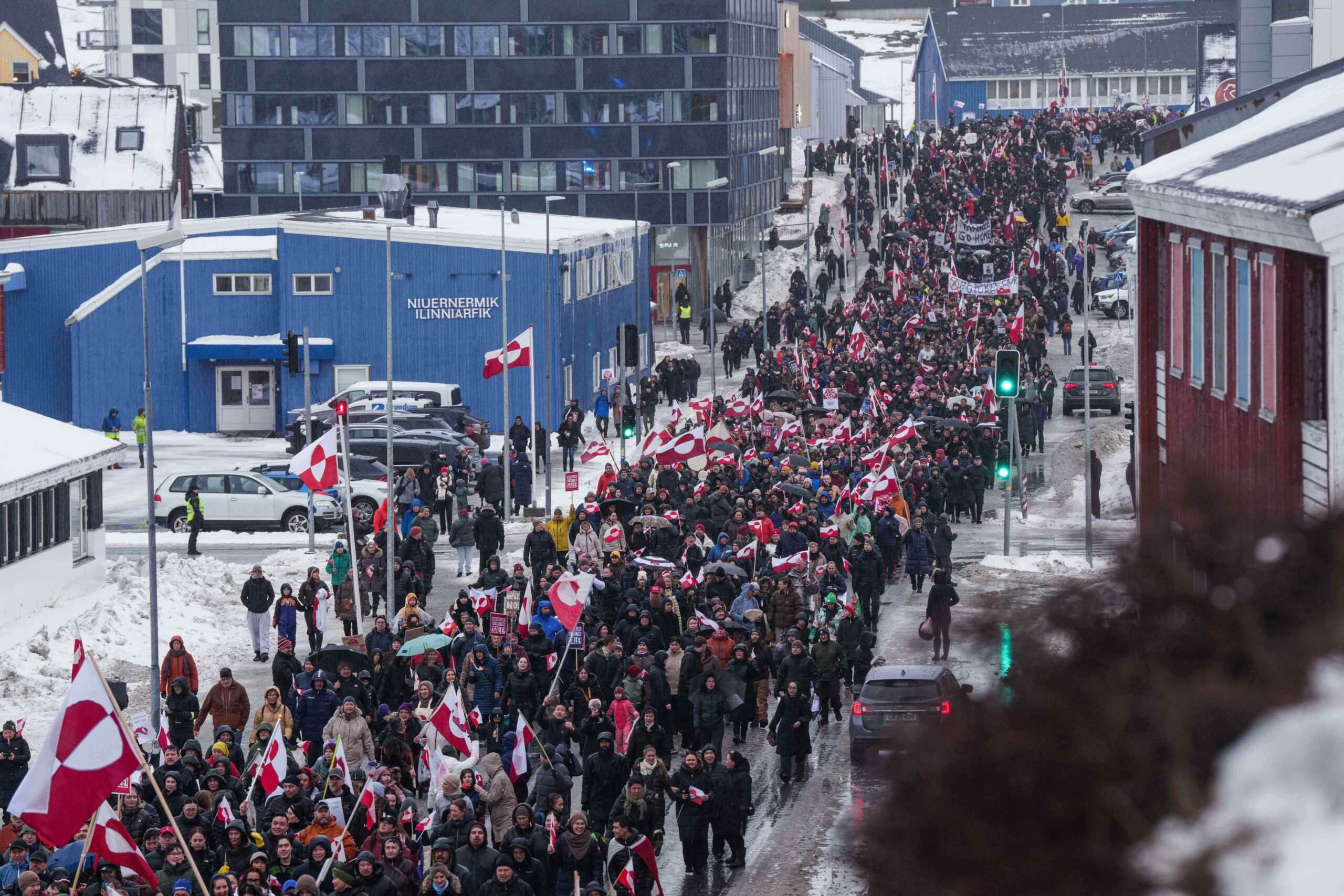
Thousands of protesters rallied across Greenland, chanting, “Hands off Greenland” and “Greenland is not for sale” on Jan. 17. Solidarity marches and rallies were held in Copenhagen, Denmark’s capital, and Nunavut, an Inuit-governed territory in Canada.
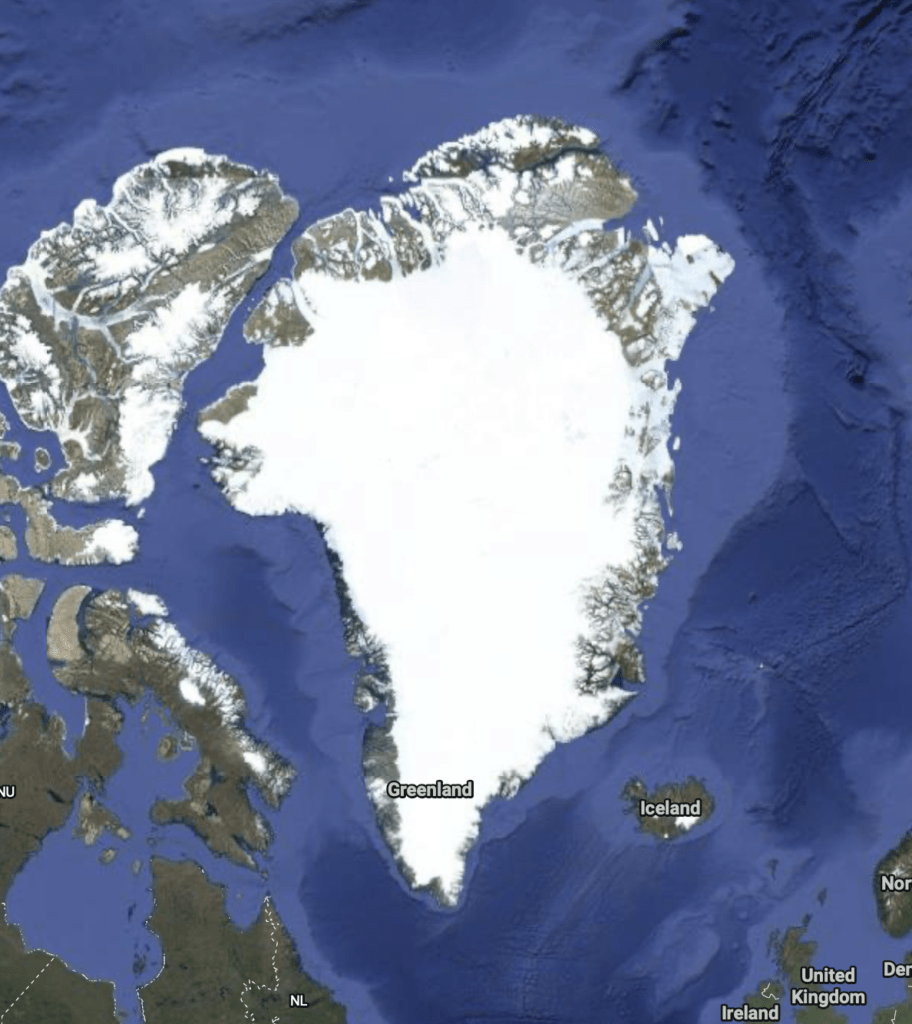
More than 56,000 people live in Greenland, and almost 90% of its population is Inuit. With the closest country to Greenland being Canada, separated by a mere 16 miles, Inuit Greenlanders are closely associated with the Inuit populations of Canada and Alaska.
Inuit leaders and activists from across the Arctic Circle have rejected the U.S. government’s threats and have called for unity.
“You can’t just go and buy a country and the people who live there,” Ms. Peter, a resident of Nunavut’s capital, Iqaluit, who was born in Greenland, said.
“We are all allies, and we have the rule of law. We have diplomacy. We have to follow the proper procedures, and we are not allowed to take up arms or threaten another ally in the NATO.”
The Inuit Circumpolar Council-Alaska released a statement on Jan. 20, standing in support of Greenland. The Inuit Circumpolar Council represents approximately 180,000 Inuit across Greenland, Alaska, Canada and Russia’s autonomous Chukotka territory.
“Alaskan Inuit reaffirm our support and solidarity with our Greenlandic relatives, who are asserting that decisions concerning Greenland’s political future, governance, and international relationships must be made by the people of Greenland themselves,” the statement said.
The organization’s president, Marie Greene, and board member Robert (Bobby) Evans emphasized the need for unity. “It is important that we go back to the founding purpose of Inuit Circumpolar Council, to stand united as Inuit, and that is the basis in which we stand united with our Greenlandic relatives,” Ms. Greene said.
“Yes, we are Americans, but we were Inuit first and always will be. It is part of our culture to take care of our people and to stand beside our relatives, all across the Arctic,” Mr. Evans said.
Greenland is a self-governing, autonomous nation within the Kingdom of Denmark, located in the Western Hemisphere on the North American continent. This makes the large island a prime target in a tug-of-war between American and European powers.
The Inuit have inhabited Greenland for thousands of years, long before Europeans arrived with plans to colonize the island. Early efforts by the Danish to colonize Greenland began in 1721, more than 300 years ago. As part of its colonial and economic control over Greenland, the Danish government established the Royal Greenland Trading Department in 1774.
Denmark formally annexed Greenland as a colony in 1814. In 1953, after World War II, the island went from being a colony to being integrated into the Kingdom of Denmark with representation in the Danish parliament.
It wasn’t until 1979 that Denmark granted Home Rule to Greenland, allowing Greenland to manage local affairs. It was even later, in 2009, when Greenland gained the power to self-rule, which granted greater decision-making power to Greenland’s government. But the island nation still remains a territory of Denmark and is not recognized as its own sovereign country.
In an article published by Peoples Dispatch, an international media organization, writer Lotte Rørtoft-Madsen, chair of the Danish Communist Party, details Greenland’s history and its position “on the chessboard of U.S. imperialism.”
“The reality is that for over a year, the nearly 57,000 Greenlanders and their vast island have been turned into a bargaining chip, a pawn to be moved at will on the great chessboard of U.S. imperialism,” she wrote, adding that Greenland’s politicians “must fight hour-by-hour simply to get a seat at the table and be heard, not only by the U.S., but also by Denmark.”
The U.S. has maintained a military base in Greenland since 1951, following a defense agreement with Denmark that granted the U.S. the right to establish and operate military facilities on the island within a NATO framework. NATO, now composed of the U.S., Canada and 30 European countries, including Denmark, had been established two years beforehand.
Ms. Rørtoft-Madsen posed the question: “Why does the Trump Administration seek an annexation of Greenland, when the U.S. empire already holds extensive rights over Greenland?”
“The answer lies in a new security strategy and the demand for unquestioned and unlimited control over oil, control over minerals, and military dominance,” she said.
“Greenland possesses at least 25 of the 34 minerals designated as ‘critical raw materials’ by the European Commission. Greenland has significant deposits of rare earths, copper, nickel, zinc, gold, diamonds, iron ore, titanium, tungsten and uranium.”
She accused the U.S. government of being desirous of Greenland’s mineral deposit resources, wanting control over northern sea routes and wanting an advanced base against Russia and China, keeping the two countries away from the island and its resources.
Verian, a global research agency, conducted a poll in January 2025 on Greenlanders’ attitudes on the U.S., the Danish realm and independence. Results found that 85% of Greenlanders do not want to leave the Danish realm to become part of the U.S. More than half said they would vote yes to Greenlandic independence in a referendum.
Ms. Peter said Greenlanders still desire full sovereignty as a country, but that “all parties have decided to put everything on hold” to form a united front against the U.S. “Because the threat is too much.
They have decided that Greenland is still under the Danish kingdom, and one day in the future, it is up to the Greenlanders and the Danes to decide how to go about this. It’s nobody else’s business,” she said.
Leaders of Greenland’s five political parties, including its Prime Minister Jens-Frederik Nielsen, released a joint statement on Jan. 9 on Greenland’s government website.
“As Greenlandic party leaders, we would like to emphasize once again our desire for the U.S.’s disdain for our country to end. We do not want to be Americans, we do not want to be Danes, we want to be Greenlanders,” the statement said, translated into English.
“The future of Greenland must be decided by the Greenlandic people.”
—Anisah Muhammad, Staff Writer
