










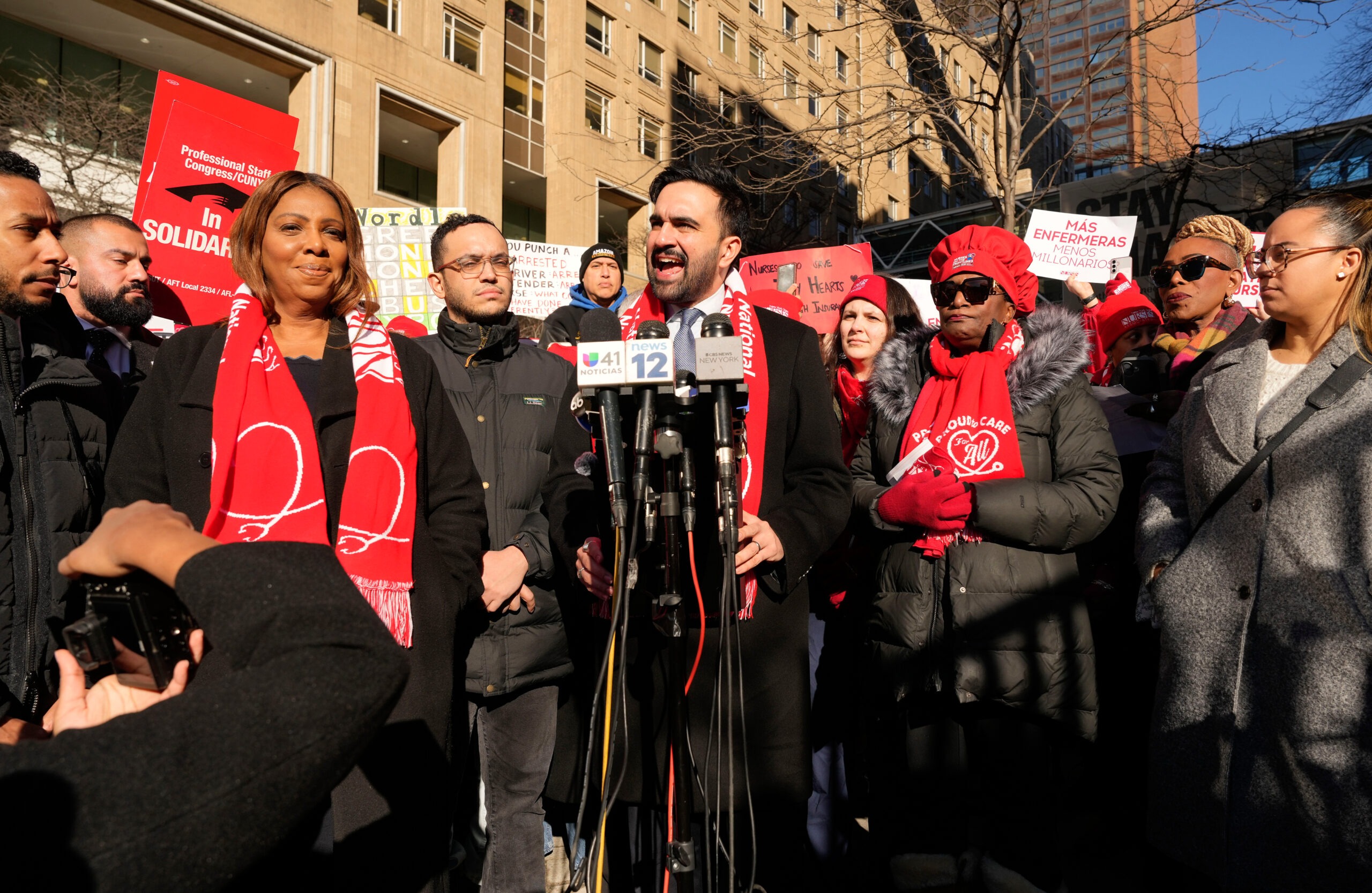

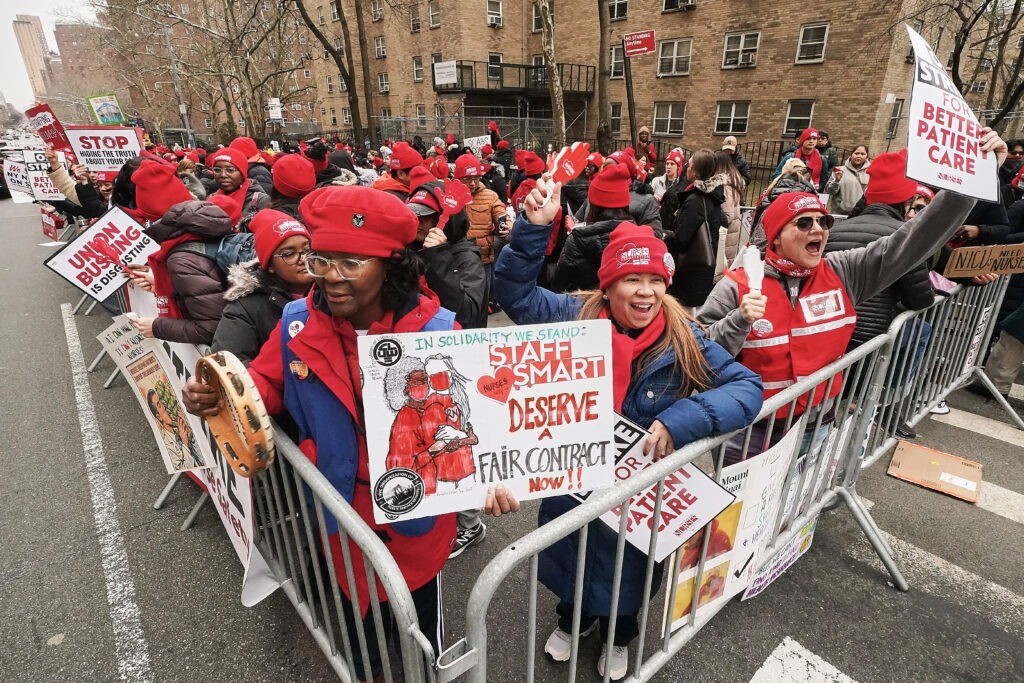
Nearly 15,000 nurses are striking after stalled negotiations with three of New York City’s wealthiest private hospital systems. The strike, which began on Jan. 12, was organized by the New York State Nurses Association (NYSNA), a labor union of about 42,000 nurses and health care professionals.
About 20,000 nurses at 12 private sector hospitals were set to strike if negotiations did not go well by the time their contracts expired on Dec. 31, 2025.
The 12 hospitals included BronxCare Health System, The Brooklyn Hospital Center, Flushing Hospital Medical Center, two hospitals under One Brooklyn Health, Maimonides Medical Center, Montefiore Medical Center, two hospitals under the Mount Sinai Health System, NewYork-Presbyterian/Columbia University Irving Medical Center, Richmond University Medical Center and Wyckoff Heights Medical Center.
Across the board, union nurses have been asking for safe staffing standards, fair wages and benefits, protections against workplace violence, safeguards on the use of artificial intelligence in health care and protections for vulnerable patients.
In the days leading up to the strike, nurses at eight of the hospitals reached agreements on their demands for increased safety and protection. Only four hospitals remained—Montefiore Medical Center, the two Mount Sinai hospitals and NewYork-Presbyterian.
The New York State Nurses Association described the hospitals as the wealthiest private hospitals in the city and criticized hospital executives for claiming they are unable to settle a fair union contract that keeps nurses and patients safe.
In a joint statement on Jan. 7, Montefiore, Mount Sinai and NewYork-Presbyterian accused nurses of abandoning patients and called the strike “reckless.”
Spokespersons for Montefiore and Mount Sinai have also called nurse demands “reckless” and “extreme,” saying they could not agree to the demands. Mount Sinai reported that 20% of its nurses showed up to work on the first day of the strike.
“As of September 2025, these three hospitals had on hand TWICE as much cash and cash equivalents than they had at a similar pre-pandemic point in 2017, even adjusting for inflation—holding onto over $1.6 billion dollars.
Now, they’re gearing up to collectively spend almost $100 million per week on temporary traveler nurses, who don’t know New York City patients or communities,” the NYSNA said in statements leading up to the strike.
“These are nurses typically from out of state who travel the country breaking strikes; management hires and pays them to cross the picket line during a strike rather than bargain in good faith with frontline nurses whose key demands are safe staffing, workplace safety, and health care benefits for caregivers.”
NYSNA president Nancy Hagans, a registered nurse who is also certified in critical care, accused hospital executives of putting “profits above safe patient care.”
“Hospital management refuses to address our most important issues—patient and nurse safety. It is shameful that the city’s richest hospitals refuse to continue health care benefits for front-line nurses, refuse to staff safely for our patients, and refuse to protect us from workplace violence.
It is deeply offensive that they would rather use their billions to fight against their own nurses than settle a fair contract. Nurses do not want to strike, but our bosses have forced us out on strike,” she said in a Jan. 12 statement.
According to a new website, NYC Hospital Greed, sponsored by the NYSNA, Montefiore pays its executives millions and has experienced excessive revenue in recent years, while refusing to invest in patient care needs.
Mount Sinai has invested millions in artificial intelligence and has prioritized profits over patients. NewYork-Presbyterian has cut front-line staff and health care services, spent large amounts of money in legal fees to fight nurses, short-staffed nurses and short-changed patients.
Nurses had spent months at the bargaining table before the strike. The NYSNA accused hospitals of responding to nurses’ demands for fair contracts with avoidance, delays, takebacks, surveillance, threats, retaliation and other intimidation tactics.
Just nine hours before the strike, Mount Sinai fired three labor and delivery nurses, accusing them of “deliberately sabotaging” emergency preparedness drills during an active shooter incident in November. The NYSNA called the firing “unlawful.”
This is the second strike in the span of three years. In January 2023, about 7,000 nurses at Mount Sinai and Montefiore went on a three-day strike over staffing and pay.
A few days ahead of this year’s strike, New York Governor Kathy Hochul declared a disaster emergency in Bronx County, Nassau County, New York County and other surrounding counties due to health care staffing shortages.
“The impacts of understaffing in hospitals and other health care facilities are expected to be particularly acute because of record-high numbers of influenza cases and hospitalizations related to influenza in recent weeks,” Gov. Hochul said in the executive order, dated Jan. 9.
The order activated a state emergency management plan that allows state agencies to assist local governments and individuals. The order also allows licensed physicians, registered nurses, practical nurses, nurse practitioners, physician assistants.
And other medical professionals in good standing in New York State, any other state, a province or territory of Canada or any other country to practice in New York without penalties related to the lack of licensure, registration or certification.
The disaster emergency will remain in effect through Feb. 8.
Newly sworn-in Mayor Zohran Mamdani has stood on the picket line in support of the striking nurses. “The safety and well-being of this city is my top priority and ensuring New Yorkers have the care they need is critical, especially during flu season,” he said in a Jan. 11 post on X.
“No New Yorker should have to fear losing access to health care—and no nurse should be asked to accept less pay, fewer benefits or less dignity for doing lifesaving work. Our nurses kept this city alive through its hardest moments.
Their value is not negotiable,” he added. “I’m relieved that most hospitals have reached an agreement and urge the remaining parties to stay at the table and reach a deal that both honors our nurses and keeps our hospitals open.”
Mayor Mamdani was one of more than 100 state and local elected leaders who signed a letter in solidarity with the nurses.
More than 1,000 nurses at three Northwell Health hospitals were also set to strike after months of stalled negotiations. By Jan. 11, all three hospitals had reached full tentative agreements on improved safe staffing standards, annual wage increases and health benefits.
