













Stories of Black youth committing suicide are becoming far too common in Black communities across the country. Black psychology and social science professors say they have noticed recurring trends regarding suicidality, or the risk of suicide, including ideation, intent, attempts and completion, in Black youth.
Between 2018-2021, suicide rates among Black youth ages 10-24 years increased from 8.2% to 11.2%, according to the Substance Abuse and Mental Health Services Administration. Suicide was the third leading cause of death for Black youth in 2021.
The AAKOMA Project, an organization dedicated to addressing mental health care for Black and other non-White youth, based in Arlington, Virginia, published a report in May on the state of mental health of non-White youth and young adults.
The organization surveyed more than 8,600 Black, Latino, Asian, Native American, Middle Eastern, North African and biracial/multiracial youth between the ages of 13-25. Almost 1,500 Black youth were surveyed.
More than 40% of Black youth reported that they seriously considered attempting suicide within the past 12 months, about 38% reported they planned about how they would attempt and about 18% attempted at least once. In most categories, Black youth were the second-highest, following Latino youth.
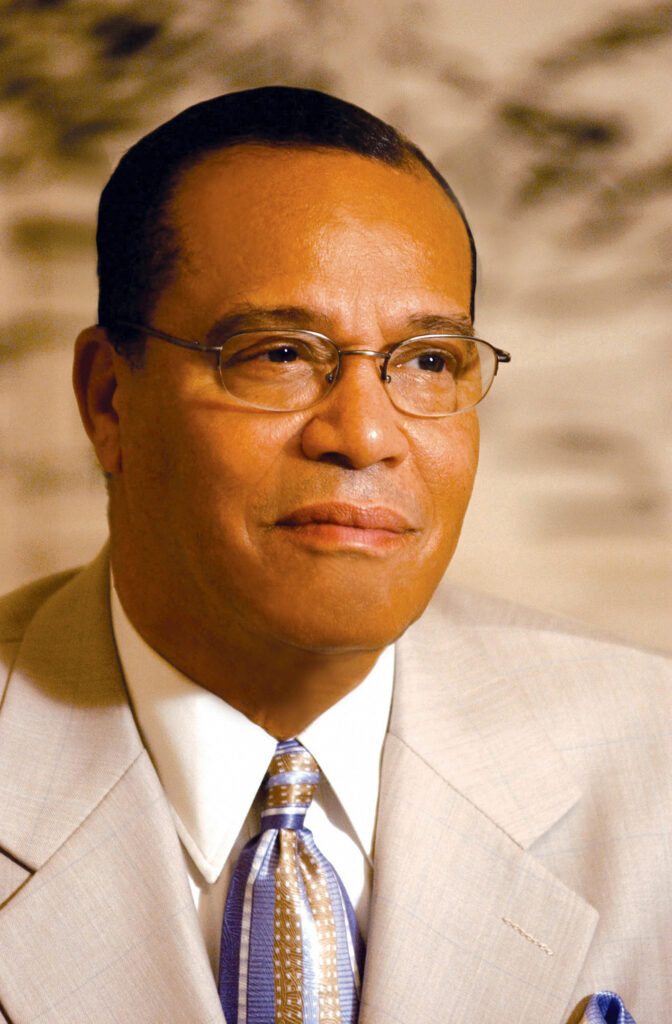
“We’re seeing huge spikes among young Black men attempting and completing suicides as of recently,” Dr. Michael Curtis, assistant professor in the University of Minnesota’s Department of Family Social Science, said to The Final Call.
“My work is really dedicated to understanding why these disparities are happening and what’s going on in these young men’s lives today that are creating these huge spikes.”
Dr. Curtis co-authored a study published in 2024 on the role childhood adversity and racial discrimination play in suicidal ideation among Black men.
He is finding that young Black men in particular feel they don’t have a future due to socioeconomic pressures related to things like home ownership and that social media is also playing a role in Black youths’ outlook towards the future.
“They are being bombarded with information all day long about how hard it is to survive, and then they’re looking around at their friends and their families, trying to scratch and survive and work really hard to just make ends meet.
And they’re like, is this what the rest of my life is going to look like?” Dr. Curtis said. “What I’m seeing, as I’m talking to young youth about their feelings, I see a lot of pessimism around the future.
And one of the biggest things for young people is if they don’t feel like they have a future tomorrow, they make bad mistakes today.”
While his work focuses on young Black boys, he noted that young Black girls are also experiencing a crisis.
“We’re not seeing spikes in suicidality, but I am seeing spikes in substance use and riskier behaviors, and I think it’s really linked to this sort of loneliness crisis,” he said.
“These young people see the world is on fire and they feel like no one’s doing anything about it, and they’re just sort of being left to fend for themselves.”
Between 2018-2021, the Black suicide rate significantly increased, while the White suicide rate declined by 3.9%, according to the Centers for Disease Control and Prevention. Black men committed suicide at four times the rate as Black women in 2021.
“What stands out is when suicide death rates increase for Black people while they are decreasing for White people, and that suggests that there is something very different going on in the Black community that people need to attend to,” Dr. Rheeda Walker, a psychology professor at Wayne State University in Detroit, said to The Final Call.
Dr. Walker has worked in the mental health space for about 30 years and authored the book, “The Unapologetic Guide to Black Mental Health.”
Throughout her 30 years, she has noticed the times when Black suicide death rates increased and White suicide death rates decreased. The COVID-19 pandemic was one of those times.
She also tied the increase in suicide among Black youth to the loss of spiritual and cultural identity, including faith and belief in a Higher Power.
“Part of the resilience comes from our culture, comes from our identity as strong Black people who endure no matter what happens. But there has been what we would call more acculturation, or more assimilation, of African Americans in our larger society.
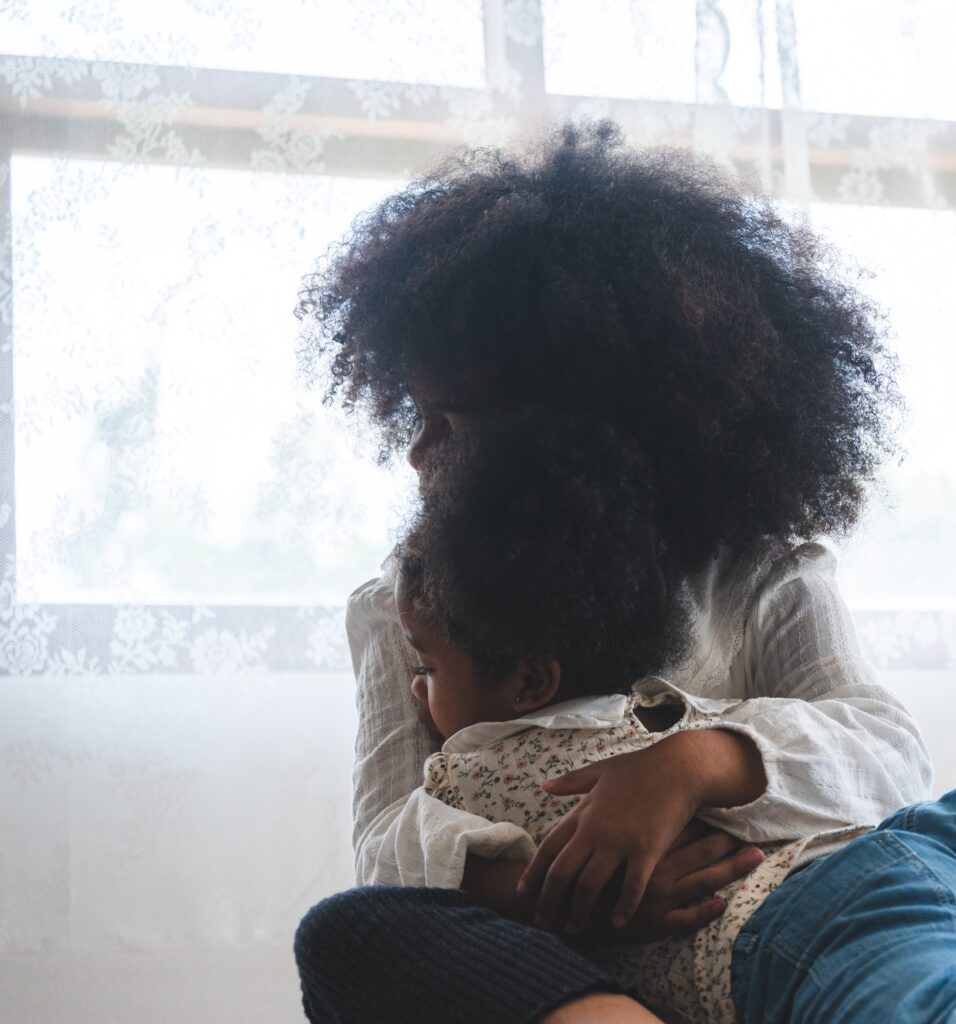
And so, what that looks like is kind of giving up or relinquishing the identity that has made us genuinely strong,” she said. “I can’t help but to wonder, and my research has shown it, that those who have less spiritual identity, or spiritual resources, less cultural identity, those are the ones who are more likely to be vulnerable to suicide.”
Social media
Along with feelings of loneliness, societal pressure and the loss of identity, studies have linked social media usage to negative mental health outcomes.
“Put the phones away. Social media is not helpful,” Dr. Curtis said.
Researchers have now begun to examine the impact of short-form video content on the brain, calling the potential risks “brain rot.” Many short-form videos on social media are 60 seconds or less and aid in quick consumption before scrolling to the next.
Social media users might find themselves “doomscrolling,” or spending an excessive amount of time watching short-form or other content on social media that aids in feelings of anxiety and depression.
A recent NBC article on “brain rot” and emerging risks tied to short-form video referenced a September review of 71 studies and a paper published in October.
The review found links between heavy consumption of short-form video and poorer cognition as well as increased symptoms of depression, anxiety, stress and loneliness, while the paper described associations between heavy use of short-form video and shorter attention spans and poorer academic performance, according to NBC.
Creating community
Dr. Curtis feels that it’s important to create in-person spaces of community for young people to deal with feelings of isolation and loneliness. He advised against young people turning to online spaces.
“One of the interventions we’ve been working on is creating physical spaces for youth to get outside of their homes, get outside of their communities and connect with one another in sort of a more positive, pro-social way, because so many of them talk about being isolated and alone and feeling that no one understands some of the pressures that they’re put under,” he said.
He’s also big on young people having peer mentors and elders who can guide them. The more social connections people have with access to peer mentors or elders who can help guide them through challenging times, “the more likely they are to make better decisions regarding their health,” he said.
Dr. Walker said the response to rising suicide rates has to take place on two levels: public health resources and education and acknowledging that suicide does happen in the Black community;
And a boots-on-the-ground response from everyday people who might be interacting with someone who is suicidal and who can provide help, especially considering that many in the Black community may not seek out professional mental health care.
“And that’s understandable,” Dr. Walker said. “Providers need to be better trained to provide culturally meaningful care.”
She provided an example of “culturally meaningful care,” which includes integrating a person’s sense of faith, prayer and belief in a Higher Power into the mental health services they receive,
“We’re trained to say, this is your issue, this is your shortcoming, this is your weakness, rather than saying, ‘Okay, but let’s see what strengths you have we can leverage.’
And in the Black community, a lot of our strengths are belief in Higher Power, connection to family, elders. We have sometimes a whole community of people who can help us,” she said. “You have to be able to get the family and the community active.”
Dr. Saaudiah Muhammad, a Chicago-based psychotherapist. “As a practitioner who works with adults, if I’m seeing more of this in adults, I could guess that for our youth and for our children, that that rate is just as high, if not higher,”
She said, explaining that children, who may not have as many coping mechanisms as adults, may be more susceptible to suicide or other emotional impacts of stress.
She pinpointed several ways for people to de-stress, including slowing down, seeking assistance and taking a moment to assess how they are feeling.
“We know there’s a link between stress and food or the impact of stress, so allowing ourselves to implement healthier eating habits, allowing ourselves to implement exercise. Exercise is great in reducing stress and anxiety,” she said. “Activities such as meditation, yoga, and all forms of exercise can really help to reduce stress.”

A spiritual solution
Minister Farrakhan has delivered several impactful messages on navigating the challenges and trials of life including the 1981 message, “The Problem of Suicide: How to Shoulder the Burden of Life.”
He also explained the importance of developing and fostering Black communities to navigate these challenges. In his 1993 message on suicide, he said that “each of us have a responsibility to our brother and sister.”
“Each one of us has a duty to the next brother, and you do your duty, and whatever Allah wills, it will be, but you do your duty by your brother,” he said.
In addition, he acknowledged that Allah (God) is always present. “When you were sperm in the womb of your mother, your mother did not know that she had conceived you, and your mother did not form you and give you a firm resting place in her womb.
That was done by another power. Is that right? Who formed you in the womb? And when you were just sperm mixed with ovum and became a cell of life, who gave you a firm resting place in the womb? Come on. Allah,” he said.
“Who formed you into a clot? Who formed you into an embryo? Who evolved you into a fetus? Who brought you forth from your mother’s womb at the appointed time? Who put milk in your mother’s breast for you? Who gave your mother the nature to hear your cry in the night and answer that cry and change your diapers?
Who put the food in the earth that when you got hungry, you could go to the earth and get food to strengthen your body so that you could grow to full maturity? Was it your mother, was it your father, was it your minister or was it Allah?”
“You see the sun. Mama didn’t put it there. Daddy didn’t put it there. Allah put it there. It warms you. It turns the planet on which you live. The sun passes out into the night and the night covers us and gives us rest and sleep. Mommy didn’t do that. Daddy didn’t do that. Allah did that,” Minister Farrakhan added.
“You study His creation and you learn physics, chemistry, biology, zoology, navigation, aviation, engineering. You learn history, geometry, geography. All of it you learn, all of it is Allah.
So now you mean to tell me you’re going to get in a little trouble and you don’t know how to reach the God who gave you a firm resting place when you were nothing but sperm mixed with ovum, and now you feel that that same God can’t give you a firm resting place when you’re in trouble?”
