








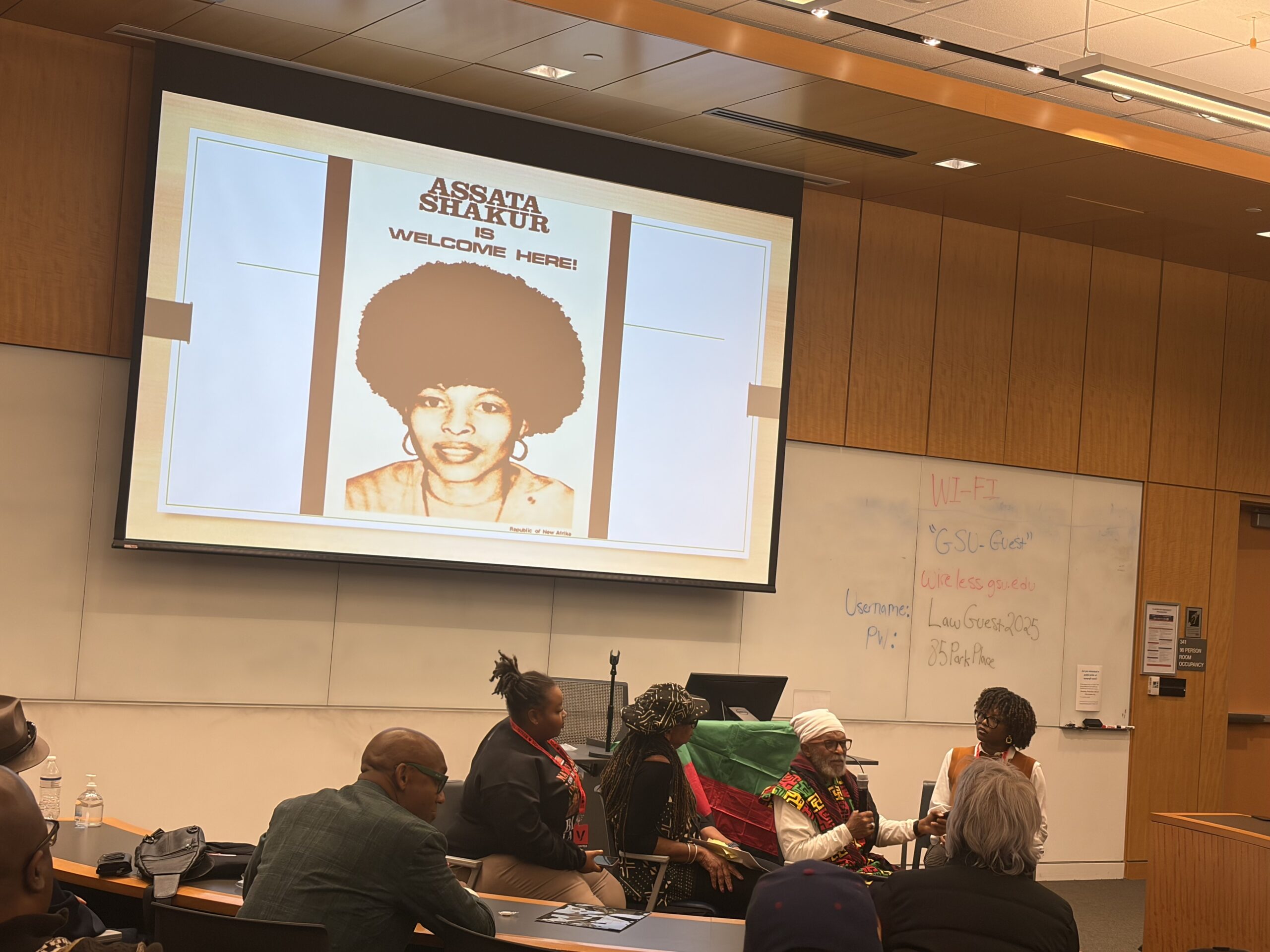

ATLANTA—During a three-day conference in Atlanta, Black law students and professionals discussed the areas in which Black lawyers fight on the frontlines for Black liberation. The National Conference of Black Lawyers’ annual conference was held at the Georgia State University College of Law from Nov. 13 to Nov. 15.
With the theme, “Inspiring the Next Generation of Legal Warriors in the Movement for Black Liberation,” the conference offered a space and opportunity for future Black lawyers to connect with lawyers who have dedicated their lives to fighting for reparations, building Black economies and cooperatives, challenging free speech attacks, fighting to free political prisoners and overall working in the freedom struggle.
“Annually, the National Conference of Black Lawyers gathers in different cities to really recommit ourselves to the struggle for Black liberation and for us to be able to share the work and to learn from each other,” Mawuli Davis, an African-centered civil rights attorney and president-elect of the organization, said to The Final Call. “It’s really an educational opportunity for the lawyers to be in community with each other and community with organizers.”
The National Conference of Black Lawyers was founded in 1968. Historically, it represented activists, freedom fighters and political prisoners such as Angela Davis, Assata Shakur and Mumia Abu-Jamal.
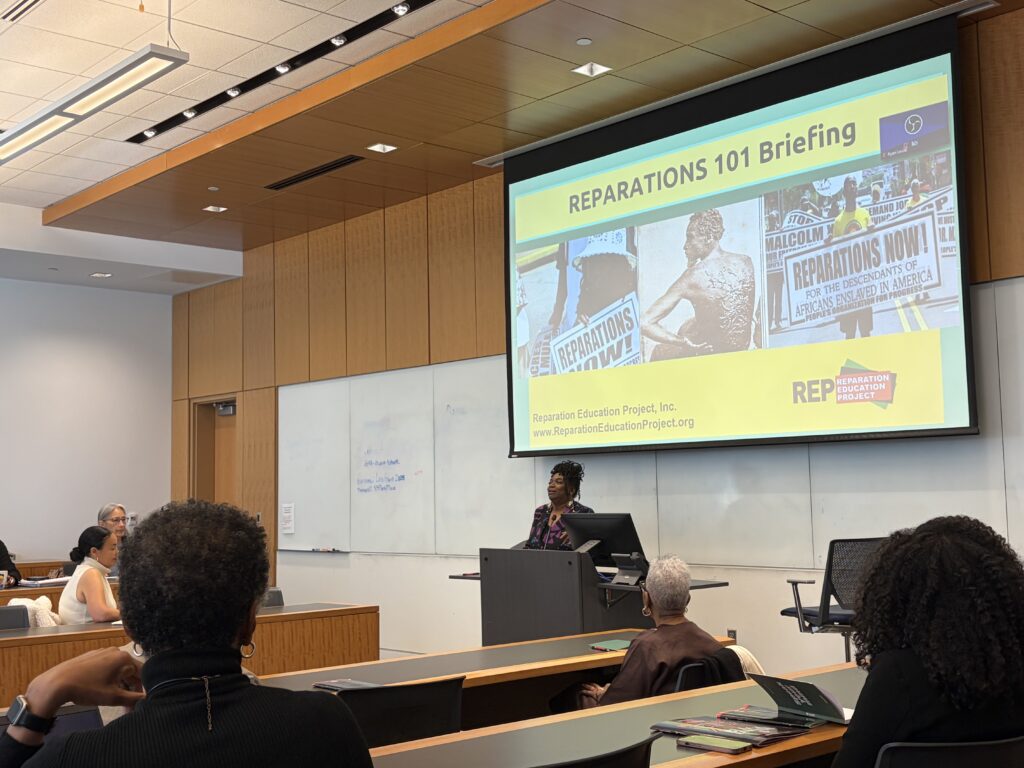
“We have to follow the lead of our people. Our responsibility is really to hear what our people need from us so that we can serve,” Atty. Davis said, adding that Black lawyers have the responsibility to use their legal education in liberation work.
Pre-law and undergraduate students from Clark Atlanta University, Morehouse College, Spelman College, Howard University and Georgia State University attended the conference, along with members of the Black Law Students Association from Georgia State, Emory University, Atlanta’s John Marshall Law School and Howard University.
“This is a convening of people who fit in two categories: long-distance runners and freedom fighters and long strugglers, and then those of us who are not only inspired by them and instructed by them, but we see them as models that we can do it. And plus, it’s also very, very beautiful to see so many young people, students, folks who are looking for answers to, ‘Why am I here? What’s my purpose?’” Dr. Greg Carr, chair of Howard University’s Department of Afro-American Studies, said to The Final Call.
Nyah Chalker, a second-year law student at Howard who is passionate about criminal justice and civil rights, attended the conference for the first time.
“This is a place where I knew I would be able to come and gain context and perspective and also be inspired and understand that I am not alone and that the fire that exists inside of me exists inside of so many other people, attorneys, legal minds, liberators, abolitionists for life,” she said to The Final Call. “To be in that room is just affirming.”
Key workshop sessions included “Movement Lawyering: How Lawyers Move in the Movement in the Wake of the Assault on Free Speech,” “Hip Hop Under Legal Attack: RICO, Lyrics and Surveillance,” “Defending Black and Brown Immigrant Lives: Legal Resistance to State Violence and Deportation” and a special session honoring the late revolutionary Assata Shakur.
Movement lawyering
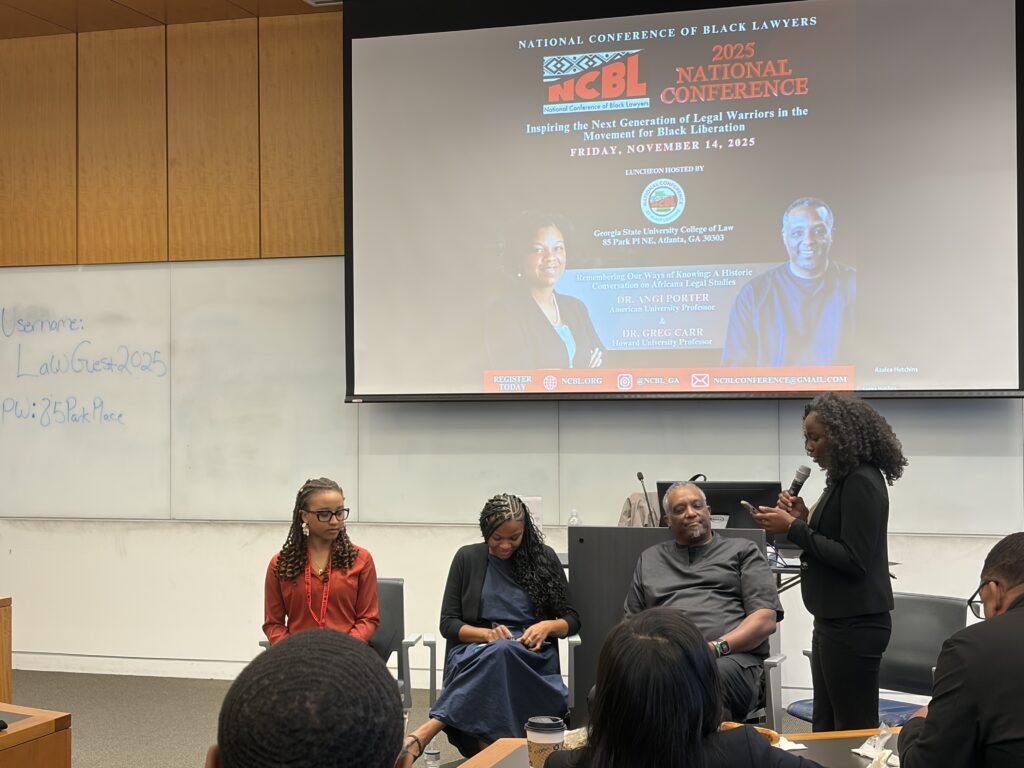
In the session on movement lawyering, Tiffany Williams Roberts, a criminal defense and civil rights attorney, spoke on the importance of teaching young people about the Federal Bureau of Investigation’s Counter-Intelligence Program (COINTELPRO), which historically targeted Black leaders and Black organizations and which serves as a blueprint for the U.S. government’s continued surveillance and targeting of Black activists today. Atty. Roberts described social media as “a warehouse of surveillance information.” The Nation of Islam, The Honorable Elijah Muhammad, the Rev. Dr. Martin Luther King Jr., the Black Panther Party were just a few of the targets of COINTELPRO.
Rev. Gary Spencer, senior counsel to the NAACP’s Legal Defense Fund, distinguished the difference between being in the movement and just wanting to be part of the current system.
“Just because folks in leadership are Black does not mean they want Black liberation. What many people want is their part of a system they finally figured out,” he said.
The speakers also looked at movement lawyering historically, present day and what needs to be done in the future. “Movement lawyering is a conclusion,” Rev. Spencer said. “It is people who are doing the work for the movement of our people.”
Attacks on hip-hop
Panelists addressing the legal attacks on hip-hop discussed the history of the Racketeer Influenced and Corrupt Organizations (RICO) Act and how it has been misused to target rap and hip-hop artists.
Congress passed the law to target organized crime, particularly the mafia, because the majority of those arrested would be foot soldiers, not the people at the top, Lucius Outlaw III, an associate professor of law at Howard University, explained. He said the idea was to rack up individual crimes and pile on so much prison exposure that the justice system would reach the people at the top.
“Most lawyers don’t understand RICO,” he said. “It starts with the premise of ‘you’re a criminal enterprise.’” But now, it’s being used to identify and accuse groups of people who may have a connection, he added.
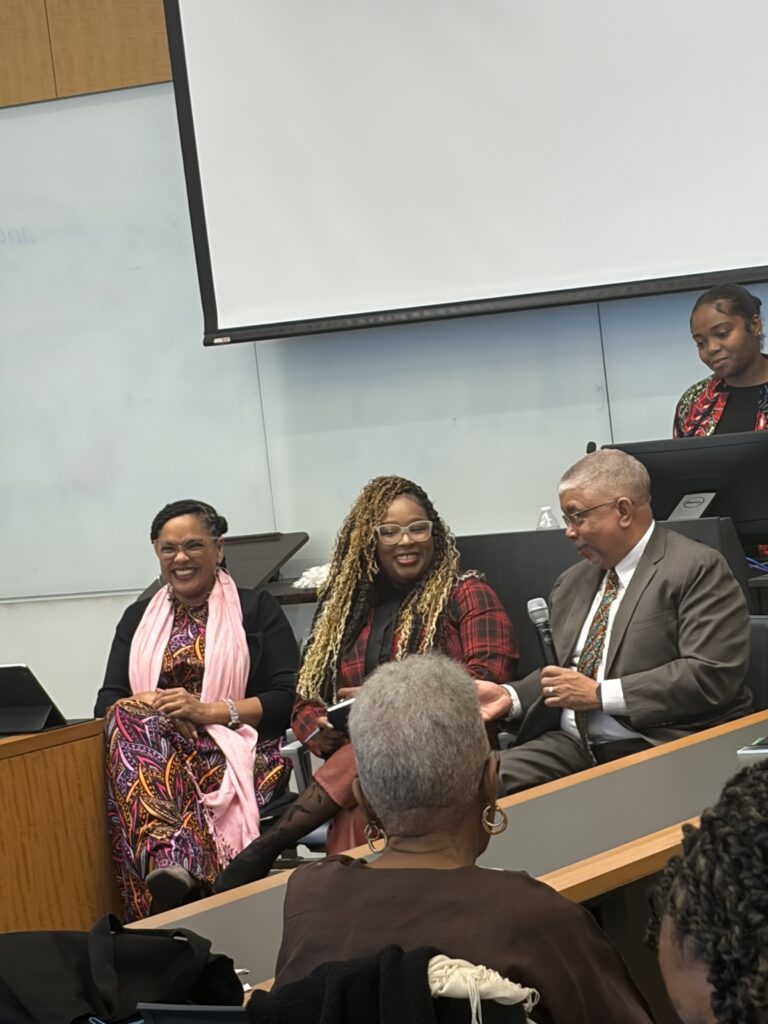
He witnessed “rap on trial” first-hand when representing an aspiring rapper. The client’s album art displayed him standing on piles of money with two guns at his side. Atty. Outlaw said the client was charged for “possessing a gun” as a convicted felon, and the court wanted to send him to prison for three years. He referenced the book, “Rap on Trial: Race, Lyrics, and Guilt in America,” in saying that since the late 1980s, there have been nearly 700 cases where rap lyrics have been used as evidence.
“Hip hop is the one artistic art form that the criminal court somehow refuses to separate the art from the artist,” Prof. Outlaw III said.
At the same time, criminal defense attorney Gabe Banks warned against artists engaging in illegal or questionable activities and then rapping about it over a beat. “Our artists have to be really conscientious about what they’re saying and how they’re saying it,” he said.
Watani Tyehimba, a certified criminal defense investigator, worked with rap legend Tupac Shakur for three years and spoke on the targeting of Tupac because of who his family was. His mother Afeni Shakur was a member of the Black Panther Party, and his stepfather, Mutulu Shakur, was a member of the Black Liberation Army. Tupac considered his step-aunt, Assata Shakur, who was Mutulu Shakur’s sister, his godmother.
Mr. Tyehimba said many artists “are targeted because of the communities they’re involved with.”
“You have artists today who are trying to emulate other people and things they’re not really involved in and they get caught up … ‘studio gangsters,’” he said.
“We need to engage our community and talk about ‘the consequences of thug life,’” he added. “People talk down to our young people. We have to be able to talk to them and listen.”
Black immigrants and deportation
During the session on immigration, panelists Cassandra Charles, a staff attorney with the National Immigration Law Center, and Ecleynne Mercy, an experienced criminal and immigration defense attorney, discussed how immigration law affects Black immigrants.
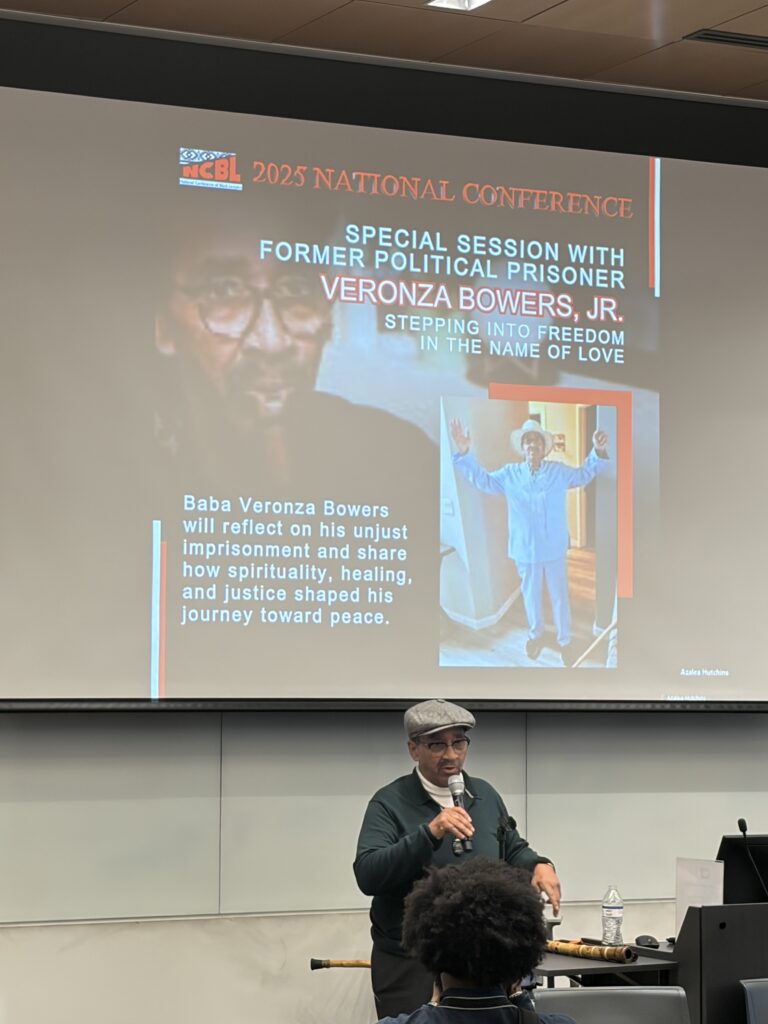
“Black immigrants are at a unique intersection of the liberation movement and immigrant movement,” Atty. Charles said. “Not only are they facing all types of injustices because of the color of their skin, they’re also facing similar injustices because of their immigration status.”
According to a 2022 report by Freedom for Immigrants, a California-based abolitionist organization committed to ending immigration incarceration, Black immigrants accounted for 6% of the total Immigration and Customs Enforcement (ICE) detention population but were the source of 28% of all abuse-related reports to the organization’s hotline. Another report by the Black Alliance for Just Immigration said that though “Black immigrants make up only 5.4% of the undocumented population in the U.S.,” they “make up 20.3% of immigrants facing removal based on criminal convictions.”
But because Black people are not the face of the immigrant rights movement, African and Caribbean communities in the U.S. “genuinely thought these policies would not affect them,” Atty. Charles said, referring to recent immigration policies and ICE detentions and deportations across the country.
She explained that the federal government is now asking state and local law enforcement to get involved in a federal issue and argued that local law enforcement “should not be in cahoots or collaboration” with federal agents.
She and Atty. Mercy also shared the importance of education, people knowing their rights and roleplaying in advance to know what to do if ICE knocks on the door or approaches someone in a public setting.
The work continues
Veronza Bowers Jr., an original Black Panther and former political prisoner, was imprisoned for more than 50 years for a crime he maintained he did not commit. He was sentenced to life for the 1973 murder of a U.S. park ranger and was released on May 7, 2024, 20 years after he was eligible for parole. He shared his story with conference attendees, from growing up in a small, all-Black community in Oklahoma to joining the military and witnessing poverty and welfare in the Black community, which contrasted with how other people lived, leading him to start a Black Panther Party chapter.
While behind bars, Mr. Bowers discovered music and meditation as a healing practice. At the conference, he played soothing melodies from the shakuhachi flute, shared the connection between music, meditation and healing and spoke on the importance of lawyers seeing their clients as human beings, first. “We got reason to be bitter. We got reason to have hatred. But more importantly, we have more reason to be guided by the great pillars of love and compassion for our people,” he said.
