







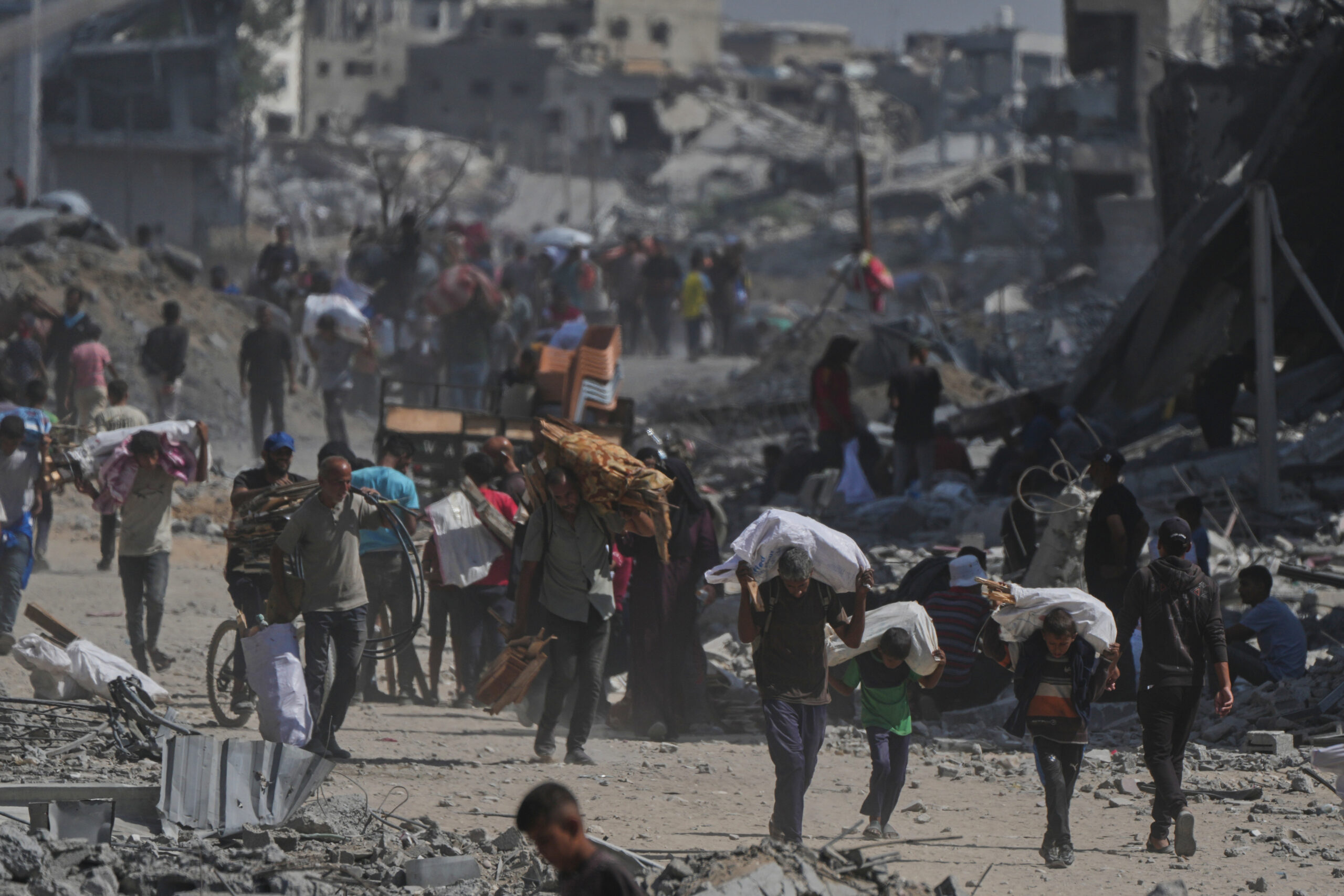

Israel continued its atrocities in the Gaza Strip just days after it agreed to phase one of the U.S.-brokered ceasefire deal. Breaches included continued airstrikes, artillery attacks and gunfire and limiting the entry of aid into Gaza. Palestinians in the West Bank also continued to face violence from Israeli settlers.
“Israel is not using its F-35 and F-15 war jets against the Palestinians today due to that plan, but still, it practices all patterns of occupation and aggression in terms of building settlements in the West Bank, detaining people and shooting Palestinians in Gaza,”
Osama Nazzal, chief of the Palestinian Broadcasting Corporation’s international desk in Ramallah, Palestine, and an English-Arabic interpreter for Palestine TV, said to The Final Call.
Meanwhile, Israeli forces still control more than 50% of Gaza and have fired on Palestinians attempting to return to their homes.
“Hundreds of thousands of Palestinians are moving back to the areas from which they were displaced, including to areas in close proximity to the remaining Israeli ground forces,” the UN stated.
“The targeting of civilians not directly participating in hostilities constitutes a war crime regardless of the location of the incident and its proximity to agreed deployment lines.”
Since the so-called ceasefire on Oct. 11, Israeli forces killed 23 people and injured 122, according to the Palestinian Ministry of Health’s update on Oct. 16. The death toll has risen to 67,967, with 170,179 wounded since October 23, 2023.
Despite Israel’s breaches, Yezid Sayigh, senior fellow at The Malcolm H. Kerr Carnegie Middle East Center in Beirut, Lebanon, told The Final Call that President Trump’s efforts should be focused on Israel as Israel has the real power to decide whether to escalate matters.
Release of prisoners, captives
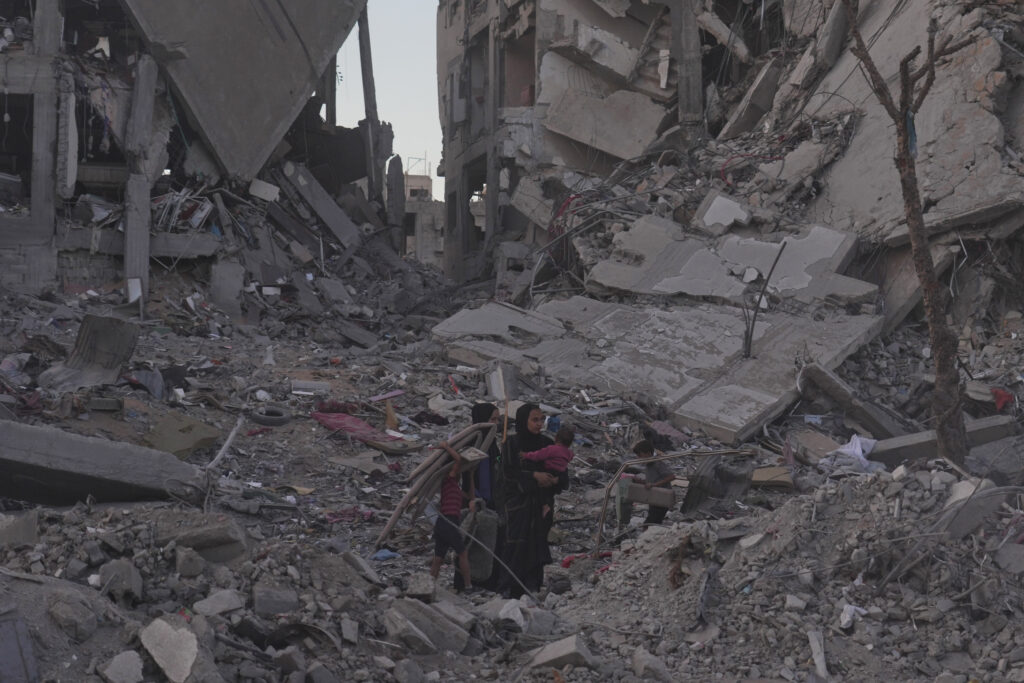
Days following the ratification of phase one of President Trump’s “peace plan” for Gaza, Palestinians returned to homes of rubble after two years of Israel’s genocidal war. With winter approaching, they are still in dire need of food, water, shelter and medical aid. Israel has continued to block a full flow of aid into Gaza after accusing Hamas of not adhering to the agreement.
Phase one of the plan required Hamas to return 20 living captives and 28 deceased to Israel within 72 hours. All living hostages were returned safely, but both Hamas and the International Committee of the Red Cross, which has been facilitating the return of the deceased captives, voiced difficulties in handing over all bodies due to the amount of rubble in Gaza.
“Even before the ceasefire was announced, during the negotiations about the ceasefire, (Hamas) warned the U.S. mediators, as well as Egyptian, Qatari and, of course, the Israeli side, that it was going to have a hard time finding bodies, many of which are in areas under Israeli military control,” Mr. Sayigh said.
“There have been massive bombings, so there’s going to be a lot of bodies that have disappeared under the rubble. … When Israeli officials claim that Hamas is violating the ceasefire by not returning all the bodies, they’re deliberately disregarding what they knew already.”
As part of the exchange, Israel released nearly 2,000 Palestinians from captivity, including those who were serving life sentences and 1,700 detainees.
Posts on social media depicted the joy of families as freed Palestinians reunited with loved ones. They have also been speaking out about the alleged abuse they suffered while in captivity.
“It is really heartbreaking, the torture, the humiliation, the spending of long, long time in solitary confinement. The stories they came with are unbelievable really, unbelievable, the way they were beaten, the way they were starved,” Mr. Nazzal said.
Many were surprised to see their families alive, as they were told their families had been killed to destroy their spirit and morale, he added. Others collapsed after finding out all their family members were dead. Israeli forces also published leaflets in the West Bank, “warning families against any celebration or any expression of joy and happiness.
And told them, when you receive your prisoners, you get them to your home without any visitors, without talking to the media, without singing, without celebrating, without anything, and if you break the rule, you are going to suffer the repercussions,” Mr. Nazzal said.
What struck Mr. Sayigh is the release of the Palestinian detainees.
“The detainees are people that Israeli forces picked up in Gaza and just took into detention without them being charged [with] anything. They never went to trial. They weren’t sentenced for anything,” he said.
“They were being held deliberately, it appears, as bargaining chips, so that if and when there were negotiations over exchanges of hostages and prisoners on both sides, then Israel could basically give up people it had detained purely so as to use them for exchange purposes.”
Israel also released the remains of more than 120 deceased Palestinians.
Gaza’s Government Media Office issued a press release on Oct. 16 concerning the conditions of the deceased Palestinians. Officials documented clear signs of hanging and ropes on the necks of several bodies, direct gunfire from very close range, hands and feet bound with plastic slings, blindfolded eyes and features, bodies crushed under the treads of Israeli tanks and signs of severe physical torture, including fractures, burns and deep wounds.
Destruction and rebuilding of Gaza
Human rights organizations have raised additional concerns about the amount of destruction Israel caused in Gaza and have demanded that aid be let in.
Despite agreeing to allow 600 aid trucks into Gaza a day, per the ceasefire deal, Israel cut the number to 300 and delayed the opening of the Rafah crossing between Egypt and Gaza. In the days following the deal, Al Jazeera correspondents reported only a “trickle,” of trucks entering and said the number was less than 300.
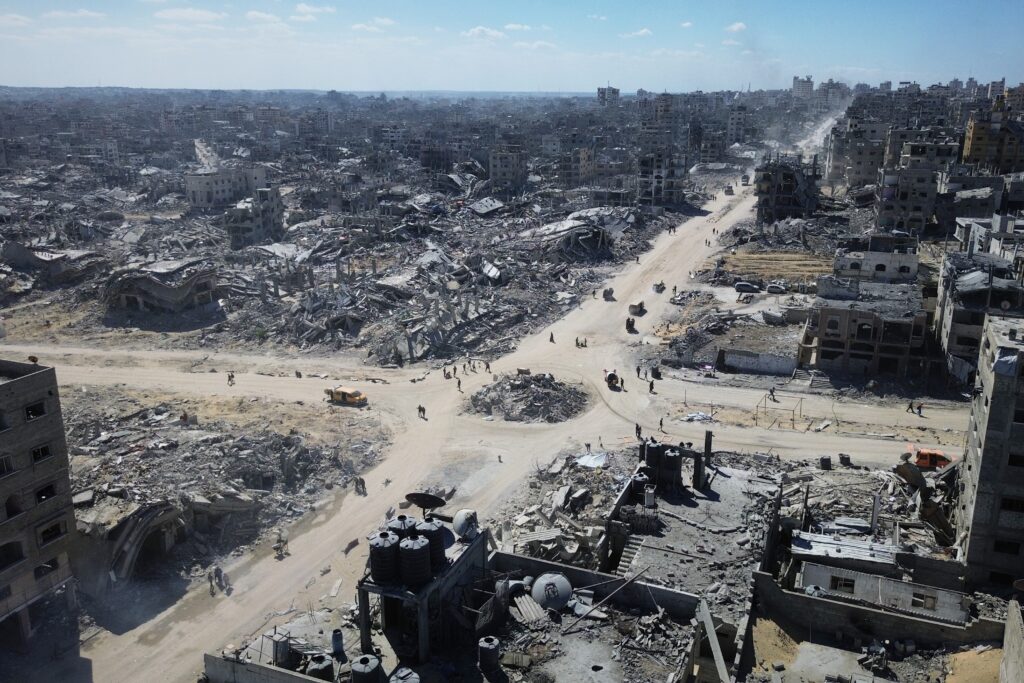
In a statement posted on X, on Oct. 10, Ismail al-Thawabta, Director General of Gaza’s Government Media Office, provided an account of Israel’s destruction of Gaza since Oct. 7, 2023, including the destruction of 90% of civilian infrastructure, 38 hospitals, 670 schools, 165 universities and educational institutions, 835 mosques and 300,000 housing units, with partial destruction to 200,000.
Mr. Nazzal described the humanitarian situation as catastrophic, noting that the people there are not starting life from “zero” but from a negative.
“It shows the consistency and the determination of the people not to leave their land, but at the same time, these people are human beings. They need housing units. They need toilets. They need all the facilities that are basic elements of a human life,” he said.
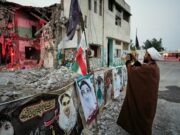
“It was very difficult for them even to know where their houses were, because all the roads and all the streets were covered by the rubble of these houses that were bombed out by the Israeli tanks and the Israeli warplanes.”
At a UN press briefing in Geneva, Jaco Cilliers, Palestinian Special Representative for the United Nations Development Program, estimated that there are 55 million tons of rubble in the Gaza Strip, with over 84% of Gaza destroyed. Gaza needs $70 billion for recovery and reconstruction, according to a joint estimate by the UN, World Bank and European Union.
“The damage, however, is not just that. Damage to the soil, toxic materials released from things like destroyed solar panels or Israeli bombs that have released chemicals into the soil and into the water aquifer,” Mr. Sayigh said. “The most urgent question is restoring a clean drinking water supply, which is hugely difficult.”
Even with the difficulties Palestinians are facing as they return, Mr. Sayigh believes the only feasible option is for them to stay in Gaza and said the international community would have to provide more housing units to help Palestinians prepare for the upcoming winter and possible flooding. This must happen quickly, along with the flow of food and clean water, he said.
“It’s also important for them to be part of that reconstruction process, in working on what remains of their original homes,” he said. “Do people get to say what kind of new neighborhoods they want rebuilt where the old ones have completely disappeared from the face of the earth? There has to be community participation in these kinds of key design issues.”
Next steps
President Trump announced the beginning of phase two of his plan on Truth Social on Oct. 14. Phase two calls for the demilitarization of Gaza and Hamas, which Israeli officials have been consistently demanding.
And the establishment of a technocratic government (a form of governance where decision-making is primarily handled by technical experts, scientists, and engineers, rather than by elected politicians) with oversight by President Trump and others.
Egyptian Foreign Minister Badr Abdelatty told The Associated Press on Oct. 13 that 15 Palestinian technocrats have been selected with approval from Israel, Hamas and other Palestinian factions.
Mr. Sayigh said phase one should have included the deployment of an international stabilization force that would take over security in Gaza, causing the further withdrawal of Israeli forces.
“The 20-point peace plan proposed by President Trump very specifically said that deployment of international security forces would happen immediately.
In other words, it should have been happening already, and this would provide some kind of guarantee or security for Hamas in order to disarm safely without worrying that by disarming, it becomes vulnerable, then, to the Israeli forces claiming some kind of ceasefire violation and reinvading,” he said.
The international security force would be one that Israel cannot attack, and it would be responsible for protecting territories in Gaza, while the governance body would oversee the revival of Gaza’s economy without Israeli control, he added.
Even as phase two commences and Gaza begins the process of rebuilding, Mr. Sayigh explained that a significant challenge remains regarding the situation in the West Bank, as Israel is determined to colonize the West Bank and East Jerusalem completely.
“The focus is going to be on the West Bank, where over a thousand Palestinians have been killed in the last two years by Jewish settlers and backed by Israeli police and the army.
The government regularly announces massive new expansions of Israeli illegal settlements in these occupied territories,” he said. “The writing is very clearly on the wall as to where the next big battle is going to be.”
Can peace be achieved Gaza or is it smoke and mirrors?
