






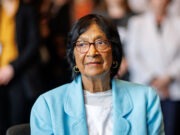




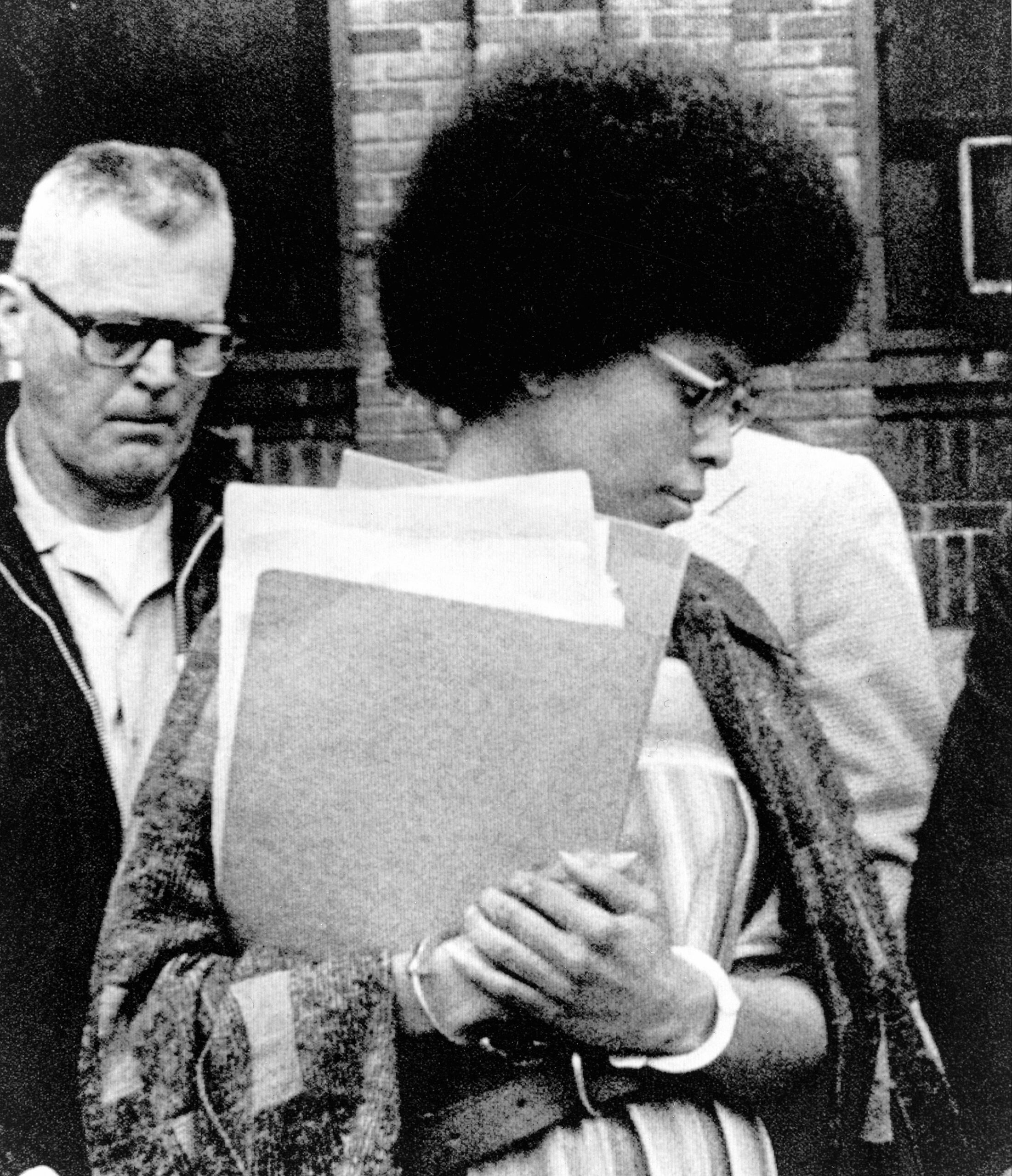

Decades after her name first gained worldwide recognition, Assata Shakur remains an enduring symbol of resistance, resilience, and the ongoing struggle for Black liberation.
Born JoAnne Byron in 1947 in Queens, New York, Ms. Shakur became a leading figure in the Black liberation movement of the 1960s and ‘70s, standing at the intersection of the civil rights and Black Power movements. She died recently in Havana, Cuba, due to “health conditions and advanced age,” Cuba’s Ministry of Foreign Affairs said in a statement.
“She continues to be a symbol of Black liberation and freedom,” Dr. Jared Ball, professor of Africana Studies at Morgan State University, told The Final Call.
“She had an incomparable attitude and spirit, about Black freedom, nationhood, womanhood, strength, comradeship and commitment to a set of politics that center around revolutionary Pan Africanism, socialism, radical, revolutionary Black nationalism, and international solidarity with anti-colonial movements. She’s a hero.”
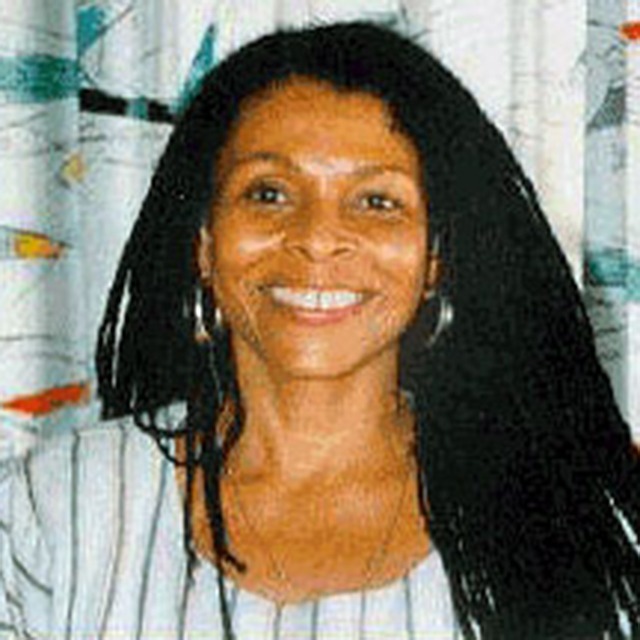
Assata Shakur was raised in a working-class household that instilled racial pride and awareness. After her parents’ divorce, she lived with her grandparents in segregated Wilmington, North Carolina, where she developed her understanding of systemic racism.
Ms. Shakur, known for her intellect, attended Borough of Manhattan Community College and City College of New York. During college, her political consciousness grew through involvement in the Black liberation movement and Vietnam War protests.
In 1967, she was briefly married to Louis Chesimard, a fellow student activist from the City College of New York, and they divorced a few years later. In her memoir, she devoted only a single paragraph to this period, indicating that it was a phase she quickly moved past.
As a member of the Black Panther Party and later the Black Liberation Army, Ms. Shakur dedicated her life to challenging systemic racism, state violence, and economic injustice. Her activism came at a time when Black communities across the United States were fighting for equal access to housing, education, healthcare, and freedom from police brutality.
Railroaded and finding solace in Cuba
Ms. Shakur became widely known after being convicted in 1977 for the murder of a New Jersey State Trooper during a 1973 shootout. It started with an incident of what would now be called “racial profiling” on the New Jersey Turnpike. Ms. Shakur was traveling with Malik Zayad Shakur (no relation) and Sundiata Acoli. State troopers stopped them, reportedly because of a broken headlight.
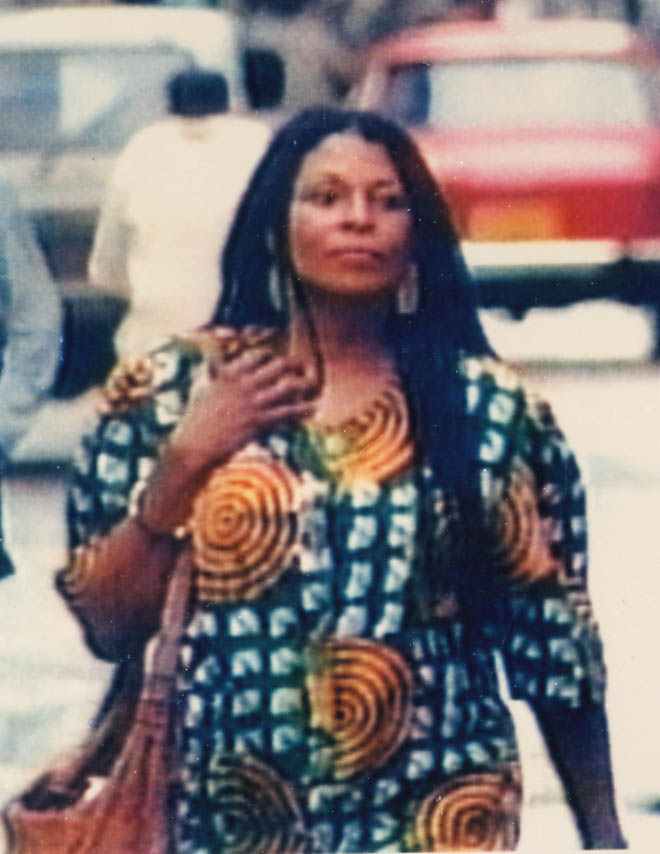
The three were made to exit the car with their hands up when suddenly shots were fired.
When all was said and done, State Trooper Werner Foerster and Malik Shakur were dead. Ms. Shakur and Mr. Acoli were charged with the death of state trooper Foerster.
At her trial, forensic evidence clearly established that Ms. Shakur was shot with her hands up, and that the trooper who made the stop, James Harper, by his own admission, started the shooting and fled the scene.
However, Ms. Shakur and her co-defendant, Sundiata Acoli, who was granted parole in 2022 at the age of 85, were each given life sentences plus 30 years for the murder of Trooper Foerster.
“I was shot with my arms in the air. My wounds could not have happened unless my arms were in the air. The bullet went in under my arm and traveled past my clavicle. It is medically impossible for that to happen if my arms were down,” Ms. Shakur told The Final Call in a 2002 exclusive interview in Cuba.
“I was sentenced to life plus 30 years by an all-White jury. What I saw in prison was wall-to-wall Black flesh in chains. Women caged in cells. But we’re the terrorists. It just doesn’t make sense.”
She spent six and a half years in prison, two of those in solitary confinement. During that time, she gave birth to her daughter Kakuya.
On November 2, 1979, Ms. Shakur escaped after threats on her life in prison. There was a nationwide search for her. In 1984, she went to Cuba and was reunited with her daughter.
“When I came to Cuba, I expected everyone to look like Fidel (Castro). But you see, everything and everyone is different. I saw Black, White, Asians all living and working together. The Cuban women were so elegantly dressed and groomed,” she told The Final Call.
“People would just talk to me in the street. I would wonder why until I realized that people are not afraid of each other. People in America are afraid to walk the streets; it’s not like that here.
“I realized that I had some healing to do. I didn’t know the extent of my wounds until I came to Cuba. I began to heal with my work, raising my daughter and being a part of a culture that appreciates you.
“Living in Cuba means being appreciated by society, not depreciated by society. No matter what we do in America, no matter what we earn, we’re still not appreciated by American society.”
The island nation is where she died. Her daughter, Kakuya posted an announcement on social media on Sept. 26. “At approximately 1:15 PM on September 25th, my mother, Assata Shakur, took her last earthly breath. Words cannot describe the depth of loss that I am feeling at this time,” she said in part.
“I want to thank you for your loving prayers that continue to anchor me in the strength that I need in this moment. My spirit is overflowing in unison with all of you who are grieving with me at this time. Sending much love and appreciation to you all, Kakuya Shakur,” she posted on Facebook. She was 78 years old.
A revolutionary who resonated with generations
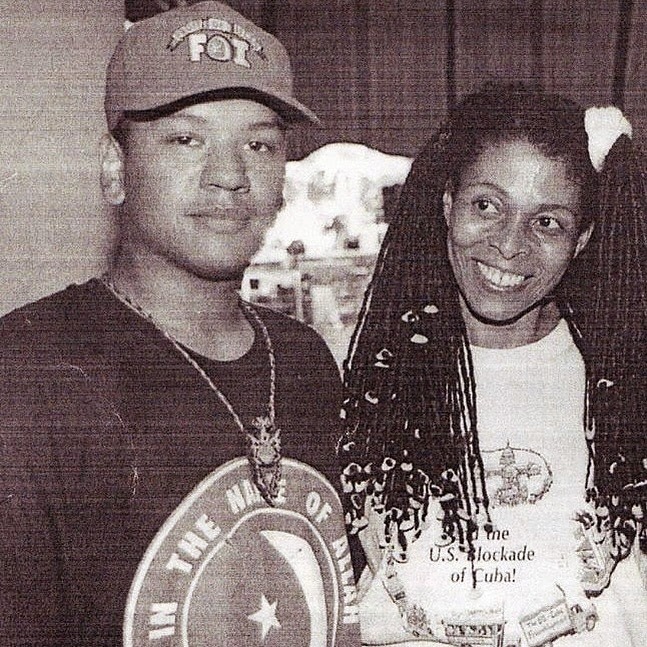
In 1995, Brother Abel Muhammad visited Cuba with a national youth group, hosted by Pastors for Peace, which carried medical and school supplies. Brother Abel Muhammad, who is of Mexican descent and is a Student Minister in the Nation of Islam, told The Final Call, “Upon our arrival, we were blessed, all the young people, to spend the whole day with Sister Assata.
She was as excited to meet us as we were to meet her. Which is, I think, what shocked me, we were 19, 20 year olds, nobody knows anything about. We were excited to be in Cuba and to be doing something that we thought was beneficial.”
“The United States paints her as this fiery revolutionary, which she definitely is. But that was rooted in her love. All I felt from her was just the deepest, most beautiful love and desire for things to be better for us. She wanted to make the world better for our generation and its generations to come than the one that she was born into.”
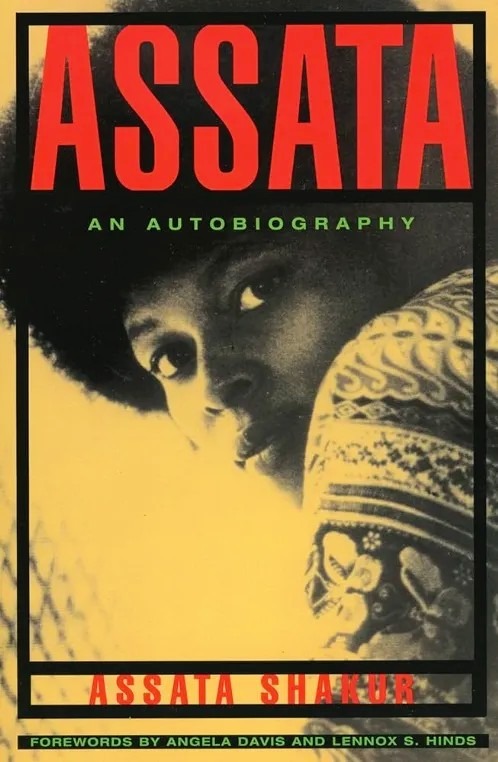
From Havana, Ms. Shakur’s voice resonated across generations. Her 1987 autobiography remains a touchstone for activists, scholars, and young readers. The book chronicles her life in the movement and reflections on freedom, justice, and dignity, becoming a blueprint for political education and a testament to the human spirit.
What was it like living in exile? What was it like to be away from family and friends? She told The Final Call: “Living in exile is hard. I miss my family and friends. I miss the culture, the music, how people talk, and their creativity. I miss the look of recognition Black women give each other, the understanding we express without saying a word.
“I adjusted by learning to understand what was going on in the world. The Cubans helped me to adjust. I learned joys in life by learning other cultures. It was a privilege to come here to a rich culture.
“I had a big fear that the Cubans would hate me when I arrived. They are very sophisticated. They were able to separate the people from America, like me, from the government.”
What message did she have for youth? What did she want people to know about her life?
“I don’t see myself as that different from sisters who struggle for social justice. In the ’60s it was easier to identify racism. There were signs that told you where you belonged. We had to struggle to eliminate apartheid in the South. Now we have to know the other forms that exist today.
“We had to learn that we’re beautiful. We had to relearn something forcefully taken from us. We had to learn about Black power. People have power if we unite. We learned the importance of coming together and being active. That fueled me,” she continued.
“I realized that I was connected to Africa. I wasn’t just a Colored girl. I was part of a whole world that wanted a better life. I’m part of a majority and not a minority. My life has been a life of growth. If you’re not growing, you’re not going to understand real love. If you’re not reaching out to help others then you’re shrinking. My life has been active. I’m not a spectator.
“We can’t afford to be spectators while our lives deteriorate. We have to truly love our people and work to make that love stronger,” she added.
Assata Shakur’s words, often quoted in movements for racial and social justice, remind people of the interconnected struggles of oppressed communities. In her autobiography, she writes: “What kind of justice is this?
Where the poor go to prison and the rich go free. Where witnesses are rented, bought, or bribed. Where people are tried not because of any criminal actions but because of their political beliefs.”
Those words continue to inspire protest chants, poetry, and murals worldwide. Artists, musicians, and writers—from Public Enemy, Common and Mos Def to Sonia Sanchez and Angela Davis—have lifted up Ms. Shakur’s name, ensuring that her story remains part of the cultural fabric of Black consciousness and resistance.
In 2013, the FBI placed then 65-year-old Assata Shakur on their most wanted list and increased the bounty for her to $2 million. The U.S. government repeatedly sought her extradition from Cuba, but she remained there, protected from deportation.
“This is a political act pushed by the state of New Jersey, by some members of Congress from Miami, and with the intent of putting pressure on the Cuban government and to inflame public opinion,” Ms. Shakur’s Attorney Lennox Hinds told Democracy Now in 2013. “There is no way to appeal someone being put on the terrorists list.”
Scholar and activist Angela Davis, who was also on the FBI’s 10 Most Wanted Fugitives list, told Democracy Now, “Assata is not a threat. … If anything, this is a vendetta.”
Assata Shakur’s life reminds us of the enduring struggle for justice, and of the ways in which individuals—no matter how embattled—can spark hope and imagination across generations. She is a symbol of resistance against oppression and her life story continues to spark important conversations about race, justice, and political activism in America.
“Assata Shakur has joined the pantheon of revolutionary ancestors, leaving a legacy of deep love for the people, resistance, and steadfastness in the fight for liberation. Her life was an indictment of White supremacy, capitalism and U.S. imperialism, and stands as a testament to the unbreakable will of oppressed people to resist,” wrote Claudia De La Cruz on Liberation News.
