



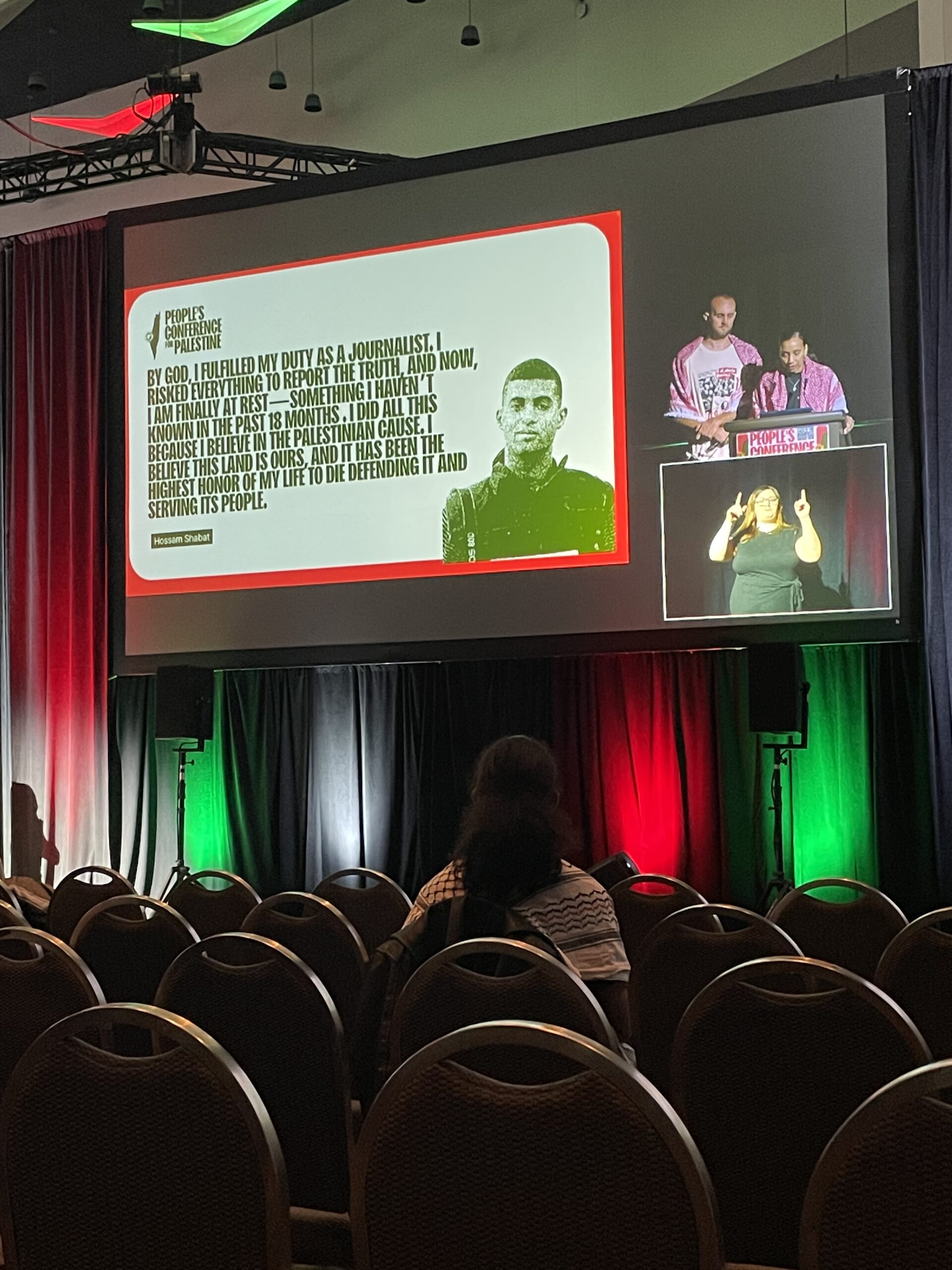

DETROIT—For Palestinians standing up against Israel’s atrocities in the Gaza Strip and the West Bank, culture, media and education are key aspects of resistance.
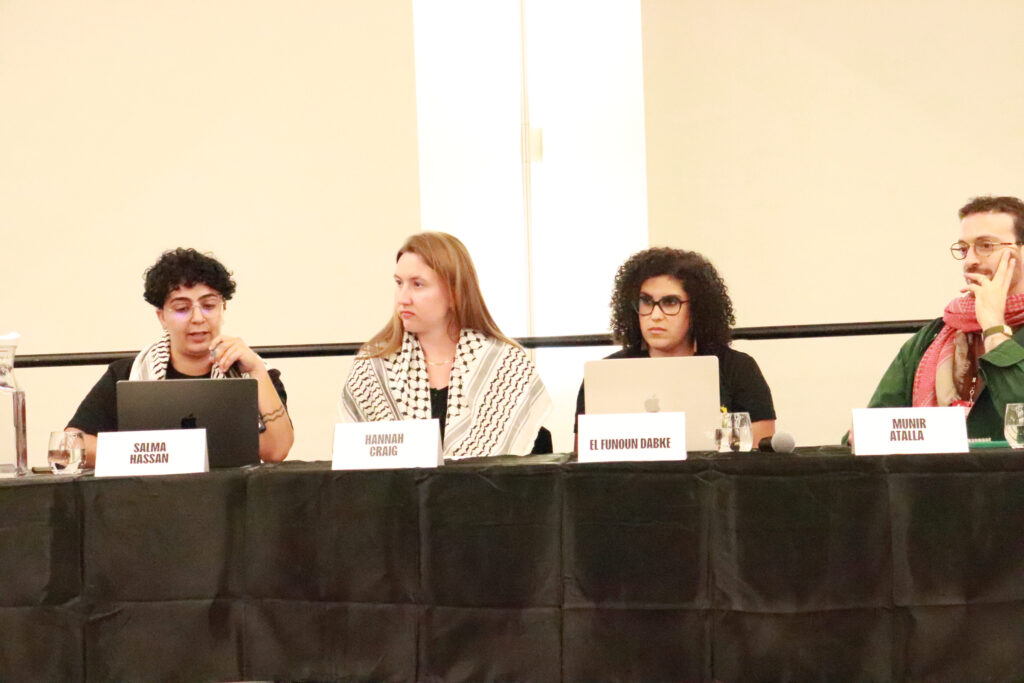
At the People’s Conference for Palestine held in Detroit, a workshop panel analyzed the role and power of Palestinian artists, writers, singers, musicians, film producers, performers and other cultural contributors.
“In the struggle for the liberation of our land, our culture is essential. It embodies our Palestinian identity, narrative and resistance to decades of colonization and ethnic cleansing,” workshop moderator Salma Hassan, an organizer with the Palestinian Youth Movement, said.
“Storytelling, song, dance and imagery have become weapons in their own right. They have allowed Palestinians to express, popularize and unite our own aspirations and political realities.”
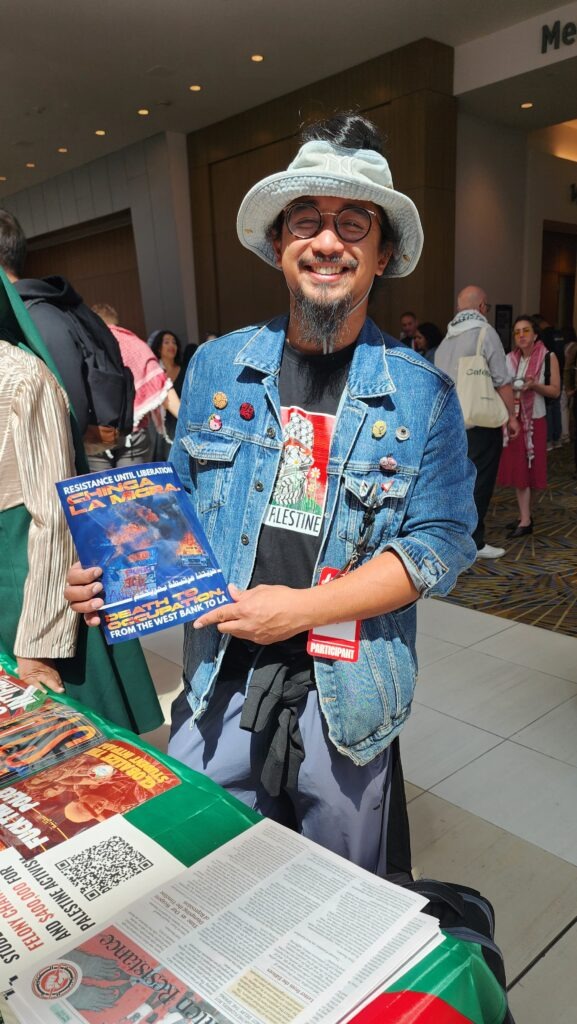
She accused Israel of targeting and assassinating Palestinian cultural workers, including writers, journalists, teachers and musicians. “Our enemy knows the importance of cultural resistance,” she said.
“Our enemy wields culture as a tool to enhance their ethnic cleansing and colonialism.” She described participating in and preserving Palestinian culture as an active form of defiance against colonization and erasure.
Other speakers discussed the way culture has been used as a weapon by the ruling class, advised culture creators, artists and contributors to remain consistent, be independent, not rely on foreign funding and to be at the cutting edge of cultural production with the goal of being revolutionary.
“It is our responsibility, as people who are in the movement, as people who are artists in the movement, as cultural workers in the movement, to take our work, to take culture even more seriously than they do.
Because we have to use and see our work, our cultural production, as inherently tied to our work as organizers,” Hannah Craig of The People’s Forum and Artists Against Apartheid, said.
She commended artists who are using their platforms to stand for Gaza. “I want to just note the ways that artists are speaking out from their stages, and then there’s also ways that artists are creating new work.
They’re creating new songs, they’re creating new plays and films and dances that are speaking to and building this revolutionary culture,” she said.
She shared that artists on the ground in Palestine have been sharing their work and documenting the genocide, and artists have been creating artwork as part of mass demonstrations in the U.S.
“We have a lot to combat and a lot that we’re going up against, but we have to bring the seriousness and the incredible creativity to bring people together and into this movement,” she said.
Role of media
The People’s Conference for Palestine, held Aug. 29-31, occurred two weeks after Israel targeted and assassinated journalist Anas al-Sharif and his colleagues and just a few days after five more journalists were killed in an Israeli strike on Nasser Hospital in Khan Younis on Aug. 25.
“In Gaza being a journalist is not being a journalist literally because journalism in Gaza is genocide documentation. It’s not journalism,” Palestinian journalist Abubaker Abed said during the conference’s keynote session. “I lost many members of my family, my extended family. I also lost my very dearest friend and my neighbors, and I survived many Israeli attacks.”
He shared a story of going live on TV moments after seeing his cousin killed. “We’re not those so-called … journalists who are trying to heroize themselves all the time. … We’re not those people.
We’ll never, ever accept selling our souls for a few dollars, a few euros,” he said, critiquing Western media outlets he accused of being “cheap sellouts” that have played a role in keeping the genocidal war going.
Mr. Abed left Gaza four months ago after facing the same threats Anas al-Sharif faced. He noted that since the death of Mr. Sharif, the news has been suppressed. While in Gaza, he and other journalists merely wanted to tell the truth, no matter the cost, he explained.
“We were not protected. We were working in tinted makeshift workplaces and spaces. And we never had rest. We never had rest at all. We just wanted to sacrifice in a way, because everyone, every single one in Gaza is a resistance fighter in their own way,” he said.
Although in desperate need of money, he declined an offer to work for a major UK news outlet after being asked to remove some of his social media posts on his stance regarding Gaza. For him, true journalism is not working in the most prominent media outlets in the world, but “it’s about exploring the essence of collective humanity in this world.”
“It’s about transcribing the feelings of people and adding and mixing the pain into your pain and carrying that wherever you go,” he said.
Attacks on education
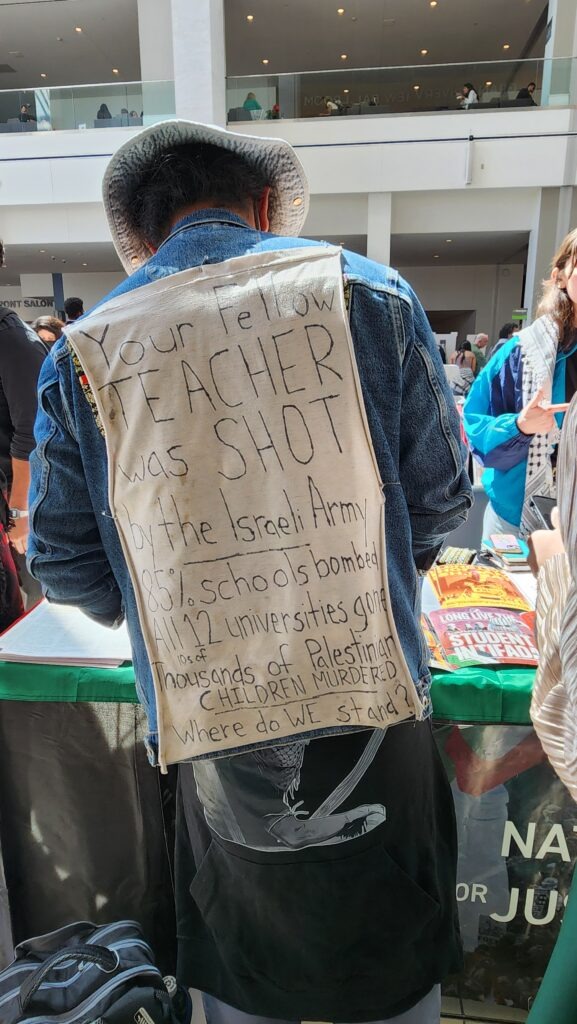
Daniel Santiago, a high school English teacher in Jersey City, New Jersey, wanted to find a way to support Gaza. He went to the West Bank in 2024 to serve as a buffer between Israeli army settlers and the Palestinians,
With the hopes that the army would not want to shoot an American. But during a demonstration in Beita, a town in the West Bank, protesting the continued annexation of Palestinian lands, the Israeli army fired tear gas and live rounds.
“While we were running away, and I made sure everyone was in front of me and safe, that’s when I heard a loud bang. I thought a tear gas canister hit me because I was still limping away.
And then an anti-Zionist Jewish person came, helped me out, and then the Palestinians lifted me up to safety. Then I saw that I was shot,” Mr. Santiago, who attended the conference, said to The Final Call.
While he was in the West Bank, his favorite memory was going to the playground, as Palestinian children could only go with the presence of international volunteers due to the threat of violence and death.
“That was a beautiful memory, being able to sing and dance with them, even though I was in crutches, and just seeing the happiness and joy on their faces to be able to play freely,” he said. In his work, he tries to highlight the damage to Palestinian educational institutions.
The United Nations Office for the Coordination of Humanitarian Affairs reported that 97% of educational facilities in Gaza are damaged and 91% require major rehabilitation or complete reconstruction to become functional again, according to an August news article by Al Jazeera.
“Every single day, a whole classroom of children are erased from this world,” Mr. Santiago said.
During a conference session on Gaza’s resistance, Palestinian poet Mosab Abu Toha spoke on the destruction of schools and universities and the effects the war has had on education and cultural life in Gaza.
He shared that hundreds of thousands of students have had no access to education for the past two years and that teachers and volunteers, including some of his friends and family, have been opening tents to attempt to educate the young generation in Gaza.
Yet despite everything, Palestinians still maintain a high national literacy rate, he said. “It is because education remains one of the most essential and powerful ways to resist occupation. It is how Palestinians hold on to their homeland, and it is how they invite others to visualize it based on our own experiences.”
He urged attendees to support those offering classes to students in Gaza and initiatives that help educate children.
Mr. Santiago described the children he met in Gaza as very bright.
“They were trying their best to get an education in the midst of occupation, whether it’s the Israeli army coming in harassing Palestinians or settlers attacking schools.
They know that education is the way for them to understand their rights and dignity on their land,” he said. “That’s why I believe Israel is targeting educational institutions, because that’s the heart of everything.”
