










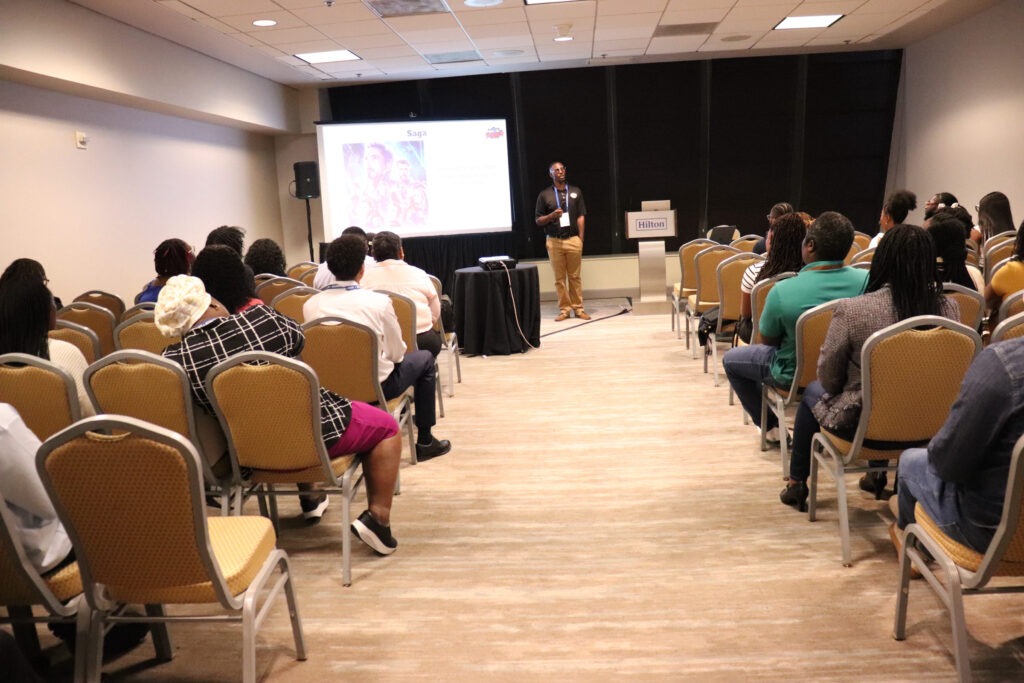
ATLANTA—Students and professionals met at the Hilton Atlanta for the National Organization for the Professional Advancement of Black Chemists and Chemical Engineers’ (NOBCChE) 52nd annual conference on Sept. 21-25.
Approximately 700 people registered for the conference, including nearly 500 students from colleges and universities across the nation.
“There’s a lot going on in the world right now, and so our focus is to make sure that everyone feels empowered with what we’re experiencing, but also know that this community is here to support them as they develop and they grow,” Dr. Tyrslai Williams-Carter, the organization’s president-elect, said to The Final Call.
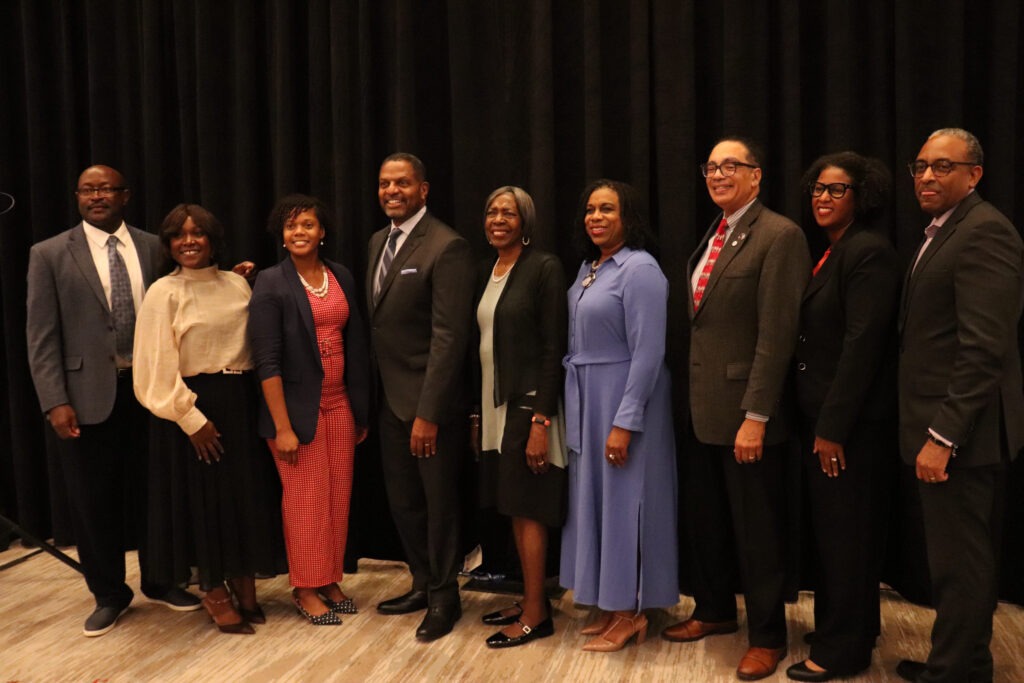
The conference’s theme was “Still I Thrive.”
Sessions covered student and professional development, graduation and graduate school, early career, leadership development, communication methods, business, networking, and the Black scientist experience.
Dr. Williams-Carter described the conference as a place where Black students and professionals can go for support and to gather in a space to understand that they are not alone.
“This is a place where you build up your energy to go out and deal with: the science is not going right; the colleagues that may be working your nerves or not being collegial. You find your space. You find the energy.
You have professional development. You have a good time,” she said. “You also hear top, cutting-edge science that’s going on around the world. And so, you’re refined and ready to go on about your business.”
During one session, attendees learned how to utilize artificial intelligence programs, while in other sessions, they were guided on establishing a professional reputation and safeguarding themselves in academia.
The conference attracted international students who are studying at colleges and universities in the U.S. One panel discussed the international student experience. They covered the challenges they go through, the impact of cultural differences, navigating isolation, and maintaining cultural identity.
“You don’t have to hide yourself for any reason,” panelist Islamiyat Ojelade, a fourth-year doctoral candidate in chemistry at Florida State University, said. “Be yourself always.”

Originally from Nigeria, Dr. Mubarak Ayinla recently graduated with a doctoral degree in organic chemistry from the University of Massachusetts Lowell and has been conducting postdoctoral research in materials science. He told The Final Call that when he misses home, the conference makes him feel like, “This is home.”
He said he has received surprise reactions from people about his attending a Black chemist conference.
“‘Oh wow, Black chemists and chemical engineers. Why Black? Why is this not for everybody?’ And I’m like, well, I’ve been to conferences that is for everybody and I’ve been to conferences that is not for everybody, and I’ve seen differences.
And I feel like sometimes you feel a deeper sense of connection,” he said. “I don’t feel like this conference, this organization, gets as much publicity as it deserves. I promise you that. If people talk more about this out there … I think people would understand the need for this.”
Dr. Clarice Phelps, the first Black woman to help discover a new element on the periodic table, delivered a lecture at the conference on her journey and research. Her words and experience stood out to Dr. Ayinla.
“The fact that she’s literally the first African American woman who has the title of being involved in the discovery of an element in the periodic table. That’s a big thing,” he said. “For every kid, the periodic table is like life for them. So, for you to know that somebody who looks like you has done this, you definitely feel like there is a chance to soar that high.”

Technical science sessions covered biochemistry, organic chemistry, inorganic chemistry, nanochemistry, medicinal, chemical engineering, analytical chemistry, environmental and green chemistry, biophysical chemistry, chemical education, computational chemistry and physical chemistry.
One interactive workshop addressed forever chemicals, which are substances that persist in the environment and are linked to a range of health issues, and held small group discussions on what chemists and chemical engineers can do to mitigate plastic toxicity and other toxic chemicals. Other sessions highlighted cutting-edge chemistry for medicinal and therapeutic purposes.
In addition to the specific branches of chemistry, conference attendees learned how to communicate their research through writing and presentations and how to craft personal statements.
During a discussion on “making science clear,” panelists Sydney Floryanzia, a doctoral candidate at the University of Washington, Sierra Sterling, a doctoral candidate at Emory University and Dr. Brea Manuel, a postdoctoral scientist at Howard Hughes Medical Institute, shared tips on how to ensure an audience can understand the science.
Tips included using drawings and visuals, using real-life examples, metaphors and analogies, implementing storytelling and creating a story arc and balancing the amount of jargon to use depending on the audience.
Several workshops also focused on business and entrepreneurship, turning science into a brand, the formula for business growth and technical entrepreneurship.
Many Black chemists and chemical engineers are in professions that are overwhelmingly White. They may be the only or one of the few Black people in their graduate schools and at their companies.
In 2021, only 4.4 % of the chemistry workforce was Black, according to an article by Chemical & Engineering News. The NOBCChE conference addressed the challenges that Black chemists and chemical engineers may encounter and the experiences they may face in a predominantly White industry.
Those sessions included self-advocacy, burnout, keeping it moving through setbacks and struggles, life as a Black scientist at a national lab, afro biotechnology, diversity in cosmetic science and thriving without code-switching.
In one workshop, presenter Dr. Ryan Johnson, assistant professor of chemistry at Langston University, encouraged participants to believe in themselves, respect themselves, acknowledge their journey and exceed their own expectations. He also presented a session on burnout, advising attendees on the importance of saying no, setting boundaries and pacing themselves.
Cosmetic chemist Lo Williams-Thomas painted a picture for her workshop audience linking some Black beauty routines to science.
“Our grandmothers and our mothers, they were scientists long before they had titles, mixing oils in mason jars.” She walked participants through some of the history of Black haircare scientists such as Madam C.J. Walker and the Bronner Brothers.
Panelists discussed the importance of overcoming the fear of rejection and being authentic.
“The biggest thing that our conference addresses is mindset,” Dr. Williams-Carter said. “We’re all capable of being great and doing innovative things. The mindset can keep you back.
And when I say that, you can have either a fixed mindset or a growth mindset. And I think what I love to see happen at this conference is that growth mindset be built.”
The conference offered many opportunities for attendees, including the chance for undergraduate and graduate students to present their research posters.
Chanez Symister, director of research at a California-based biosciences company first attended the conference as a graduate student in a program with only two Black students. This year, she was part of a team working with students on their poster and oral presentations. She described NOBCChE as a student-focused conference.
“A lot of the big conferences, everything is expected to be fully polished and all the way there. For NOBCChE, you give the students the opportunity to start from the very beginning,” she said to The Final Call.
“Before the conference, we started off with a pre-conference session, showing them from the very beginning how you open the PowerPoint, what size, how you need to change the sizes, what types of fonts are used for professional presentations.”
“It’s to help them build that confidence, that scientific backbone, so they can feel confident. If you can feel confident speaking to your peers and people who look like you, you get more confident going out into the world,” she added.
NOBCChE and its sponsors awarded 18 graduate and undergraduate students for outstanding poster presentations
The conference hosted a competition called, “Three Minute Rundown,” where students had three minutes to talk about and present on their research.
The student researchers tackled environmentally safe x-ray technology, understanding protein structure to treat diseases, the removal of forever chemicals, renewable energy, breaking down plastic, preventing red blood cell damage, gold’s role in nanotechnology and how to 3D print organs, among other topics. Three students placed first, second and third.
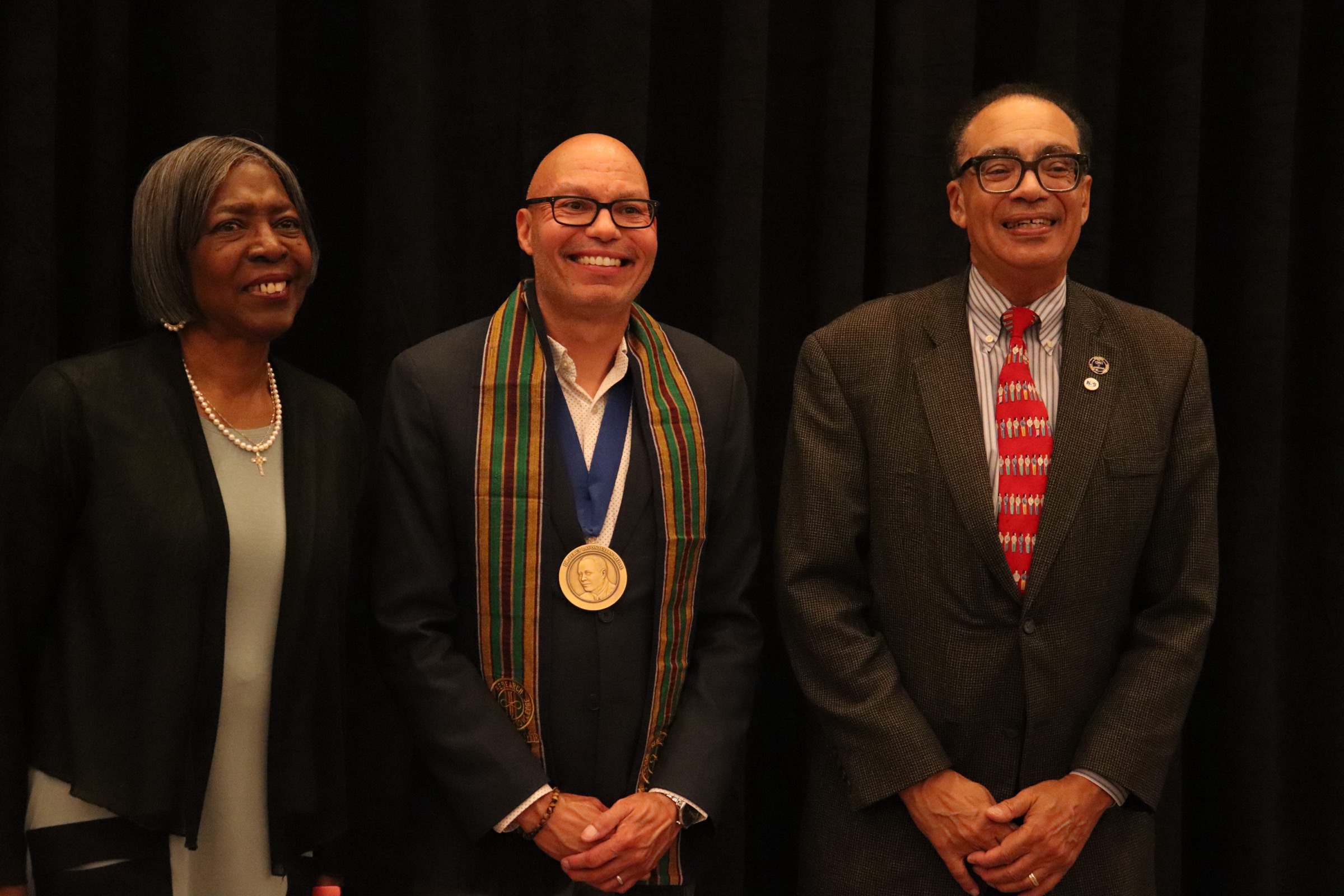
The conference ended with an awards reception, presentation and celebration. Awards included regional rising star awards, awards for an innovation competition, four awards named after NOBCChE founders and past presidents, two awards named after renowned Black chemists, a lifetime achievement award, and presidential awards.
“I want everyone to know that Black excellence is important and that we are Black excellence, no matter where you are and what level you’re in, point blank period,” Dr. Williams-Carter said.
