





DETROIT—As Israel continues its genocidal plans in the Gaza Strip and the West Bank, colleges and universities in the U.S. are still cracking down on students who are against the war in Gaza.
The University of California Berkeley shared information on more than 150 faculty members and students with the U.S. government to aid in a federal investigation looking into complaints of anti-Semitic incidents on college campuses.
An anonymous graduate student told local newspaper Berkeleyside that “the names targeted seem to be Muslim and Arab individuals who expressed support for Palestine,” according to Al Jazeera.
Throughout August and September, student protesters have received noise complaints, have had prolonged hearings from their demonstrations in 2024, and have pursued lawsuits against their universities over free speech violations.
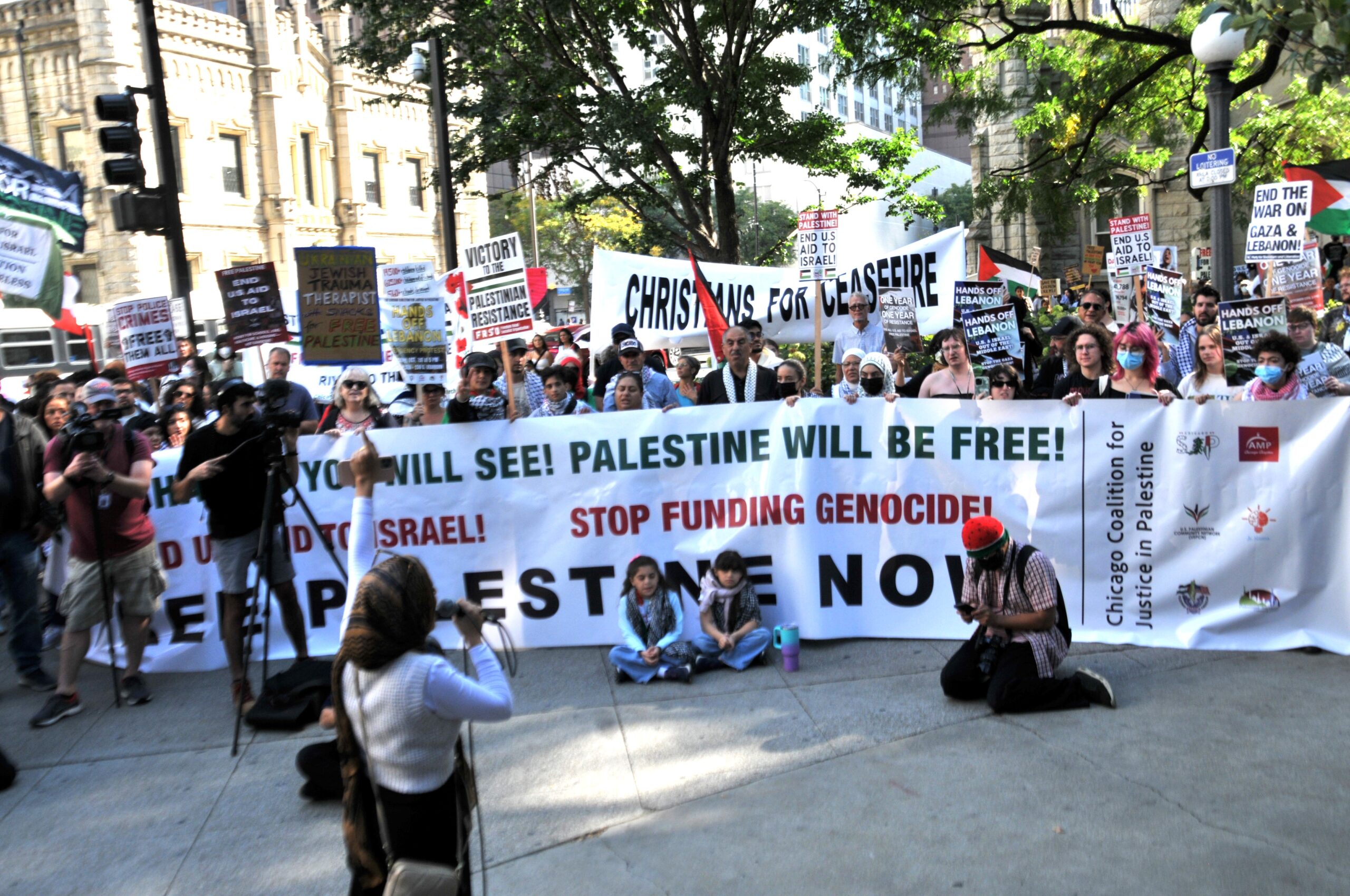
Despite government threats, sanctions, hearings and accusations of anti-Semitism, student organizers have still been mobilizing. On Sept. 4, Temple University students in Philadelphia demanded that the university divest from pro-Israel companies and urged the school’s president to protect immigrant students.
On Sept. 10, students at San José State University in California held a protest at their school’s career fair due to the presence of Lockheed Martin, a weapons manufacturer involved in the Israeli weapons supply chain.
On Sept. 11, University of Louisville students in Kentucky also protested outside a school career fair and called attention to the university’s partnerships with pro-Israel companies that were present, including GE Aerospace, Raytheon, Gulfstream Aerospace and Toyota, according to The Louisville Cardinal, a student newspaper.
The publication noted that GE Aerospace supplies helicopter engines and gas turbine technology; Raytheon provides guided missiles, F-16 fighter jet components and Iron Dome interceptors; Gulfstream delivers G550 jets to the Israeli Air Force and Toyota vehicle platforms have been adapted into armored vehicles used by Israeli security forces.
The student movement was an essential topic covered at the People’s Conference for Palestine in Detroit on Aug. 29-31.
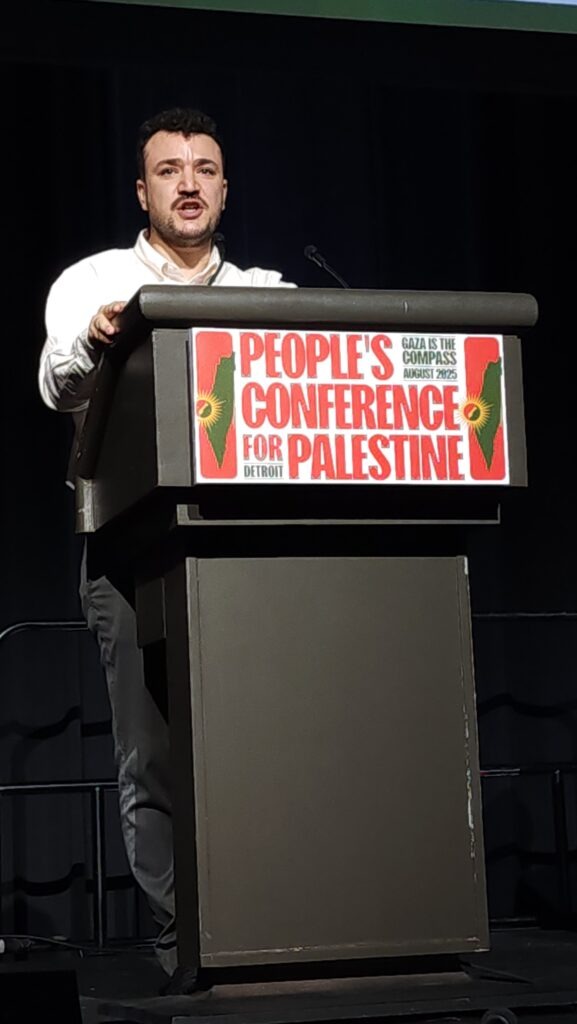
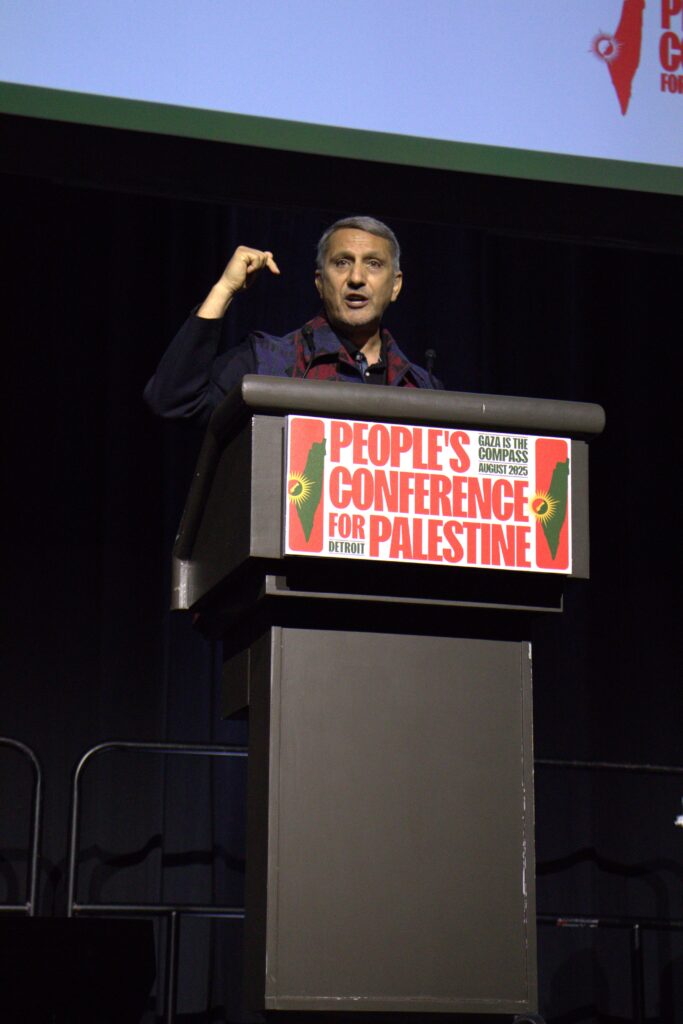
During keynote remarks, Palestinian scholar and professor Dr. Hatem Bazian shared stories of students who could not focus on their schoolwork due to losing family members in Gaza.
“Thank you to the student movement. Thank you for your parents. Thank you for putting up with the multiple layers of the complicity and co-production of genocide. You are on the correct side of history,” he said.
“The students in the free speech movement, in the anti-Vietnam war, in the anti-apartheid solidarity movement and Central American solidarity movement, the students were demonized, arrested, harassed, prevented from—some—completing their degrees.
History remembered them, and history books, cafes, murals, art exhibits remember them, but not the chancellors, the administrators, the chairmen, the police, those who arrested them; they are in the dustpan of history.”
He advised students to not allow anyone on the university campus to say talking about Gaza “makes them” feel uncomfortable. “Genocide should make you feel uncomfortable,” he said.
“The whole structure of campus climate was structured to erase Palestine and Palestinians from the campus. Gaza has to be narrated on the campus in the middle of a genocide,” said Dr. Bazian.
He urged educators on campus and in the community to include Gaza in their teaching, describing Gaza as an “intellectual mirror for higher education” and he argued that every university should have a Palestine studies program and an Islamophobia studies program.
“Don’t accept the university to use symbolic inclusion,” he said, giving the example of universities that provide halal food or wudu stations for Muslim students to wash up for prayer, but still remain silent on the genocide and prevent students from speaking out.
“Don’t allow the university’s responsibility to provide you halal food or a place for wudu and prayer to be substituted for you to be silent on genocide,” he added.
Mahmoud Khalil, the student activist from Columbia University who was detained by U.S. Immigration and Customs Enforcement (ICE) from March 8 to June 20, also shared keynote remarks. He described the student movement as “the moral compass of this country.”
“When I got detained, I had few options. One, to remain silent and just wish that the system may vindicate me. Another option is to focus on my case, to focus on my family and appeal to the people’s emotions.
And another is to focus and to connect my case to the larger case of oppression against Palestinians,” he said. “I chose the latter. I chose that because I knew that I was targeted because I am Palestinian.”
He spoke of the U.S. government’s plans to intimidate and silence, but said that the Palestinian liberation movement is winning.
“The fact that I was targeted by the highest officials and levels of this country means that we are winning, means that we are succeeding in shifting the mainstream in this country for Palestine to be the mainstream. Also, it shows that our movement threatens the status quo, that it punctures the Zionist narrative and the propaganda that Israel depends on,” Mr. Khalil said.
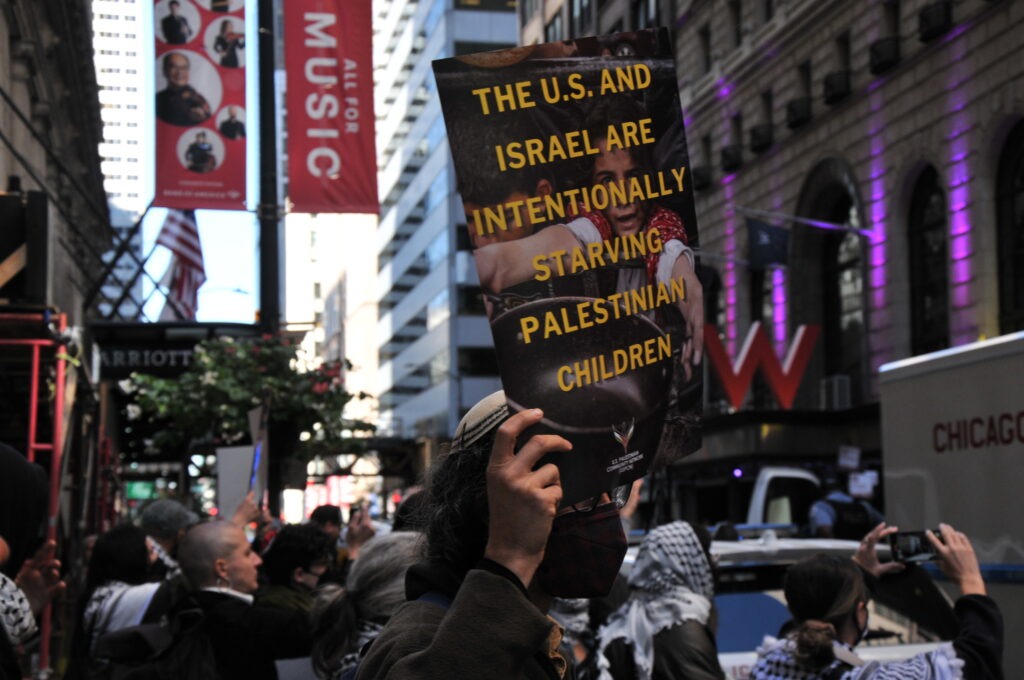
Conference organizers held a session on the student movement in the wake of the 2024 encampments. The panel of college and high school organizers discussed the global spread of encampments, the repression students faced and strategies to sustain the movement.
“In April of 2024, students all over the world and the country launched encampments that took everyone by storm. What began as a small encampment at Columbia quickly turned into a chain series of escalations on college campuses throughout North American and European campuses with a clear goal.
A clear demand, and that is to end our institutions’ support for the brutal, ongoing genocide of Palestinians in Gaza, to confront our administrations with a moral crisis and to prove to students and our society at large just how far entrenched our institutions of higher education are in protecting their financial interests as well as the status quo politics and agenda of the empire,” panel moderator Roua Daas, a graduate student at Pennsylvania State University and a Palestinian Youth Movement organizer, said.
The student movement for Palestine quickly rose into a global movement, with students from Australia to Cuba and students at Birzeit University in the West Bank and at American University of Beirut in Lebanon joining demonstrations.
Recently, in August, a student leader at Aligarh Muslim University in Aligarh, India, and several other students were arrested for showing solidarity with Palestinians by wearing keffiyehs and raising the Palestinian flag.
Similar to reports on U.S. colleges and universities surveilling and sharing information on students and staff, an investigation into the University of Melbourne in Australia, released on Aug. 20, found that school officials used the Wi-Fi network to surveil students and staff who held a pro-Palestine protest in May 2024.
Since the 2024 encampments, “We’ve seen students take up tactics such as hunger strikes, putting their bodies and lives on the line for the people of Gaza. And throughout this all, we have watched students get arrested, brutalized, suspended and charged with false criminal allegations. We’ve watched students get kidnapped off the streets and be held in ICE detention.
We’ve watched them get their visas revoked,” Ms. Daas said. “It’s not only been the university and school systems that have asserted this repression, but the state itself that has poured copious amounts of time energy and money into repressing the student movement. Right here in Michigan, the FBI targeted and raided students for daring to stand against a genocide.”
Sueda Polat, a former graduate student at Columbia University, shared how at the end of the student encampments, there was an opportunity for colleges and universities to change, but that opportunity has now diminished.
“Instead, what we have are changing campus policies such as so-called designated protest areas, security officials that collude with the NYPD that have the ability to arrest you, increasing surveillance mechanisms through Wi-Fi systems or the implementation of new cameras and essentially a commitment to ensuring that the word ‘Gaza’ or ‘Palestine’ is not uttered anywhere near our campuses,” she said.
She advised students to build their own networks for aid rather than relying on colleges and universities for things such as housing and health care.
“Have connections with labor unions which can provide access to mutual aid, which can remediate you if you’ve lost access to campus housing or jobs or things like this. The more that we depend on one another, the less we have to depend on the institution,” she said.
The panel also discussed ways to grow the student movement and made one thing clear: the student movement for Palestine will not stop.
“The students have said that we will do whatever it takes to expose the truth,” Ms. Daas said. “As Israel continues to target journalists, activists and anyone that dares to expose Zionism’s brutality, students will continue to rise and again and again, we will continue to reiterate that Gaza is our compass.”
