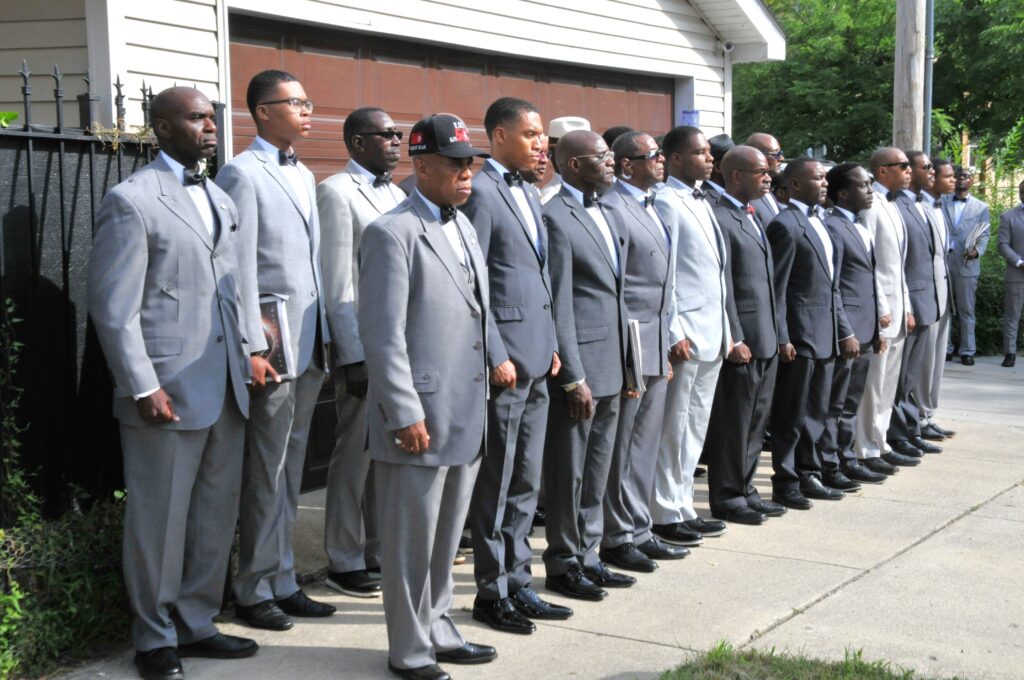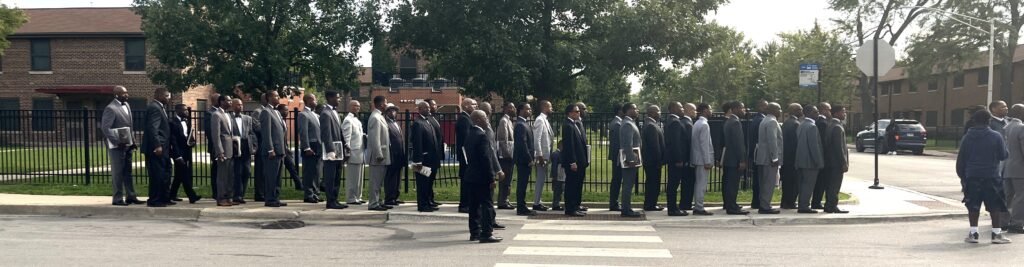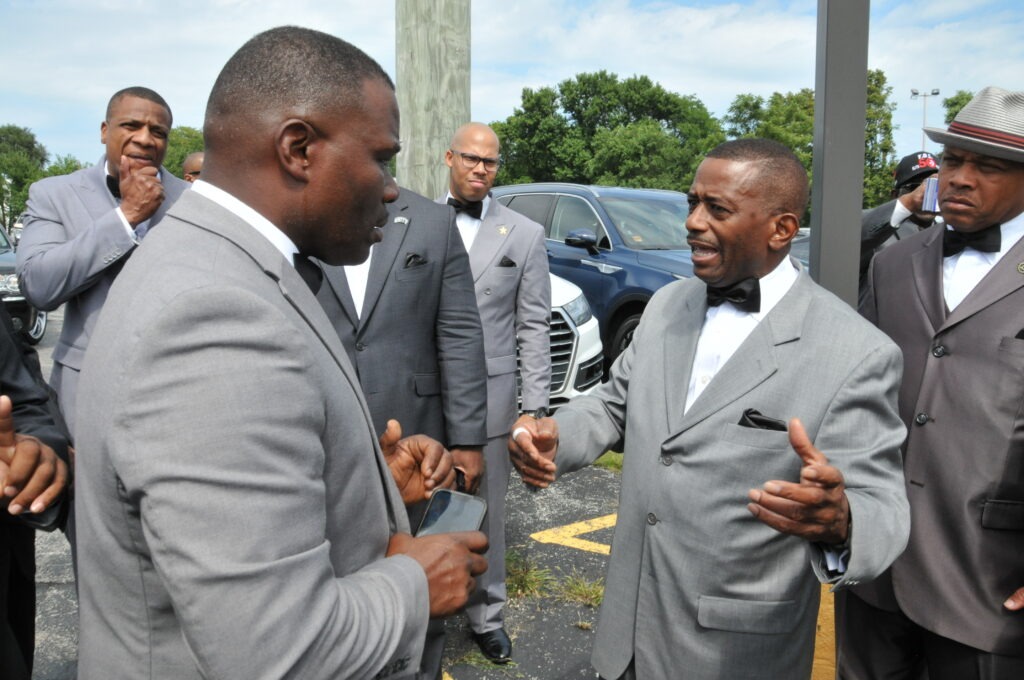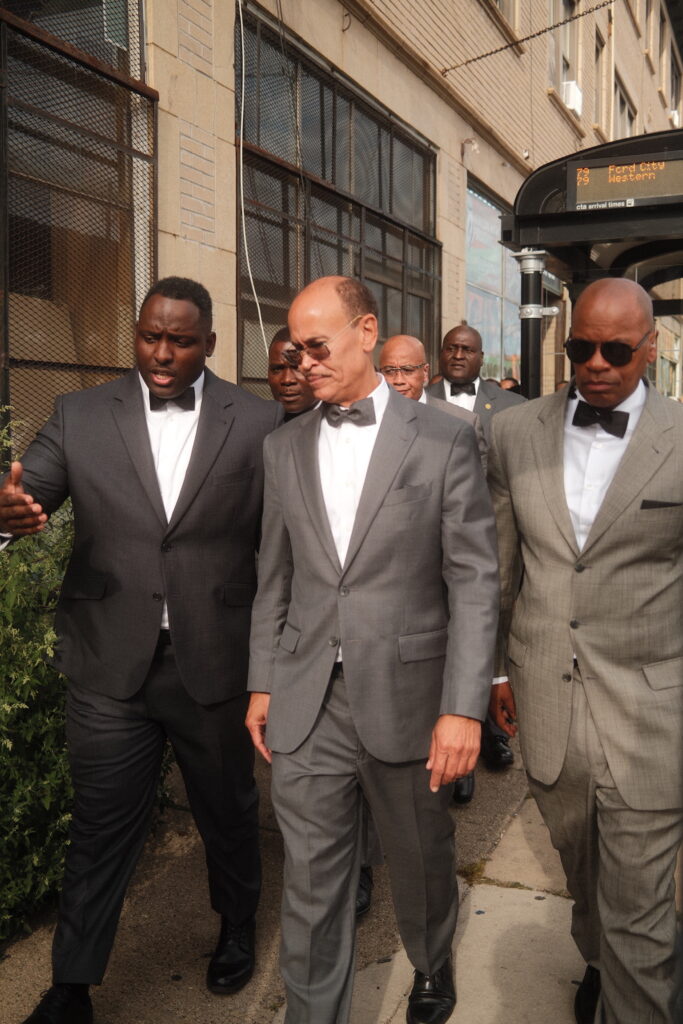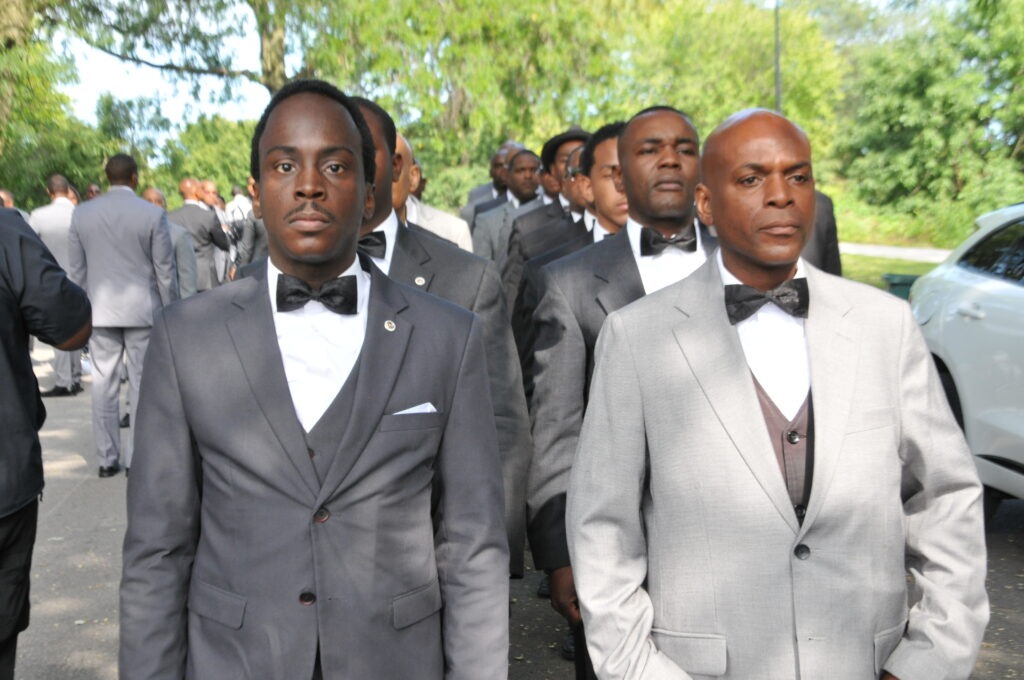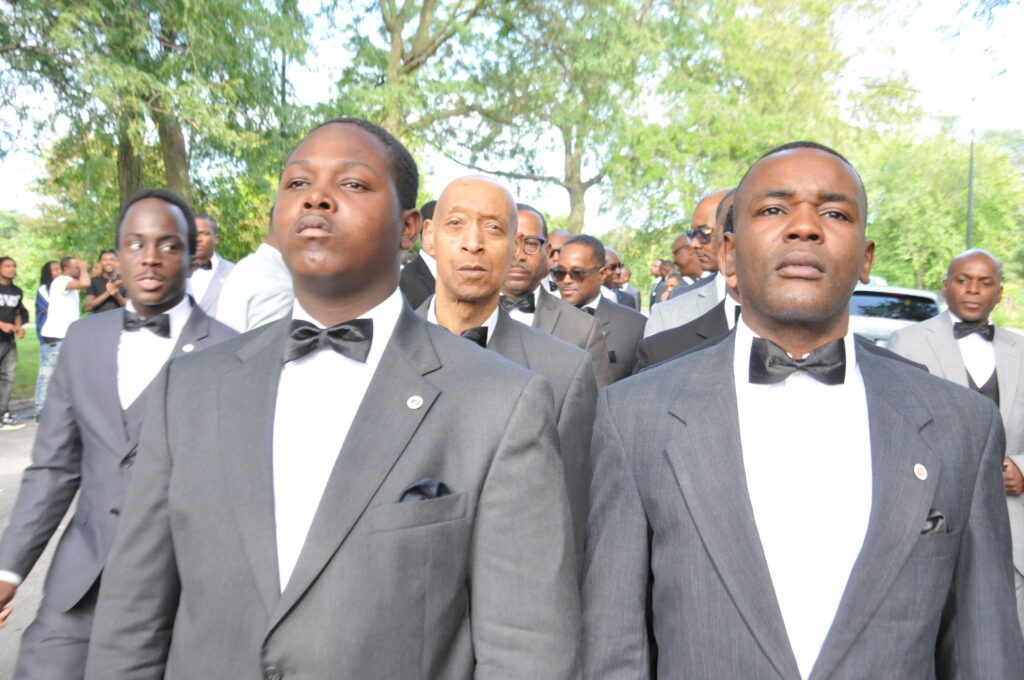







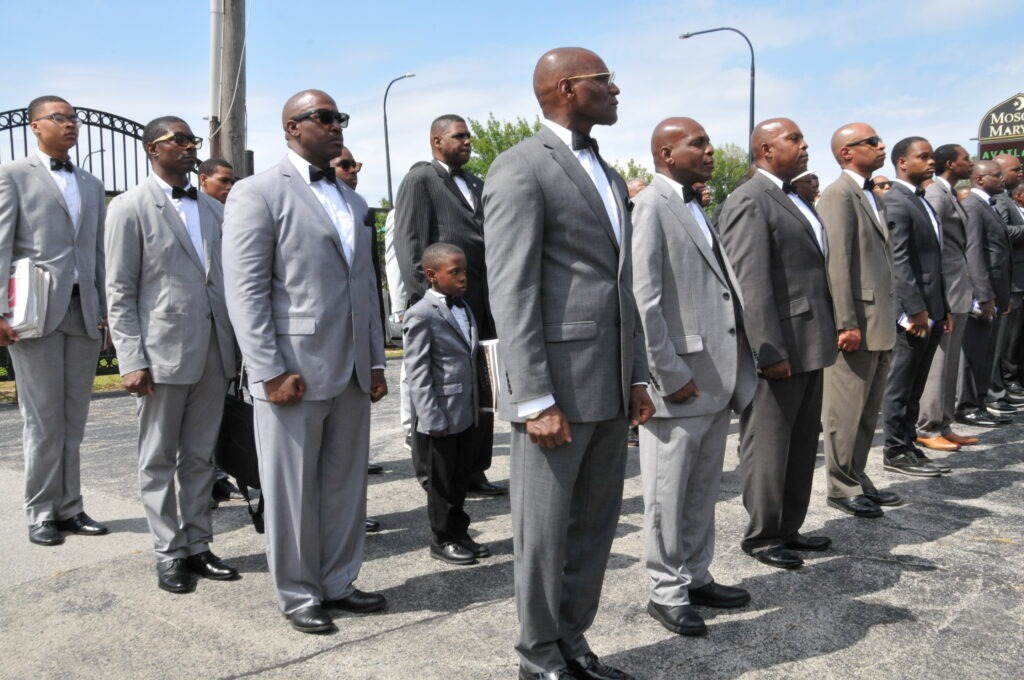
CHICAGO—With crisp gray suits, black bow ties, and unmatched discipline, more than 200 Black men took to the streets of Chicago on Saturday, August 30—not to protest, but to serve.
Gathered at the Nation of Islam’s National Center at Mosque Maryam, these men, most of them Fruit of Islam (F.O.I.), from Chicago, but some from Baltimore, Detroit and other cities, for a continuation of a spiritual and community-centered outreach effort rooted in the Mission of the Most Honorable Elijah Muhammad and the Honorable Minister Louis Farrakhan.
Chicago was the most recent stop the F.O.I. have visited in 2025.
Their goal was profoundly simple: to walk into the heart of some of Chicago’s most long-ignored neighborhoods and offer love, encouragement, and a reminder that Black lives are valued, respected, and worthy of protection.
Before embarking on the journey through neighborhoods including Altgeld Gardens-Phillip Murray Homes—known as “The Gardens” and regarded as the birthplace of the environmental justice movement—South Shore on the Southeast Side and on the West Side on Adams and Keeler.
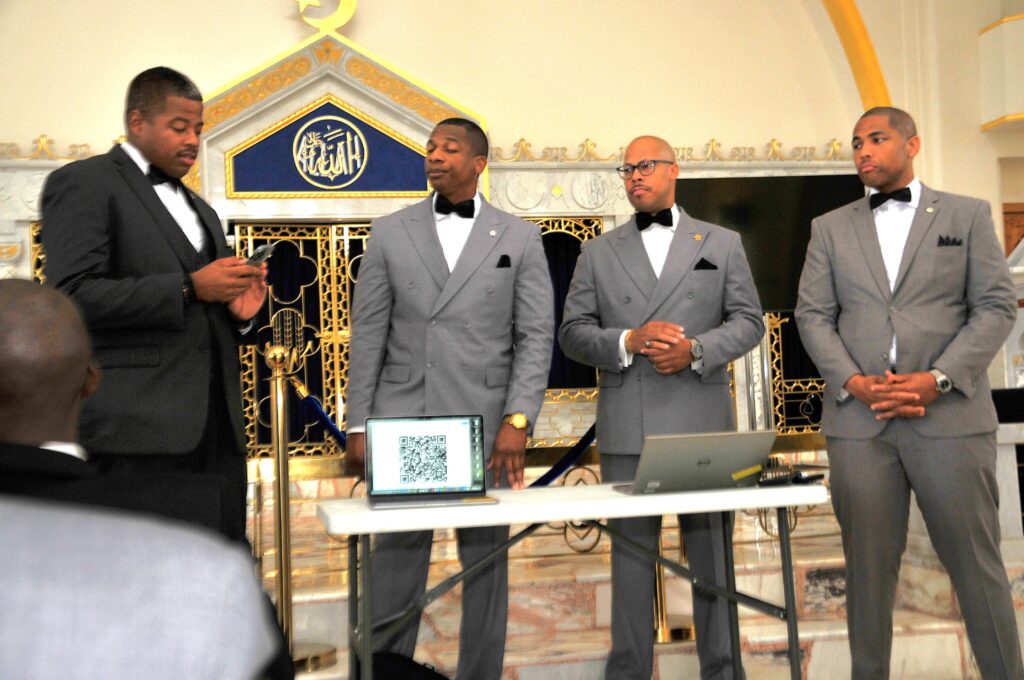
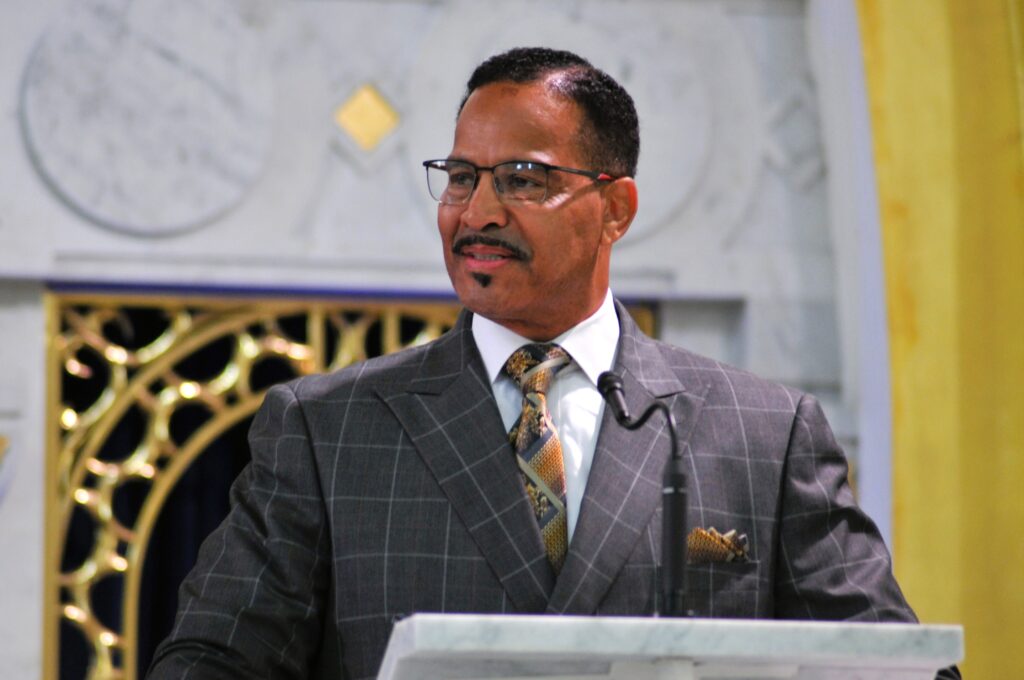
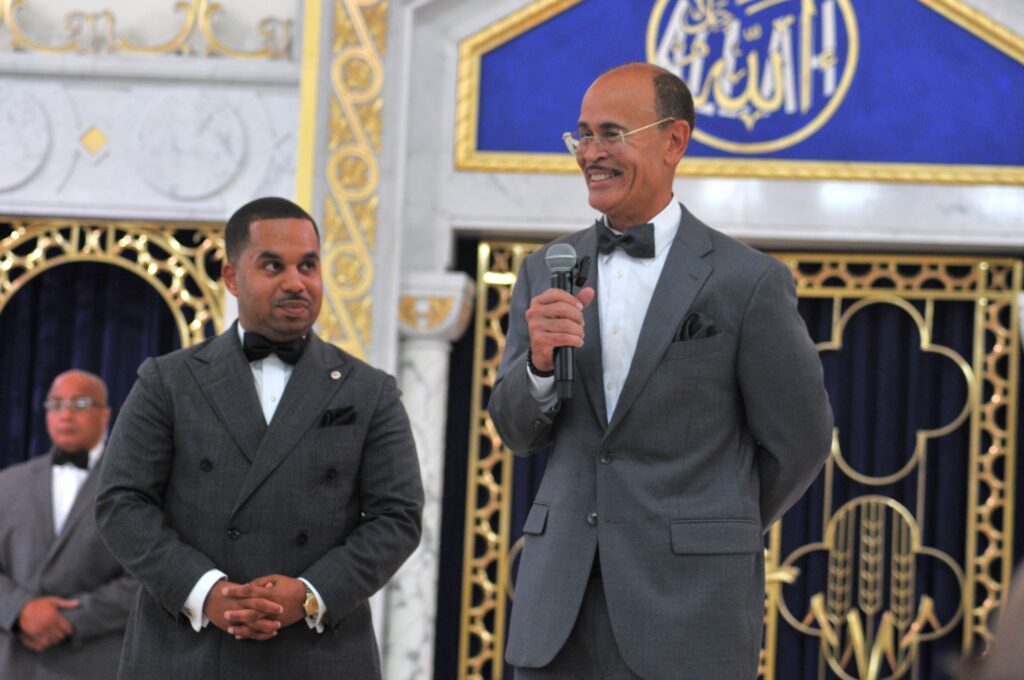
And California and Flournoy, the men gathered at noon at Mosque Maryam to receive words of inspiration from Student Minister Ishmael Muhammad, National Assistant to Minister Farrakhan and Student Supreme Captain Mustapha Farrakhan, who addressed the F.O.I. with clarity and conviction.
Afterward, as men poured out of the mosque into the parking lot and into vehicles with energy and focus, the magnitude of the moment could be felt in the afternoon air.
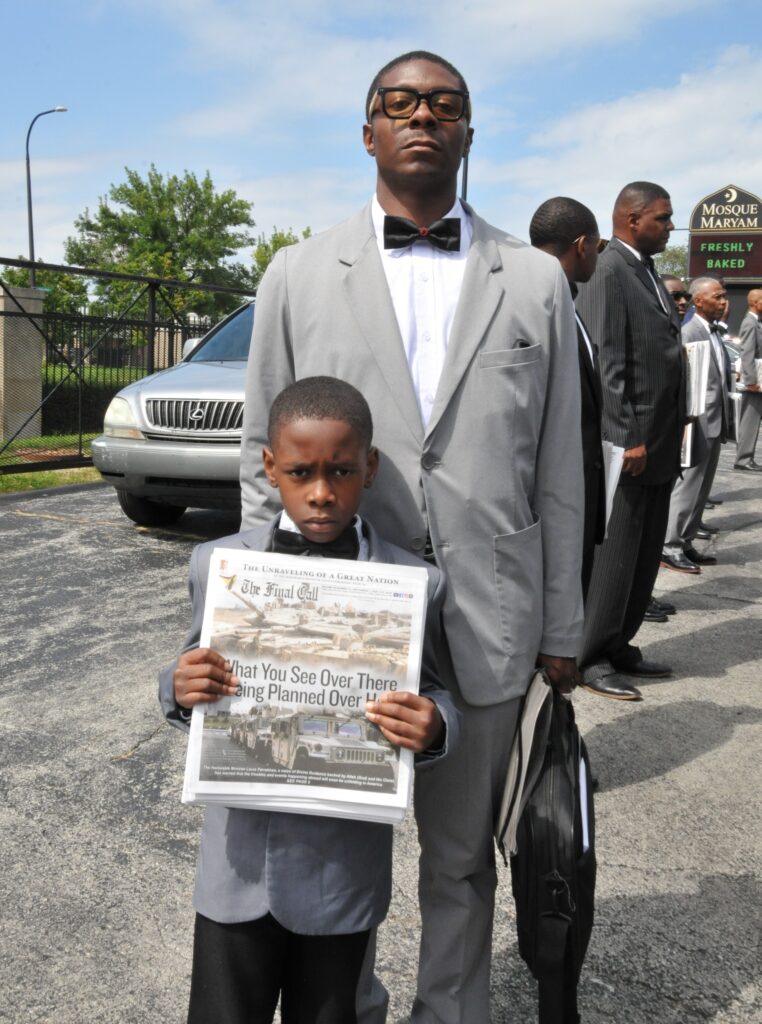
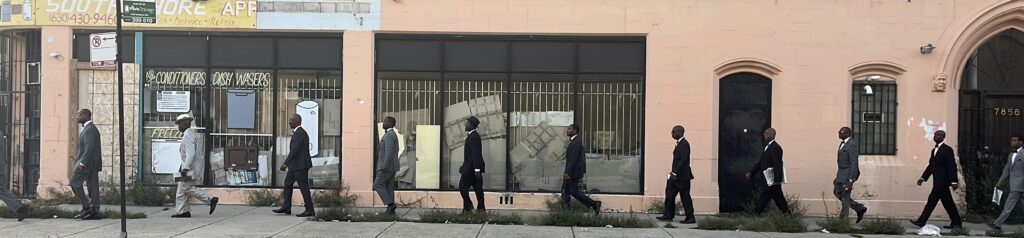
Led by Student Minister Ishmael, Student Assistant Supreme Captain Abdul Azziz Muhammad and Student Central Region F.O.I. Captain Dwyane Muhammad, the brothers walked in unity down streets and knocked on doors that are often ignored and abandoned by others.
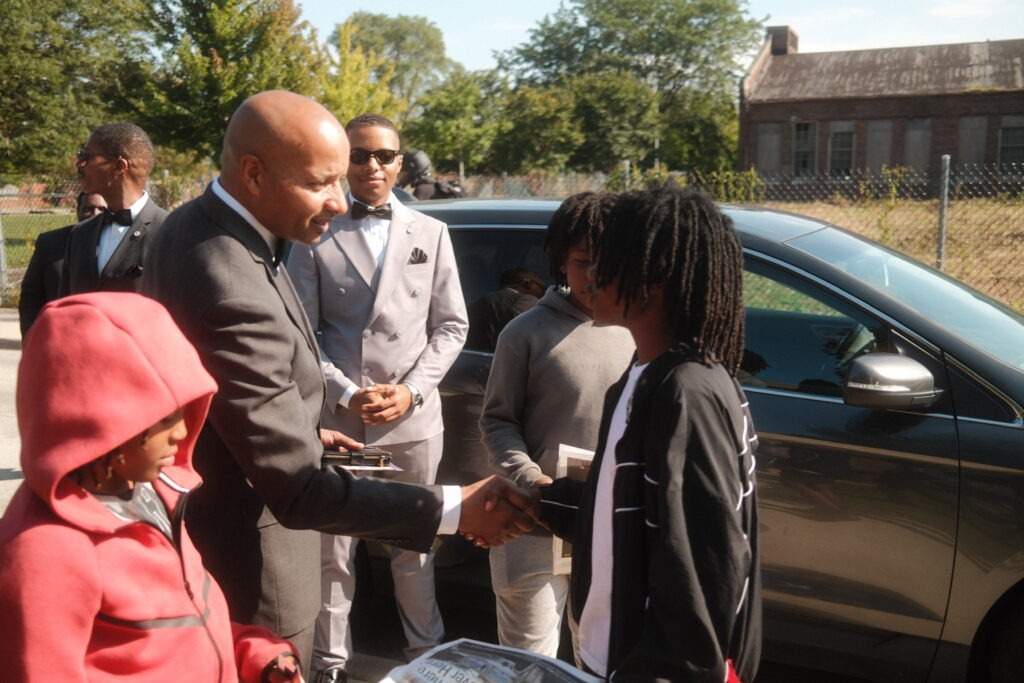
On this day, Black families saw something different—what love in action looks like. The brothers invited people to the mosque meeting the following day. “I’ll see you all tomorrow,” said two smiling women in unison while holding the invite flyer.
In The Gardens and along 78th Street and Essex Ave., the presence of the brothers brought tears, smiles, and shouts of appreciation. “We need y’all out here every day!” a young woman called out as she drove past the formation. “Thank y’all for coming!”
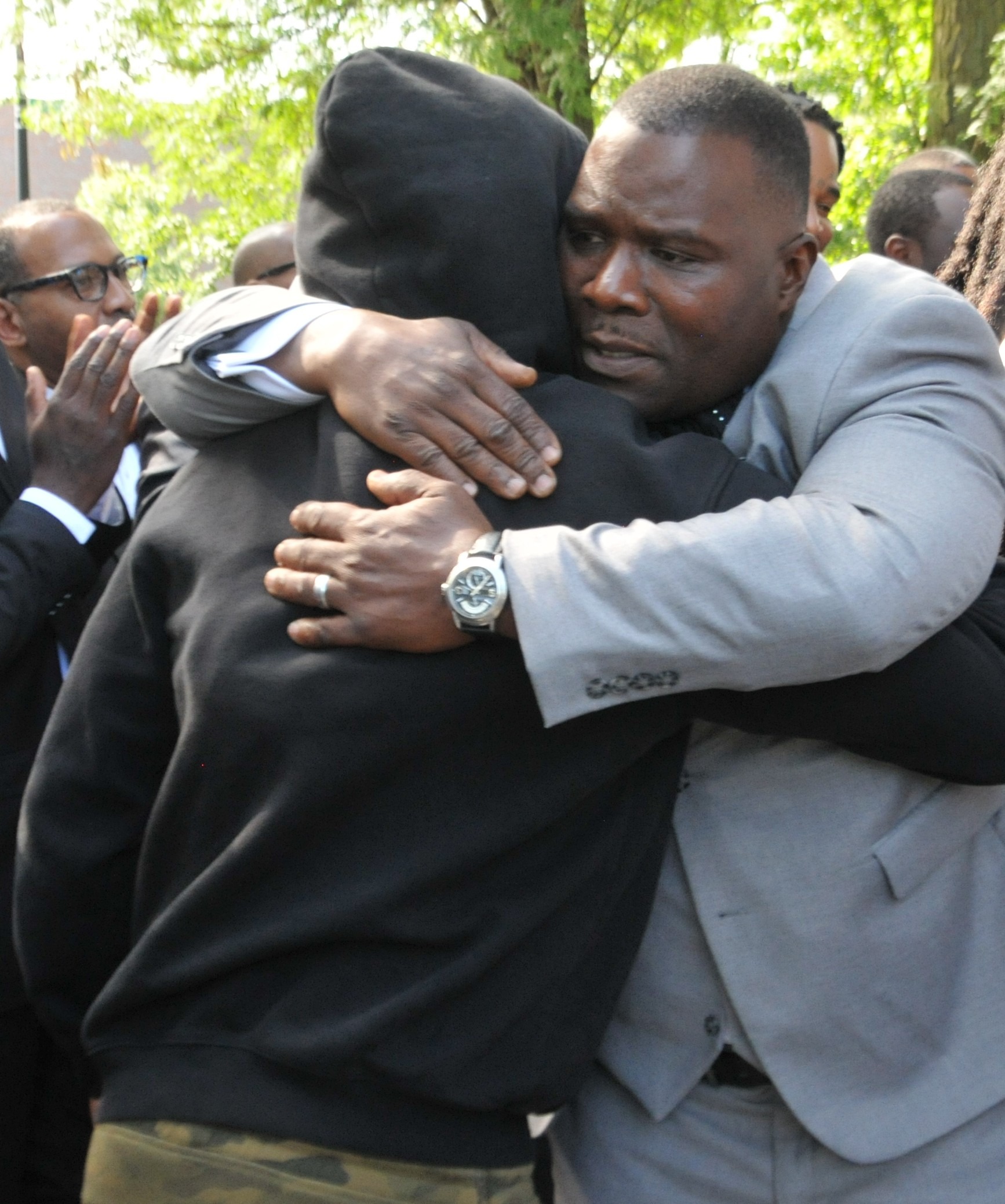
Maybe for some, for the first time in their young lives, adolescent boys ran up to embrace dozens of Black men they had never met or seen before this chance encounter. The sight of so many disciplined Black men evoked both awe and relief.
In one neighborhood, a potential conflict between young men was defused simply by encouraging and facilitating dialogue and presenting the calming presence of the F.O.I., witnesses said. Peace, in this case, required no badge or weapon—only the firm but loving presence of righteous men.
“It was my honor to spend some quality time with my brothers as we served our dear people near and far,” said Student Minister Abdul Rasul Muhammad, General Manager of The Final Call. “May Allah (God) continue to bless us all. May Allah continue to bless you and your families in every possible way.”
This act of outreach is not new for the Nation of Islam. Their presence in neighborhoods ravaged by systemic disinvestment is a physical rebuke to the narrative that Black men are inherently violent or absent. Instead, they offered The Final Call newspaper, warm greetings, and, when necessary, words of encouragement and prayer.
For those watching from their windows, corners, and passing cars, the presence of the F.O.I. was more than a one-day event. It was a glimpse of what is possible when love replaces apathy and when service replaces spectacle.