












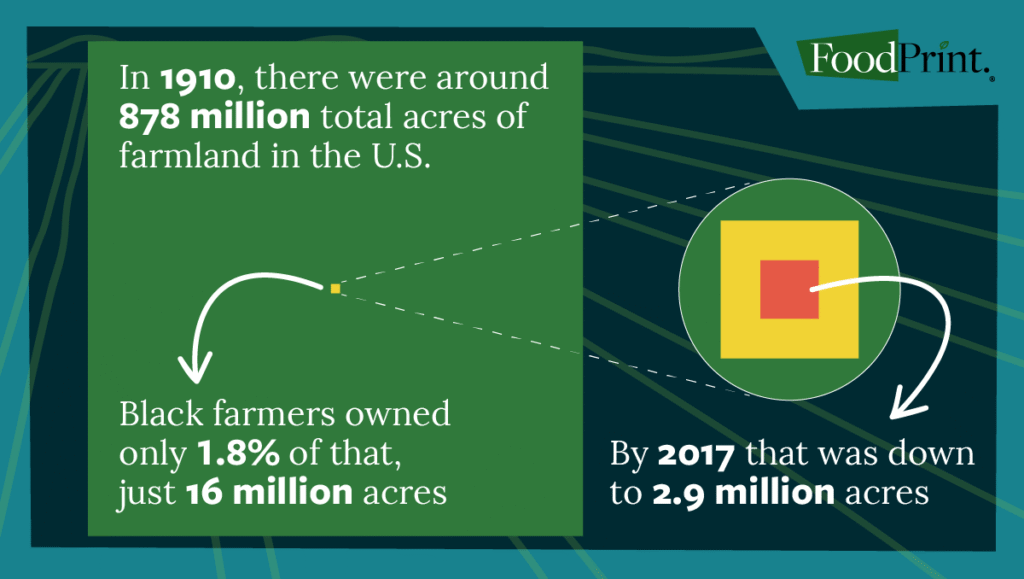
At one time, Black people in the U.S. owned millions of acres of land. However, due to discriminatory schemes perpetrated by the American government, systematic racism and violence, Blacks have gone from having 16 million acres of land in 1910 to only 2.5 million acres today, according to several reports and sources.
According to foodprint.org, “Black land loss represents a systemic blockage of Black Americans’ opportunity to build generational wealth: One estimate suggests that the total active farmland lost since 1920 has meant more than $326 billion in lost wealth for Black farmers and their families.” Today, Blacks are still struggling to hold on to their family land.
The Most Honorable Elijah Muhammad taught on the importance of Black people acquiring land as a way for us to produce what we need for independence, self-sufficiency and to grow healthy food.
“In order to build a nation you must first have some land,” the Most Honorable Elijah Muhammad wrote in “Message To The Blackman in America,” on page 223.
The Honorable Minister Louis Farrakhan has explained that “farming is the engine of our national life,” and that the government has schemed against Black people when it comes to land acquisition and ownership.
In part 36 of his 58-week lecture series, “The Time and What Must Be Done,” Minister Farrakhan spoke on these roadblocks imposed by White people to prohibit Black land ownership.
“One of the things that ‘The Black Codes’ and ‘The Slave Codes’ did to Black people was that we had no right to own land. Blacks were prohibited from buying or renting farmland except in designated all-Black, but White-controlled, areas.
Black people were forbidden to sell farm products like flour, cotton, hay, rice, peas, wheat, etc., without written permission from a White man, thus disallowing independent Black agribusiness and eliminating the potential threat of Black competition in farming,” Minister Farrakhan said.
Today, Blacks are still fighting to keep their farmland.
Sabotage, schemes and underhanded tactics
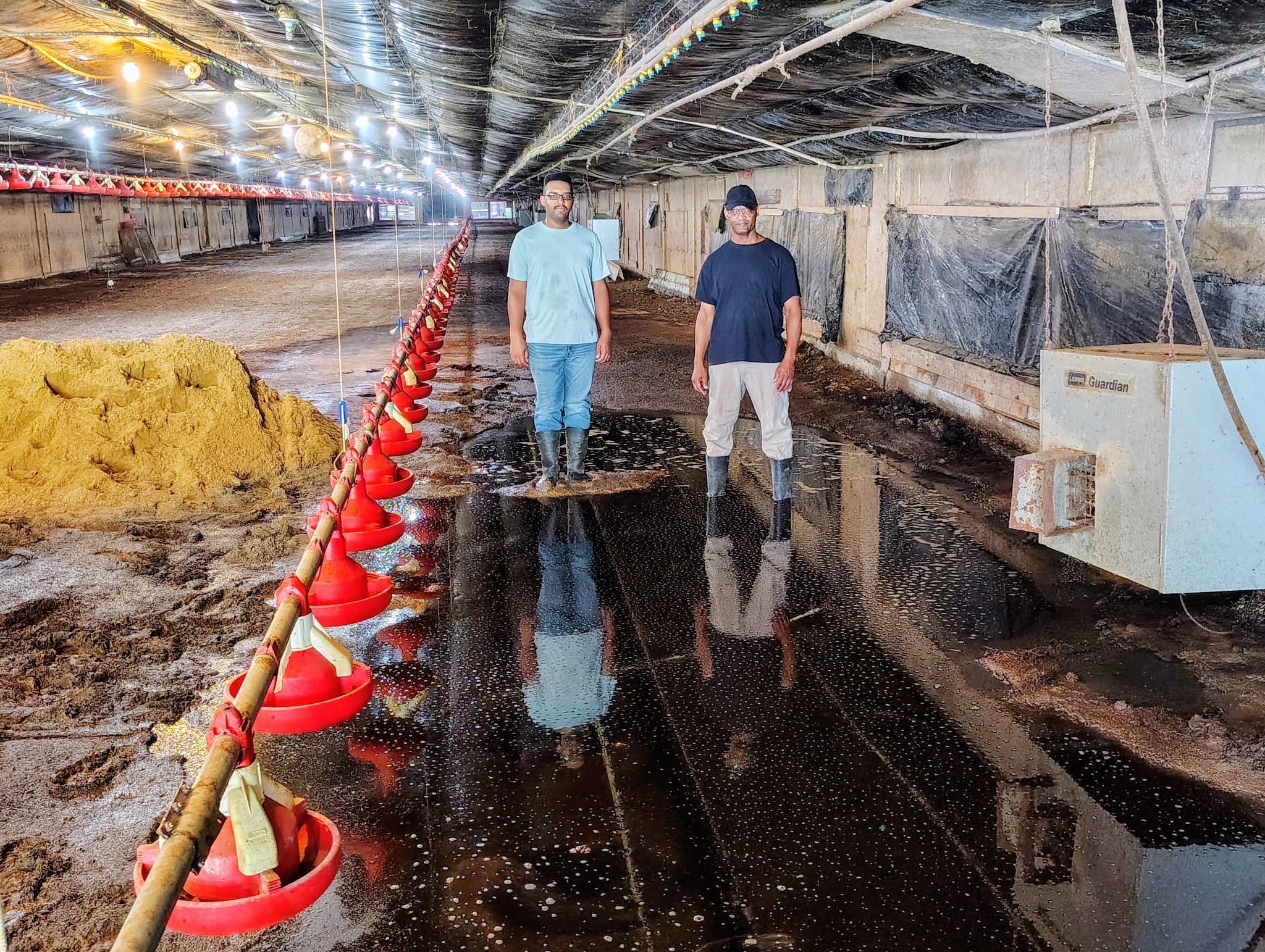
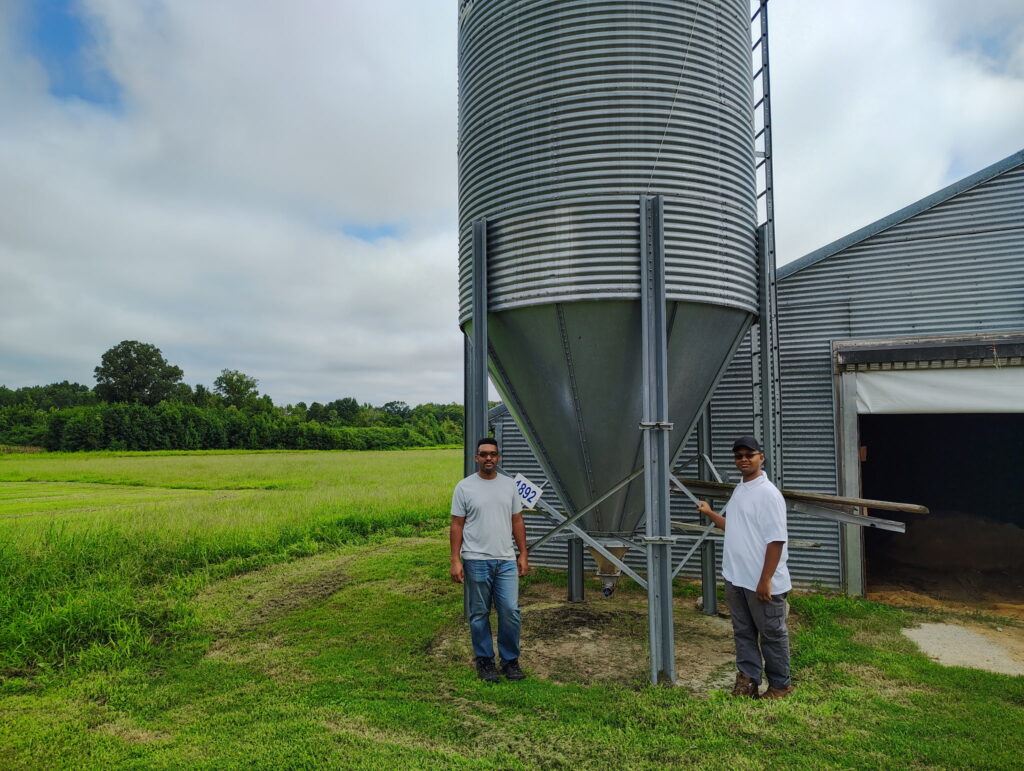
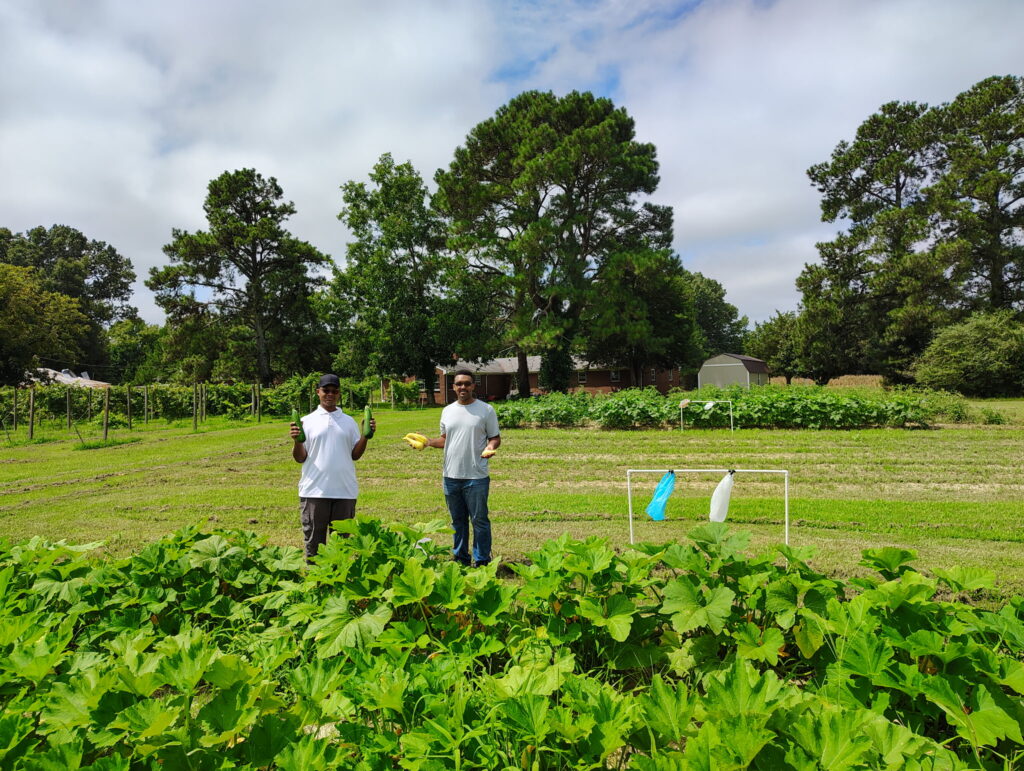
On this 66-acre farm in Virginia, which has remained in Black ownership since emancipation, Shelton Muhammad is locked in a struggle that stretches across generations.He says his family’s livelihood has been under relentless attack—through sabotage, discriminatory lending, and systemic efforts to push them off the land.
“For over 15 years, we’ve been in a constant fight with agencies, local officials and lawyers who want to force us into default and take our farm,” said Mr. Muhammad, a former assistant principal who walked away from his career to protect his family’s agricultural operation.
“Generations of Black farmers have had their land stolen through underhanded tactics. We are determined not to let history repeat itself,” he said.
Last year, the family’s main farming equipment was reportedly sabotaged, causing a 20-month operational shutdown and significant financial strain. Despite mounting legal and repair costs, Mr. Muhammad says his family was able to retain the land.
But another wave of reported sabotage has recently targeted their property and the very farming operation that generates the revenue to cover the mortgage, pay property taxes, and compensate family workers.
He pointed to a proposed real estate tax payment plan delivered by lawyers he believes are aligned with those working to push him off the land. He believes, “the plan is to make us break the payment terms and then rush our property into a court-ordered sale,” he explained.
“This isn’t just about one family farm,” he said. “It’s about an entire system that has worked to keep Black farmers from becoming economically independent and feeding our own people.”
He added, “The USDA and its Farm Service Agency have worked hand in hand with White families in this county to make sure I never had the same fair shot. Where White farmers were approved for loans, my applications were delayed or denied. That’s not mismanagement—that’s sabotage.”
His ordeal is unfortunately not unique. For decades, Black farmers have fought the USDA via lawsuits for equity.
A legacy of Black land and resistance
Southampton County in Virginia holds a unique place in American history. Known as the site of Nat Turner’s 1831 rebellion—the most famous slave uprising in U.S. history—the county has long been a flashpoint in the struggle for Black freedom. After emancipation, formerly enslaved families remained on the land, carving out farms despite hostility and systemic barriers.
By the late 19th and early 20th centuries, Black farmers in Southampton joined the ranks of the nearly one million Black farmers nationwide, cultivating cotton, peanuts, corn, and livestock. Families often pooled resources to buy plots, and some have held their land across multiple generations, according to reports.
But land retention was always precarious. White landowners and county officials used discriminatory lending, exploitative sharecropping contracts, and intimidation to limit Black independence.
The same county that bore witness to Nat Turner’s rebellion also became a place where Black farmers constantly had to resist new forms of economic control.
Today, Southampton stands as both a reminder of resilience and a cautionary tale. Where once there were hundreds of Black farm families, now only a fraction remains. Shelton Muhammad’s battle to protect his farm is part of that broader legacy of survival in a county where land has always been the measure of freedom.
Without historical context, Mr. Muhammad’s accusations may sound far-fetched, but at the height of Black farm ownership in 1920, there were nearly one million Black farmers in America.
Today, fewer than 50,000 remain—just 1.3 percent of the nation’s 3.4 million farmers, according to USDA data. Advocates argue this catastrophic decline is no accident but the result of discriminatory lending, foreclosure tactics, and systemic neglect.
The USDA has faced multiple lawsuits. The landmark Pigford v. Glickman case, settled in 1999, admitted decades of discrimination. Billions in settlements were promised, but many farmers—including elders who had lost everything—died without ever seeing justice.
“They want you to think this is about one farm or one family,” Mr. Muhammad said. “But what’s happening to me has been happening to Black farmers for over a century. It’s the same playbook—delay your applications, deny your loans, then move in to seize your land.
“This is how Black families lose what our ancestors fought to build,” he added. “It’s not just dirt—it’s our inheritance, our history, and our future.”
Healing from the land
While Shelton Muhammad fights to hold onto his land in Virginia, another family shows how farming can also be a path to health and healing.
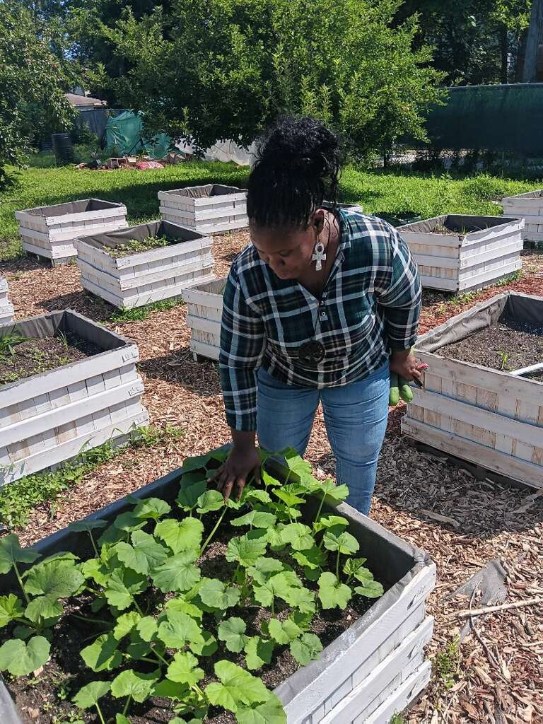
At Black Oaks Farm, Dr. Jifunza Wright Carter, a physician and farmer, leads a 12-week program called Power Pressure Down, designed to combat hypertension naturally. Families in Roseland, Robbins, South Shore, and Phoenix receive classes, fresh produce, eggs, and herbs.
“Hypertension is really chronic under-oxygenation of our tissues,” Dr. Wright Carter explained. “One patient told me it feels like you’re suffocating from within. We teach families how to restore oxygenation naturally—through food, herbs and lifestyle—not just prescriptions.” Her work connects to broader equity struggles.
“Most people don’t know this, but before corn and soybeans took over, Illinois was a vegetable belt,” she said. “If you are a Black American and your family has been in the Midwest for more than two generations, your DNA was fed by this soil.”
Pembroke was once home to the largest Black farming community in the Midwest, with as many as 20,000 acres owned by Black truck farmers who supplied migrating families.
“The elders told us about the glory of this place, but most of that history was never written down,” Dr. Wright Carer recalled.
She and her husband, Fred Carter, recently reclaimed 15 acres once promised by an elder’s family. They plan a garden honoring Mr. and Mrs. Franklin, longtime Black farmers, and a grove memorializing children lost to gun violence.
A land rooted in freedom
Pembroke’s story is deeply tied to both the land and the long Black freedom struggle. Situated in Kankakee County, the rural township became a haven for Black farmers and formerly enslaved people in the 19th century. Local oral history and state archives note that Pembroke was a stop on the Underground Railroad, with families offering safe passage to those fleeing slavery.
By the mid-20th century, Pembroke had grown into one of the largest Black farming communities in the Midwest, with as many as 20,000 acres owned by hundreds of families.
Truck farmers supplied produce to Chicago’s South and West Sides, ensuring Black households migrating North had access to fresh, culturally familiar food, according to various reports.
The community became a rare example of independent Black land ownership in the North—an inheritance from both Reconstruction-era migration and the Great Migration. But, like many Black agricultural communities nationwide, Pembroke faced targeted neglect.
Roads were left unpaved, utilities were delayed, and discriminatory lending compounded the economic strain. Land speculators and conservation groups later moved in, reducing Black landholdings even further.
Even so, Pembroke remains a symbol of resilience. Its farmers carried forward traditions of self-sufficiency and mutual aid that Dr. Wright Carter and Fred Carter now seek to revive. “This land holds memory,” she said. “It holds both trauma and healing. Our job is to restore it, grow from it, and pass it on.”
Planting seeds for the future
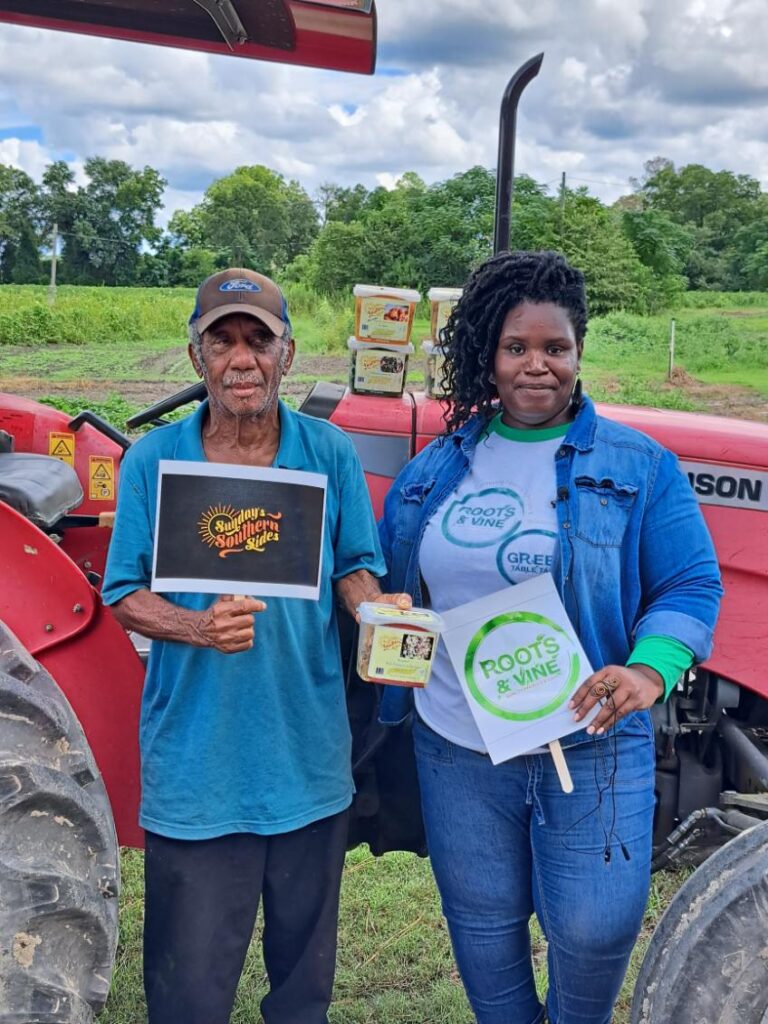
Further north, based in Chicago, Ena Jones, founder of Roots & Vine Produce and Café, is focused on the next generation. She and her son are raising funds to purchase a 20-acre farm south of the city as a youth agricultural training and retreat center.
“This is more than a farm,” Ms. Jones said. “It’s a living classroom, a safe space, and a launchpad for the next generation of food leaders from our own communities.”
Her nonprofit, Green Table Talks, is driving the campaign, Buy Butter. Build the Farm, combining handcrafted body butter sales with grassroots donations.
But like Mr. Muhammad, she says she has faced USDA barriers.
“We submitted applications, followed the process, and still got silence or rejection,” she said. “Programs that are supposed to help us too often become tools that shut us out.”
With fewer than 60 Black farmers left in Illinois, Ms. Jones sees her fight as part of a survival strategy. “There are only about 58 Black farmers in Illinois out of tens of thousands,” she said. “That’s not by accident—it’s ongoing discrimination. We can’t wait for them to save us. We have to build it ourselves.”
The USDA had not responded to inquiries about Mr. Muhammad and Ms. Jones by Final Call press time.
From Virginia’s embattled chicken houses to Illinois’ healing fields and Chicago’s youth-focused farm vision, Black families are connecting the dots between land, health, and independence as taught and demonstrated by the Most Honorable Elijah Muhammad.
The Honorable Minister Louis Farrakhan has stated that farming is the engine of our national life.
“Every room you sit in, everything in it, started with a farmer,” Ms. Jones said. “Agriculture is the foundation of everything. If we don’t reclaim our stake, our children will starve,” she added.
For Shelton Muhammad, the stakes are existential. “This is about whether we will ever be independent,” he said. “If Black farmers united and fed our people, many of the problems we talk about wouldn’t exist. That’s why they fight so hard to keep us from succeeding.”
