









ATLANTA—The year was 1941. Nettie Hancock Washington, who was born on the campus of Tuskegee University, returned home to Tuskegee for summer vacation and was rushing to meet friends on campus.
Dr. Frederick Douglass III, a surgeon who had been commissioned in Tuskegee, Alabama, during World War II, decided to eat lunch in the campus’s student cafeteria for the first time.
“If you can get this visual of him strolling to get something to eat, my grandmother rushing to meet her friends, and they literally bumped into each other. Didn’t know that the other descended from a historic family.
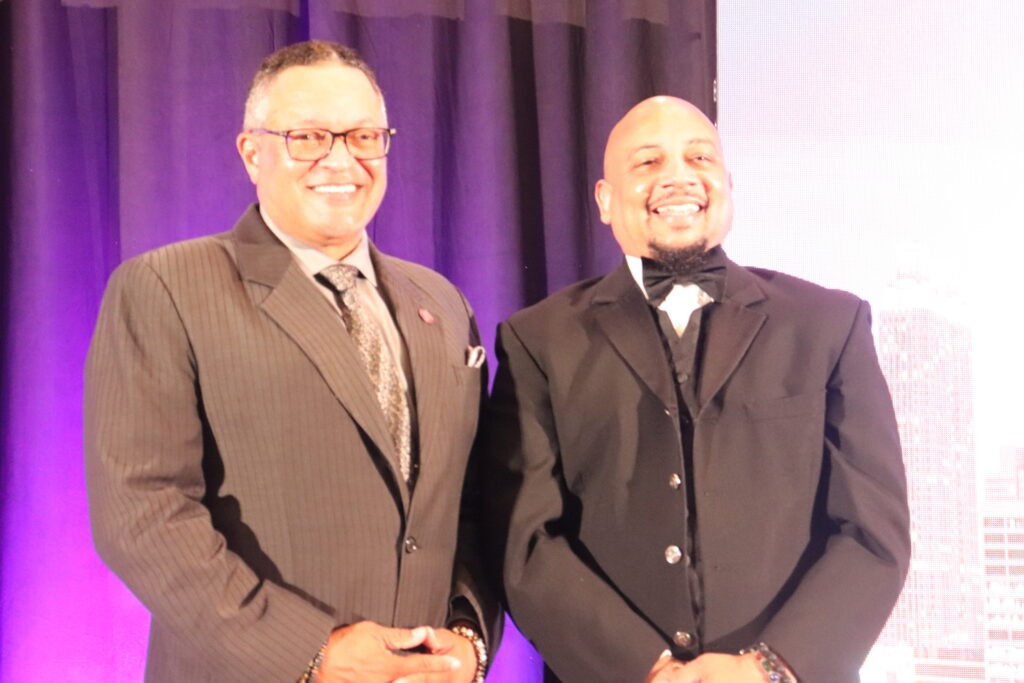
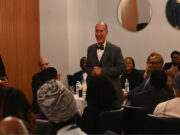
They fell in love at first sight and wound up getting married just three months later,” Kenneth B. Morris Jr. said at the gala of the 125th anniversary of the National Business League Conference, held at the Hilton Atlanta Hotel on Aug. 23. (See The Final Call, Vol. 44 No. 47)
Nettie Hancock Washington was the granddaughter of Booker T. Washington. Dr. Frederick Douglass III was the great-grandson of Frederick Douglass. After the two met and married, they gave birth to Nettie Washington Douglass, Mr. Morris’s mother, forever merging two great families.
Booker T. Washington founded the National Negro Business League 125 years ago in Boston, Massachusetts, and held the league’s inaugural conference in Boston on Aug. 23, 1900. The impact of his work and legacy is still felt today.
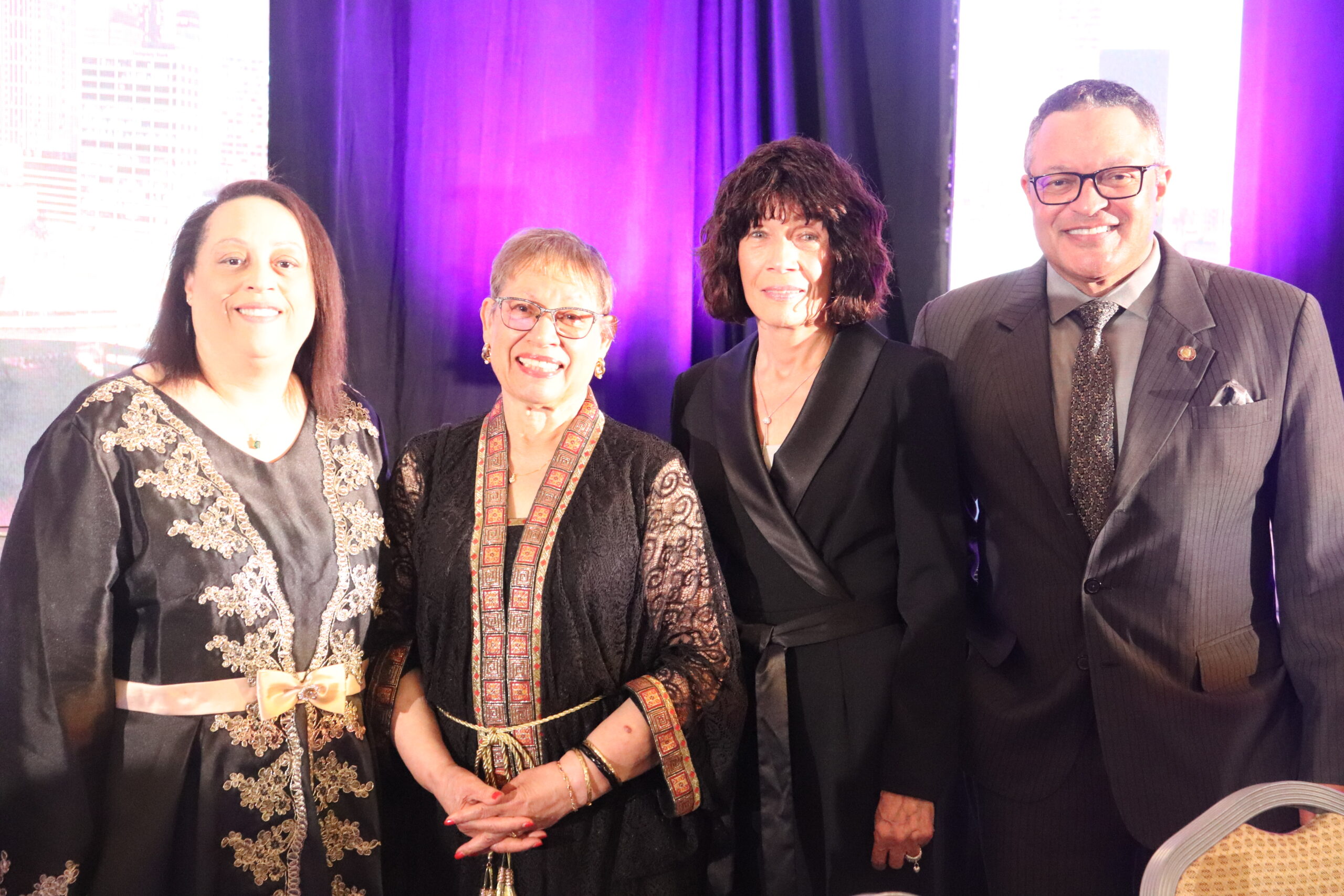
Several descendants of Booker T. Washington attended the recent conference, including his great-granddaughter, Edith Washington Charles. “It’s been overwhelming. I really enjoyed this,” she said to The Final Call.
She found it amazing that so many people who believe in Mr. Washington’s philosophy would gather and carry it on. She enjoyed the sharing of information among Black entrepreneurs and businesspeople.
“They’ll continue to share their information, and that is so valuable. When they share and those people share with their children and the young people, it just keeps going on. So, somebody will be here 125 years from today learning new things,” she said.
Dr. Erica Washington McDonald, great-great-granddaughter of Booker T. Washington, explained to The Final Call how Mr. Washington pushed his students to be the best at what they did. “That was one thing my mother always expressed to us as well. Regardless to what it is you’re choosing to do, always be the best at it,” she said.
“I really appreciate how the conference is taking it back to the roots of where we started from,” she added, referring to the show of Black unity at the conference.
She encouraged people to continue Booker T. Washington’s legacy by having integrity, adhering to promises, being open, honest and candid and ensuring they are mentally, physically and emotionally fit for business.
Dr. McDonald founded Booker T. Washington Family Initiative and has been working with Booker T. Washington high schools, Tuskegee University and the National Business League. She reads her great-great-grandfather’s book, “Up from Slavery,” every three to five years and discovers something new to work on each time.
In recent years, the National Business League Conference has been hosted by the National Alliance for Black Business, a partnership between The National Business League, led by Dr. Ken Harris, The World Conference of Mayors, founded by Tuskegee councilmember Johnny Ford, and the National Black Chamber of Commerce, led by Charles H. DeBow III.
“It’s an idea that started about five years ago when Dr. Harris and I met and we talked about The World Conference of Mayors and The National Business League working together, just like many years ago Minister Farrakhan and I worked together,”
Mr. Ford said to The Final Call, referring to the Honorable Minister Louis Farrakhan, National Representative of the Most Honorable Elijah Muhammad.
“We’re proud that this has become one of the nation’s largest Black economic business conferences, bringing Black businessmen and women together so that they can find ways to make their businesses successful.
And also it serves as a vehicle to build a bridge between business in the U.S. and business in Africa. I’m so happy that this idea started in Tuskegee with Dr. Booker T. Washington.”
Mr. Ford has continued the legacy of Booker T. Washington by promoting Black entrepreneurship and business, as well as his involvement with the National Business League.
“Black people are well on their way regardless of what happened in Washington, D.C. or elsewhere. We’re not concerned about that,” he said. “We’re going to concentrate on Black people working together, building our own institutions, taking care of ourselves, because when we stick together, we can overcome any obstacle.”
The history of Booker T. Washington
In his keynote address at the conference’s gala, Mr. Morris delivered a history lesson on both Frederick Douglass and Booker T. Washington. Mr. Washington was enslaved in Virginia and was freed at nine years old.
He learned the value of hard work by working in the salt and coal mines of West Virginia. One night, he heard two older gentlemen talking about “Hampton Normal and Agricultural Institute,” now Hampton University, a historically Black university in Hampton, Virginia.
Booker T. Washington’s determination to attend led him to walk 500 miles to school, taking odd jobs along the way, sleeping outside and under bridges, and persisting despite showing up at the institute’s doorsteps dirty and disheveled.
After matriculating through the school and graduating, he returned as a teacher before finally taking on the task of founding his own school in Tuskegee, Alabama.
“He goes down to Tuskegee and he’s ready to get started. He’s looking around for an old schoolhouse or somewhere where he could start his formal lessons in that type of setting.
But there was nothing really but farmland as far as the eye could see. But he didn’t get discouraged. That was not a challenge that was going to be too great for him to overcome.
He started recruiting students. He started getting them excited about getting an education, and then one of the first things that he taught them to do was to make bricks,” Mr. Morris said.
The students of Tuskegee University labored in the hot sun to build their school brick by brick. Booker T. Washington cleaned up the students, teaching them the basics of civilization and the importance of trade.
“Booker T. showed free African Americans how they can change themselves, overcome obstacles … and rise by their own efforts to honorable positions of respect, but most importantly, self-esteem,” Mr. Morris said.
Further pushing Black people into self-determination and economic power, Booker T. Washington founded the National Negro Business League. Shortly before he passed, he launched National Health Improvement Week, later known as National Negro Health Week.
“He used his final strength to summon our communities to action, calling for sanitation, for disease prevention, for health and well-being. He knew that without health, there is no freedom. Without vitality, there is no progress,” Mr. Morris said.
“The call did not fade with him. National Negro Health Week continued for decades, and though it later evolved, its spirit endures. Today, its legacy is alive in National Public Health Week and in National Minority Health Month each April.”
