




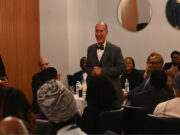





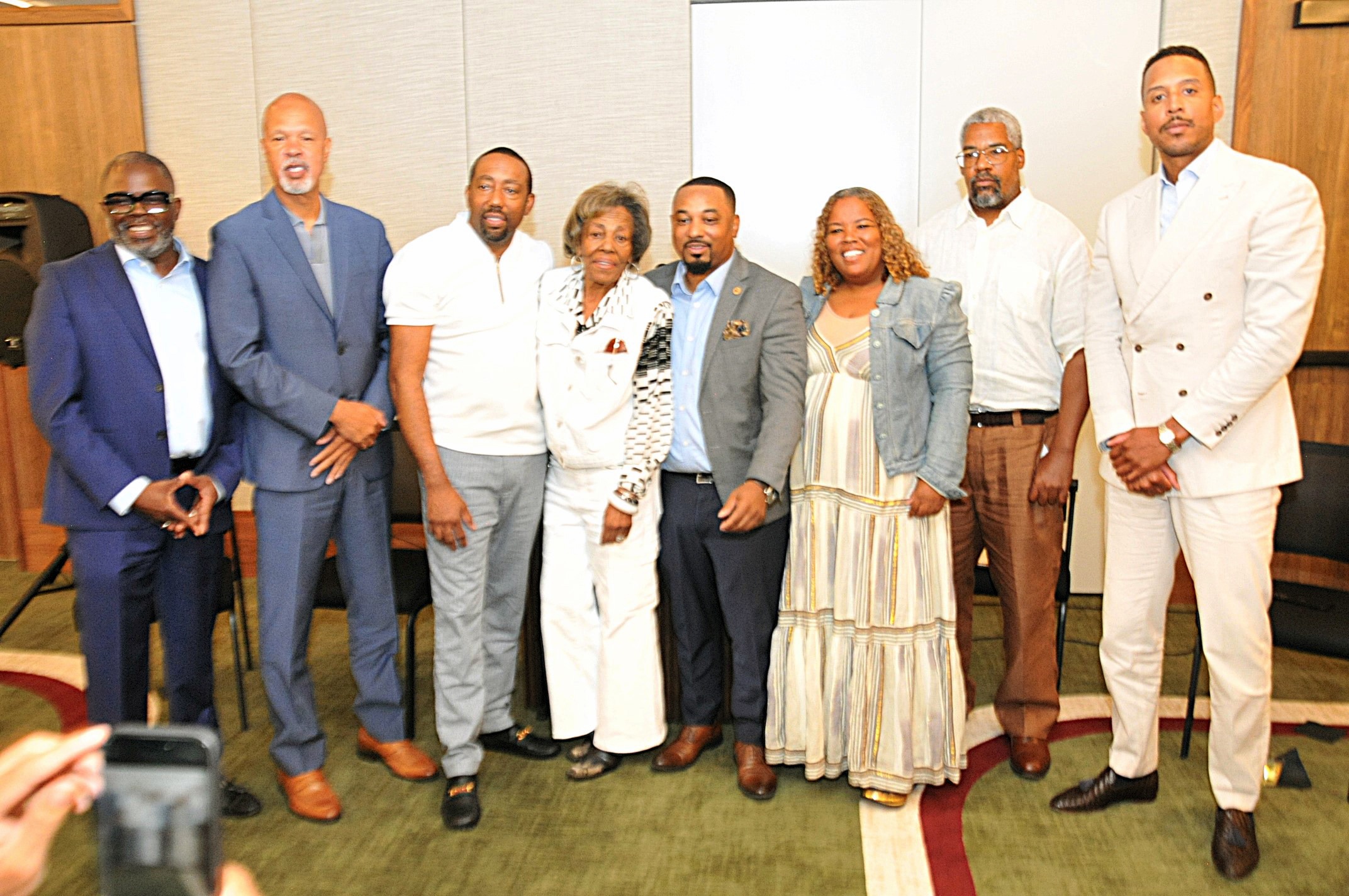

CHICAGO—On the 30th floor of a downtown skyscraper, calls for justice and redemption echoed through a powerful fireside chat centered on one of the nation’s most polarizing and misunderstood incarcerated figures—Larry Hoover.
Hosted by political commentator and entrepreneur Maze Jackson and co-organized with the Illinois Coalition to End Permanent Punishment, the event was facilitated by journalist Yohance Lacour and featured a panel including State Senator Willie Preston.
Hoover’s counsel Attorney Justin Moore, Professor Lance Williams, and Hoover’s son, Larry Hoover Jr. Together, they delivered a compelling case for Hoover’s release, arguing that his continued imprisonment after more than 50 years reflects a justice system reluctant to recognize reform and transformation.
On May 28, the White House stated that President Donald Trump had commuted his federal sentence. However, he is still incarcerated on state charges (See The Final Call Vol. 44 No. 35).
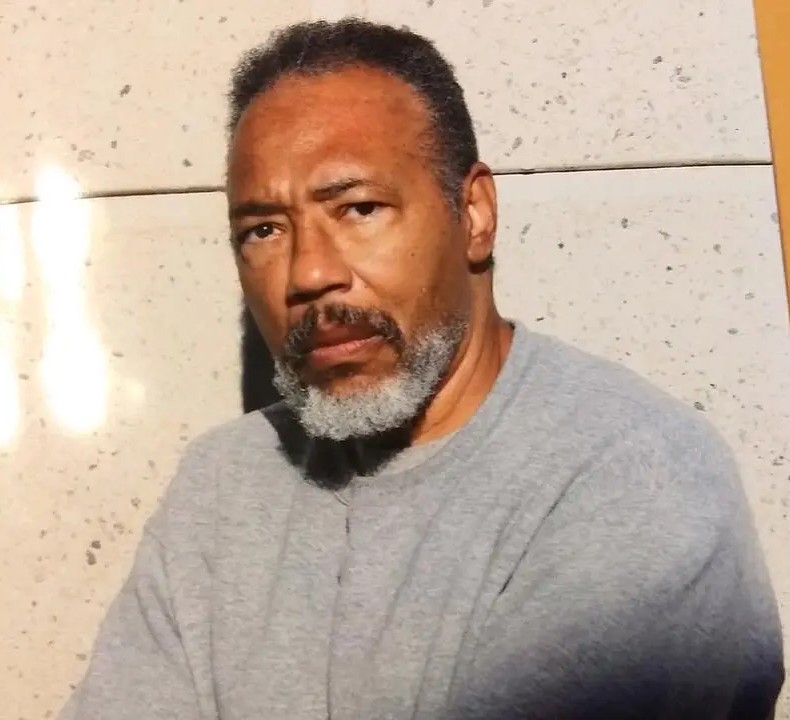
Contrary to public perception, Hoover’s reformation efforts didn’t begin behind bars—they continued there. In 1969, while still a teenager, he helped form the LSD coalition—Lords, Stones & Disciples—an unprecedented alliance of rival street organizations that worked to reduce violence and demand economic access for Black communities.
“The LSD coalition, which successfully disrupted $80 million in construction contracts to demand job access for Black people,” noted Professor Williams during the fireside chat.
Larry Hoover’s influence evolved further in the early 1990s with the launch of the 21st Century VOTE movement, which promoted civic engagement, education, and political empowerment.
His vision reached national audiences in 1993 through a spoken message on a Geto Boys (Houston-based legendary hip hop group) track, where he urged young people to reject gang life:
“We need to stop the killing, stop the gang banging, and develop ourselves … educate ourselves and learn to resolve conflict with intelligence,” he said.
However, this shift in image was met with fierce opposition. Then-Mayor Richard M. Daley publicly condemned the record, falsely accusing it of glorifying gang activity.
In 1994, Daley also pressured Governor Jim Edgar to block a proposed prison transfer for Mr. Hoover, claiming it would appear to “reward criminal behavior.” His comments typified the political resistance Larry Hoover faced, despite his redirection toward peace and civic activism.
Hoover’s legal challenges escalated in 1995 when he was indicted on federal charges of continuing to lead a criminal enterprise and transferred to the ADX Florence supermax facility in Colorado, where he remains in solitary confinement. Advocates argue that the timing of the indictment was strategic, intended to suppress a growing voice for Black unity and justice.
“Hoover’s indictment in 1995—amid growing civic organizing and peacebuilding—echoes the historical suppression tactics of COINTELPRO, the FBI’s covert campaign to neutralize Black political leaders and movements.
Advocates argue that silencing Hoover as his influence shifted from street leader to community organizer fits a familiar pattern of state intervention against Black empowerment,” said Prof. Williams.
Despite his age, declining health, and a record of good conduct, Hoover remains incarcerated. Efforts to secure his release through the First Step Act and state-level reforms have stalled. His supporters see his case as a stark indictment of how American justice resists Black redemption.
At the July 28 fireside chat, advocates focused on two Illinois bills—Senate Bill 2129 (SB2129) and Senate Bill 2675 (SB2675)—as potential pathways to freedom.
SB2129 empowers state’s attorneys to seek resentencing “in the interest of justice,” particularly for elderly inmates who’ve demonstrated rehabilitation. SB2675 expands parole eligibility for long-term prisoners, prioritizing transformation over punishment.
“There are less than 200 individuals who are left in the Illinois Department of Corrections under the old laws that were prior to 1978. The laws have changed. They’re more progressive now.
But these individuals are still being held under the old laws,” said Prof. Williams. “And Mr. Hoover is one of them. That’s why we need SB2129, and that’s why we need SB2675, to correct the injustices of the past.”
“We’ve introduced legislation like SB2129 and SB2675 to allow resentencing and parole opportunities for people like Mr. Hoover,” said Senator Preston. “This isn’t about special treatment—it’s about a justice system that believes in redemption.”
Larry Hoover Jr. spoke passionately about his father’s humanity and the impact of incarceration on their family. “My father isn’t who they say he is. He brought peace to our community, shut down City Hall, and marched for change. But the media still paints him as a gangster—not as a father, not as someone capable of redemption.
“After over 50 years, he’s a senior citizen,” Hoover Jr. added. “The truth is, they want him to die in prison. But we’re going to keep fighting—for him and for all the seniors behind bars who deserve another chance.”
Professor Williams rejected fears that Hoover’s release would threaten public safety. “His incarceration destabilized communities. The argument that he’s a threat is rooted in fear, not fact.”
Attorney Justin Moore echoed the sentiment: “We must challenge the narrative. Mr. Hoover is not the villain the media created. He’s a man committed to peace and healing.”
Beyond personal testimony, the event served as a rallying point for political action. “Use your power,” urged Senator Preston. “Call your lawmakers, call the governor. Let them know this is a priority.”
Benny Lee, a respected violence prevention expert and former gang member turned restorative justice advocate, offered deeply personal reflections on his decades-long relationship with Larry Hoover.
Now a national trainer and co-founder of the National Alliance for the Empowerment of the Formerly Incarcerated, Lee traced their connection back to Chicago’s juvenile detention system. “I go back with Larry Hoover.
We ate peanut butter sandwiches together in the Audy Home when we were 13 years old,” he said. “I didn’t know we were going to be legends. I didn’t know we were going to be misunderstood. I didn’t know that we were going to be demonized. But one of the things I did know is that we had a heart to care about our people.”
Community advocate Afrika Porter emphasized coordinated grassroots pressure. “If we all email lawmakers on the same day, we apply real pressure. These gatherings keep people from giving up. After so long, it’s easy to lose hope—but spaces like this restore it.”
“I am here today because I believe in justice reform. I believe nobody in their geriatric years should be incarcerated. One of my biggest beliefs is that Mr. Hoover had paid his debt to society.
I believe he is an elderly man that just desires to be home with his family. He’s not a criminal. He’s not what the media has made him out to be. He’s a man of respect,” said hip hop artist Leonard Harris, who performs under the moniker GLC.
Podcast host “Mr. Rick,” brought a personal perspective to the fireside chat. He told The Final Call that as a young boy of 11 or 12, he knew of Mr. Hoover and explained that his long-standing connection to Hoover informs his continued advocacy. “Larry was my hero,” he said. “I’ll keep fighting for him until he comes home,” he added.
A key takeaway from the event was the overlooked authority of the Cook County State’s Attorney. Under SB2129, the office has the independent power to initiate a resentencing motion “in the interest of justice.”
“The state’s attorney can act right now,” one speaker emphasized. “It’s not just about clemency—it’s about using the power already granted by law.”
For Larry Hoover, now 74, that decision could mean the difference between dying behind bars or finally receiving a long-overdue second chance. Advocates are directing public pressure not just to Gov. JB Pritzker, but to the Cook County State’s Attorney’s Office—where the legal mechanism for release already exists.
