




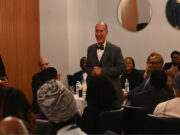







CHICAGO—Dr. Abdullah Hasan Pratt doesn’t just treat gunshot wounds—he’s empowering young people to transform how Black communities respond to violence, heal from trauma, and pursue careers in medicine.
A South Side emergency medicine physician at the University of Chicago Medical Center, Dr. Pratt is the founder of two life-saving initiatives: the Trauma Recovery and Prevention of Violence (TRAP) program and the Medical Careers Exposure and Emergency Preparedness (MedCEEP) program.
Both initiatives are rooted in self-sufficiency and community empowerment, principles that Dr. Pratt directly links to the Teachings of the Most Honorable Elijah Muhammad.
“When we approach violence, I think not only from an evidence-based point of view, from a community-based point of view, but even with the Teachings of the Most Honorable Elijah Muhammad—being able to be self-sufficient has to be at the core root of those solutions,”

Dr. Pratt told The Final Call during an exclusive one-on-one interview during the National Medical Association conference held in Chicago July 20-24.
Responding to trauma where it hits hardest, TRAP is designed to give students practical tools to address trauma, including treating gunshot wounds, de-escalating conflict, and building emotional resilience. The program is implemented in some of Chicago Public Schools’ most violence-impacted neighborhoods.
“We looked to focus on Chicago Public Schools that are closest to the problem first,” said Dr. Pratt. “The schools that send us the most children who are victims of gun violence—that’s where we started our ‘Stop the Bleed’ training and the TRAP program.”
Students learn critical trauma response skills such as bleeding control, trauma triage, and behavioral health awareness. The curriculum also includes culturally informed strategies for emotional regulation and peer leadership. Dr. Pratt frequently brings in guest speakers, including youth who have survived shootings and used the training to save themselves or others.
“I even brought with me one of my guests who’s like a little brother—who used these skills to save his own life from a fatal wound due to gun violence,” Dr. Pratt shared.
MedCEEP, the second initiative, extends that mission by introducing young people to careers in health care. Students gain hands-on experience in emergency medicine, public health, hospital operations, and disaster response. Through mentorship and immersive experiences, the program prepares youth to become doctors, nurses, health administrators, and more.
“If they can learn how to save a life, they can use that as an empowerment way to pursue a career in medicine,” said Dr. Pratt. He founded the organization, “to actually do that work—starting local, teaching youth to do for themselves.”
Since its inception, MedCEEP has impacted over 2,000 youth across Chicago, achieving a 98% high school graduation rate and 100% college acceptance among students who apply.
The program partners with the University of Chicago’s Trauma Center, the Urban Health Initiative, and other local organizations to offer wraparound support.
“Shane wants to pursue a career in business and is looking at the intersection between business, healthcare administration—and he told me he wants to be a still photographer,” Dr. Pratt noted, referring to the student. “Those are the kinds of things we want to expose him to—any career path that he’s looking at.”
For Dr. Pratt, trauma centers must be more than medical institutions—they must become community pillars. His vision includes expanding culturally responsive trauma care, integrating community engagement, and ensuring no one is left behind.
“We’re not going to miss this population,” he said. “We’re not just going to scrape the cream off the top—we’re going to go to the root, we’re going to go to the bottom of where these problems are the worst—and we’re going to start there.”
His programs also partners with community institutions, teaching young people principles of discipline, emotional intelligence, and self-worth alongside clinical skills.
“The trauma our communities endure has to be met with structure and sustainability,” Dr. Pratt added. “Being able to say, ‘What does the evidence say our children and youth need—and how are we responding to that evidence?’ That’s what drives this work.”
by Toure Muhammad
Contributing Writer
