






The Caribbean nation of Jamaica has taken a significant step toward seeking reparatory justice from the United Kingdom for the lasting harms of slavery and colonialism.
Jamaica’s Parliament recently voted to petition King Charles III, its constitutional Head of State, to address the long-unresolved question of justice for the descendants of Africans in the island nation.
The announcement was made by Olivia Grange, Jamaica’s Minister of Culture, Gender, Entertainment and Sport, while addressing the country’s House of Representatives on June 24.
“We are taking our demand for reparations from the United Kingdom for the enslavement of our African ancestors into another phase,” Ms. Grange told Parliament.
“We will be submitting a petition to His Majesty King Charles III to refer to the Privy Council a set of questions that we want answered within his current position as Head of State of Jamaica,” she said.
As a constitutional monarchy, Charles III is Jamaica’s legal head of state. The Caribbean nation is requesting that he takes up several slavery-related legal questions with the London-based Judicial Committee of the Privy Council (JCPC),
Which is a court of last resort for overseas territories of the United Kingdom and Crown dependencies. The JCPC likewise handles appeals from Commonwealth countries that still direct their highest court cases to the king for a final decision.
The Jamaican government is raising critical legal questions about the legacy of slavery, including: whether the forced transport of African people to Jamaica and their subsequent enslavement—up to 1833—was lawful;
Whether the enslavement of people of African descent until 1838 constituted crimes against humanity under international law for which the United Kingdom bears responsibility; and, in light of these historical injustices, whether the UK is legally obligated to provide reparatory justice to the Jamaican people.
For Brother Abdul Hakeem Muhammad, the Student Regional Minister of the Nation of Islam for the European Region, the answer is “yes” to all of the above questions. He emphasizes, however, along with the call, reparations must begin with Black people—by repairing our relationships with one another and actively drawing upon each other’s expertise.

“The first line of reparations is really for Jamaican and Caribbean governments to recognize their nationals and their people throughout the diaspora, and invite them back home to build the Caribbean.
And to offer them incentives and to offer them opportunities that they may bring their gifts and their talents back to the Caribbean,” said Student Minister Hakeem Muhammad, who is based in London.
“So as we’re waiting for these legislative processes to evolve,” he reasoned, “the Caribbean can do itself a massive favor by reaching out to its indigenous people throughout the diaspora, particularly in places like England and America … where we are in some of the highest offices in some of the most professional fields that the Caribbean need,” he said.
Student Minister Hakeem Muhammad, who is of Jamaican descent, told The Final Call that the Caribbean hasn’t called out to its citizens where billions of dollars could return to the Caribbean through those who are now living abroad. “This is not to debase the need for reparations,” he explained.
But if the demand continues to be ignored then what has to be done about the onward development of the Caribbean and its people? He says the unity of the diaspora is needed, along with the call.
We have people who are capable of building infrastructure, revolutionizing the healthcare systems, educational, political and scientific systems, he reasoned. “We have the resources, but we’re not calling upon the resources,” he added.
Despite gaining independence from Britain in 1962 and continuing national debate over transitioning to a republic, Jamaica remains a constitutional monarchy—and Charles III, as Head of State, retains the authority to refer legal questions to the JCPC.
In Jamaica, enslaved Black people, forced to work on plantations, cultivating sugar and other crops generated fortunes for British merchants. The centuries long system of bondage financially benefitted the royal family and proponents of justice argue that the UK owes reparations for the lingering harms of slavery.
However, the rich generally rebuffs the poor on the question of reparatory justice and rejects reparations, let alone apologize for enslavement, justice advocates argue.

During a Commonwealth Summit of leaders held in October 2024, in Samoa, King Charles addressed the issue of historical infractions. “None of us can change the past but we can commit with all our hearts to learning its lessons and to finding creative ways to right the inequalities that endure,” he said, reported Associated Press.
While he was Prince of Wales, Charles III spoke of the “appalling atrocity of slavery, which forever stains our history” while attending the ceremony of Barbados becoming a republic in 2021. Then at the 2023 Commonwealth Summit in Rwanda, on slavery and its legacy, he said it was a ”conversation whose time has come.”
However, in contrast, while Charles III on occasion went on record acknowledging the sordid history and lingering effect of slavery, neither he nor the British government has explicitly apologized or supported reparations. The UK, like other former colonial powers, has consistently rejected the demand.
British Prime Minister Keir Starmer dismissed the issue with the weakhearted and tepid excuse about “looking forward rather than looking backwards.”
Although the petition to Charles III is an initiative pertaining to Jamaica, momentum in the wider Caribbean Community (CARICOM) has been growing around the issue.
“We have made very significant progress in the reparations campaign,” said David Comissiong, Barbados ambassador to CARICOM.
When the 15-member CARICOM first embarked on the campaign for reparations in 2013, many people dismissed it as a pipe dream, but now over a decade later that sentiment has changed, he said. “In fact, we have turned the corner where that is concerned, and we talk about it as a very realistic probability—that it will happen,” said Mr. Comissiong.
“Some evidence of the progress is that, although we haven’t gotten the European governments to the reparations table yet, we have gotten the families of former enslavers … companies … institutions and universities,” he continued.
“So, there is this tangible evidence of progress being made in the reparations campaign. And we think that with the new initiative to establish that reparations partnership with Africa we are convinced that is going to bolster our effort tremendously,” Mr. Commissiong stated.
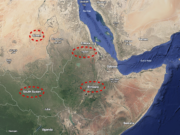
He was referring to a major global gathering of forces on the campaign for reparatory justice between CARICOM and the African Union (AU). At the AU headquarters in Addis Ababa, Ethiopia, the two bodies will meet for the 2nd Africa-CARICOM Summit in September under the theme:
“Justice for Africans and People of African Descent Through Reparations” with a sub-theme, “Building the Future: Healing and Reparations Towards Socio-Economic Justice for Africans and People of African Descent.” The conference is expected to strengthen the global fight for reparations, which will top the agenda.
“We want our African brothers and sisters at our side in this struggle,” said Mr. Commissiong.
Britain entered the transatlantic slave trade in the mid-1500s. However, British colonial policy in the Caribbean was not just influenced by slavery—it was engineered around it and still impacts Caribbean nations today. The effects can be seen in nations still tied to their former colonial masters.
The Honorable Minister Louis Farrakhan, National Representative of the Most Honorable Elijah Muhammad and the Nation of Islam, gave evidence of it in part 41 of his 58-week, 2013 lecture series, “The Time and What Must Be Done.”
“The definition of ‘colonize’ means: ‘to send a group of settlers to a place and establish control over it; come to settle and establish political control over the indigenous people of an area; to appropriate a place or domain for one’s own use,’” Minister Farrakhan pointed out.
“Many colonies in Africa, the Caribbean and in Central America were ‘gifted’ their freedom, except Haiti (who fought for and won their own freedom). So, when your former slave master ‘gifts you’ something, you better be careful that it’s not a Trojan horse: Is it something that has in it something that will overcome you and eventually keep you in a colonized state?” he asked.
“Black peoples’ condition in Africa, the Caribbean and Central America is nothing more than a colony of Blacks subjected to the whim or will of outside forces. So, you are ‘separate,’ but very, very unequal … . So now, your desire is to integrate into the major colonial power—not completely separate from them?”
Minister Farrakhan said many of these nations remain shackled to their former colonial powers. Despite political independence, they are still yoked in the grip of colonial influence—in law, language, economics, education, and foreign policy.
“His education is what you function by; his legalities and system of law and governance and jurisprudence is what you function by! So, you have a ‘flag,’ and you have representatives in the Commonwealth nations and in the United Nations, but you are not able to see that you are yet still a colony,” said Minister Farrakhan.
Africa does not fare that much better being subjected to outside powers like the International Monetary Fund and the World Bank through debt. “A legitimized colony, with not even the implements that will allow you to set yourself free!” Minister Farrakhan added.
“So as it teaches in the 16th Chapter of the Book of Ezekiel, verses 1-6, you are still like ‘a baby’ cast out in the open field, with no one to cut the umbilical cord, so you are not washed and cleaned, and you are absolutely not clothed or covered. But you are polluted in ‘the blood,’ or life: Directed by a colonial, or slave, mentality.
“It is a worldwide ‘colonization’ of the Darker People of our planet! That is why the Message of the Honorable Elijah Muhammad is so vital, so necessary, for the Darker People, the Aboriginal People of the world: To wake them up to make them see that they have been neo-colonized!” Minister Farrakhan said.
