












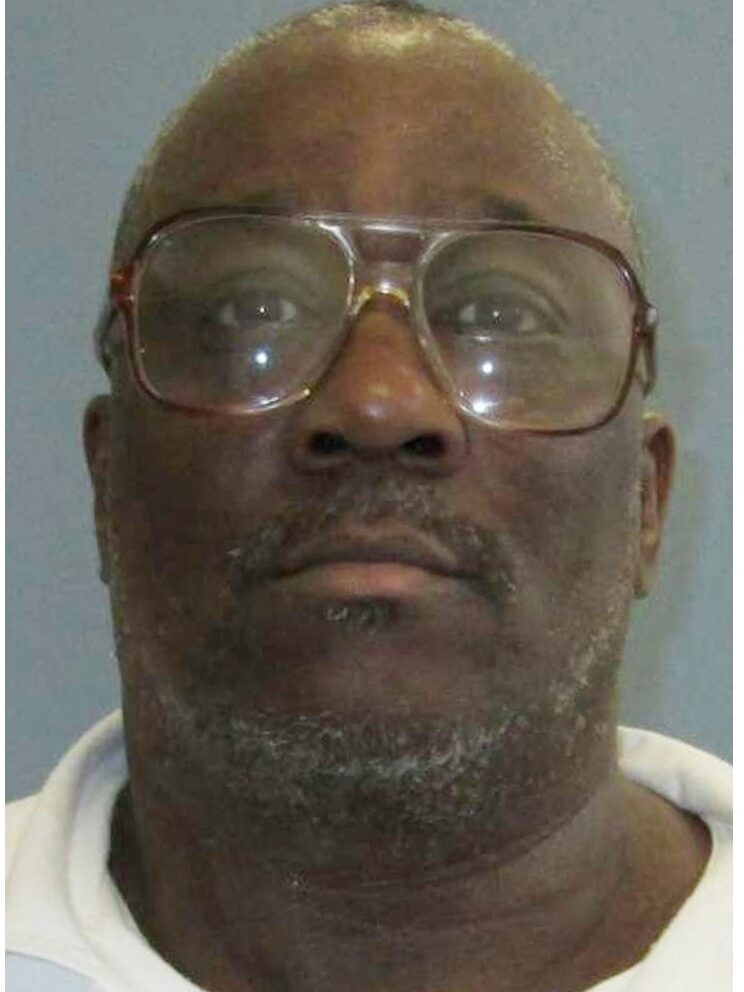
Robin “Rocky” Myers, a 63-year-old intellectually disabled Black man, had been on Alabama’s death row for more than 30 years for a crime he has maintained he did not commit.
Five years ago, he was running out of options to prevent his execution. He was tired and did not want to beg anyone for his life, according to a 2020 blog post by his lawyer, Kacey Keeton.
Earlier this year on Feb. 28, Alabama Governor Kay Ivey commuted Mr. Myers sentence to life in prison, a move that shocked his legal and advocacy team.
He was set to be executed by nitrogen gas this spring at William C. Holman Correctional Facility in Atmore, Alabama, according to AL.com, a digital news website by Alabama Media Group. The last time an Alabama death row inmate had their sentence commuted was in 1999.
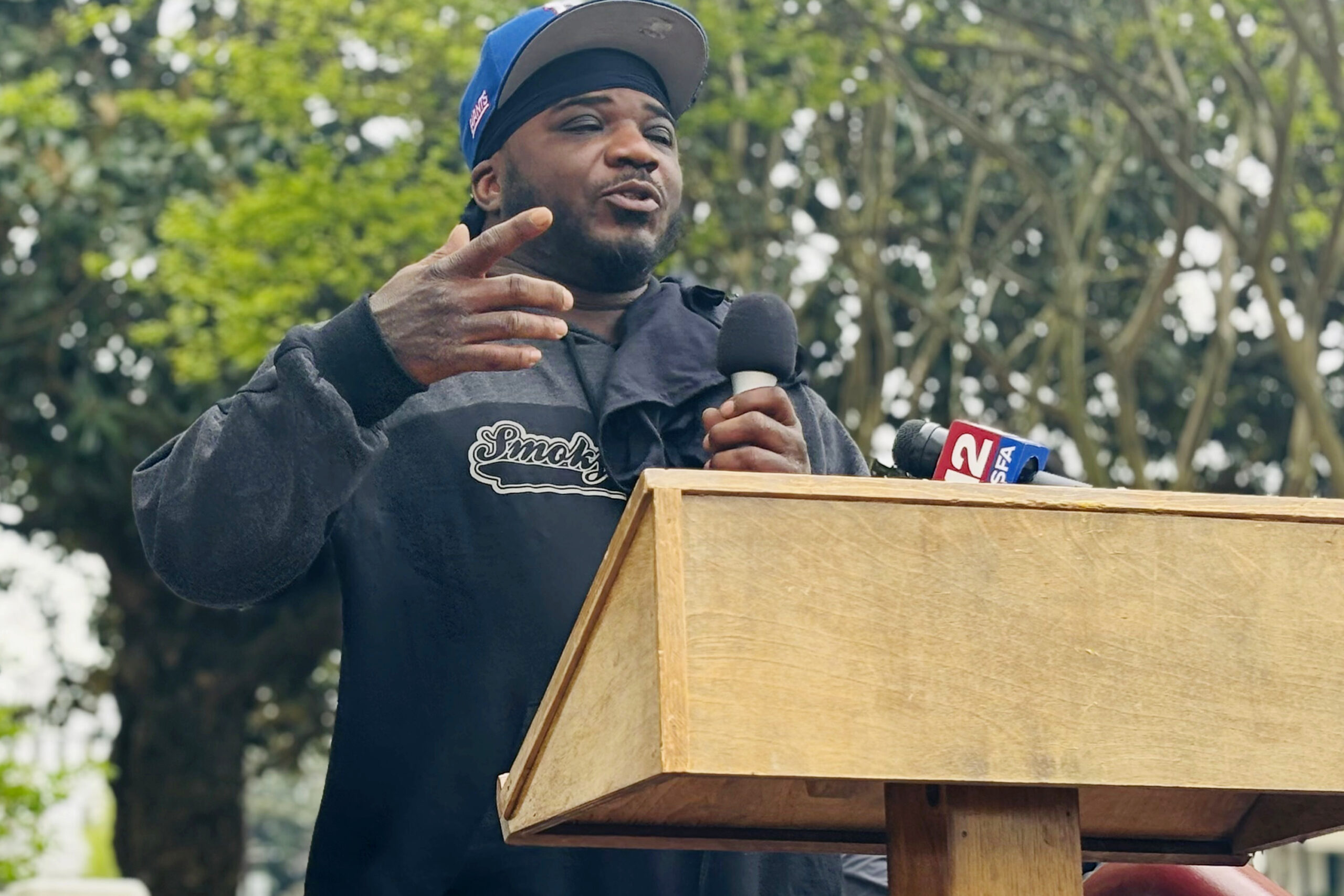
“It was quite shocking and unexpected,” TJ Riggs, Amnesty International’s death penalty abolition coordinator for Alabama, said to The Final Call. “I was really hoping and praying that this would be the result. But given how intensely committed she’s been to executions over the last couple years, it really did come as an absolute shock.
“It was a step towards justice for Rocky,” he added.
Prosecutors alleged that Mr. Myers killed his neighbor, Ludie Mae Tucker, in 1991. He was convicted of murder and sentenced to death in 1994. But Mr. Riggs, a senior studying law, politics and society at Birmingham, Ala.’s Samford University, pointed out holes in the story. Original witnesses to the crime placed a different suspect at the scene and named the suspect.
“Unfortunately, that original suspect was very well connected. Had a very wealthy father who was able to pay a private investigator to go around and get the original witnesses to recant their testimony, at least supposedly,” Mr. Riggs said. A dishwasher who worked for the suspect’s father then pointed the finger at Rocky Myers.
“He was arrested. He was tried. There was no forensic evidence tying him to the crime. The only thing that investigators used to convict him was the fact that he couldn’t keep a straight timeline for the night of the murder, even though he was proven to have intellectual disabilities that would prevent him from being able to do so,” Mr. Riggs said.
Mr. Myers was convicted by 11 White jurors and one Black juror in Decatur, Ala. Though the majority voted for life without parole, the judge overrode the decision and sentenced Mr. Myers to death in a now illegal practice called “judicial override.”
“The United States Supreme Court later found this practice of judicial override to be unconstitutional and struck down Florida’s capital sentencing scheme, which allowed override,” a change.org petition created in 2015 by Atty. Keeton, Mr. Myers’ lawyer, says.
“Alabama was one of only two states remaining that allowed for such judicial override and it stood alone in giving a judge no guidance in exercising this power.”
“In 2017, the Alabama legislature abolished the practice of judicial override but failed to make it retroactive. This left over 30 people—including Rocky—on death row, even though a jury had determined they did not belong there,” the petition says. “In the last 15 years, shockingly, Alabama is the only state to ever use judicial override to sentence someone to death.”
According to an article by a staff reporter with the American Civil Liberties Union (ACLU), before the practice was banned, the Equal Justice Initiative, based in Alabama, calculated that 20 percent of inmates on death row in Alabama had their sentences imposed through judicial override and 75 percent of the cases involved a White victim, though only 35 percent of homicide victims in the state are White.
A little over a week before Gov. Ivey commuted Mr. Myers’ sentence, Alabama Daily News ran an article by Mae Puckett, a juror at the 1994 trial who has been vocal about Mr. Myers’ innocence for years. “I was a very young woman when I served on Mr. Myers’s jury.
The 12-person jury included older men and women with strong personalities. Some of them made up their mind that Mr. Myers was guilty before the trial ever started. I don’t know how they got on that jury,” she wrote.
During deliberations, opinions were split. She and a few other jurors thought Mr. Myers was innocent but compromised to vote life without parole in hopes of preventing a mistrial that could result in a death sentence. Since then, a “key witness against Mr. Myers recanted his testimony, and there was no physical evidence,” Ms. Puckett wrote.
“The woman who was murdered, who knew Mr. Myers, spoke to the police before she passed away. She described the man who stabbed her. She said he was a stocky Black man in a light-colored shirt. She didn’t say ‘it was my neighbor Rocky,’ even though she knew him,” she wrote.
She also shared how unfairly Mr. Myers had been treated by his legal representation. Mr. Myers’ lawyer at trial, John Mays, defended the Ku Klux Klan, spoke at Klan rallies in the 1970s and 1980s and used “foul, obscene language to urge Klan members to prepare for a race war.” His post-conviction lawyer “abandoned him, literally quitting without even telling Mr. Myers” and “refused to take any collect calls.”
This caused Mr. Myers to miss the deadline for filing a federal habeas petition, which, according to the ACLU article, would have allowed Mr. Myers to present new evidence and to dispute the underlying rationale that led to his conviction. His only hope was clemency granted by the governor.
“In all of Rocky’s post-conviction proceedings, he and his counsel have argued that he should not be executed because he is innocent and intellectually disabled. Additionally, Alabama’s decision to execute Rocky is a direct violation of a 2002 U.S.
Supreme Court ruling that found the execution of an intellectually disabled inmate to be cruel and unusual and, therefore, in violation of the Eighth Amendment to the U.S. Constitution,” the change.org petition, which has almost 500,000 signatures, says.
Mr. Riggs has spoken to Mr. Myers’ lawyers and said they will continue to fight, as Mr. Myers is still serving time for a crime he says he did not commit.
Mr. Myers’ oldest son, LeAndrew Hood, was 11 when the crime happened. He is now a husband and a father who has stood with anti-death penalty advocates at protests and rallies. Mr. Myers has four children and has kept up a relationship with his family despite being behind bars.
“I think it’s difficult for anyone to have a family member incarcerated; not even on death row, but to just have a family member in prison. And Rocky has a great family around him. He has kids. He has grandchildren that he loves and they love him,” Mr. Riggs said.
“I think it’s been really difficult for them to have to grow up without their father, without their grandfather, in their life, as much as he wants to be, but I think they stay strong for each other. I think he stays strong for them, and I think they stay strong for him.
“I think that this news was really fantastic for all of them,” Mr. Riggs added. “It was confirmation that Rocky was going to live to see past the end of March and going to continue to be able to be a part of his family’s life, even if it’s still behind bars.”
—Anisah Muhammad, Staff Writer
