










“This Black people of America, who have been swallowed symbolically by the White slave-master and his children, must now be brought out of this race of people and be taught the knowledge of their own.” —The Most Honorable Elijah Muhammad, “Message To The Blackman in America,” from the chapter, “We Must Teach Our Own”
ATLANTA—The Council of Independent Black Institutions (CIBI) called a cadre of educators, school administrators, parents and community members to Atlanta for a conference titled, “African-Centered Education: Now More Than Ever!”
“Why do we need African-centered schools? Why is it more important now?” educator Baba Baye Kemit, president of CIBI and conference organizer, said to The Final Call. “The workshops were all speaking to that.”
He cited a proverb about how the gazelle does not send its young to the lion to be reared.
“We are the ones that know our healing process, our pain, our struggle, our sense of direction. We’re probably the foremost people that are connected to the spirit. So, there are ways that we educate our children differently than the European,” he said. “The more we know, the more we understand that they are not equipped to teach our children. The curriculum is not equipped to teach our children. The environment is not equipped for our children. So, it’s important that we chart a path for ourselves.”
The Muhammad University of Islam, the independent educational system of the Nation of Islam, was established in the 1930s by The Great Mahdi Master Fard Muhammad and the Most Honorable Elijah Muhammad to educate Black children. Thanks to the Honorable Minister Louis Farrakhan, who reestablished M.U.I., the school system still operates today with several schools and affiliate schools around the country.
The early Muslims were persecuted for exercising their rights to teach their children but were victorious. The Most Honorable Elijah Muhammad and many of the teachers and parents of M.U.I. were unjustly arrested.
“You know what they were arrested for? They (Master Fard Muhammad and the Most Honorable Elijah Muhammad) asked the Believers at that time to take their children out of public schools and put them in the newly-formed Muhammad University of Islam,” Minister Farrakhan stated in an address on Oct. 14, 2018, marking the 23rd anniversary of the Million Man March and the Holy Day of Atonement in Detroit.
“The Honorable Elijah Muhammad taught us if a man won’t treat you right, what would make you think that man would teach you right? In the public schools, the enemy wants to make us better tools of service for him. When we took our children out of the public school, they came to the school and arrested the teachers. Elijah Muhammad went to the jail and said, ‘I am their teacher so if you’re going to arrest them, arrest me too.’ Today if you have an independent school, somebody paid a price. If you have Afrocentric education, somebody paid a price. If you know how to stand up for your beautiful Black self, somebody paid a price,” Minister Farrakhan said.
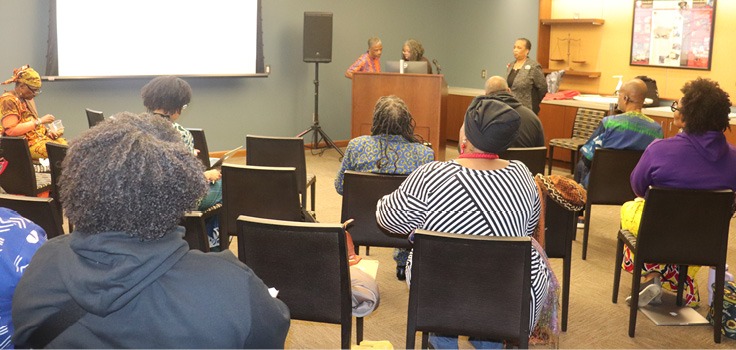
Cultivating, nurturing Black children
CIBI is headquartered in Atlanta, a city that has many African-centered institutions. The organization, founded in 1972, is a coalition of around 25 African-centered institutions from around the country. Most of the institutions are full or part-time schools, but some CIBI members offer different services, such as after-school programs, bookselling, trips to parts of Africa and SAT and ACT prep.
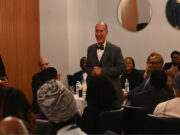
The two-day event began with an opening plenary on Feb. 14 at the Omenala Griot Afrocentric Teaching Museum. Panelists included Dr. Baba Kofi Lomotey, a distinguished professor of educational leadership at Western Carolina University and longtime member of CIBI, Dr. Daphne “Mama Noni” Davis, director and chief administrator of St. Sya Academy in Durham, North Carolina, and Mama Makini Niliwaambieni, founder of Amankwa Enterprises, an educational consulting company.
Dr. Lomotey defined African-centered education as “an educational experience where Black children are able to see themselves in the curriculum” and “can visualize themselves doing whatever they choose to do in life.”
“An African-centered education is an educational experience where Black children are prepared to fit into and serve their own community,” he said. “An African-centered education is an educational experience where Black children see teachers, physicians, lawyers, psychologists, fire people, nurses and other service people who not only look like them but who are committed to the individual and collective backing of the social, cultural and spiritual success of all Black people worldwide.” He argued that continuing to send Black children to public schools, is harmful due to the amount of “damage that has come to our children and our people as a result.”
Photos: Anisah Muhammad
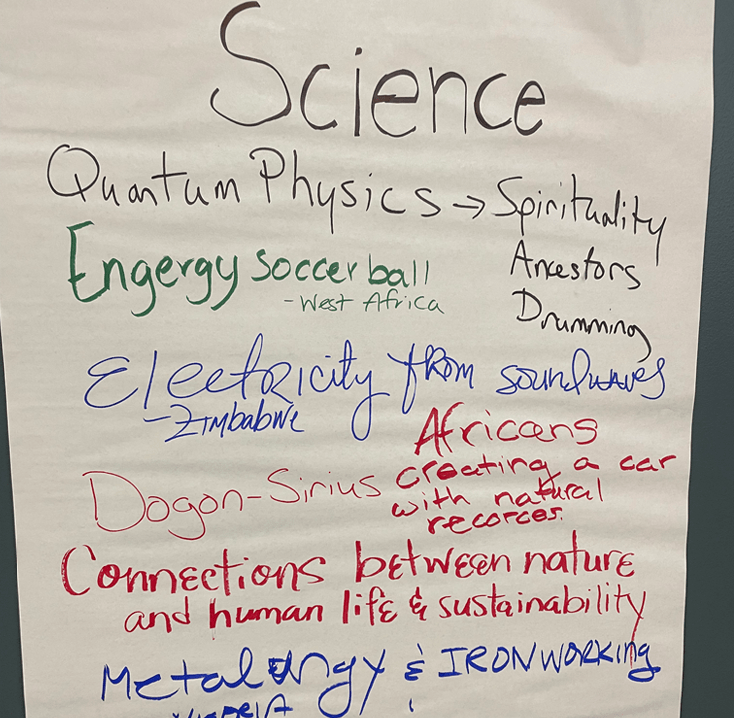
Dr. Davis highlighted the importance of teaching science from an African-centered perspective.
“It makes your children feel like there is no limit to what they can do. They are free to express themselves,” she said. “We are the first scientists,” she added. “We had to go through the whole process of observation, that scientific method to live, to survive, and that’s the way I teach my students.”
Ms. Niliwaambieni works with students and teachers using restorative educational practices.
“I have to tell the truth. I have to make certain that teachers, all staff, principals—I don’t care who you are—and especially students know the truth about everything that we’re doing,” she said.
The panelists tackled discussion and audience questions on the educational landscape for Black children in America, how to start an African-centered institution, what to do about the social programming in the public school system and other topics.
Day two of the conference featured six workshops and a lunch period with a keynote address. The sessions were held at the Auburn Avenue Research Library, a library that specializes in Black culture, history and literature.
During a workshop on starting an independent Black institution, Mr. Kemit addressed funding and location challenges. He emphasized the importance of autonomy and ensuring it is not lost through federal, state and local mandates.
“Make sure you are very clear on how much autonomy you are maintaining in your school,” he said.
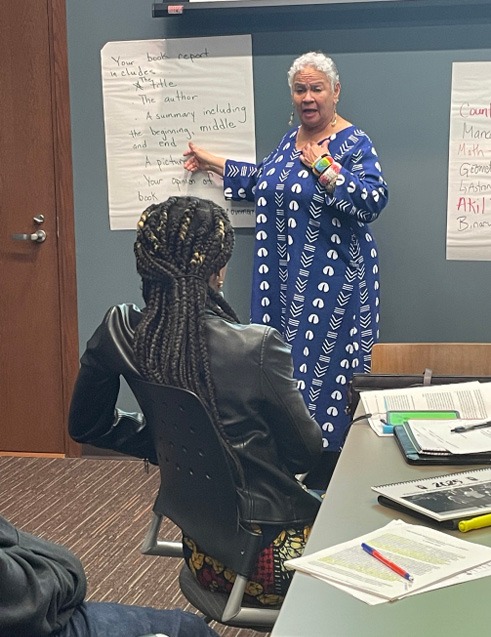
Ms. Niliwaambieni delivered a session on understanding African-centered pedagogy, which delved into the method and process of teaching and instruction. She and another presenter discussed the parasitic relationship between Black people and the United States, the purpose of education and the importance of understanding how Black children learn.
Dr. Davis led a workshop on “Science: An African-centered approach,” and longtime educator Dr. Mama Esi Willis led a workshop on “Math: An African-centered approach.” In the science workshop, Dr. Davis provided examples of how the earth operates with justice and reciprocity and presented a list of items and concepts that African science and technology brought to America, including areas of iron smithing, agriculture, architecture, navigation, astronomy and irrigation.
Dr. Willis addressed what an African-centered approach to teaching mathematics looks like by walking participations through interactive math activities.
Aminata Umoja, founder of the Kilombo Academic and Cultural Institute based in Decatur, Georgia, and her daughter, Tashiya Umoja M’Kanga, an instructor at the school, tag-teamed on a workshop on African-centered curriculum. They asked participants to chart down their favorite African-centered lessons in English and language arts, math, science and social studies.
Mr. Kemit and his wife, Makeda Kemit, talked about parenting in relation to African-centered education. Makeda Kemit shared stories on how safe and loved she felt growing up in an African-centered school. “I felt strong and confident and that rooted me” to be able to experience anything in life, she said.
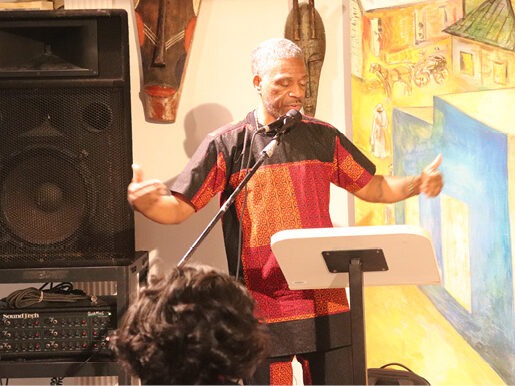
Dr. Joyce King, an educator and professor at Georgia State University, delivered the conference’s keynote message, titled, “African-Centered Education: Now More Than Ever!” She spoke on how Black-centered education centers on the needs of Black children, the importance of talking to Black children about how African people are being targeted all over the planet and the resources available for Black students and educators to use technology such as artificial intelligence for humanity’s sake rather than for evil.
Zawadi Dismuke from Atlanta’s West End, a historic Black neighborhood, recently started her career in teaching and is a professor in logistics and supply chain at The Promise Career Institute, a high school that trains students in various careers. She said she attended the conference because she needed it.
“Coming from an African-centered perspective as a child and that being at my heart but then going into a world where that is not at the center, or focus, or interest, or concern of most people and just being out there with them without the reinforcement of being with people with like-minded thoughts, … it has taken a toll on me,” she said to The Final Call. “I needed this. I needed everything that this conference gave and then some.”
The conference reminded her of how Eurocentric traditional public school education is and how “culturally relevant teaching is the spirit of resistance.”
“We as educators have to do more to reach children where they are and present curriculum and education in a way that culturally and spiritually they can better align to,” she said. “It’s going to be a little more lesson planning, a little bit more work, a little bit more organization, but I accept that challenge.”
CIBI is currently working on a teacher training institute set to occur on Aug. 1 and 2 in Atlanta and another conference in November.
Mr. Kemit hopes to see more Black unity in the future and more families getting together to educate their children differently.
“I hope that we continue the work of our ancestors, continue to build a sense of collective consciousness, that we begin to tie the loose ends of our disconnectedness, and so that we can start having a shared vision,” he said to The Final Call. “It doesn’t have to be a single vision, but a shared vision, that we all have different missions but to the same destination.”
