

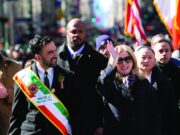
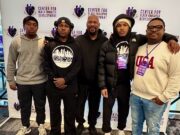





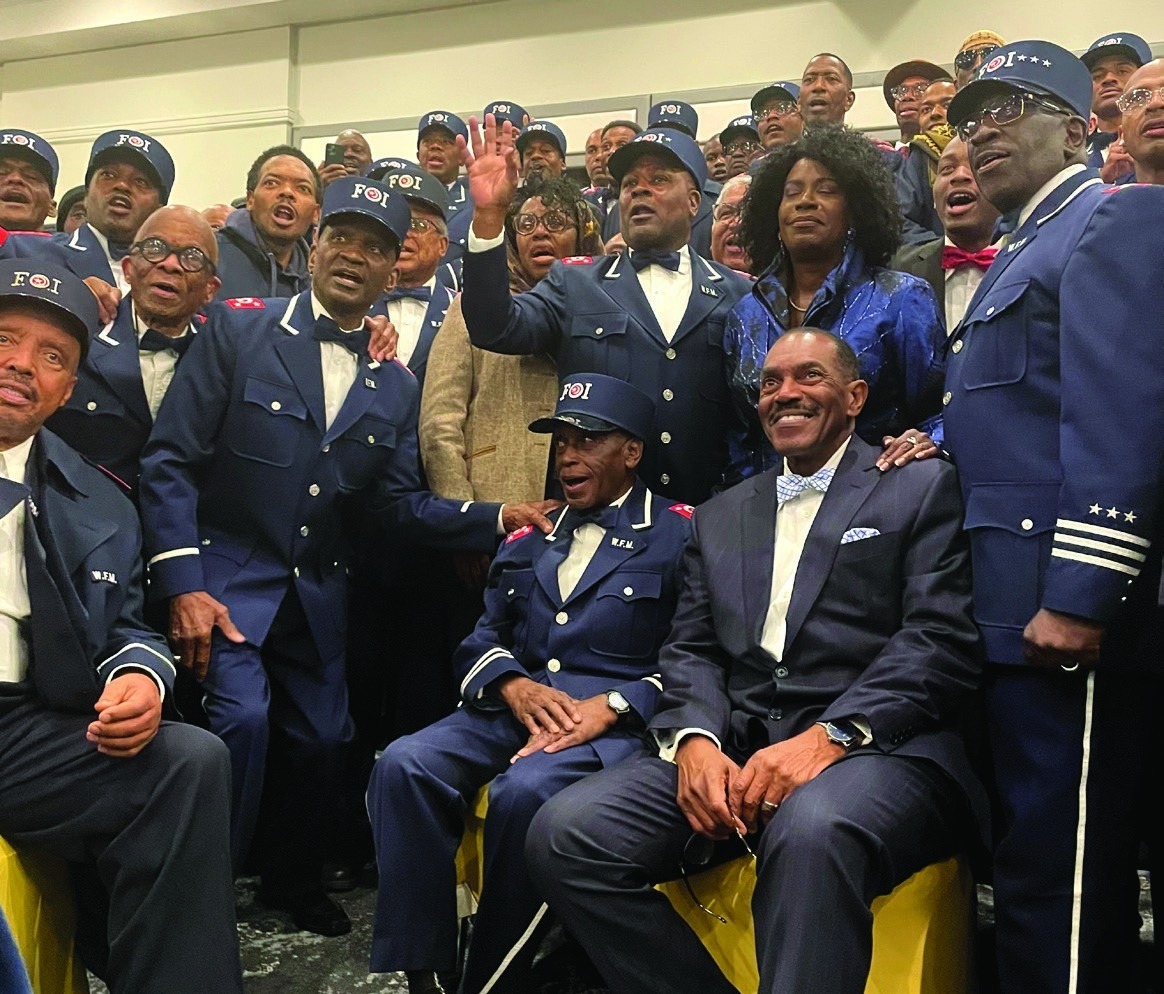

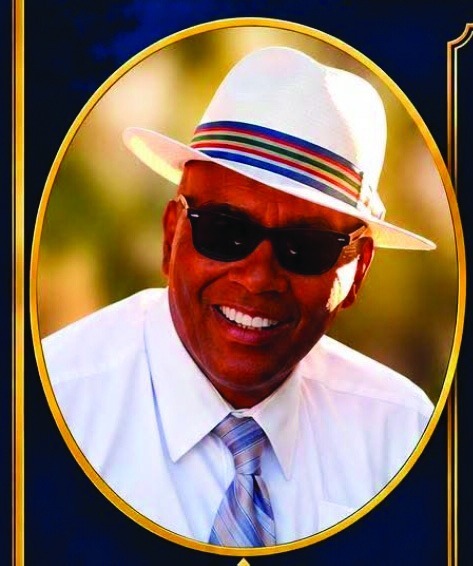
PHILADELPHIA—Thousands gathered at Philadelphia’s historic Metropolitan Opera House to honor Brother Akbar Muhammad, a devoted member of Mosque No. 12, longtime Final Call distribution captain, community advocate, and trusted adviser whose influence spanned religious, political, and social boundaries. His Janazah (funeral service) was held Nov. 16. Brother Akbar returned to Allah (God) on Nov. 11.
The audience reflected the breadth of that influence. Elected officials, faith leaders, law enforcement executives, activists, entertainers, business leaders and neighborhood residents filled the venue. Attendees included Philadelphia Mayor Cherelle Parker, City Council President Kenyatta Johnson, Pennsylvania State Senator Sharif Street, Police Commissioner Kevin Bethel, Sheriff Rochelle Bilal and numerous civic leaders from throughout the region. Representing the Nation of Islam was Student Supreme Captain Mustapha Farrakhan, son of the Honorable Minister Louis Farrakhan and a member of the Shura Executive Council.
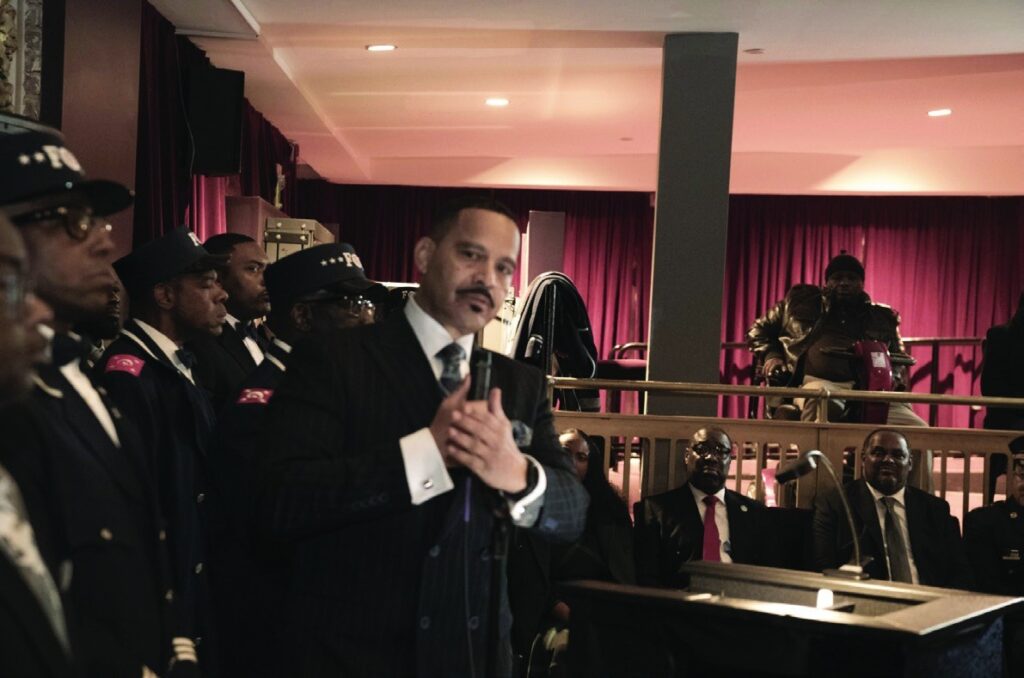
The gathering served as a testament to a man many described as a bridgebuilder, connecting communities that often operated in separate spheres.
Addressing those in attendance, Student Supreme Captain Mustapha Farrakhan said Brother Akbar’s life demonstrated the value of unity and service. “We were taught something simple: 95 percent of our problems can be solved with unity,” he said. “Brother Akbar stood with us through all of it.”
Recalling recent conversations with him, Student Supreme Captain Mustapha Farrakhan said Brother Akbar dedicated his life to helping others, both inside and outside of the Nation of Islam.
“He spent his life taking care of brothers and sisters, not just here, but everywhere our connection reached,” he said.
Quoting the Holy Qur’an, the Islamic book of scripture, he reminded attendees that believers do not view death as the end of one’s existence. “Speak not of those who are slain in Allah’s way as dead. They are alive, but you perceive it not,” he said, referencing Surah (Chapter 2), Ayat (Verse) 154.
His remarks concluded with a challenge to the city. “To everyone here in Philadelphia: find your way to unity. Find your way to one another. The days ahead will be hard, and only unity will carry us through.”
Throughout the service, speaker after speaker described Brother Akbar as a trusted counselor, peacemaker and protector whose influence often exceeded any formal title he held.
Mayor Cherelle Parker referred to him as Philadelphia’s “number one top soldier.”
“You can’t lead the people if you don’t love the people. You can’t save the people if you don’t serve the people,” Mayor Parker said. “Each and every one of us who are here today, we are here because Philly’s number one top soldier loved the people.”
She described him as a trusted presence in neighborhoods, political circles and community spaces throughout the city. “He didn’t have to be present. He could speak a word and stop a gang war,” she said. “You’ve never seen him with a gun. Confidence and respect, you command it by how you carry yourself.”
As part of her tribute, Mayor Parker announced plans for an annual internship initiative that will give five young men selected by Mosque No. 12 opportunities to serve in the Mayor’s Office.
“This city is better because of him,” she said.
Pennsylvania State Sen. Sharif Street reflected on Brother Akbar’s ability to recognize potential in people whom others often overlooked. “He came to North Philadelphia, a place where a lot of people were lost, but he had a way of finding them,” State Sen. Street said. City Council President Kenyatta Johnson described him as both mentor and friend. “He was a man I considered not only a professional colleague, but also a friend and a big brother,” Mr. Johnson said.
One of the most personal reflections came from Student Minister Rodney Muhammad of Mosque No. 12, who focused on how Brother Akbar chose to spend his life.
“Time is probably the most pre- cious currency we have. It’s the stufflife is made of,” Student Minister Rodney Muhammad said. “I saw Akbar as a man who traded his time for the mission.”
He noted that Brother Akbar never occupied a highly visible leadership position within the Nation of Islam, yet his influence was widely recognized. “It was important for everyone to see that he had no official title of high standing in the Nation of Islam,” he said. “But look at his impact with no title.”
Much of that impact came through his work as Final Call captain for Mosque No. 12. Under his leadership, newspaper distribution was treated not simply as an assignment but as a responsibility to inform and uplift the community. Student Captain Anthony Muhammad recalled Brother Akbar’s unwavering commitment. “He made sure the papers were received no matter the hour, two, three, four, five in the morning,” he said. “Akbar was there.”
Others remembered him as a reliable presence whenever help was needed.
Former Municipal Court Judge and boxing champion Jacquelyn Frazier-Lyde praised his commitment to community service. Sheriff Rochelle Bilal described him as “a protector” whose positive spirit affected everyone around him. Imam Suetweddien Muhammad of Masjid Muhammad highlighted Brother Akbar’s rare ability to build relationships across different sectors of society.
For members of Mosque No. 12, Brother Akbar exemplified the principles of the Fruit of Islam (F.O.I., the men of the Nation of Islam): discipline, courage, loyalty and service. A common theme emerged throughout the service. Brother Akbar never sought public acclaim, titles or recognition. Whether distributing The Final Call, mentoring young men, mediating conflicts, advising public officials or simply checking on a friend, he earned respect through consistent acts of service.
His life reflected something the Honorable Minister Louis Farrakhan teaches: “Duty is the activity of love.”
Brother Akbar Muhammad is survived by his daughter Shyretia Dunston, his grandchildren, siblings, and a host of relatives, friends, and members of the Nation of Islam who will continue to carry forward his example of service and sacrifice.
—Michael Z. Muhammad, Contributing Writer
