









The U.S. often touts itself as being at the forefront of technological advancements and developing systems using the most advanced technologies. However, the sole reliance, and in some cases overreliance, on computers, cyber systems, and online technology can have its drawbacks.
And recently, the U.S. is facing this reality on a large scale. These challenges also reveal a harsh reality: the vulnerability of major systems and infrastructure.
In five days, five major systems failed, one after another:
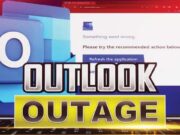
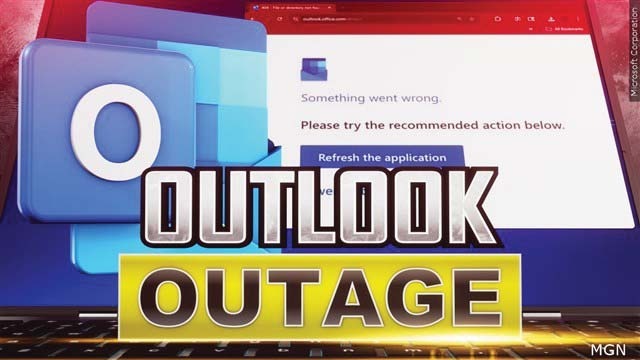
• Nov. 12: Microsoft 365, including Outlook and Teams, suffered a global outage
• Nov. 13: The Federal Aviation Administration halted departures nationwide
• Nov. 16: JPMorgan Chase, Bank of America, Wells Fargo, and U.S. Bank experienced temporary online and transaction outages
• Nov. 16: United Airlines delayed departing flights because of what it called a technology issue
• Nov. 17: The National Security Agency’s classified internal network was degraded
Federal officials say the failures were not connected. The White House said on Nov. 18 that there was “no indication of a coordinated cyberattack, state-sponsored activity, or malign actor,” calling the outages “separate incidents caused by companies patching vulnerabilities and upgrading outdated systems.”
According to federal and company officials, they attribute the system failures to the following:
• Microsoft – The incident “was introduced by an issue during an earlier network capacity upgrade that surfaced following a recent network change,” Microsoft stated on X on Nov. 13.
Executive Vice President Charles Lamanna said that “a latent defect caused servers to become overwhelmed and unresponsive under certain load conditions.” The company called it “a technical issue not related to cyber or AI / agents” and said on Nov. 14 that it had restored service to the remaining customers and regions.
• The FAA – “On November 13 at approximately 3:30 p.m. ET, the FAA experienced a technical problem that resulted in issuing a nationwide ground stop,” the agency said.
According to the FAA, old equipment became unstable when data flooded its telecommunications network at 1,000 connection attempts every 4 to 5 seconds, disrupting aircraft communications and radar feeds.
More than 3,500 flights were grounded, and more than 8,000 flight operations resumed that night, according to the Department of Transportation.
Transportation Secretary Sean Duffy traced the trouble to a site in El Dorado, Arkansas, saying it “was an old copper wire that basically was going to be decommissioned,” according to the White House.
The router’s maker, Hewlett Packard Enterprise, said that the device “functioned as it was confi g- ured to by the installer. It did not fail or act improperly.”
• Chase – “Due to a technical issue, some transactions are taking longer than usual to complete but customers still have access to their accounts and funds,” the bank stated on Nov.
16. On X, Chase said it had “experienced a temporary issue related to a software bug in on-premise hardware systems—there is no evidence this is cyber-related.” Chase has not said what hardware failed or how many customers were affected.
On Nov. 19, the bank stated that a cyberattack on outside vendors may have exposed some customers’ names and email addresses, and that the attack was not related to the Nov. 16 outage.
• United Airlines – “We have resolved a technology issue that delayed flight departures,” United said on Nov. 16. “While some flights were delayed, there was no impact on flights in progress, or on United Express flights.” The airline said there was “no indication that this was a cybersecurity-related issue.” United has not said which system failed.
• The NSA – The agency said on Nov. 17 that it “experienced temporary degradation during scheduled routine maintenance” and that “mission-critical capabilities remain fully operational.”
“This is not a cyber attack and this is not a coordinated effort by a nation-state,” Director of National Intelligence Jay Clayton said on CNBC on Nov. 17 regarding the temporary bank outages. As of Nov. 19, none of the federal bank regulators had posted a public statement on the outage, according to a review of their websites.
Representative Maxine Waters (D- Calif.), the top Democrat on the House Financial Services Committee, stated on Nov. 16, “I urge banks to promptly inform the public about what went wrong,” adding, “Regulators must hold banks accountable and ensure that any harmed consumers are made whole.”
According to U.S. News and World Report, Senator Josh Hawley (R-Mo.) told reporters at the Capitol, “If this is all a coincidence, it’s likely the greatest coincidence in the history of the world.” The outlet also reported that Senator Hawley demanded that President Donald Trump’s administration brief lawmakers on the problems.
However, what has unfolded in the aftermath of so many issues in such a short window of time has been confusion, uncertainty, and, in some instances, panic among the general public.
“The problems have provided a powerful reminder of just how much our everyday routines depend on technology we assume will work whenever it’s needed. That vulnerability spotlights a number of questions that are not easily resolved,” reported U.S. News and World Report.
“Rampant speculation, and reports of people stockpiling supplies out of fear of a tech doomsday, have even some Republicans criticizing efforts to downplay the problems. Americans aren’t stupid.
We want and deserve to know what’s really going on,” Tricia McLaughlin, the former assistant secretary for public affairs at the Department of Homeland Security, said in a social media post, noted USNews.com.
Old foundations, new strain
Secretary of Transportation Sean Duffy has asked Congress for $50 billion to overhaul air traffi c control systems and infrastructure, according to the White House.
A wider record shows similar weak points in other areas, including:
• The American Society of Civil Engineers gave U.S. infrastructure an overall C in 2025, its best grade since 1998, but nine of 18 categories still got a D-range grade. Its D+ for aviation cites, among other things and a shortage of about 3,000 air traffi c controllers, according to ASCE.
• Thirteen of 23 assessment areas face resource adequacy challenges over the next 10 years, according to the North American Electric Reliability Corp.
• The shift to internet-based 911 has brought “a corresponding increase in major, multi-state 911 service outages,” the Federal Communications Commission said.
For students of the Most Honorable Elijah Muhammad, under the guidance and leadership of the Honorable Minister Louis Farrakhan, these recent developments lead to different observations.
“Our reliance on technology has caused a lot of advancements, but it’s also a powder keg ready to explode,” said Brother Timothy Muhammad, an information technology specialist who is also a member of the Ministry of Information team for the Nation of Islam. “What isn’t connected? That’s really the question.”
When technology fails or slows down, the impact can be resounding.
“The most vulnerable are the poor, the disabled, the elderly, and of course our children,” said Nation of Islam Student Southwest Regional Minister Abdul Haleem Muhammad. “They don’t have redundancy in terms of their finances, communication, food, shelter, transportation. … Therefore, they cannot be resilient.”
Don’t panic. Prepare.
When the banks experienced technical difficulties, reports said some customers had difficulty conducting online transactions or even withdrawing cash at ATMs. For the thousands stranded at airports during the ground stoppage, many without alternative ways or plans to reach their destination found themselves stuck.
Theresa Payton is a cybersecurity expert and a former White House chief information officer. She told ABC News Live on Nov. 18 “that these recent issues underscore the importance of making and having an updated digital disaster plan,” the outlet reported.
“Payton said companies and government organizations, as well as individuals, could all benefit from some preparation before an emergency or unexpected situation arises,” noted ABC7Chicago.com.
Brother Timothy Muhammad says preparation is personal. “Do you have access to your cash in your home stored away? Do you have access to your food? Do you have access to your water?” And if your phone can’t reach the cloud, “do you know the phone numbers of your loved ones?” he asked.
Brother Timothy Muhammad emphasized, “Are you prepared? That’s the question.” He offered the following for consideration: “First and foremost, for the general audience, look at how much you’re giving over to technology that you can actually take back into your own hands.
Something as simple as: Where are your photos? Do you have a copy of your photos? Is all your money in the bank, with no access to any money outside of it? Where are the resources you would need in an outage that lasts a month or two?
Are they bound up in the cloud? Are they bound up in an institution that can go offline at a moment’s notice, so you don’t have access and have to run from your house looking for resources? Or are you storing away some of those resources?”
Brother Timothy Muhammad also referenced the importance of what the Most Honorable Elijah Muhammad and the Honorable Minister Louis Farrakhan have continued to teach. “You have to prepare. We’ve been taught that by the Most Honorable Elijah Muhammad and the Honorable Minister Louis Farrakhan.
Those are the things we have to revisit, and make sure we shore up our homes, because when an outage lasts a month or two, no one’s going to care about your dollars. Everything is about food. Everything is about energy,” he said.
Brother Timothy said other areas and questions to weigh in preparation include: Do you have battery storage for energy or a solar panel to plug into the battery to recharge it the next day?
How much of your food will spoil after one day without power? If the internet and the grid both go down can essentials be powered if one has to stay at home? Can food be properly refrigerated, and is there water?
“Digitally, do you have your contact list, so you have access to your numbers? Because if the phone can’t get access to the cloud to pull down phone numbers, do you know the phone numbers of your loved ones? This is the kind of thing we have to prepare for,” Brother Timothy Muhammad added.
Student Minister Abdul Haleem Muhammad says preparation should also be communal. “Do for self does not mean do by yourself,” he said. “We have to pool our resources,” he said, referring to the Teachings of the Most Honorable Elijah Muhammad.
Student Min. Haleem Muhammad suggested families and communities consider buying wholesale items together, sharing vehicles, and building a reliable HAM radio network for when cell towers go down. “The time is at hand,” he said, “so we must prepare ourselves for that eventuality.”
