










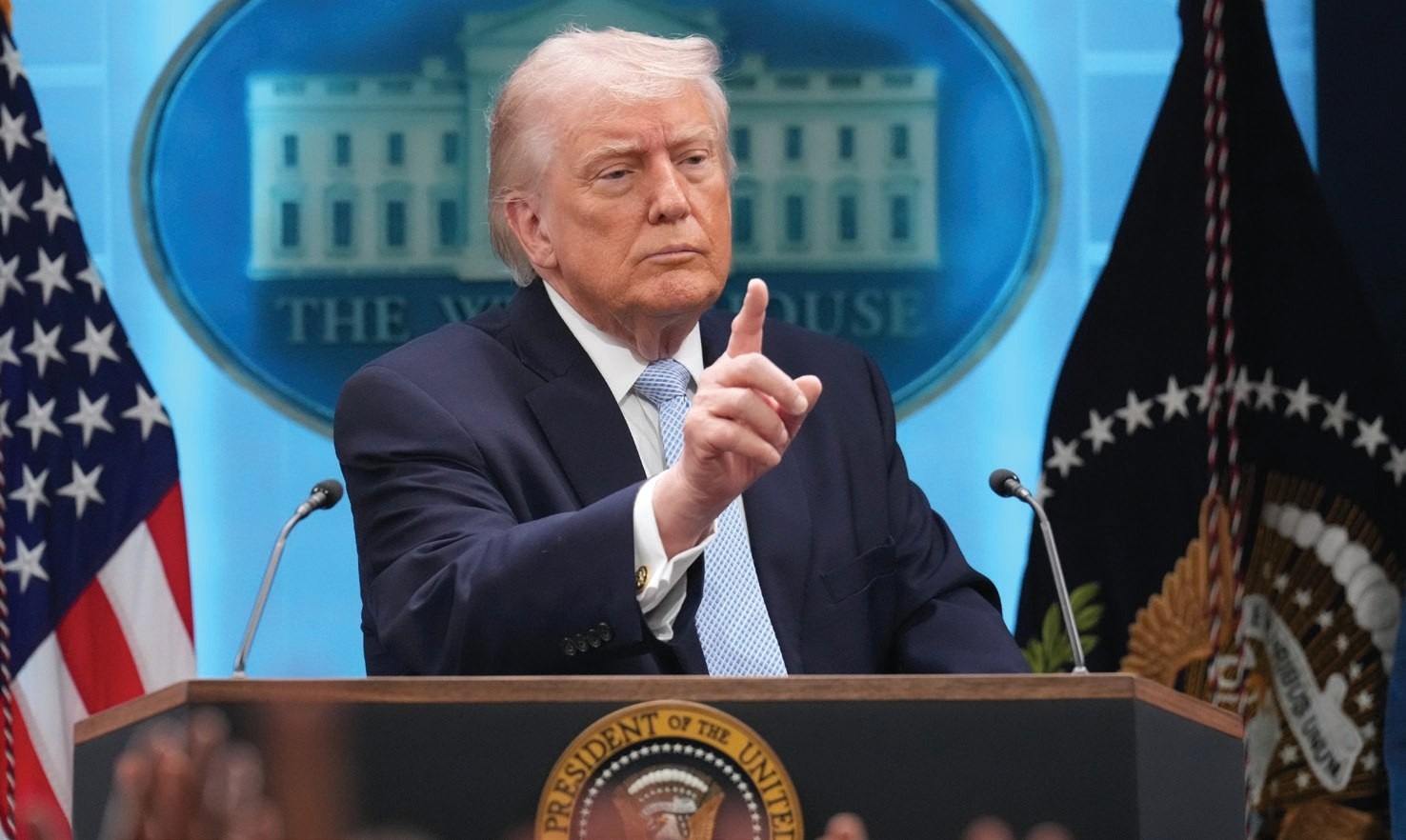

A decision to prolong or end the eight-month war on Iran, which was supposed to last a few weeks at most, will be made after the Nov. 3 U.S. midterm elections. Once the election dust has settled, President Donald Trump will know if his hold on Congress will continue unabated or if a Democrat majority in either house will hamper his “Make America Great Again” agenda.
Even if Republicans retain a majority in both houses, it is possible that some Republicans may express more independence and vote against him since they can no longer be primaried and they recognize the war quagmire the U.S. is getting itself into, along with rising prices across the board for the average American.
Democrats, with any victory, most definitely will throw up obstacles to the Trump agenda, particularly against the war, but not necessarily in the legislative body’s support of Israel, which many observers say is the reason Mr. Trump attacked Iran.
A Pew Research poll conducted Sept. 28-Oct. 4 among 5,062 adults and reported on Oct. 8 showed 65% disapproval of the Iran war. Pollster Nate Silver’s Silver Bulletin Iran War Poll Tracker reported on Oct. 30 a 57% disapproval rating.
Muhammad Sankara of the U.S. Palestinian Community Network noted the awakening of the American public to speak out more against the atrocities committed by Israel and how U.S. legislators lag behind.
“There is a potential political opening in the U.S. now that has not existed in a generation or more,” he said regarding opposition against Israeli behavior. “People are recognizing there is real injustice taking place and we don’t want the U.S. to bear the brunt of the moral, financial and ethical responsibilities. But, again, the interest of [Democrats in Congress] is to save Israel.”
None of the options to end the war are favorable for Mr. Trump. Some argue the war could have ended in June when presidents of both warring countries signed a Memorandum of Understanding.
Mr. Trump can still make a deal, although he violated the agreement shortly thereafter with another attack on the Islamic Republic. As a result, Iran has hardened its resolve on adherence to its demands before any peace negotiations.
Those demands include a withdrawal of the U.S. Naval blockade and Iran maintains control of the Strait of Hormuz, which was open and had free passage prior to the war. Mr. Trump would probably perceive such a negotiation as a defeat.
Another option, which Mr. Trump appears to be prepared to activate, is a short but intense bombing campaign. U.S. military presence in the Persian Gulf has increased significantly over the last month and U.S. citizens at embassies and in those countries have been advised to evacuate in light of a pending attack.
But absent ground troops along with the bombings, the president will not achieve the outcome he is looking for, according to analysts. And ground troops will result in casualties.
Such a campaign would also result in Iran unleashing an all-out attack on the vital energy and technology infrastructure as well as critical desalination plants in neighboring Gulf countries allied with a U.S. attack. Iran’s attacks would cripple the global economy for years and cause massive suffering in Gulf countries, observers note.
The attack most certainly would impact the conflict occurring in the Bab al-Mandeb Strait, where Ansar Allah (Houthi) forces allied with Iran are fighting Yemeni forces that are backed by Saudi Arabia. Ansar Allah has attacked Saudi vessels in the strait and attacked Saudi oil infrastructure, further limiting oil exports to the world market.
A months-long Naval blockade by the U.S. on Iran is causing significant economic hardships, adding to the decades of suffering caused by previous sanctions. Continuing the economic pressure would prolong the conflict into what would look like a “forever war,” which the president campaigned against.
The president could couple economic pressure with limited bombings on critical areas. The question still to be answered is, will Iran unleash its “scorched earth” response to any attack by the U.S. or Israel, regardless of the scale of the attack? And will Israeli Prime Minister Benjamin Netanyahu abide by President Trump’s wishes if he advises Israel not to engage Iran?
Mr. Netanyahu is fighting for his political life after losing his majority in the Israeli Knesset (Parliament) in recent elections and could lose his post. He is also facing criminal corruption charges, which could leave him vulnerable to imprisonment if he is no longer prime minister, according to analysts. The International Criminal Court has also issued a warrant for Mr. Netanyahu’s arrest on war crimes.
Under such pressure, he may feel forced to launch an attack. Opposition leader Gadi Eisenkot, whose coalition came in second in the elections and who could become prime minister, told heads of the security forces to resist attempts by Mr. Netanyahu to use his post for political aims, according to the Times of Israel.
“Remember that you serve the state and the interests of Israel’s citizens alone. Stand firm against any attempt to pressure you. You have my full backing,” he said, according to the report.
The statement came against the backdrop of reports that an Israeli Defense Force chief had resisted a push by Mr. Netanyahu to strike Iran before the Oct. 27 election. Speculation has continued that Netanyahu still may order an attack on Iran, the paper reported.
U.S. military advisers must also consider the widely reported depletion of weapons stockpiles. Use of such weapons in another attack would further deplete those weapons and leave the U.S. military vulnerable if another conflict should emerge, perhaps with a more powerful military such as China or Russia.
Then again, with the midterms behind him, President Trump may continue to work his agenda regardless of opposition from either party and fight the consequences. He has proven the capacity to do that.
