











Nisa Islam Muhammad | Staff Writer | @nisaislam
Several cities led by Black mayors have reported progress against violence. Community leaders say that making neighborhoods safer still needs more work, resources, and trust, but that there have been positive steps.
Baltimore saw 61 fewer homicides in 2025 compared to 2024. Los Angeles had a 19% drop in killings, and Chicago’s year-end numbers showed homicides down by about 29%. Mayors say focused policing, violence intervention, and more opportunities for young people have helped. Los Angeles, Chicago, Baltimore and Birmingham, Ala., are a few of the cities touting progress.

Baltimore, D.C., and the work behind the numbers
Baltimore police’s year-end report on January 1, 2026, counted 133 homicides in 2025, down from 194 in 2024, a 31% drop. Nonfatal shootings fell from 412 to 311, about a 24.5% decrease. Police said they updated past homicide numbers so cases match the years when the incidents actually happened.
Mayor Brandon Scott’s administration uses both enforcement and a public health approach to address violence. The Group Violence Reduction Strategy pro-vides services to people at high risk for shootings and focuses enforcement on those responsible for violence. The city also relies on Safe Streets mediators, hospital intervention programs, and victim services.
In a July 2026 review, the administration said it connected over 400 people to life coaching and other support through Youth Advocate Programs and Roca. An evaluation found that in the first 18 months of the strategy in the Western District, shootings and homicides dropped by 33% without more arrests. While this result covers only one district and time period, not the whole city, it is significant.
Student Minister, Student Imam Abdul Salaam Muhammad, of the Nation of Islam’s Mosque No. 6 in Baltimore, told The Final Call that relationships among religious leaders, grassroots organizations, and city government have strengthened the work.

“During the COVID years, mosque members joined church leaders and others in walking through neighborhoods,” he said. Fruit of Islam (F.O.I.) Student Captain Andrew Muhammad and the F.O.I., the Nation of Islam’s men, continued that outreach, following the Honorable Minister Louis Farrakhan’s instruction and guidance.
“We have to make our own community a decent place to live and make it safe and habitable for our people,” Minister Farrakhan said in a 2016 year-in-review interview with The Final Call. He explained the need “to free where we live from senseless violence and to free this community from police.”
“They don’t need more training. They’re well trained. Their training shows in other communities, it’s only when they come into our community that another kind of training comes into force. They are an Occupying Army to colonized people. When we make our own community a decent place to live, we don’t want them in our community at all. We want to police our own community,” Minister Farrakhan said.
“In Chicago’s Woodlawn neighborhood, I don’t see us on the University of Chicago and university hospital police force. That is a police force that polices its own community.
We can do the same. We have professional people who have gone to police training. We need to pull up some of our young people and train them and ask the Whites to leave.
“You go and patrol your community. We will police our own. We can begin taking our community and making it ours and making those who come in to respect our territory, like we have to respect theirs, but that will never happen until we respect ourselves,” Minister Farrakhan continued.
In Baltimore and other cities, the efforts continue. Student Min. Abdul Salaam Muhammad welcomed the progress in Baltimore but noted that grassroots organizations often start with commitment and limited resources.
“Those who know how to reach young people need dependable support,” he said. “So greater unity, more resources, and consistency in the work will get the job done.”
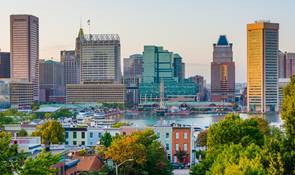
Baltimore’s update on October 1, 2026, reported 83 homicides, down from 98 at the same time in 2025, a 15.3% drop. Nonfatal shootings fell by 4.2%.
However, an October 20 report from The Baltimore Banner said Mayor Scott called public safety leaders together after a series of shootings. This shows that progress can still be fragile.
Mayor Muriel Bowser said in January 2026 that violent crime in Washington, D.C., dropped by 29% in 2025, including a 32% drop in homicides.
The Metropolitan Police Department reported 127 homicides, down from 187 in 2024. D.C. police credited Operation THRIVE, which brings agencies together in neighborhoods affected by gun violence, and the Real Time Crime Center, which helps with investigations and responses.
Education and opportunity in Benton Harbor
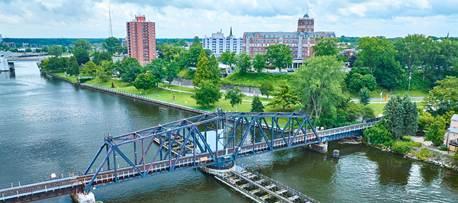
Benton Harbor, Michigan, is much smaller than the big cities getting national attention for their efforts. Even so, Mayor Marcus Muhammad believes its approach offers important lessons.
He told The Final Call that community policing, restorative justice, and more job and education opportunities have helped the city improve. He explained that restorative justice is about understanding that people can make mistakes but can still change.

“Engagement and education give people tools to make better decisions. Increasing access to work and constructive activities also matters,” he said.
Public Safety Director Dan McGinnis said crime dropped 24% as 2025 ended, according to a December 22 TV Station WNDU report citing The Herald-Palladium. Mayor Muhammad also mentioned a 25% drop in his interview.
For the mayor, education is still central to keeping progress going. He said, if government is going to help people, “education must be at the forefront.”
He also linked community improvement to the legacy of the 1995 Million Man March and the Honorable Minister Louis Farrakhan’s call for Black men to love one another and return home committed to making their communities clean and safe. “That message has resonated,” he said.
Chicago, Los Angeles and Oakland invest in prevention
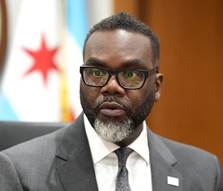
Chicago Mayor Brandon Johnson’s year-in-review on December 31, 2025, said there were 416 homicides through December 30, about 29% fewer than the same period in 2024. Shooting incidents dropped by 34.5%. These numbers are from just before the end of the year.
Mayor Johnson’s administration credited partnerships between police, community groups, and violence intervention workers. They also focused on youth employment. City officials said One Summer Chicago gave jobs to 31,122 young people in summer 2025, according to Chicago PBS station WTTW’s report from a November budget hearing.
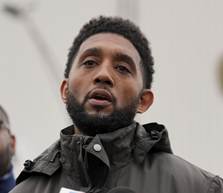
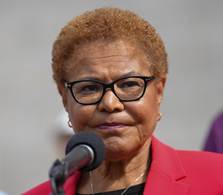
Los Angeles Mayor Karen Bass announced on February 17, 2026, that citywide homicides dropped by 19% in 2025. In Gang Reduction and Youth Development zones, where neighborhoods get special services, homicides fell by almost 27%.
Mayor Bass’s office said the city invested in prevention, reentry services, and community activities. The Summer Night Lights program served more than 110,000 people at 42 parks and recreation centers in 2025, according to the mayor’s office. However, community organizations warn they need steady funding to keep their work going.
The Urban Peace Institute described crisis response, conflict mediation, and outreach through the LA Peacemakers Initiative, but said its funding will end in 2026.
Oakland, California, has also seen progress with decreases in crime reflected in the first half of 2025 compared with the same period in 2024, including a 21% drop in homicides and a 29% decrease in all violent crime, according to the midyear report by the Major Cities Chiefs Association, the Associated Press reported.
“Officials credited collaborations with community organizations and crisis response services through the city’s Department of Violence Prevention, established in 2017,” AP noted.
“These results show that we’re on the right track,” Mayor Barbara Lee said at a news conference. “We’re going to keep building on this progress with the same comprehensive approach that got us here,” she said, according to AP.
Birmingham and other cities report gains
Birmingham, Ala., Mayor Randall Woodfin has focused on investigations and police resources. Birmingham television station WBRC reported he cited 86 homicides in 2025, down from 152 in 2024. Another count from Birmingham Times/AL.com listed 88. Both numbers show a large drop.
In February 2025, Birmingham police introduced a strategy with specialized enforcement. They arrested people wanted for violent felonies, worked with federal partners, and fought illegal gun trafficking. They also restarted their youth athletic program.
Philadelphia Mayor Cherelle Parker’s administration reported that homicides fell by 17.5% and shootings dropped by 23% from 2024 to 2025. In her December 2025 State of the City speech, Mayor Parker emphasized prevention, intervention, and enforcement, and said the city spent $25 million on community-based violence prevention that year.
Residents felt safer, but concerns remained. A Pew survey from January to March 2025 found that 56% of Philadelphians felt safe in their neighborhoods at night, up from 44% in 2022. Still, 61% said crime, drugs, and public safety were the city’s top issues. The survey was done before the full 2025 results were available.
Atlanta Mayor Andre Dickens said in his January 2026 inaugural speech that Atlanta ended 2025 with fewer than 100 homicides. He also highlighted youth programs such as Midnight Basketball.
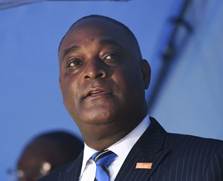
Newark Mayor Ras Baraka’s State of the City speech in April 2026 said there were 31 homicides in 2025, down from 37 in 2024, and nonfatal shootings dropped by 36%. Newark’s Office of Violence Prevention and Trauma Recovery helps with neighborhood intervention, supports victims, and works with young people.
In July, the Congressional Black Caucus and the Vera Institute of Justice hosted a virtual roundtable and Q&A on the crime declines and to present what they called “a proactive vision of public safety.” The gathering included Mayor Scott, Mayor Baraka, Durham Mayor Leonardo “Leo” Williams, U.S. Rep. Summer Lee (PA-12) and U.S. Rep. Shontel Brown (OH-11).
“For too long, leaders in Washington and around our nation have weaponized the issue of public safety with a failed ‘tough on crime’ approach that drives fear and division while fueling a cycle of mass incarceration, instead of delivering real solutions that make communities safer,” said CBC Chair Yvette D. Clarke (NY-09).
“While Trump focuses on ‘tough on crime’ fearmongering and counter-productive gimmicks like deploying the National Guard, Black Mayors across the country are doing the real work to make cities safer. I’m proud to stand with my colleagues in the Congressional Black Caucus to set the record straight and advocate for real public safety solutions,” added Rep. Brown.
More work ahead and community responsibility
Community leaders interviewed by The Final Call said that keeping up progress means recognizing those doing the work and investing in their ability to keep going. Student Imam Abdul Salaam said Baltimore’s coalition work is moving in the right direction. The goal, he said, is for the city to reach a point with no murders.
While progress has been made and Black mayors are doing what they can to address challenges in their cities with the resources available, responsibility also lies with community residents.
The Honorable Minister Louis Farrakhan offered guidance and solutions during his Saviours’ Day keynote message on March 1, 2009, at the Rosemont Theatre in Rosemont, Illinois, titled, “Accepting Responsibility To Build Our Community.”
“In building a community, everybody has to go to work. Everyone’s talent has to be put to use. We’ve got people among us who know how to organize people effectively. Preachers, scholars, lawyers; local, national and international activists; and entertainers:
Don’t you think that we could come together and plan spiritual education, pool our preachers together and stop hooping, shouting and going crazy and leaving the people in ignorance?
Can’t we plan a spiritual curriculum based on the Bible and Holy Qur’an, and educate people that when they come to church it should be a learning experience about God as it was today?” Minister Farrakhan said.
“We can multiply what we see here all over the country. It’s time now, because if we don’t do it now and lose this opportunity, then our people and their children will never forgive us.
Barack has done his job. Now we’ve got to do ours,” he said, referring to former President Barack Obama. Minister Farrakhan’s guidance in 2009 is just as applicable in 2026.
“Let’s gather the house. We don’t have a lot of time. I need help. I know I can’t do it by myself, but I know we need help, and the help is here. The people are ready. The question is: Are we ready to go to work and build a national community? Who is going to help me do that?
There are people all over the world that will help us if we would determine to help ourselves. All of you: Let’s go to work. Let’s build our community and make it a decent place to live. If we do this, we can take our young brothers away from the violence, away from the guns, away from the self-hatred,” Minister Farrakhan said.
Final Call staff contributed to this report.
